Benzo[b]fluoranthene (BbF) testing is the laboratory determination of BbF — a five-ring polycyclic aromatic hydrocarbon (PAH), IARC Group 2B, molecular weight 252 — in food, water, and environmental matrices, as one of the four components of the EU PAH4 sum (BaP + BaA + BbF + Chrysene). BbF shares the PAH4 compliance framework with benz[a]anthracene (BaA) — the EU regulates the sum, China regulates only BaP — but BbF has two distinct features that make its testing technically and toxicologically different from BaA's: a m/z 252 isobaric challenge that demands chromatographic separation from its fluoranthene-isomer siblings, and a male-reproductive toxicity profile (Leydig-cell apoptosis via the Akt-p53 pathway) that sets its hazard characterization apart.
BbF's Place in PAH4 — and How It Differs from BaA
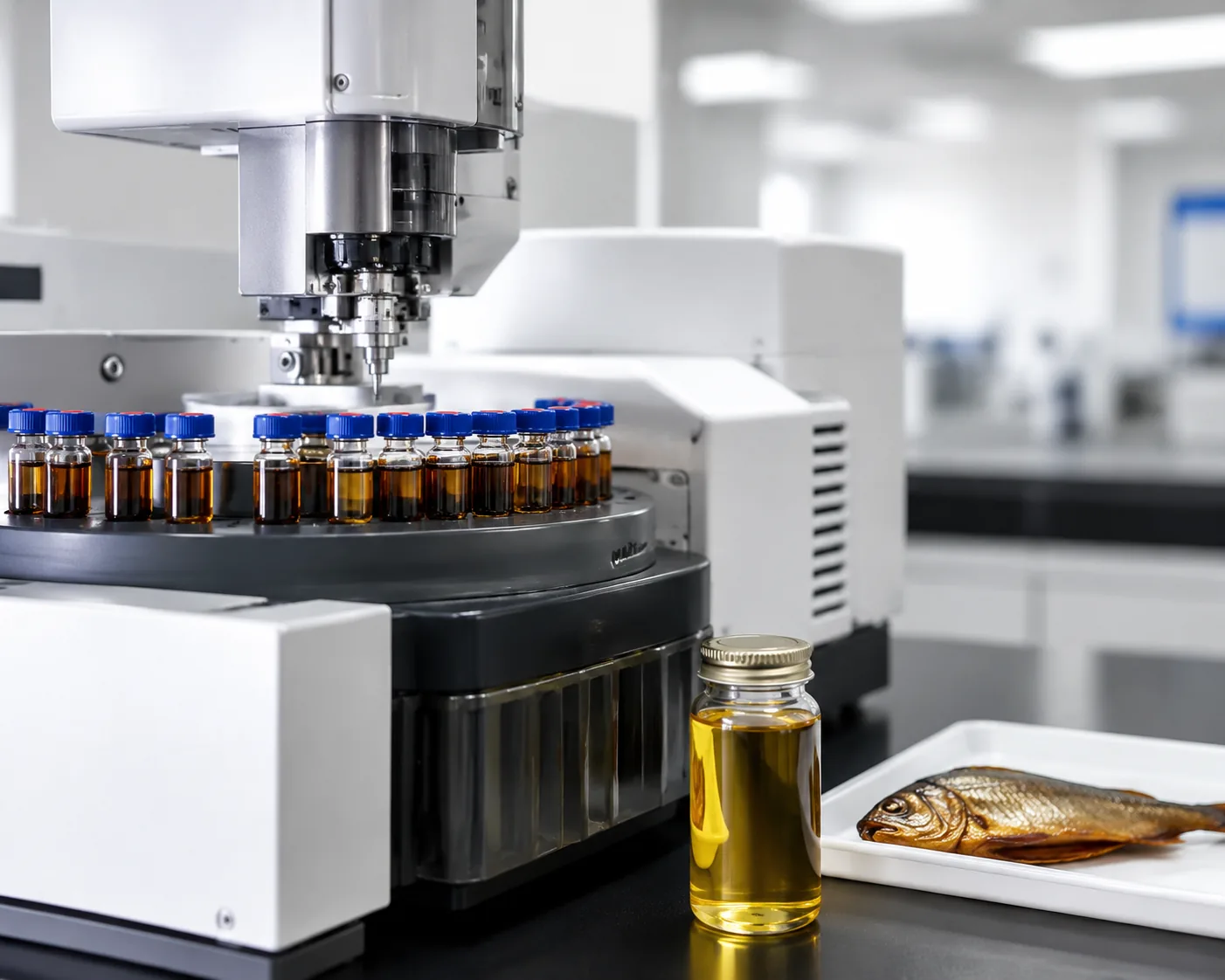
BbF is one quarter of the PAH4 sum the EU uses as its food-PAH marker (introduced by EFSA in 2008 as a better indicator than BaP alone). The full PAH4 framework — EU Regulation 835/2011 / 2023-915 limit table, China GB 2762 regulating only BaP, the sampling and method standards — is covered in the benz[a]anthracene testing article; this article focuses on what is specific to BbF.
The two PAH4 components differ structurally and analytically in ways that matter to the laboratory:
| Benz[a]anthracene (BaA) | Benzo[b]fluoranthene (BbF) | |
|---|---|---|
| Ring count | 4 rings (anthracene backbone) | 5 rings (fluoranthene backbone) |
| Molecular weight | 228 | 252 |
| GC-MS quantitation ion | m/z 228 (unique) | m/z 252 (shared with BjF, BkF) |
| Internal standard | BaA-d12 (m/z 240) | BbF-d12 (m/z 264) |
| Mass-spec distinguishable from neighbors? | Yes | No — needs chromatography |
| Metabolic activation | Diol-epoxide | Diol-epoxide (different regiochemistry) |
The headline difference is the m/z 252 isobaric problem, which is the single most important BbF-specific analytical fact and the subject of the next section.
The m/z 252 Isobaric Challenge
BbF shares its molecular weight (252) and its molecular-ion m/z (252) with two close isomers: benzo[j]fluoranthene (BjF) and benzo[k]fluoranthene (BkF). The three fluoranthene-family PAHs produce virtually identical mass-spectral fragmentation patterns — mass spectrometry alone cannot distinguish them. This is fundamentally different from BaA (m/z 228), whose mass is unique among the PAH4 and which mass-spec alone identifies.
Because mass cannot resolve BbF from BjF/BkF, the differentiation must come from chromatographic separation:
- On a standard HP-5 (5 % phenyl) column, BbF and BkF may partially overlap, and BjF can co-elute — making accurate BbF quantitation unreliable.
- A specialty PAH-select column (a phase designed for PAH separation) improves resolution, with the fluoranthene isomers eluting in a defined order (BbF, then BkF, then BjF on select phases).
- GC-MS/MS (MRM mode) adds a second dimension of selectivity by monitoring BbF-specific precursor-to-product transitions, but the chromatographic baseline separation remains the prerequisite — MRM cannot rescue two compounds that co-elute at the same retention time.
This is why a BbF report is more demanding than a BaA report at the same μg/kg level: the laboratory must demonstrate chromatographic resolution of the three m/z 252 isomers, not just detect the ion. A method that quantifies "m/z 252" without resolving BbF from BkF/BjF is reporting the sum of the fluoranthene isomers, not BbF itself.
BbF's Male-Reproductive Toxicity — Why It Earned Its PAH4 Place
BbF's hazard characterization is distinctive within PAH4. The search results are dominated by a reproductive-toxicology study showing that BbF induces male reproductive damage through a specific molecular mechanism:
- Leydig-cell apoptosis — BbF causes apoptosis in the testosterone-producing Leydig cells of the testis.
- Akt-Mdm2-p53 pathway — BbF inhibits Akt-Mdm2 signaling, which activates the p53-mediated mitochondrial apoptosis pathway (downstream: increased Bax and cleaved Caspase-3, decreased Bcl-2).
- Testosterone decline and sperm damage — the Leydig-cell loss reduces testosterone, which in turn decreases sperm concentration and motility and aggravates testicular pathological injury.
- Computational-toxicology confirmation — the in-vivo/in-vitro findings were predicted by computational-toxicology analysis of the Akt/p53 pathway, validating the mechanism.
This reproductive-toxicity dimension is on top of BbF's carcinogenicity: IARC classifies BbF as Group 2B (possibly carcinogenic to humans), with sufficient evidence in experimental animals (skin tumors in mice by repeated skin painting), and the US NTP 14th Report on Carcinogens lists BbF as reasonably anticipated to be a human carcinogen. Like other PAHs, BbF is not directly DNA-reactive — it is metabolically activated (by cytochrome P450 enzymes) to diol-epoxides that form covalent DNA adducts, the mutagenic lesion.
The combination — reproductive toxicity plus animal carcinogenicity, on top of BbF's meaningful share of the PAH4 carcinogenic potency (BaP accounts for roughly 61 % of PAH4 potency in some studies, with BbF carrying a significant fraction of the remainder) — is why EFSA included BbF rather than other PAHs in the PAH4 marker.
The Method: Same Standard, Harder Execution
BbF is measured by the same method standards as the rest of PAH4 — GB 5009.265 (food, China), ISO 22959 / EN 16619 (EU), EPA-based methods (environmental) — using GC-MS (SIM at m/z 252) or HPLC-FLD, with a BbF-d12 deuterated internal standard (m/z 264) for quantitation. The extraction (saponification for oils, gel-permeation/SPE cleanup) is shared across PAH4. What differs for BbF is the execution rigor required for the m/z 252 isobaric separation described above — a BbF result is only valid if the chromatogram demonstrates baseline resolution of BbF from BkF and BjF.
The four-component PAH4 panel (BaP, BaA, BbF, Chrysene) is reported as both individual values (mg/kg or μg/kg) and the PAH4 sum, and the EU limit applies to the sum.
Our Testing Capabilities
Beijing ZKGX Research conducts benzo[b]fluoranthene testing as part of its PAH4 panel:
- PAH4 panel — BaP, BaA, BbF, and Chrysene, reported individually and as the PAH4 sum, by GC-MS (SIM, m/z 252 for BbF with BbF-d12 internal standard) and HPLC-FLD, with chromatographic resolution of the m/z 252 isomers (BbF/BkF/BjF) demonstrated on every report.
- Standards: GB 5009.265 (food, China), ISO 22959 / EN 16619 (EU-bound), EPA methods (environmental).
- Matrices: edible oils and fats, smoked and grilled meat/fish, cereals and infant cereals, cocoa products, food supplements, food-contact materials, soil, and air particulate.
- Export support: parallel reporting against EU Regulation 2023/915 (PAH4 sum) and China GB 2762 (BaP only), per the target market.
- Deliverable: a test report stating the matrix, the method standard, BbF's individual value, the PAH4 sum, the chromatographic isomer-resolution evidence, and pass/fail against the applicable limit.
If you have a food, oil, or environmental sample requiring BbF / PAH4 verification, contact our testing team to scope the matrix, the isomer-resolution requirement, and the target-market limit regime.
Frequently Asked Questions
Why is benzo[b]fluoranthene harder to test than benz[a]anthracene?
Because BbF shares its molecular weight (252) and m/z 252 molecular ion with two isomers — benzo[j]fluoranthene and benzo[k]fluoranthene — which produce nearly identical mass spectra. Mass spectrometry alone cannot distinguish them, so chromatographic separation (typically on a PAH-select column, or with GC-MS/MS MRM as a second dimension) is essential. BaA (m/z 228) has a unique mass among PAH4 and does not face this isobaric problem.
Is benzo[b]fluoranthene the same as benzo[k]fluoranthene?
No. They are structural isomers — both five-ring fluoranthene-family PAHs with molecular weight 252 — but they differ in the geometry of the fused-ring system. They co-occur in PAH-contaminated samples and share the same m/z, so chromatographic separation is required to quantify BbF independently of BkF.
What is BbF's toxicity?
BbF is IARC Group 2B (possibly carcinogenic to humans), with sufficient evidence of carcinogenicity in experimental animals (skin tumors in mice). It is not directly DNA-reactive; it is metabolically activated to diol-epoxides that form DNA adducts. Separately, BbF induces male reproductive toxicity — Leydig-cell apoptosis via the Akt-Mdm2-p53 pathway, causing testosterone decline and sperm damage — which is a hazard dimension distinct within PAH4.
What is the BbF limit in food?
There is no standalone BbF limit. BbF is regulated as one quarter of the PAH4 sum (BaP+BaA+BbF+Chr). Under EU Regulation 835/2011 / 2023-915 the PAH4 sum limit is 10 μg/kg for most edible oils and fats, 30 μg/kg for cocoa, 1 μg/kg for infant cereals. China's GB 2762 regulates only BaP, not PAH4.
What method detects benzo[b]fluoranthene?
GC-MS in selected-ion-monitoring mode at m/z 252 (the BbF molecular ion), with a BbF-d12 deuterated internal standard at m/z 264 for quantitation — but only after chromatographic resolution from the m/z 252 isomers BjF and BkF. The method standards are GB 5009.265 (food), ISO 22959, and EN 16619.