Seat belt testing encompasses a comprehensive range of evaluation methods used to verify the safety, reliability, and performance of seat belt systems in automotive applications. These testing procedures are critical for ensuring that seat belts effectively protect vehicle occupants during collisions and meet stringent regulatory requirements worldwide.
This comprehensive guide covers all major seat belt testing methodologies, from component-level strength testing to full system crash simulation. You'll learn how to evaluate webbing integrity, test retractor mechanisms, assess locking performance, and ensure compliance with international safety standards.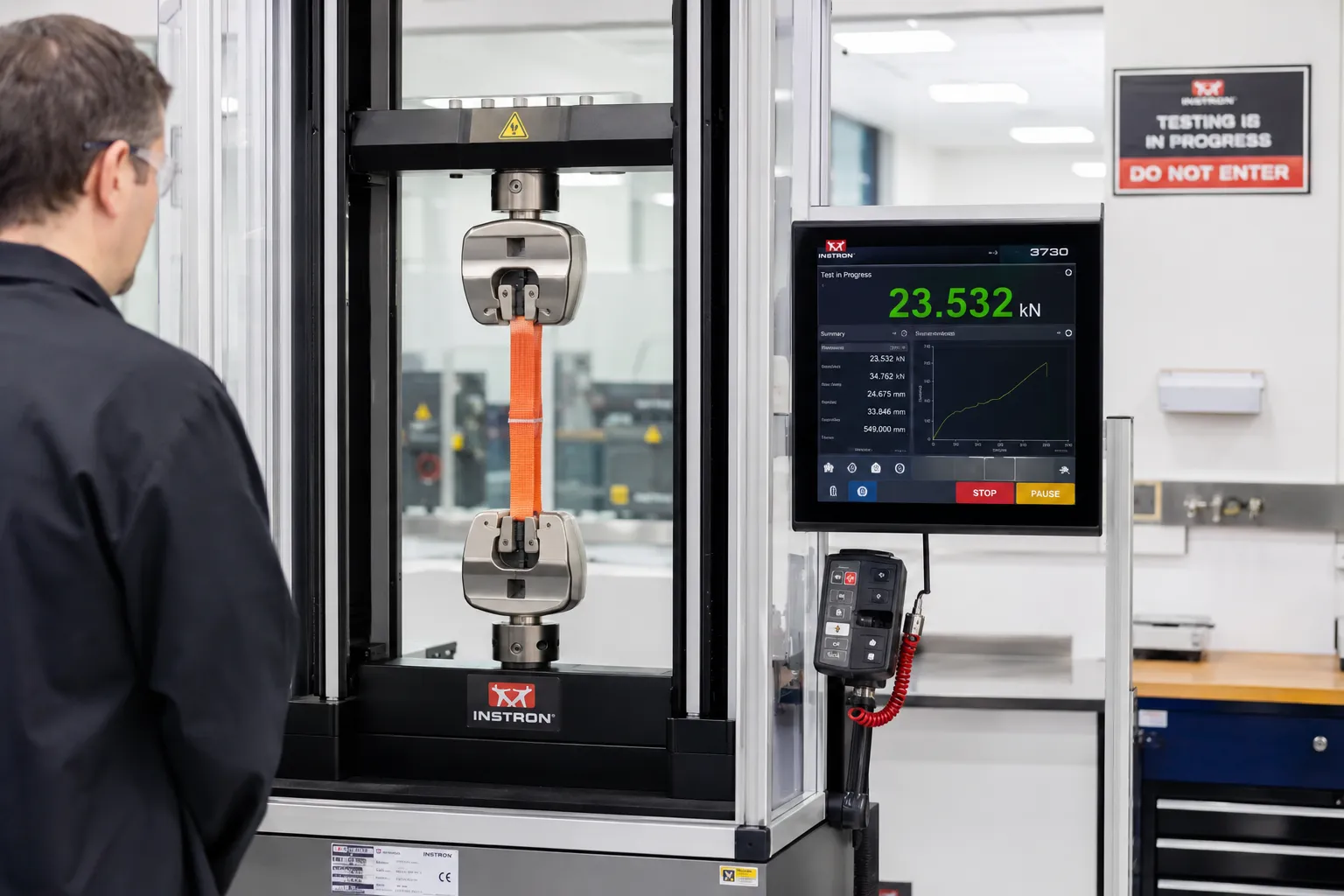
What you'll learn in this guide:
- Seat belt component testing methods
- Tensile strength and webbing testing
- Retractor and locking mechanism evaluation
- Crash simulation and dummy testing
- Durability and environmental testing
- Regulatory standards (FMVSS 209, UN/ECE R16)
- 5-step seat belt fit test for proper positioning
- Quality control and certification procedures
Importance of Seat Belt Testing
Testing seat belts serves critical functions for occupant safety, regulatory compliance, and product reliability.
Key benefits of seat belt testing:
Life protection: Testing verifies that seat belts will perform as designed during crashes, reducing the risk of injury by at least 50% and saving over 13,000 lives annually in the United States alone.
Regulatory compliance: Certified testing provides documentation required by Federal Motor Vehicle Safety Standards (FMVSS), UN/ECE regulations, and other international safety standards for vehicle certification and market access.
Product reliability: Regular testing identifies manufacturing defects, material weaknesses, and design issues before products reach consumers, ensuring consistent quality.
System integration: Testing validates that seat belts work correctly with airbags, pretensioners, and other vehicle safety systems for comprehensive occupant protection.
Durability assurance: Long-term testing confirms that seat belts maintain performance throughout the vehicle's service life under various environmental conditions.
Post-accident verification: Testing after collisions determines whether seat belts remain functional or require replacement, maintaining ongoing safety.
Seat Belt System Components
Primary Components
Webbing:
- Fabric belt that wraps around occupant's body
- Typically made from high-strength polyester or nylon
- Must resist stretching, abrasion, and environmental degradation
- Width: typically 46-50 mm for adequate load distribution
Buckle:
- Mechanism that secures and releases the latch plate
- Must withstand impact forces without releasing
- Includes release button for occupant egress
- Critical for proper belt function during crashes
Latch plate (tongue):
- Metal component that inserts into buckle
- Provides secure connection between belt and buckle
- Must resist deformation under crash loads
Retractor:
- Mechanism that winds and stores excess webbing
- Contains spool and spring for automatic retraction
- Includes locking mechanism for crash protection
- Types: Emergency Locking Retractor (ELR), Automatic Locking Retractor (ALR)
Advanced Components
Pretensioner:
- Pyrotechnic device that tightens belt during crash
- Activated by crash sensors before impact
- Removes slack to improve restraint effectiveness
- Single-use component requiring replacement after deployment
Load limiter:
- Mechanism that controls belt force during crash
- Allows controlled webbing payout to reduce peak loads
- Prevents excessive force on occupant's chest
- Works in conjunction with pretensioner and airbag
Height adjuster:
- Adjustable anchor point for shoulder belt
- Allows proper belt positioning for different occupant sizes
- Must maintain strength at all adjustment positions
Component-Level Testing Methods
Tensile Strength Testing
Purpose: Determine the breaking strength of webbing and belt components
Test standards:
- FMVSS 209: Federal Motor Vehicle Safety Standard for seat belt assemblies
- EN ISO 1492: Tensile testing for belts
- UN/ECE R16: Uniform provisions for safety belt approval
Test procedure:
- Mount webbing sample in tensile testing machine
- Apply increasing tension until failure
- Record breaking force and elongation
- Compare to minimum strength requirements
Equipment:
- Universal tensile testing machine
- Roller grips or capstan grips for webbing
- Safety housing for high-energy failures
- Video extensometer for strain measurement
Acceptance criteria:
- Webbing breaking strength: minimum 26.7 kN (6,000 lbs) per FMVSS 209
- Buckle assembly strength: must withstand specified loads without failure
- Elongation at break: typically 8-12% for polyester webbing
Test considerations:
- Roller grips prevent specimen damage at clamping points
- High release energy requires protective housing
- Optical measurement preferred over crosshead travel
- Multiple samples tested for statistical significance
Webbing Abrasion Testing
Purpose: Evaluate resistance to wear and surface damage
Test method:
- Cycle webbing over abrasive surface
- Typically 2,500 cycles or more
- Inspect for wear, fraying, or damage
- Retest tensile strength after abrasion
Acceptance criteria:
- No significant wear or damage visible
- Tensile strength after abrasion must meet minimum requirements
- No reduction in performance characteristics
Buckle Release Force Testing
Purpose: Verify buckle operates correctly under various conditions
Test conditions:
- Unloaded release force measurement
- Release force under tensile loading
- After environmental exposure (temperature, humidity)
Procedure:
- Insert latch plate into buckle
- Measure force required to release
- Test under simulated crash loading
- Verify smooth operation without sticking
Acceptance criteria:
- Release force within specified range
- No unintended release under load
- Consistent operation after cycling
Retractor Performance Testing
Purpose: Evaluate retraction and locking mechanisms
Tests performed:
Retraction test:
- Extend webbing fully and release
- Measure retraction speed and completeness
- Verify smooth operation without jamming
- Check for proper webbing storage
Locking mechanism test (G-force test):
- Subject retractor to simulated deceleration
- Verify locking activates at specified G-force
- Test both vehicle-sensitive and webbing-sensitive locking
- Measure lock engagement distance
Tilt test:
- Rotate retractor to various angles
- Verify locking function at different positions
- Important for adjustable seat applications
Cycle durability test:
- Cycle retractor 50,000 times or more
- Verify consistent performance throughout
- Identify wear or degradation issues
Acceptance criteria:
- Locks at deceleration ≥0.45 g (vehicle-sensitive)
- Locks at webbing acceleration ≥2.0 g (webbing-sensitive)
- Full retraction within specified time
- No jamming or hesitation
Tilt Lock Test for Adjustable Belts
Purpose: Test locking bar performance in height adjusters
Procedure:
- Mount adjuster in tilt lock testing machine
- Apply tilting motion at various angles
- Verify locking at all positions
- Measure locking force and engagement
Equipment:
- Tilt lock testing machine
- Digital readout for angle and force
- Adjustable fixtures for different adjuster designs
Acceptance criteria:
- Locks securely at all adjustment positions
- Maintains position under specified loads
- Smooth adjustment operation
Crash Simulation Testing
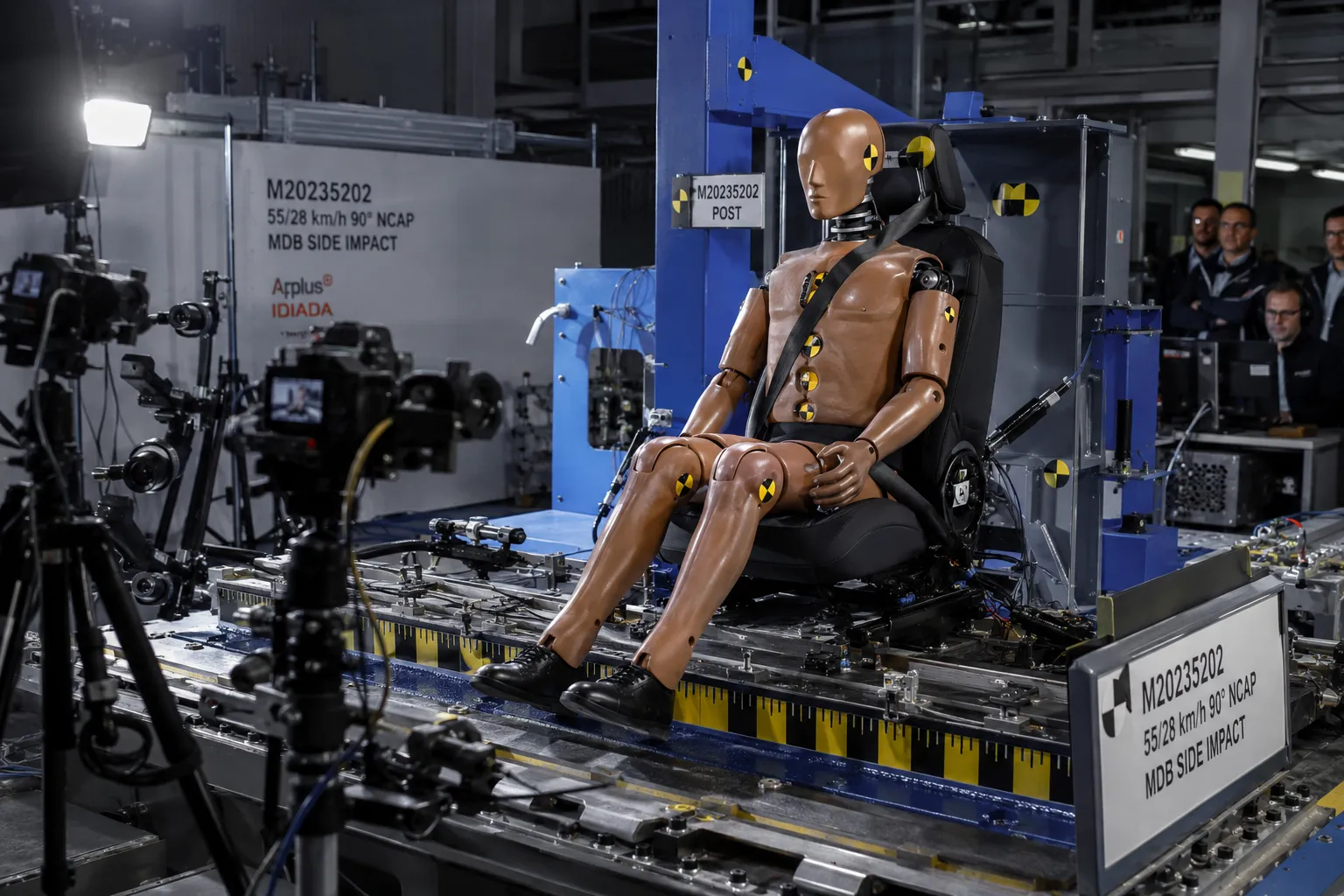
Sled Testing
Purpose: Evaluate seat belt performance in simulated crash conditions
Test setup:
- Instrumented test dummy positioned in seat
- Seat belt system installed per vehicle configuration
- Sled accelerated to specified velocity
- Rapid deceleration simulates crash pulse
Measurements:
- Dummy kinematics and excursion
- Belt loads and webbing payout
- Injury criteria (head, chest, neck)
- Pretensioner and load limiter performance
Test dummies:
Hybrid III 50th percentile male:
- Most widely used frontal crash dummy
- Represents average adult male
- Instrumented for injury measurement
- Used for FMVSS and ECE testing
ECE R16 TNO 10 dummy:
- Specified for ECE Regulation 16 testing
- Represents 50th percentile male
- Simplified design (no forearm, single leg)
- Used for safety belt system approval
Other dummies:
- Hybrid III 5th percentile female
- Hybrid III 95th percentile male
- Child dummies for various ages
- Specialized dummies for side/rear impacts
Full-Scale Crash Testing
Purpose: Validate seat belt performance in actual vehicle crashes
Test types:
Frontal impact:
- Vehicle crashed into barrier at specified speed
- Typically 35-40 mph for FMVSS 208
- Evaluates frontal restraint system performance
- Measures dummy injury criteria
Side impact:
- Moving barrier strikes vehicle side
- Evaluates side airbag and belt interaction
- Tests occupant protection in lateral crashes
Rear impact:
- Moving barrier strikes vehicle rear
- Evaluates seat and belt performance
- Tests for whiplash protection
Rollover testing:
- Vehicle rolled to evaluate belt retention
- Tests belt effectiveness in rollover scenarios
- Evaluates roof crush and ejection risk
Pretensioner Testing
Purpose: Verify pretensioner deployment and function
Tests:
Deployment test:
- Activate pretensioner with crash signal
- Measure deployment time and force
- Verify webbing retraction amount
- Check for proper function
- Measure resistance of squib circuit
- Typical resistance: 2-3 ohms
- Verify connection integrity
- Test with multimeter or diagnostic tool
Integration test:
- Test pretensioner with crash sensors
- Verify proper activation timing
- Evaluate interaction with airbag system
- Confirm system coordination
Post-deployment inspection:
- Pretensioner is single-use device
- Must be replaced after any deployment
- Check for deployment indicators
- Clear crash data from airbag module
Durability and Environmental Testing
Cycle Durability Testing
Purpose: Simulate lifetime use and verify long-term reliability
Procedure:
- Mount seat belt in cycle testing machine
- Extend and retract webbing repeatedly
- Cycle buckle latch and release
- Typically 50,000 cycles or more
- Retest performance after cycling
Measurements:
- Webbing condition and wear
- Buckle operation smoothness
- Retractor performance
- Any degradation in function
Acceptance criteria:
- All components functional after cycling
- No excessive wear or damage
- Performance within specifications
Salt spray testing
Purpose: Evaluate corrosion resistance of metal components
Procedure:
- Expose seat belt components to salt spray
- Typically 48 hours in salt spray cabinet
- Highly corrosive environment per ASTM B117
- Inspect for corrosion after exposure
- Retest strength and performance
Components tested:
- Buckle mechanism
- Latch plate
- Retractor components
- Anchor hardware
Acceptance criteria:
- No significant corrosion
- All mechanisms operate smoothly
- Strength meets requirements after exposure
Environmental Exposure Testing
Temperature testing:
- High temperature: +85°C to +125°C
- Low temperature: -40°C
- Temperature cycling
- Verify function at all temperatures
Humidity testing:
- High humidity exposure
- Cyclic humidity conditions
- Check for moisture-related degradation
UV exposure testing:
- Expose webbing to UV radiation
- Simulate sunlight exposure
- Verify colorfastness and strength retention
Chemical resistance:
- Exposure to automotive fluids
- Cleaning agent resistance
- Verify no degradation from common chemicals
Regulatory Standards and Requirements
FMVSS 209 (United States)
Scope: Federal Motor Vehicle Safety Standard for seat belt assemblies
Key requirements:
Strength requirements:
- Webbing breaking strength: ≥26.7 kN (6,000 lbs)
- Buckle strength: withstands specified loads
- Anchor strength: meets attachment requirements
Performance requirements:
- Retractor locks at specified deceleration
- Webbing retracts properly
- Buckle releases under specified force
Durability requirements:
- Withstands environmental exposure
- Maintains performance after cycling
- Corrosion resistance for metal parts
Labeling requirements:
- Manufacturer identification
- Date of manufacture
- Compliance certification mark
UN/ECE R16 (Europe)
Scope: Uniform provisions for safety belt and restraint system approval
Coverage:
- Safety belts and restraint systems
- Child restraint systems and ISOFIX
- Vehicles equipped with restraint systems
Test requirements:
- Component strength testing
- Dynamic testing with dummies
- Retractor performance verification
- Environmental conditioning
Approval process:
- Type approval for belt assemblies
- Vehicle approval for installation
- Production quality requirements
- Marking and documentation
Other International Standards
Australian Design Rules (ADR):
- ADR 4: Seat belts
- Based on ECE regulations with local adaptations
Japanese regulations:
- JIS standards for seat belts
- TRIAS requirements for vehicle safety
Chinese standards:
- GB 14166: Seat belt requirements
- CCC certification for market access
5-Step Seat Belt Fit Test
Purpose: Determine if child is ready to use adult seat belt without booster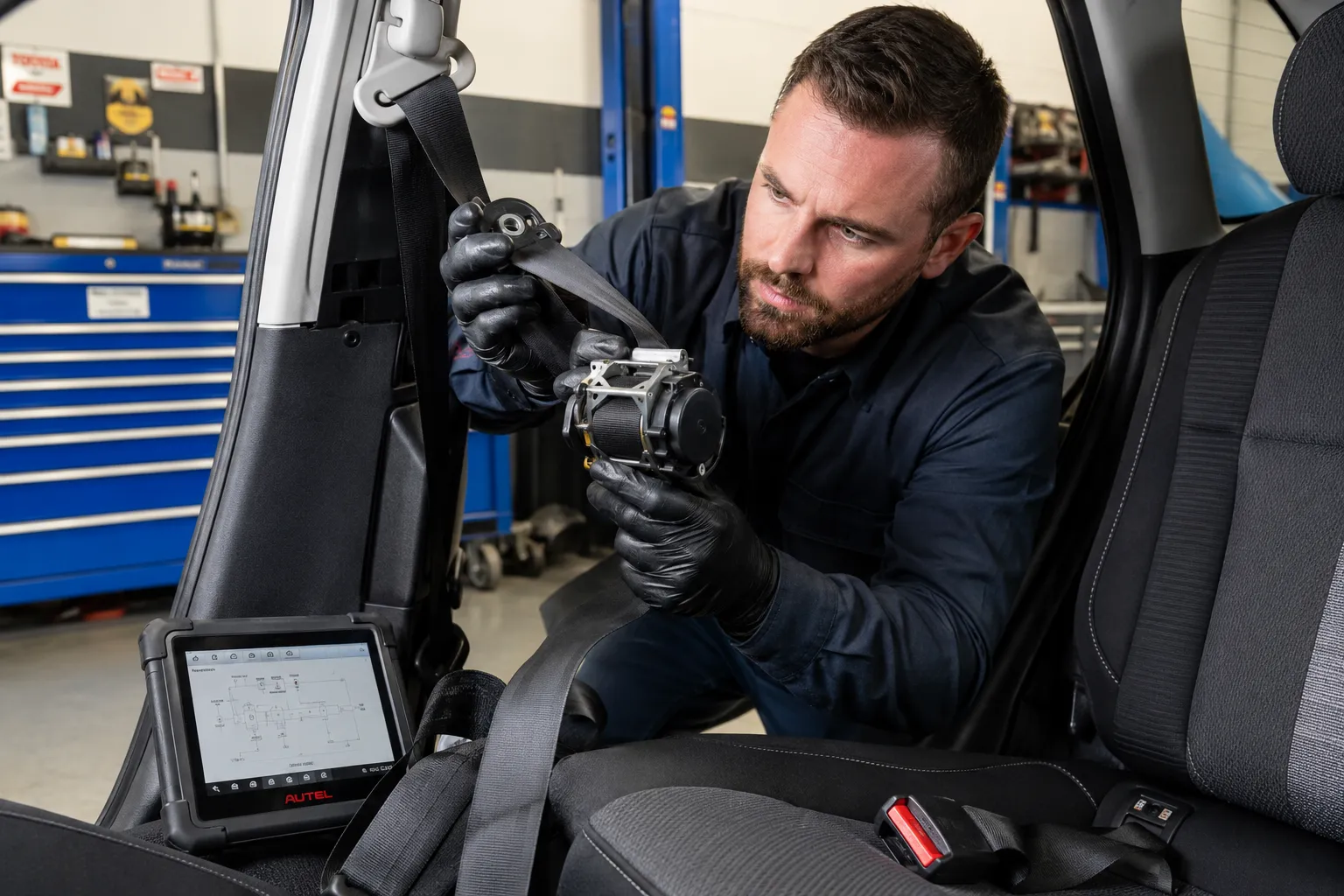
The 5 steps:
Step 1: Shoulder belt position
- Shoulder belt crosses between neck and shoulder
- Belt lies across mid-chest
- Not too close to neck (causes discomfort)
- Not off shoulder (can slip off in crash)
Step 2: Back against seat
- Child's back flat against vehicle seat back
- No gap between lower back and seat
- Prevents belt from riding up onto abdomen
- Maintains proper belt positioning
Step 3: Lap belt position
- Lap belt stays on upper thighs
- Belt crosses hip bones, not abdomen
- Prevents internal organ injury in crash
- Critical for proper restraint function
Step 4: Knees bend at seat edge
- Knees bend comfortably at front of seat
- Child doesn't need to slouch forward
- Indicates adequate leg length
- Prevents poor positioning
Step 5: Feet flat on floor
- Feet rest flat on vehicle floor
- Legs long enough for proper seating
- Maintains position throughout ride
- Prevents shifting and slouching
Additional consideration:
- Child can maintain this position for entire ride
- No excessive movement or repositioning needed
- Belt stays in proper position automatically
Typical readiness:
- Most children ready at 10-12 years old
- Minimum height: typically 4'9" (145 cm)
- Varies by vehicle and seating position
- Test in all seating positions child uses
Visual Inspection Procedures
Routine Inspection Checklist
Webbing inspection:
- Check for cuts, tears, or fraying
- Look for burn marks or discoloration
- Feel for stiffness or brittleness
- Examine areas passing through guides
- Verify no twists in belt
Buckle inspection:
- Check housing for cracks
- Verify latch plate inserts smoothly
- Test release button operation
- Ensure secure locking when engaged
- Check for debris or obstruction
Retractor inspection:
- Test full extension and retraction
- Verify smooth operation
- Check for hesitation or jamming
- Test locking with sudden pull
- Listen for unusual sounds
Anchor points:
- Check for secure attachment
- Look for loose or missing hardware
- Verify no corrosion or damage
- Ensure proper positioning
Post-Accident Inspection
Critical checks after any collision:
Visual examination:
- Inspect webbing for stretch marks
- Check for any cuts or damage
- Look for pretensioner deployment indicators
- Examine all components for stress signs
Functional testing:
- Test retraction and extension
- Verify locking mechanism
- Check buckle operation
- Confirm proper belt positioning
System diagnostics:
- Check for airbag warning lights
- Scan for crash data in airbag module
- Test pretensioner circuit resistance
- Verify SRS system status
Replacement criteria:
- Any visible damage to webbing
- Pretensioner has deployed
- Retractor not functioning properly
- Airbag warning light illuminated
- Any doubt about component integrity
Quality Control and Certification
Manufacturing Quality Control
Incoming inspection:
- Verify material specifications
- Test webbing samples
- Inspect metal components
- Document lot traceability
In-process inspection:
- Monitor critical dimensions
- Verify assembly procedures
- Test samples from production
- Document process parameters
Final testing:
- 100% functional testing
- Statistical strength testing
- Visual inspection
- Documentation and marking
Certification Process
Type approval:
- Submit samples to accredited laboratory
- Complete all required tests
- Provide technical documentation
- Receive approval certificate
Production control:
- Maintain quality management system
- Regular production testing
- Process capability monitoring
- Traceability requirements
Market surveillance:
- Random testing of production
- Investigation of field failures
- Corrective action requirements
- Reporting obligations
Common Failure Modes and Solutions
Retraction Problems
Symptoms:
- Belt retracts slowly
- Belt doesn't fully retract
- Belt jams or sticks
Causes:
- Dirt or debris in retractor
- Worn retractor components
- Damaged webbing guides
- Misaligned belt path
Solutions:
- Clean retractor mechanism
- Replace worn components
- Realign belt guides
- Replace retractor assembly if needed
Locking Mechanism Failure
Symptoms:
- Belt doesn't lock with sudden pull
- Lock engages inconsistently
- Lock releases under load
Causes:
- Worn locking pawl
- Damaged sensor mechanism
- Contamination in mechanism
- Spring fatigue
Solutions:
- Clean or replace mechanism
- Replace retractor unit
- Professional service required
Buckle Problems
Symptoms:
- Difficult to latch
- Won't release
- Releases under load
Causes:
- Debris in mechanism
- Worn or damaged components
- Corrosion
- Manufacturing defect
Solutions:
- Clean buckle mechanism
- Replace buckle assembly
- Never use lubricants on buckle
Webbing Damage
Symptoms:
- Visible cuts or tears
- Fraying edges
- Stiff or brittle areas
- Discoloration
Causes:
- Abrasion from sharp edges
- UV exposure
- Chemical exposure
- Normal wear over time
Solutions:
- Replace entire belt assembly
- Eliminate sharp edges in belt path
- Protect from UV when possible
Frequently Asked Questions
How often should seat belts be tested?
Seat belts should be visually inspected regularly as part of routine vehicle maintenance, at least monthly. Functional testing (extension, retraction, locking) should be performed at every oil change or service interval. After any collision, even minor, seat belts should be thoroughly inspected and tested by a qualified technician.
What is the minimum breaking strength for seat belt webbing?
Per FMVSS 209, seat belt webbing must have a breaking strength of at least 26.7 kN (6,000 lbs). This ensures the belt can withstand the high forces generated during a crash without breaking. Quality webbing typically exceeds this minimum by a significant margin.
How do pretensioners work and when are they tested?
Pretensioners are pyrotechnic devices that tighten the seat belt when a crash is detected, removing slack before impact. They are tested during development and production for proper deployment force and timing. After any crash, pretensioners must be inspected and typically replaced if deployed, as they are single-use devices.
What is the difference between ELR and ALR retractors?
Emergency Locking Retractors (ELR) lock only when vehicle deceleration or webbing acceleration exceeds a threshold, allowing normal movement during driving. Automatic Locking Retractors (ALR) lock when webbing is fully extended and retracted slightly, used for securing child seats. Many modern belts have switchable retractors that function as both types.
How do I know if my seat belt needs replacement after an accident?
Any seat belt that was worn during a collision should be thoroughly inspected. Replace the belt if there is visible damage, if the pretensioner deployed, if the retractor doesn't function properly, or if the airbag warning light remains on. When in doubt, replace the belt to ensure safety.
What testing do child restraint systems require?
Child restraint systems (car seats) undergo extensive testing including dynamic crash testing with child dummies, inversion testing for rollover protection, and flammability testing. They must meet FMVSS 213 in the US or ECE R44/R129 in Europe, depending on the market.
How are seat belts tested for different sized occupants?
Seat belts are tested with various crash test dummies representing different body sizes, from 5th percentile female to 95th percentile male. This ensures the belt system provides adequate protection for the range of occupant sizes expected in real-world use.
What role do load limiters play in seat belt safety?
Load limiters allow controlled webbing payout during a crash to reduce peak forces on the occupant's chest. They work with pretensioners and airbags to optimize restraint performance, preventing belt-induced injuries while maintaining effective restraint.
Conclusion
Seat belt testing provides the essential foundation for automotive occupant protection, ensuring that restraint systems perform reliably when needed most. Comprehensive testing programs that include component strength evaluation, retractor performance verification, crash simulation, and durability assessment enable manufacturers to deliver products that meet stringent safety standards and protect lives.
Understanding testing methods, maintaining regular inspections, and addressing failures promptly ensures that seat belts continue to provide effective protection throughout their service life. The investment in proper testing and quality control pays dividends through enhanced safety, regulatory compliance, and most importantly, lives saved.
Key takeaways:
- Seat belts reduce crash injuries by at least 50% and save over 13,000 lives annually
- Component testing verifies webbing strength, buckle function, and retractor performance
- Crash simulation with dummies validates system performance in realistic conditions
- Durability testing ensures long-term reliability under environmental exposure
- Regulatory standards (FMVSS 209, ECE R16) define minimum performance requirements
- Regular inspection and prompt repair maintain ongoing safety
- Post-accident inspection is critical for identifying hidden damage
- The 5-step fit test determines proper seat belt positioning for children
The commitment to rigorous seat belt testing demonstrates manufacturer dedication to occupant safety and regulatory compliance in this essential automotive safety system.
Note: This article provides general guidance on seat belt testing methods. Always consult relevant standards (FMVSS, ECE regulations), manufacturer specifications, and regulatory requirements for detailed testing procedures and acceptance criteria. Reference authoritative sources including NHTSA, Euro NCAP, and SAE for current standards and best practices.