Total beta radioactivity testing is the laboratory measurement of the gross (total) beta activity of a sample — the summed activity of all beta-emitting radionuclides present, without identifying which specific nuclides — as a rapid screening test for radiological compliance. In China, drinking water is governed by GB 5749-2022 (Standards for Drinking Water Quality, effective 2023-04-01) with a total β limit of 1 Bq/L after deducting the potassium-40 contribution, and food by the GB 14883 series (Determination of Radionuclides in Foods, GB 14883.1-2016 general). The defining trait of the test is that it is a screening measurement: if the gross result is below the screening level, the sample is compliant and no further analysis is needed; if it exceeds, the laboratory proceeds to nuclide-specific analysis to identify the responsible radionuclides.
The Screening Principle — Why "Total" Beta Comes First
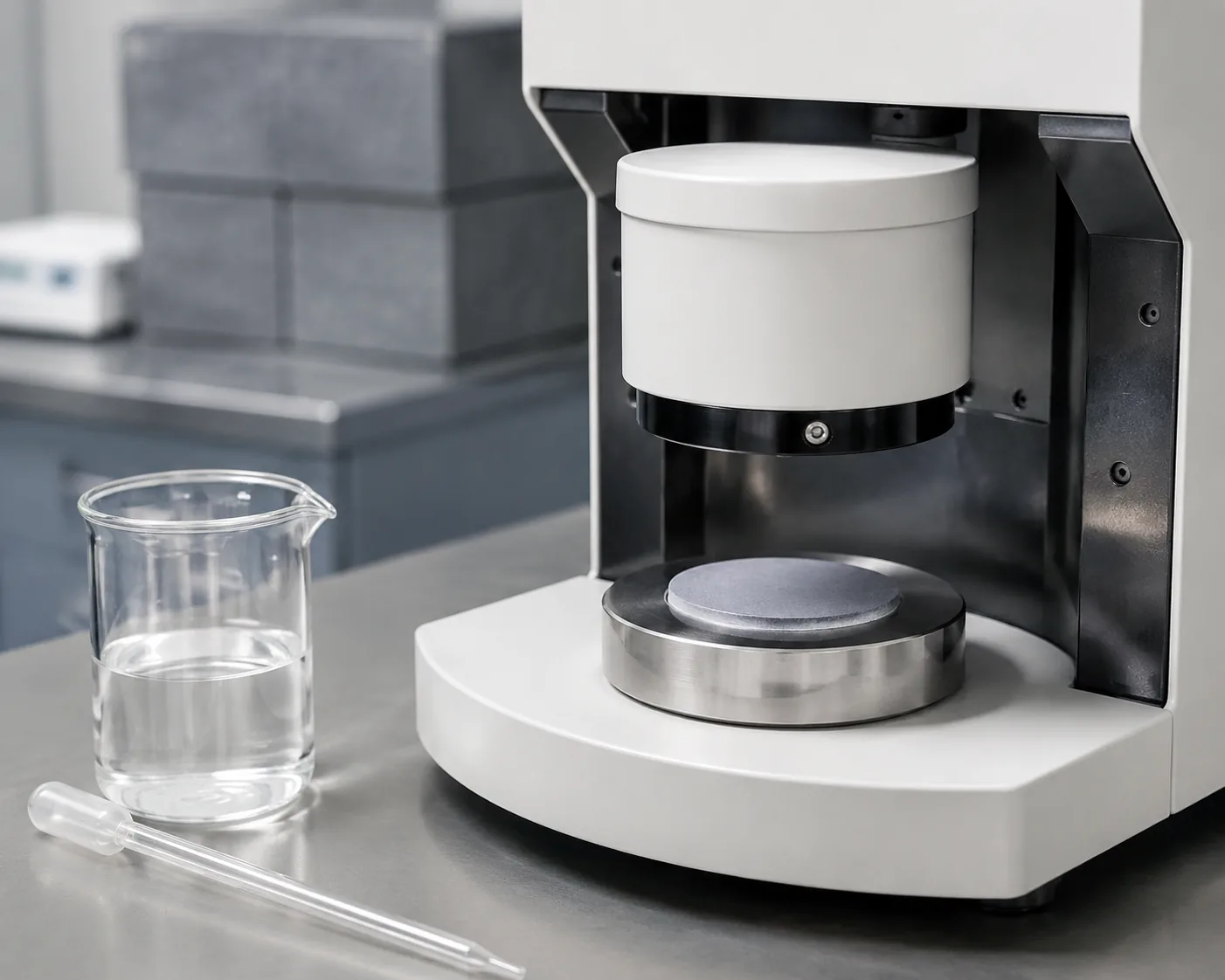
The single most important concept, and the one the search results explain only under Western regulations, is that total beta is a deliberately non-specific screening test. Measuring the total β activity is fast and cheap; measuring each individual β-emitting nuclide (strontium-90, tritium, carbon-14, etc.) is slow and expensive. The screening logic is:
- Measure the total β activity first.
- If total β ≤ the screening level → the sample is compliant; no further analysis needed.
- If total β > the screening level → proceed to nuclide-specific analysis (gamma spectrometry for γ-emitters, radiochemical separation for Sr-90, liquid scintillation for tritium) to identify and quantify the responsible radionuclides, then assess the dose.
This two-tier logic keeps routine compliance monitoring affordable — the great majority of samples pass at the screening tier and never need the expensive nuclide-specific workup. It is the same logic the EPA Ireland and Bureau Veritas/Health Canada competitor content describes, but under Chinese regulation it is governed by GB 5749 (water) and GB 14883 (food), not by Euratom or Health Canada guidelines.
The ⁴⁰K Deduction — the Defining Calculation Rule
A calculation rule that is essential to the total β test and absent from the search results is the potassium-40 (⁴⁰K) deduction. Natural potassium contains a fixed fraction of the radioactive isotope ⁴⁰K, a beta emitter. Because potassium is ubiquitous in water and food, the ⁴⁰K beta activity is a natural background that is present in essentially every sample and that does not indicate contamination.
The compliance limit therefore applies not to the raw total β but to the residual total β after deducting the ⁴⁰K contribution:
Residual total β = measured total β − ⁴⁰K contribution
The ⁴⁰K contribution is calculated from the sample's stable-potassium content (⁴⁰K is a fixed 0.0117% of natural potassium), which is measured separately. Only the residual — the beta activity attributable to non-natural, potentially anthropogenic nuclides — is compared against the 1 Bq/L limit. Without this deduction, any potassium-rich water (most natural waters) would falsely exceed the screening level.
Drinking Water: GB 5749-2022
GB 5749-2022 (生活饮用水卫生标准, Standards for Drinking Water Quality), implemented 2023-04-01 to replace GB 5749-2006, sets the radiological indicators for drinking water:
| Indicator | Limit (guideline value) |
|---|---|
| Total α radioactivity | 0.5 Bq/L |
| Total β radioactivity (after ⁴⁰K deduction) | 1 Bq/L |
The total β value is a guideline limit: if the residual total β exceeds 1 Bq/L, the water supplier must perform nuclide-specific analysis and dose assessment to determine whether the water remains acceptable for human consumption. The test method is in GB/T 5750 (Standard Examination Methods for Drinking Water), which includes the total α/β radioactivity determination (the evaporated-residue thick-source or thin-source method, counted on a low-background α/β counter).
The GB 5749-2022 revision (replacing the 2006 edition) carried the radiological indicators forward with procedural alignment; a current drinking-water radioactivity report cites GB 5749-2022 and GB/T 5750.
Food: GB 14883 Series
For food and agricultural products, the radiological-contamination framework is the GB 14883 series (食品安全国家标准 食品中放射性物质的测定, Determination of Radionuclides in Foods). The general standard is GB 14883.1-2016 (检验总则, General Rules for Examination), implemented 2017-03-01 to replace GB 14883.1-1994. It governs sampling, sample preparation (including ashing for low-level beta measurement), and reporting across the GB 14883.1–14883.10 method parts:
| Standard | Radionuclide / parameter | Method |
|---|---|---|
| GB 14883.1-2016 | General rules | Sampling, pretreatment, reporting |
| GB 14883.3 | Strontium-89 / Strontium-90 | Low-background β measurement of ⁹⁰Y |
| GB 14883.9 | Iodine-131 | Low-background β measurement / γ spectrometry |
| GB 14883.10 | Caesium-137 | γ spectrometry |
For food, the total β measurement is typically a screening measurement by low-background β counter on an ashed sample, with nuclide-specific analysis (Sr-90 by GB 14883.3, Cs-137 by GB 14883.10, I-131 by GB 14883.9) performed when elevated total β or specific regulatory concern warrants it. Food-export certificates of radioactivity (the kind EPA Ireland issues for importing-country requirements) are based on these GB 14883 methods in the Chinese context.
The Three Radiological Screening Tests
Total β is one of three radiological screening tests that are commonly applied together, and they screen for different emitter types:
| Screening test | Emitters it screens for | Typical nuclides of concern |
|---|---|---|
| Total α | Alpha emitters | Ra-226, Ra-228, Po-210, natural U/Th series |
| Total β | Beta emitters | Sr-90, tritium (³H), C-14, ⁴⁰K (natural) |
| Gamma scan (γ spectrometry) | Gamma emitters (also identifies specific nuclides) | Cs-137, Cs-134, I-131, K-40 |
A complete radiological screen runs all three: total α and total β for the α/β emitters that gamma spectrometry does not capture (Sr-90 and tritium are pure or near-pure β emitters invisible to a gamma detector), and gamma spectrometry for the γ-emitters and for nuclide identification. Total β and total α are complementary non-specific screens; gamma spectrometry is the specific identifier.
Why the Search Results Are Off the Compliance Intent
The search results for "total beta radioactivity testing" are dominated by content that describes the test but does not frame the GB compliance framework:
- EPA Ireland radiochemical service — gross alpha/beta + tritium in drinking water, Euratom screening levels (alpha 100 mBq/L, beta 1000 mBq/L), food-export certificates of radioactivity. Irish regulator, Euratom framework, zero GB.
- Bureau Veritas / Health Canada — Canadian drinking-water radionuclide screen, Health Canada MACs (alpha 0.5 Bq/L, beta 1 Bq/L), Ontario Safe Drinking Water Act requirements. Canadian regulator, zero GB.
- ALS Global / radiochemistry labs — multi-matrix gross alpha/beta, gamma scan, Sr-90. Western lab service, zero GB.
None tells a Chinese water utility, a food exporter, or a radiochemistry lab which GB standard applies, what the 1 Bq/L after-⁴⁰K-deduction rule means, or how the GB 14883 / GB 5749 frameworks structure the screening. That compliance question is what this article addresses.
Our Testing Capabilities
Beijing ZKGX Research conducts total beta radioactivity testing across the GB framework:
- Drinking water (GB 5749-2022 + GB/T 5750): total α and total β radioactivity by low-background α/β counter, with the ⁴⁰K deduction applied to the total β result against the 1 Bq/L guideline, and nuclide-specific follow-up (gamma spectrometry, Sr-90, tritium) when the screen is exceeded.
- Food and agricultural products (GB 14883.1-2016 + series): total β screening on ashed samples by low-background β counter, with nuclide-specific analysis per GB 14883.3 (Sr-90), GB 14883.9 (I-131), and GB 14883.10 (Cs-137) where elevated.
- Other matrices: environmental water (HJ thick-source method), soil, and air particulate, with gross α/β and gamma-scan screening.
- Sample types: drinking water, groundwater, surface water, food and agricultural products for export, soil, and environmental samples.
- Deliverable: a test report stating the matrix, the standard (GB 5749-2022 / GB 14883.1-2016), the total β (and total α) value with the ⁴⁰K deduction shown, the screening-level pass/fail, and — where the screen is exceeded — the nuclide-specific identification and dose assessment.
If you have a water, food, or environmental sample requiring total beta radioactivity verification, contact our testing team to scope the matrix, the applicable standard, and whether nuclide-specific follow-up is likely.
Frequently Asked Questions
What standard governns total beta radioactivity in drinking water?
GB 5749-2022 (Standards for Drinking Water Quality, effective 2023-04-01) sets the total β guideline at 1 Bq/L after deducting the ⁴⁰K contribution, and total α at 0.5 Bq/L. The test method is in GB/T 5750. If the residual total β exceeds 1 Bq/L, nuclide-specific analysis and dose assessment are required.
Why is the ⁴⁰K contribution deducted from total beta?
Because natural potassium contains the beta emitter ⁴⁰K (0.0117% of natural potassium), and potassium is present in essentially all water and food. The ⁴⁰K beta activity is a natural background that does not indicate contamination, so the compliance limit applies to the residual total β after subtracting the ⁴⁰K contribution (calculated from the sample's stable-potassium content). Without this deduction, any potassium-rich water would falsely exceed the screen.
What is the difference between total beta and nuclide-specific analysis?
Total beta (gross β) is a non-specific screening test that sums the activity of all beta emitters without identifying them — fast and cheap. Nuclide-specific analysis (e.g., Sr-90 by GB 14883.3, tritium by liquid scintillation) identifies and quantifies the individual radionuclides — slow and expensive. The screening logic: total β first; if it exceeds 1 Bq/L (after ⁴⁰K deduction), proceed to nuclide-specific analysis.
What replaced GB 5749-2006?
GB 5749-2006 (Standards for Drinking Water Quality) was replaced by GB 5749-2022, effective 2023-04-01. The 2022 edition carried the radiological indicators (total α 0.5 Bq/L, total β 1 Bq/L after ⁴⁰K deduction) forward with procedural alignment. A current drinking-water radioactivity report cites GB 5749-2022.
Is total beta testing the same as gamma spectrometry?
No. Total beta screens for beta emitters (Sr-90, tritium, C-14, ⁴⁰K) by counting their beta particles on a low-background β counter — it cannot identify which nuclide. Gamma spectrometry identifies and quantifies gamma emitters (Cs-137, I-131, K-40) by their characteristic gamma energies. The two are complementary: total β catches the pure β emitters (Sr-90, tritium) that a gamma detector cannot see, and gamma spectrometry provides nuclide-specific identification of γ emitters.