Introduction
Liquid Chromatography-Mass Spectrometry (LC-MS) is a powerful analytical technique that combines the high separation capability of liquid chromatography with the accurate mass analysis of mass spectrometry. This hyphenated technology enables the identification, quantification, and structural analysis of a vast array of compounds within complex mixtures, making it indispensable in fields such as pharmaceutical development, environmental monitoring, food safety, and clinical diagnostics. At Beijing ZKGX Research Institute of Science and Technology, our LC-MS systems deliver sensitive, specific, and robust data, supporting both routine testing and advanced research programs.
How LC-MS Works
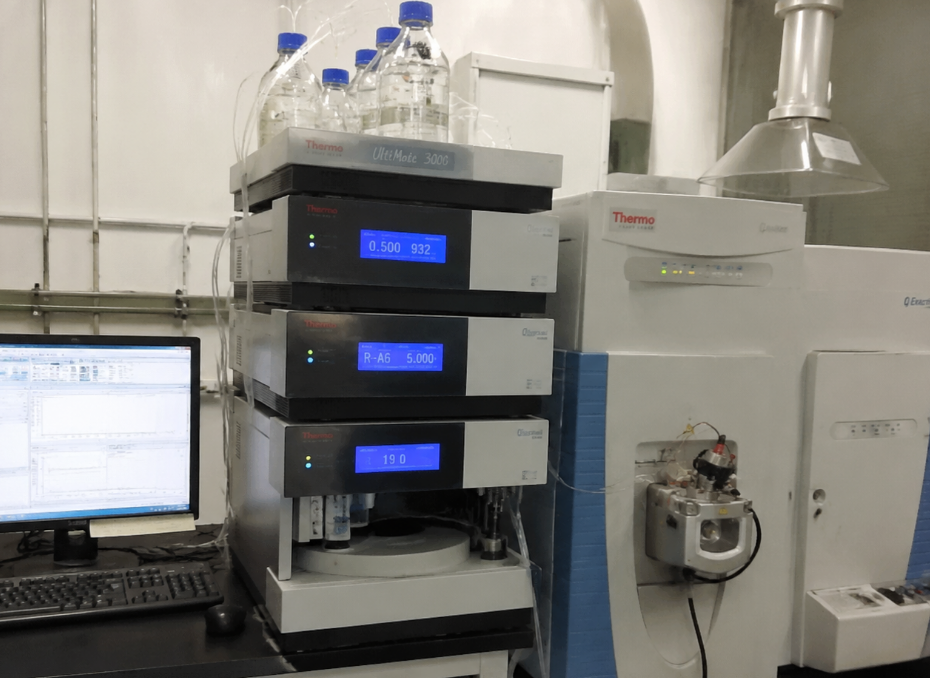
The LC-MS workflow can be divided into two main stages:
-
Liquid Chromatography (LC) Separation
A liquid sample is injected into a chromatographic column packed with a stationary phase. As a mobile phase (a solvent mixture) flows through the column, different components in the sample interact differently with the stationary phase, causing them to elute at distinct retention times. This process effectively separates complex mixtures, reducing interference and simplifying the subsequent mass analysis. -
Mass Spectrometry (MS) Detection
Upon exiting the LC column, the separated analytes are transferred into the mass spectrometer through an interface (commonly an electrospray ionization, ESI, or atmospheric pressure chemical ionization, APCI source). The molecules are ionized, and the resulting ions are separated based on their mass-to-charge ratio (m/z) in the mass analyzer (e.g., quadrupole, time-of-flight, or orbitrap). A detector then records the abundance of each ion, generating a mass spectrum. The combination of retention time from LC and m/z data from MS provides highly specific compound identification.
Key Advantages of LC-MS
-
High Sensitivity and Selectivity: Enables detection of trace-level compounds (down to femtogram levels) in complex matrices such as plasma, wastewater, or plant extracts.
-
Broad Analyte Coverage: Can analyze polar, non-volatile, and thermally labile compounds that are unsuitable for gas chromatography.
-
Structural Information: Tandem mass spectrometry (LC-MS/MS) provides fragmentation patterns for detailed structural elucidation and confirmation.
-
Quantitative Accuracy: With appropriate standards and calibration, LC-MS delivers precise quantitation required for pharmaceutical QC and biomarker validation.
Core Applications
-
Pharmaceutical and Biomedical Analysis: Drug metabolism and pharmacokinetics (DMPK) studies, therapeutic drug monitoring, biomarker discovery, and impurity profiling.
-
Environmental Testing: Detection of pesticides, herbicides, endocrine disruptors, and perfluorinated compounds in water and soil.
-
Food Safety: Contaminant analysis including mycotoxins, veterinary drug residues, and food additives.
-
Clinical Toxicology: Rapid screening of drugs of abuse, toxins, and metabolites in biological fluids.
-
Proteomics and Metabolomics: Large-scale identification and quantification of proteins, peptides, and metabolic products.
Why Choose ZKGX for Your LC-MS Needs
At the Beijing ZKGX Research Institute, we operate state-of-the-art LC-MS systems maintained by highly experienced analysts. Our services are compliant with ISO 17025 standards, ensuring that every result meets international quality benchmarks. Whether you require method development, routine batch testing, or in-depth structural characterization, our team delivers personalized solutions with rapid turnaround and thorough post-analysis support.