sotope Ratio Mass Spectrometry (IRMS) differs fundamentally from conventional mass spectrometry in that it does not merely identify compounds by their mass-to-charge ratios; instead, it precisely determines the ratios of stable isotopes (e.g., ¹³C/¹²C, ¹⁵N/¹⁴N, ¹⁸O/¹⁶O, ²H/¹H) within a sample. The instrument typically consists of an inlet system, an ion source, a magnetic sector analyzer, and a multi-collector array (Faraday cups) that simultaneously measures multiple ion beams, enabling exceptional precision down to 0.01‰ (per mil) or better.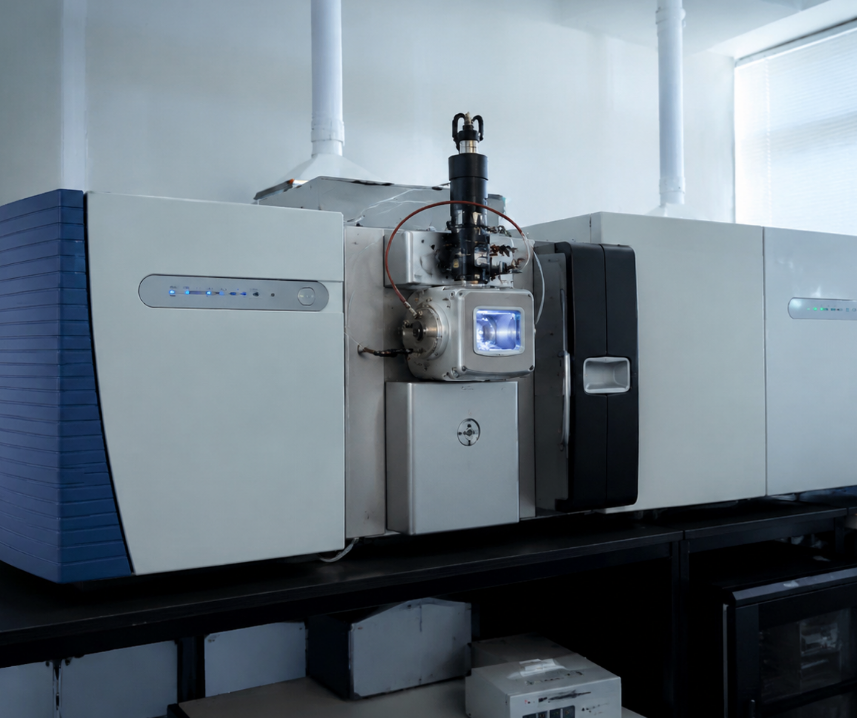
In a typical workflow, samples are first converted into simple gases (CO₂, N₂, H₂, SO₂, etc.) through combustion, pyrolysis, or chemical reaction. These gases are then ionized and accelerated through a magnetic field, which separates ions based on their mass. By comparing the ion currents of the heavier and lighter isotopes, the instrument calculates the isotopic ratio relative to an international reference standard.
Applications of IRMS span a wide range of scientific and industrial domains. In food and beverage authentication, it detects adulteration by identifying the isotopic fingerprint of ingredients, such as the addition of cane sugar to honey or synthetic vanillin to natural extracts. In environmental science, IRMS traces the source and fate of pollutants, reconstructs past climate conditions via ice cores and sediments, and studies nutrient cycling in ecosystems. Geosciences rely on IRMS for petroleum exploration, mineral deposit studies, and paleoenvironmental reconstruction. Additionally, in biomedical and forensic research, stable isotope labeling is used to monitor metabolic pathways, and IRMS analyses have been applied to identify the geographic origin of human remains or illicit drugs.
At Beijing ZKGX Research Institute of Science and Technology, our IRMS facilities are integrated with elemental analyzers, gas chromatography, and liquid chromatography systems, accommodating a diverse range of sample types. Operated under ISO 17025 guidelines, our experienced team delivers high-quality isotopic data for research, regulatory compliance, and industrial quality control, ensuring reliable and defensible results for every project.