Table of Contents
- What is butyl benzyl phthalate (BBP) testing?
- The standard stack: REACH SVHC, GB 31604.30, EPA TSCA, EN 14372, CPSIA
- BBP vs the regulated phthalates: the SVHC group and the conditions of use
- The EPA TSCA 2025 risk evaluation and the unreasonable-risk determination
- Analytical method: GC-MS and the m/z 149 / 206 signature
- The six regulated matrices: consumer products, food, water, air, cosmetics, toys
- REACH Annex XVII restriction and the Authorisation List
- FAQ
- Our BBP testing capabilities
What is butyl benzyl phthalate (BBP) testing?
Butyl benzyl phthalate (BBP, CAS 85-68-7, C₁₆H₂₂O₄, MW 312.36, also called benzyl butyl phthalate, BBP) testing is the measurement and validation of the concentration of BBP — the mixed alkyl/aryl ortho-phthalate ester used as a plasticiser in PVC flooring, adhesives, sealants, food packaging, and artificial leather — in consumer products, food, food-contact materials, toys, cosmetics, water, and environmental matrices. BBP is one of the five high-priority phthalates regulated as SVHC (Substance of Very High Concern) under the EU REACH Regulation, listed on the Authorisation List (Annex XIV), restricted in toys and childcare articles (REACH Annex XVII, 0.1 %), and the subject of the EPA TSCA 2025 final risk evaluation that determined BBP poses unreasonable risk to human health under specific conditions of use. The output of a BBP test is a quantitative concentration reported against the applicable regulatory limit — typically the 0.1 % (1000 mg/kg) limit in toys, childcare articles, and consumer products per REACH Annex XVII and the US CPSIA; or the specific migration limit in food-contact materials per GB 31604.30-2016; or the environmental water-quality limit per the EPA or the GB 5749 drinking water standard.
BBP is the benzyl-butyl mixed ester of phthalic acid — the phthalate backbone with one benzyl group (–CH₂C₆H₅) and one butyl group (–C₄H₉) at the two ortho-carboxyl positions. The mixed alkyl/aryl structure gives BBP a unique combination of properties — the aromatic benzyl group provides compatibility with PVC and the vinyl polymers; the butyl group provides the flexibility and the low-temperature performance. BBP has been used primarily in PVC flooring (where its fast-fusing property improves the calendering), adhesives and sealants (where it improves the tack), food packaging (as a plasticiser in the PVC films and the closure seals), and artificial leather (as a co-plasticiser with DEHP). Like the other ortho-phthalates, BBP is classified as a reproductive toxicant (Repr. 1B) under EU CLP and as an endocrine disruptor — the butyl and benzyl alkyl chains fit the androgen receptor and disrupt testosterone synthesis in the developing male foetus.
The standards governing BBP testing span the EU REACH Regulation (SVHC candidate list, Annex XIV Authorisation List, Annex XVII restriction at 0.1 % in toys/childcare), the EPA TSCA (the 2025 final risk evaluation for BBP, DBP, DCHP, DEHP, DIBP), the US CPSIA section 108 (0.1 % limit in children's toys and childcare articles), the GB 31604.30-2016 (the Chinese food-contact-material method for phthalates, including BBP), the GB 6675.4 / GB/T 22048 (the Chinese toy phthalate methods), the EN 14372 (the European childcare-article standard), and the IEC 62321-8 (the international electrical-product phthalate method). See our DMP testing article for the broader phthalate family overview.
The standard stack: REACH SVHC, GB 31604.30, EPA TSCA, EN 14372, CPSIA
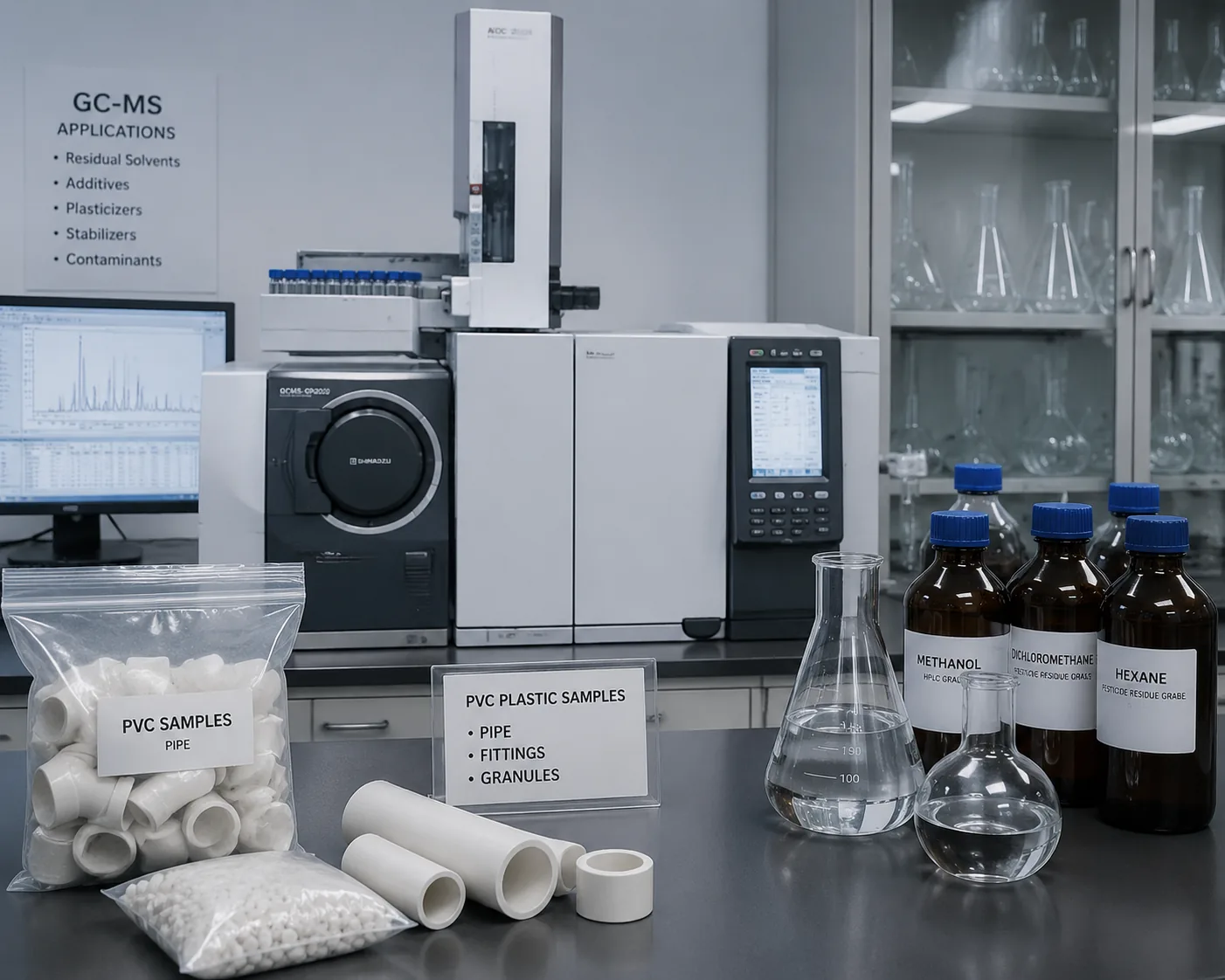
A complete BBP testing project draws on a stack of EU, US, Chinese, and international standards.
| Family | Standard | Scope |
|---|---|---|
| EU REACH — SVHC candidate list | BBP listed as SVHC since 2008 (ED/01/07 — endocrine disrupting; CMR — reproductive toxicant Repr. 1B) | The SVHC listing triggers the Article 33 communication obligation (the supplier of an article containing > 0.1 % BBP must inform the recipient / the consumer on request) |
| EU REACH — Annex XIV Authorisation List | BBP listed on Annex XIV (entry 4); the sunset date was 21 February 2015; after this date, BBP may only be placed on the market or used in the EU with an Authorisation | The Authorisation requirement means that BBP is being phased out of all EU uses except those for which a specific Authorisation has been granted |
| EU REACH — Annex XVII restriction | Entry 51 / 52: BBP ≤ 0.1 % in toys and childcare articles (per Article 67 of REACH) | The toy/childcare restriction applies regardless of the Authorisation status — BBP may not be used in toys/childcare even with an Authorisation |
| EU Cosmetics Regulation 1223/2009 Annex II | BBP prohibited as an intentionally-added substance in cosmetics | BBP may not be added to cosmetics; trace presence from packaging migration is addressed separately |
| EPA TSCA — 2025 final risk evaluation | Final Risk Evaluation for Butyl Benzyl Phthalate (BBP) (CASRN 85-68-7); EPA-HQ-OPPT-2018-0501 | The 2025 TSCA risk evaluation determined that BBP poses unreasonable risk to human health under specific conditions of use (consumer products, occupational); EPA must initiate risk management actions |
| CPSIA section 108 (US) | BBP ≤ 0.1 % (1000 mg/kg) in children's toys and childcare articles; the limit applies to any accessible plasticised component | The US CPSC phthalate limit, aligned with the EU REACH Annex XVII |
| GB 31604.30-2016 (China) | Food Contact Materials and Articles — Determination of Phthalates (19 PAEs including BBP) | The Chinese national standard for the BBP residual content and the specific migration in food-contact materials |
| GB 9685-2016 (China) | Positive list of food-contact additives | BBP is not on the GB 9685 positive list — any detectable migration from a food-contact material is non-compliant |
| GB 6675.4-2014 / GB/T 22048-2022 (China) | Toy safety / Determination of phthalates in toys and children's products | The Chinese toy phthalate limit (DEHP + DBP + BBP each ≤ 0.1 % in all toys) |
| EN 14372:2004 | Child use and care articles — Cutlery and feeding containers | The European childcare standard (BBP ≤ 0.1 %) |
| IEC 62321-8:2022 | Determination of phthalates in electrotechnical products | The international method for BBP in electrical and electronic products (the RoHS-adjacent phthalate testing) |
| CPSC-CH-C1001-09.4 | Standard Operating Procedure for Determination of Phthalates (CPSC) | The US CPSC method for the CPSIA section 108 compliance |
| EPA Method 525.2 / 525.3 / 606 / 625 / 8061 / 8270 | US environmental water/soil/sediment methods for phthalates (including BBP) | The EPA environmental methods |
The single most consequential fact for a Chinese manufacturer is that GB 31604.30-2016 covers BBP among the 19 phthalates in food-contact materials, and GB 9685-2016 does not list BBP on the positive list — any detectable migration is non-compliant. For toys, GB 6675.4-2014 limits BBP to 0.1 % (with DEHP and DBP) in all toys.
BBP vs the regulated phthalates: the SVHC group and the conditions of use
BBP is part of the regulated-6 phthalates — DBP, BBP, DEHP, DIBP, DINP, DIDP, DnOP — that are restricted in toys/childcare in the EU and the US. The table (from our DMP testing article, extended for BBP) shows the regulatory status:
| Phthalate | CAS | REACH SVHC | REACH Annex XVII (toys/childcare 0.1 %) | Annex XIV Authorisation | EU Cosmetics | CPSIA section 108 | GB 6675.4 |
|---|---|---|---|---|---|---|---|
| BBP | 85-68-7 | Yes (Repr. 1B; endocrine disruptor) | Yes | Yes (entry 4) | Prohibited | Yes (0.1 %) | Yes (0.1 %) |
| DBP | 84-74-2 | Yes | Yes | Yes | Prohibited | Yes | Yes |
| DEHP | 117-81-7 | Yes | Yes | Yes | Prohibited | Yes | Yes |
| DIBP | 84-69-5 | Yes | Yes | Yes | — | Yes | Yes |
| DINP | 28553-12-0 / 68515-48-0 | Yes | Yes (mouthable) | No | Restricted | Yes (mouthable) | Yes (mouthable) |
| DnOP | 117-84-0 | No | Yes (mouthable) | No | Prohibited | Yes (mouthable) | Yes (mouthable) |
BBP shares the Repr. 1B classification with DBP, DEHP, and DIBP, but unlike these, BBP has a unique Authorisation sunset date of 21 February 2015 — meaning BBP was phased out of EU use earlier than the others, and current EU BBP presence is typically a trace contaminant from packaging migration rather than an intentional additive.
The EPA TSCA 2025 risk evaluation and the unreasonable-risk determination
The 2025 EPA TSCA final risk evaluation for BBP (alongside DBP, DCHP, DEHP, DIBP) is the most recent US regulatory action on BBP. The evaluation determined:
- BBP poses unreasonable risk to human health under specific conditions of use
- The primary health concern is the developmental and reproductive toxicity (the anti-androgenic effect on the developing male reproductive system)
- The conditions of use that drive the unreasonable risk include: consumer products containing residual BBP (the flooring, the adhesives, the sealants), occupational exposure in the manufacturing of PVC products, and the environmental releases from the manufacturing facilities
- EPA must initiate risk management actions under TSCA section 6 to address the unreasonable risk (the risk management may include the prohibition, the restriction, or the labelling requirements)
The 2025 evaluation is the final risk evaluation; the risk management rulemaking will follow. This puts BBP on the US regulatory trajectory toward further restriction — potentially aligning the US with the EU REACH Authorisation approach.
Analytical method: GC-MS and the m/z 149 / 206 signature
The instrumental method for BBP is overwhelmingly GC-MS (gas chromatography with mass spectrometric detection), using the same instrumentation and methodology as the other phthalates.
| Parameter | Value |
|---|---|
| CAS | 85-68-7 |
| Molecular formula | C₁₆H₂₂O₄ |
| MW | 312.36 |
| Boiling point | 370 °C |
| CAS-specific MS ions | m/z 149 (protonated phthalic anhydride, universal phthalate ion), m/z 206 (BBP-specific — the loss of the butyl group from the benzyl-butyl ester), m/z 91 (the benzyl tropylium cation, C₇H₇⁺, characteristic of the benzyl group) |
| SIM ions | m/z 149, 206, 91 (the three diagnostic ions for the SIM method) |
| Retention time | Longer than DMP and DEP; shorter than DEHP (on a 5 %-phenyl 95 %-dimethylpolysiloxane DB-5MS column) |
| Solubility in water | 2.7 mg/L at 25 °C |
| Log K_ow | 4.91 (bioaccumulative) |
The m/z 206 ion is the BBP-specific signature fragment — the loss of the butyl ester group from the benzyl-butyl phthalate gives a fragment at m/z 206 that is unique to BBP (no other phthalate gives a 206 fragment). The m/z 149 (the universal phthalate anhydride ion) confirms the phthalate class; the m/z 91 (the benzyl tropylium cation) confirms the benzyl group; the m/z 206 confirms the butyl ester. The combination of the three SIM ions at the correct retention time is the unambiguous BBP identification.
The six regulated matrices: consumer products, food, water, air, cosmetics, toys
BBP is measured in six matrix categories, each with its own sample preparation, regulatory limit, and reporting convention.
| Matrix | Sample preparation | Regulatory limit |
|---|---|---|
| Toys / childcare articles | Dissolve the plasticised component in THF; precipitate the polymer with methanol; inject the supernatant (GB/T 22048 / EN 14372 / CPSC-CH-C1001-09.4) | BBP ≤ 0.1 % (1000 mg/kg) per REACH Annex XVII / CPSIA / GB 6675.4 |
| Food-contact materials | Extract with ethyl acetate or acetonitrile; or migration into food simulant (GB 31604.30-2016) | Any detectable migration is non-compliant (BBP not on GB 9685 positive list) |
| Consumer products (flooring, adhesives, sealants) | Dissolve in THF; precipitate polymer; inject supernatant (IEC 62321-8) | Per REACH Article 33: if > 0.1 %, the supplier must inform the recipient/consumer |
| Cosmetics | Liquid-liquid extraction with ethyl acetate or hexane; SPE cleanup; inject | Prohibited (EU 1223/2009 Annex II); any detectable BBP is non-compliant |
| Water (drinking, surface, wastewater) | SPE (C18 or HLB cartridge); elute with ethyl acetate; concentrate; inject (EPA 525.2 / 525.3 / 606 / 8061 / 8270) | Per the applicable water-quality standard (GB 5749; EU 98/83/EC) |
| Workplace air | OVS-Tenax tube; toluene desorption; GC-MS (NIOSH 5020 / OSHA 104) | Per GBZ 2.1-2019 / OSHA PEL (5 mg/m³ as total phthalate dust) |
REACH Annex XVII restriction and the Authorisation List
BBP is subject to the dual REACH restriction:
-
Annex XVII, Entry 51/52: BBP ≤ 0.1 % in toys and childcare articles (applies to any plasticised component, whether intentionally added or a contaminant). This restriction is absolute — no Authorisation exempts it.
-
Annex XIV, Entry 4: The Authorisation requirement — after the sunset date of 21 February 2015, BBP may only be placed on the market or used in the EU for applications covered by a granted Authorisation. The Authorisation is granted by the European Commission on the basis of a socio-economic assessment and the availability of alternatives. The current Authorisations for BBP cover a few industrial uses (e.g. the manufacture of certain PVC compounds) where alternatives are not yet technically feasible.
The practical effect: BBP is effectively phased out of the EU market as an intentionally-added plasticiser, and the BBP detected in EU consumer products is typically a trace contaminant from the packaging migration, the recycled-content carryover, or the manufacturing-process residue. A BBP detection above 0.1 % in an EU consumer product is a non-compliance that must be reported and corrected.
FAQ
Is BBP the same as the other regulated phthalates (DEHP, DBP)?
No. BBP (butyl benzyl phthalate, CAS 85-68-7) is the mixed alkyl/aryl phthalate — one benzyl group and one butyl group. DEHP (di(2-ethylhexyl) phthalate) is the di(2-ethylhexyl) phthalate — two ethylhexyl groups. DBP (dibutyl phthalate) is the dibutyl phthalate — two butyl groups. All three are regulated as reproductive toxicants (Repr. 1B) and endocrine disruptors, but they have different regulatory pathways (BBP has an Authorisation sunset date of 2015; DEHP and DBP also have sunset dates), different GC-MS signature ions (BBP at m/z 206; DEHP and DBP at different ions), and different primary uses (BBP in PVC flooring and adhesives; DEHP in PVC general; DBP in adhesives and coatings).
What is the GC-MS signature of BBP and how does it differ from the other phthalates?
BBP shows the universal phthalate ion at m/z 149 (protonated phthalic anhydride) and two BBP-specific ions: m/z 206 (the loss of the butyl group, unique to BBP) and m/z 91 (the benzyl tropylium cation, confirming the benzyl group). No other phthalate gives a m/z 206 fragment — the combination of 149 + 206 + 91 at the BBP retention time is the unambiguous identification.
Why is BBP restricted under REACH Authorisation and Annex XVII?
BBP is classified as a reproductive toxicant (Repr. 1B) and an endocrine disruptor — the benzyl and butyl groups fit the androgen receptor and disrupt testosterone synthesis in the developing male reproductive system. REACH addresses this through two parallel mechanisms: (1) the Annex XIV Authorisation (the sunset date of 21 February 2015, phasing out BBP from the EU market except for granted Authorisations), and (2) the Annex XVII restriction (BBP ≤ 0.1 % in toys/childcare, regardless of the Authorisation).
What is the EPA TSCA 2025 risk evaluation for BBP?
The 2025 EPA TSCA final risk evaluation determined that BBP poses unreasonable risk to human health under specific conditions of use — primarily the developmental and reproductive toxicity (the anti-androgenic effect on the developing male reproductive system). The conditions of use that drive the unreasonable risk include consumer products (flooring, adhesives, sealants) containing residual BBP, occupational exposure, and environmental releases. EPA must initiate risk management actions under TSCA section 6.
How is BBP tested in food-contact materials in China?
GB 31604.30-2016 covers BBP among the 19 phthalates measured in food-contact materials. The method is GC-MS of the material extract (residual content) or of the food-simulant migration (specific migration). BBP is not on the GB 9685-2016 positive list of permitted food-contact additives — any detectable migration is non-compliant. See our DMP testing article for the full GB 31604.30 / GB 9685 framework.
Our BBP testing capabilities
Beijing ZKGX Research (ISO/IEC 17025 accredited, CMA- and CNAS-accredited testing laboratory) provides complete BBP testing across the six regulated matrices:
- GB 31604.30-2016 food-contact materials — residual content + specific migration of BBP (among the 19 PAEs); GC-MS at m/z 149, 206, 91; reporting against the GB 9685 "not on the positive list" criterion.
- GB 6675.4 / GB/T 22048-2022 toys and children's products — BBP ≤ 0.1 % in the regulated six phthalates; GC-MS after THF dissolution and methanol precipitation.
- REACH Annex XVII / Annex XIV compliance — BBP in consumer products (flooring, adhesives, sealants, artificial leather); Article 33 communication threshold (0.1 %); Authorisation List compliance.
- CPSIA section 108 compliance — BBP ≤ 0.1 % in children's toys and childcare articles; the CPSC-CH-C1001-09.4 method.
- EN 14372:2004 childcare articles — BBP ≤ 0.1 %.
- IEC 62321-8:2022 electrical products — BBP in plasticised components of electrical and electronic products.
- EU Cosmetics Regulation 1223/2009 — BBP prohibited; GC-MS of the cosmetic extract; any detectable BBP is non-compliant.
- Environmental water — EPA 525.2 / 525.3 / 606 / 8061 / 8270; GB 5749 drinking-water compliance.
- Workplace air — NIOSH 5020 / OSHA 104; GBZ 2.1-2019 PC-TWA.
- Full 16- or 19-phthalate panel — the complete screen with BBP-specific SIM ions (m/z 149, 206, 91); blank-corrected reporting; method-blank QC; glass volumetric ware and phthalate-free solvents.
Suitable sample matrices include: PVC flooring and tiles; adhesives and sealants; artificial leather; food-contact plastics, rubbers, coatings, and adhesives; children's toys and childcare articles; cosmetics; electrical and electronic products; drinking water; wastewater; workplace air. Each project is delivered with a full data report (test protocol, instrument calibration, raw GC-MS chromatograms, method-blank QC, statistical analysis, traceability chain, classification conclusion per the applicable standard) in English and/or Chinese, with CMA/CNAS stamping. Contact Beijing ZKGX Research to scope the BBP test applicable to your product and target market.