What Is Mechanical Performance Testing
Mechanical performance testing evaluates how materials and components respond to physical forces — tension, compression, impact, cyclic loading, and sustained stress at elevated temperatures. The data from these tests tells engineers whether a material will survive the conditions it was designed for, or whether it will fail in ways that put people and systems at risk.
The practice covers two broad categories: tests that measure intrinsic material properties (independent of shape and size), and tests that measure how a specific structure or assembly behaves under load. Most standardized test methods fall into the first group — they produce numbers like yield strength, hardness value, or fatigue life that can be compared directly across different materials and suppliers.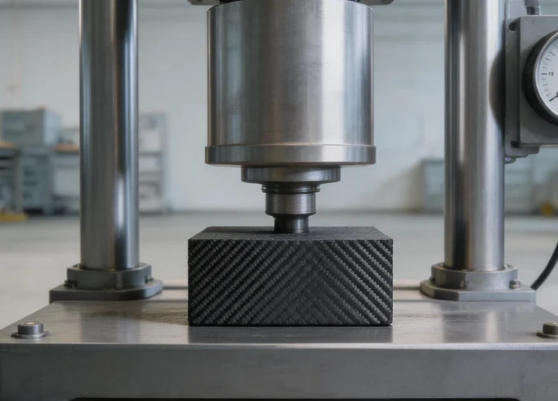
Why Mechanical Testing Matters
Every engineering decision rests on the assumption that materials will behave predictably. Mechanical testing is the process that validates that assumption. Without it, product design is guesswork.
Testing serves three practical purposes. First, it ensures safety — components in aircraft, automobiles, pressure vessels, and medical devices must perform reliably under stress, sometimes for decades. Second, it satisfies regulatory requirements. Standards bodies such as ASTM International and ISO publish test procedures that manufacturers must follow to certify their products for sale. Third, it drives material development. New alloys, composites, and polymers are evaluated against benchmarks established by mechanical testing, and the results guide formulation improvements.
The financial argument is straightforward: a failed component in the field costs far more than a test that catches the problem early. Mechanical testing is not an expense — it is risk reduction.
Key Mechanical Testing Methods
Hardness Testing
Hardness testing measures a material's resistance to localized plastic deformation, typically by pressing an indenter into the surface under a controlled load. It is fast, relatively non-destructive, and correlates well with other mechanical properties like tensile strength and wear resistance.
The most widely used methods include:
-
Rockwell hardness (HR): The workhorse of industrial quality control, especially in North America. It measures depth of penetration under a two-step load (minor then major) and reports a direct scale reading. Governed by ASTM E18.
-
Vickers hardness (HV): Uses a diamond pyramid indenter. Suitable for all metals, ceramics, and polymers. Works across a wide hardness range because the same indenter geometry applies at every scale. Standard: ASTM E92.
-
Brinell hardness (HB): Uses a steel or tungsten carbide ball. Best suited for castings, forgings, and coarse-grained materials where a larger indentation averages out local variations. Standard: ASTM E10.
-
Knoop hardness (HK): A micro-hardness test using an elongated diamond indenter, designed for thin coatings, small parts, and brittle materials where a standard Vickers indent would be too large.
-
Shore durometer: Used for elastomers and polymers. Measures resistance to penetration with a spring-loaded indentor. Standard: ASTM D2240.
Hardness values serve as quick reference indicators for machinability, ductility, and approximate tensile strength in production environments.
Tensile Testing
Tensile testing is the most fundamental mechanical test. A specimen — typically a machined "dog-bone" shape — is gripped at both ends and pulled apart at a controlled rate until it fractures.
The test produces a stress-strain curve, from which engineers extract:
-
Yield strength (or 0.2% proof stress): The stress at which permanent deformation begins.
-
Ultimate tensile strength (UTS): The maximum stress the material can withstand.
-
Modulus of elasticity (Young's modulus): The slope of the elastic region, indicating stiffness.
-
Elongation at break: A measure of ductility — how much the material stretches before fracturing.
-
Reduction of area: Another ductility indicator, measured at the fracture cross-section.
These properties form the baseline for nearly all structural design calculations. The governing standards — ASTM E8/E8M for metals and ASTM D638 for plastics — specify specimen geometry, strain rates, and reporting requirements to ensure results are comparable across laboratories.
Tensile testing also applies at elevated temperatures for components that operate in hot environments, such as boiler tubes and gas turbine parts. High-temperature tensile tests follow the same principles but require furnaces and extensometry rated for thermal conditions.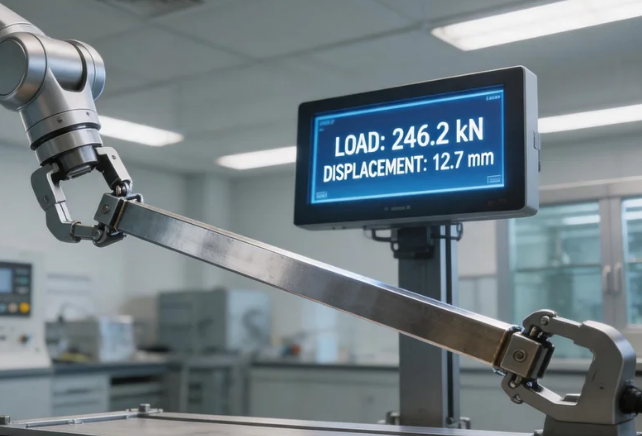
Impact Testing
Impact testing measures how much energy a material absorbs before fracturing under a sudden, high-rate load. This property — toughness — cannot be reliably predicted from tensile data alone, because some materials that are strong under slow loading become brittle when struck.
The two dominant methods are:
-
Charpy test: A notched bar is placed horizontally on two supports, and a pendulum strikes it opposite the notch. The energy absorbed is read directly from the pendulum's swing height after fracture. Supports both V-notch and U-notch specimens. Primarily used for metals.
-
Izod test: A notched bar is clamped vertically as a cantilever, and the pendulum strikes the upper tip. Accepts both metals and plastics.
Both tests reveal the ductile-to-brittle transition temperature (DBTT) in steels — a critical safety parameter for structures exposed to cold environments. The ASTM E23 standard governs impact testing procedures for metallic materials.
Impact testing is especially critical in aerospace, defense, and pipeline construction, where components must survive shock loads without catastrophic failure.
Fatigue Testing
Fatigue failure accounts for the majority of mechanical failures in engineered components. It occurs when a material is subjected to repeated cyclic loading — each cycle at a stress level well below the static yield strength — until cracks nucleate, grow, and eventually cause fracture.
Fatigue testing subjects specimens to controlled load or strain cycles and records the number of cycles to failure. The results are plotted as an S-N curve (stress versus number of cycles), which engineers use to predict component lifespan under service conditions.
Key test types include:
-
Load-controlled tests: Apply a constant cyclic force. Used for high-cycle fatigue (millions of cycles at relatively low stress).
-
Strain-controlled tests: Apply a controlled cyclic strain. Used for low-cycle fatigue (thousands of cycles at higher stress, often with plastic deformation).
-
Fatigue crack growth testing: Measures the rate at which an existing crack extends under cyclic loading, typically using fracture mechanics parameters like ΔK (stress intensity factor range).
A practical recommendation: fatigue test the finished component whenever possible, not just the raw material. Geometry, surface finish, and residual stresses from manufacturing all influence fatigue life significantly.
Relevant standards include ASTM E466 (load-controlled axial fatigue) and ASTM E606 (strain-controlled fatigue testing).
Creep Testing
Creep is the time-dependent deformation of a material under constant stress, usually at elevated temperatures. It matters whenever components carry load at high temperatures for long periods — think turbine blades, boiler headers, nuclear reactor internals, and high-temperature pressure vessels.
A creep test applies a constant tensile or compressive load to a specimen held at a fixed temperature, and records strain over time. The resulting creep curve shows three distinct phases:
-
Primary (transient) creep: Strain rate decreases over time as the material strain-hardens.
-
Secondary (steady-state) creep: Strain rate is approximately constant. This phase dominates design life calculations.
-
Tertiary creep: Strain rate accelerates due to necking, void formation, and microstructural degradation, ending in rupture.
The minimum creep rate from the secondary phase and the time to rupture are the two most reported results. Engineers use these values to set inspection intervals and predict when components must be replaced.
Creep testing follows standards such as ASTM E139 and is classified into subtypes based on loading configuration: tensile creep, constant-load creep, ratchetting creep, and fatigue-creep interaction tests.
Fracture Toughness Testing
Fracture toughness quantifies a material's resistance to crack propagation. Unlike tensile or hardness tests that assume a defect-free specimen, fracture toughness testing explicitly accounts for the presence of cracks — because real components always contain flaws, whether from manufacturing, fatigue, or corrosion.
The test measures the critical stress intensity factor (K) or the J-integral at which a pre-existing crack begins to grow unstably. Common test types include:
-
Linear-elastic (KIc): For materials where the crack tip plastic zone is small relative to specimen dimensions. This is the most widely reported fracture toughness value.
-
J-integral (JIc): For materials that exhibit significant plastic deformation before fracture — common in ductile metals.
-
CTOD (Crack Tip Opening Displacement): Another elastic-plastic parameter, used extensively in pipeline and offshore structure codes.
Fracture toughness data feeds directly into damage-tolerant design — the engineering philosophy that accepts the presence of cracks but ensures they will not grow to critical size within the inspection interval. This approach is mandatory in aerospace (per standards like ASTM E399 and ASTM E1820) and increasingly adopted in automotive and energy sectors.
Compression Testing
Compression testing applies an axial crushing force to a specimen and measures its behavior under compressive loading. It is essentially the reverse of tensile testing, but the results are not symmetric — many materials that are ductile in tension behave differently in compression.
The test produces a compressive stress-strain curve, from which compressive yield strength, compressive ultimate strength, and modulus of elasticity can be determined. For brittle materials like concrete and ceramics, compression testing is often more relevant than tensile testing because these materials are primarily used in compression-loaded applications.
Standards include ASTM E9 for metals and ASTM D695 for rigid plastics.
Bend Testing
Bend testing evaluates the ductility and soundness of a material or welded joint by bending a specimen around a specified radius until a target angle is reached or fracture occurs. It is widely used in weld procedure qualification.
The most common configuration is the three-point bend: the specimen rests on two supports while a central plunger applies force. In weld testing, face bends put the weld surface in tension, root bends put the weld root in tension, and side bends (used for thicker materials) expose the entire cross-section.
Bend testing is particularly effective at revealing fusion defects that open up during deformation — defects that might not be visible using other inspection methods.
Non-Destructive Testing (NDT)
Non-destructive testing evaluates material properties and detects discontinuities without damaging the component. Because the part remains intact, NDT is used for in-service inspection, production quality control, and acceptance testing on finished components.
Common NDT methods include:
-
Ultrasonic testing (UT): High-frequency sound waves detect internal defects and measure wall thickness.
-
Radiographic testing (RT): X-rays or gamma rays produce images of internal features.
-
Magnetic particle testing (MT): Detects surface and near-surface discontinuities in ferromagnetic materials.
-
Liquid penetrant testing (PT): Reveals surface-breaking defects by capillary action.
-
Acoustic emission testing (AET): Listens for stress waves generated by active defect growth under load.
NDT complements destructive mechanical tests — it does not replace them. Mechanical properties like yield strength and fatigue life still require destructive specimens. But for ongoing integrity monitoring of installed components, NDT is the only practical option.
Corrosion Resistance Testing
Corrosion resistance testing evaluates how a material degrades when exposed to specific chemical environments. It is not a mechanical test in the strict sense, but corrosion directly affects mechanical performance — a material that loses cross-section or develops pits has reduced load-carrying capacity.
Common approaches include Salt spray testing (ASTM B117), intergranular corrosion tests (ASTM A262), and the G48 critical pitting temperature test for stainless steels. Results guide material selection for marine, chemical processing, and oil & gas applications.
Testing Standards and Certifications
Mechanical testing only produces trustworthy results when performed according to recognized standards. Two families of standards dominate the field:
ASTM International publishes thousands of test method standards used globally. Key examples include ASTM E8 (tensile testing of metals), ASTM E18 (Rockwell hardness), ASTM E23 (impact testing), ASTM E466 (fatigue testing), and ASTM E139 (creep testing). These standards specify everything from specimen geometry and test machine requirements to data reporting formats.
ISO standards provide equivalent international procedures. ISO 6892 covers tensile testing of metals (parallel to ASTM E8), ISO 6506/6507/6508 cover Brinell/Vickers/Rockwell hardness respectively, and ISO 148 covers Charpy impact testing.
Many industries layer additional requirements on top of these general standards. Aerospace uses AS9100 and NAS standards. The oil & gas industry follows API specifications. Nuclear applications are governed by ASME Boiler and Pressure Vessel Code sections.
Testing laboratories that perform work to these standards typically hold ISO/IEC 17025 accreditation, which verifies their competence, equipment calibration, and quality management systems.
Industry Applications
Aerospace
Aerospace components operate at extremes of stress, temperature, and fatigue cycling. Every material used in aircraft structures — from aluminum fuselage skins to titanium engine discs to carbon-fiber composite wing spars — undergoes extensive mechanical testing during qualification. Fatigue testing and fracture toughness testing are particularly critical, because the damage-tolerant design philosophy used in aerospace requires engineers to know exactly how fast cracks will grow and how much residual strength a cracked structure retains.
Automotive
The automotive industry uses mechanical testing to validate body structures, powertrain components, suspension parts, and safety systems. Crash testing subjects full vehicles to controlled impacts, but the materials used in those vehicles are pre-qualified through tensile, hardness, and impact tests. Fatigue testing of chassis and suspension components predicts service life over millions of load cycles on real roads.
Construction and Civil Engineering
Structural steel, reinforced concrete, and timber all require mechanical testing to verify compliance with building codes. Tensile testing of steel rebar, compression testing of concrete cylinders, and bend testing of structural sections are standard acceptance tests on construction projects worldwide.
Energy and Power Generation
Power plants — whether fossil-fuel, nuclear, or renewable — depend on materials that can withstand high temperatures, pressures, and corrosive environments for decades. Creep testing is essential for turbine blade alloys and boiler tube steels. Fatigue testing validates wind turbine blade materials. corrosion testing ensures pipeline and offshore structure longevity.
Medical Devices
Implants, surgical instruments, and diagnostic equipment must meet strict biocompatibility and mechanical performance requirements. Tensile and fatigue testing of orthopedic implants simulates decades of walking. Stents undergo cyclic loading tests that replicate billions of heartbeats.
Challenges in Mechanical Testing
Sample Preparation
Test results are only as good as the specimens. Incorrect machining, poor surface finish, misaligned gauge sections, or inadequate dimensional tolerances introduce scatter that masks the true material behavior. For hardness and fatigue testing in particular, surface preparation is critical — a rough or work-hardened surface produces unrepresentative results.
Equipment Calibration
Mechanical testing machines must be calibrated regularly against traceable reference standards. Load cells, extensometers, and displacement transducers all drift over time. Without calibration, measured stresses and strains carry systematic errors that propagate into every property derived from the data.
Representativeness
A laboratory specimen tested under controlled conditions is a simplified proxy for a real component in service. Geometry effects, surface condition, residual stresses, multiaxial loading, and environmental exposure all differ between test and application. Engineers must apply safety factors and engineering judgment when translating test data into design allowables.
The Future of Mechanical Testing
Automation and Robotics
Automated test systems handle specimen loading, test execution, and data acquisition with minimal human intervention. Robotic specimen changers allow round-the-clock testing, increasing throughput for high-volume quality control operations. Automation also improves repeatability by eliminating operator-dependent variability.
Digital Image Correlation (DIC)
DIC uses high-resolution cameras and pattern recognition software to measure full-field strain on a specimen surface during testing. Unlike traditional extensometers that measure strain at a single gauge length, DIC reveals strain distribution across the entire specimen — capturing localized necking, crack initiation sites, and strain concentrations that point sensors miss.
AI and Machine Learning
Machine learning models trained on large mechanical test datasets can predict material properties from composition and processing history, identify anomalous test results, and optimize test matrices to extract maximum information from minimum specimens. These tools do not replace physical testing, but they augment it — reducing the number of tests needed during material development and catching quality issues earlier in production.
In-Situ and Small-Scale Testing
Miniaturized test techniques — nanoindentation, micro-pillar compression, small punch testing — allow mechanical property measurement from volumes of material too small for conventional specimens. This is valuable for grading compositionally graded materials, analyzing heat-affected zones in welds, and testing irradiated materials where sample size is limited by handling constraints.
Choosing the Right Mechanical Test
Selecting the appropriate test depends on what you need to know and what the material will experience in service. The decision process follows a straightforward logic:
-
If you need to know basic strength and ductility → tensile test
-
If you need a fast quality check on hardness → Rockwell or Vickers hardness test
-
If the component faces sudden loads or low temperatures → impact test (Charpy or Izod)
-
If the component experiences cyclic loading → fatigue test (S-N or crack growth)
-
If the component operates at high temperature under sustained load → creep test
-
If the component contains or may develop cracks → fracture toughness test
-
If you need to check the part without destroying it → appropriate NDT method
In practice, most critical components require a combination of tests. A pressure vessel steel, for example, needs tensile, impact, creep, and possibly fracture toughness data to fully characterize its performance envelope.
The testing standard should always be specified before the test begins — not selected after the results come in. The standard defines the conditions under which the results are valid and comparable.