Mineral oil testing: Methods for MOSH and MOAH Analysis
Mineral oil testing focuses on detecting mineral oil saturated hydrocarbons (MOSH) and mineral oil aromatic hydrocarbons (MOAH) in consumer products, foods, and packaging materials. The gold standard method is on-line coupled liquid chromatography with gas chromatography and flame ionization detection (LC-GC-FID), while newer approaches include comprehensive two-dimensional GC (GC×GC-MS) and nuclear magnetic resonance (NMR) spectroscopy.
What Are MOSH and MOAH?
Mineral oils are fractions from petroleum refining, sold under various names: paraffinum liquidum, white oil, petrolatum, mineral oil, or paraffin wax. They contain three main hydrocarbon types:
- MOSH (Mineral Oil Saturated Hydrocarbons): Open-chain paraffins and saturated ring systems (naphthenes)
- MOAH (Mineral Oil Aromatic Hydrocarbons): Aromatic compounds, some potentially carcinogenic
These compounds appear in cosmetics, medicines, food packaging, printing inks, and technical products. Contamination can occur through packaging migration, production processes, or environmental exposure during agriculture.
Why Test for Mineral Oil Hydrocarbons?
Health concerns drive analytical interest. Some aromatic hydrocarbons pose carcinogenic risks. Regulatory frameworks like the EU cosmetics regulation require compliance with IP 346 limits—the industry standard for assessing carcinogenicity of mineral oil raw materials.
Food contamination is particularly concerning. Mineral oils migrate easily into fat-containing foods like chocolate and oil-based products. Consumer awareness has increased demand for reliable detection methods.
Evolution of Testing Methods
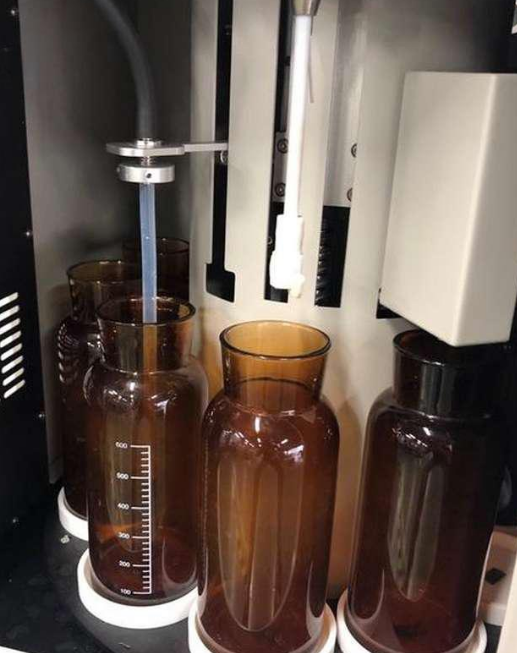
Early Methods (Pre-2000s)
Early approaches focused on quality control:
- IP 346 Method: Gravimetric determination of dimethyl sulfoxide (DMSO) extract residue. Only mineral oil fractions with less than 3% aromatics by weight proceed to further refining.
- UV Photometry: European pharmacopoeia procedure for polycyclic aromatic hydrocarbons (PAHs) with defined absorbance thresholds.
These methods work for pure mineral oil products but cannot detect trace contamination in foods.
LC-GC-FID: The Current Gold Standard
On-line coupled liquid chromatography-gas chromatography with flame ionization detection (LC-GC-FID) emerged as the method of choice for routine mineral oil analysis.
How it works:
- LC Separation: Silica phase column separates MOSH and MOAH fractions using hexane/dichloromethane gradient
- Transfer to GC: Large volume transfer requires specialized interfaces (Y-type or PTV)
- FID Detection: Flame ionization detector provides uniform response per unit mass for all hydrocarbons
Key advantages:
- High reproducibility and automation
- Lower detection limits (~50 ng)
- No calibration needed for unknown mixtures
- Robust for routine measurements
Limitations:
- Cannot resolve individual compounds—only produces "humps" of unresolved hydrocarbons
- May overestimate MOAH compared to more specific methods
- Requires experienced interpretation to avoid false positives
Sample Preparation Challenges
Sample preparation is critical. Different matrices require different approaches:
| Matrix Type | Preparation Method |
|---|---|
| Dry foods | Hexane extraction |
| Fatty foods | Hexane extraction + aluminum oxide cleanup |
| Complex matrices | Epoxidation to remove interfering olefins |
| Paperboard/plastics | Hexane/ethanol extraction |
Common interferences:
- Natural n-alkanes from plant materials (odd carbon numbers C23-C35)
- Polyolefin oligomeric saturated hydrocarbons (POSH) from plastic packaging
- Olefins like squalene, carotenoids, terpenes
- Lipids that can overload LC columns
Advanced Methods for Confirmation
GC×GC-MS (Comprehensive Two-Dimensional GC)
When LC-GC-FID shows positive results, GC×GC-MS provides confirmation and compound class identification:
- Separates MOSH into groups: n-alkanes, branched paraffins, cyclic systems (1-4 rings)
- Distinguishes MOSH from POSH
- Identifies compound classes within the "humps"
- Detects mineral oil residues in human tissues
NMR Spectroscopy
NMR offers a non-chromatographic alternative with unique advantages:
- Direct measurement without sample preparation for pure products
- Higher specificity for MOSH and MOAH than LC-GC
- Detects only toxicologically relevant aromatic rings
- No internal standard needed with PULCON quantification
- Potential for rapid screening with low-field instruments
The spectral regions show:
- 6.5-7.2 ppm: MOAH compounds
- Above 7.3 ppm: PAHs
- 3.0-0.2 ppm: MOSH fraction
Applications by Industry
Cosmetics
Focus primarily on lip care products due to oral ingestion risk. LC-GC-FID and GC×GC methods detect MOSH/MOAH in lipstick, lip gloss, and lip balm after hexane extraction.
Food and Food Contact Materials
This area has the most publications. Testing covers:
- Edible oils and fats: Detection limits around 0.3-2 mg/kg
- Dry foods (pasta, rice, cereals): Detection limits below 0.1 mg/kg
- Chocolate and fatty foods: Higher detection limits due to lipid interference
- Packaging materials: Recycled paperboard, cardboard, plastic films
The European standard EN 16995 provides standardized LC-GC-FID procedures for official food control, detecting MOSH/MOAH concentrations around 10 mg/kg.
Human and Animal Tissues
Mineral oil accumulation studies use LC-GC-FID and GC×GC to detect residues in:
- Human fat, lymph nodes, liver, kidney
- Experimental animal tissues
Detection limits around 0.5-2 mg/kg help assess bioaccumulation of different MOSH components.
Standardization and Regulatory Framework
EN 16995: European standard for MOSH/MOAH in foods
- Specifies LC-GC-FID procedure
- Includes detailed sample preparation for fat-containing foods
- Requires verification standards for HPLC fractionation
- Uses aluminum oxide to remove plant-based paraffins
IP 346: Industry standard for mineral oil carcinogenicity assessment
- Gravimetric DMSO extraction
- 3% aromatic threshold for pharmaceutical-grade mineral oils
- Referenced in EU cosmetics regulation
Choosing the Right Method
| Method | Best For | Detection Limit | Key Benefit |
|---|---|---|---|
| LC-GC-FID | Routine screening | ~0.1 mg/kg | Gold standard, robust |
| GC×GC-MS | Confirmation | Variable | Compound identification |
| NMR | Pure products | 100-4000 mg/kg | No sample prep |
Decision framework:
- Routine screening: Start with LC-GC-FID
- Positive result: Confirm with GC×GC-MS or NMR
- Pure products: Consider NMR for direct measurement
- Complex matrices: Ensure proper sample cleanup before analysis
Future Directions
Low-field NMR instruments show promise for rapid screening in raw material control. The method could provide quick pass/fail decisions before detailed chromatographic analysis.
Epoxidation procedures have been optimized to recover 95-102% of MOAH, improving accuracy for fat-containing samples.
Standardization efforts continue to harmonize methods across laboratories and ensure comparable results for regulatory compliance.
This article covers the main analytical approaches for mineral oil hydrocarbon testing. For specific method parameters, column specifications, and internal standards, consult the referenced literature and official standards.