Robotic Arm Testing: Validation Methods and Safety Standards
Robotic arm testing validates performance, safety, and compliance through functional safety assessment, precision measurement, endurance testing, electromagnetic compatibility verification, and environmental qualification. Testing follows international standards including ISO 10218, ISO/TS 15066, ISO 9283, and IEC 60601 to ensure reliable operation in manufacturing, collaborative environments, medical applications, and harsh industrial conditions.
Why Robotic Arm Testing Matters
Robotic systems have transitioned from isolated factory cages to dynamic, collaborative environments shared with humans in manufacturing, logistics, healthcare, and services. This expansion, particularly into collaborative robots (cobots), introduces profound engineering and regulatory challenges. A robot integrates mechanical precision, sophisticated software control, and electrical safety features—all requiring meticulous validation.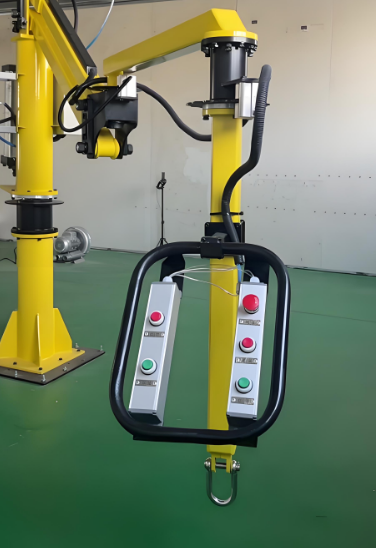
Testing is critical for:
- Confirming performance and accuracy specifications
- Guaranteeing human safety in collaborative operations
- Securing market access through regulatory compliance
- Mitigating risk and ensuring reliable operation
- Validating software and control system integrity
Functional Safety and Collaborative Robotics Standards
ISO 10218: Industrial Robot Safety
The foundation of industrial robot safety, covering both the robot (Part 1) and integrated system (Part 2) requirements.
Key safety functions:
- Safety-Rated Monitored Stop: Robot safely stops motion when human enters work cell and maintains stop until human departs, even with power maintained
- Speed and Separation Monitoring: System dynamically adjusts robot speed based on distance to human operator, maintaining protective separation distance
- Power and Force Limiting (PFL): Allows physical contact with humans within safe speed and force limits, preventing injury to vulnerable body parts
ISO/TS 15066: Cobot Safety Benchmark
Technical specification supplementing ISO 10218 with detailed guidance on Power and Force Limiting for collaborative robots.
Force thresholds by body region:
| Body Region | Maximum Permissible Force |
|---|---|
| Cranium (head) | 150 N |
| Thorax (torso) | 280 N |
| Face | 65 N |
| Abdomen | 140 N |
Contact types:
- Quasi-static contact: Crushing or clamping action requiring lower force limits
- Transient contact: Momentary impact allowing higher force limits as body absorbs impacts more safely
Testing uses force-sensing equipment and specialized apparatus replicating human body parts to measure precise forces at various speeds and contact points.
Performance, Precision, and Repeatability Testing
Accuracy vs. Repeatability
Accuracy: Measures how close robot's tool center point (TCP) comes to programmed target point. Critical for welding, drilling, and precision tasks requiring exact coordinates.
Repeatability (Precision): Measures how closely robot returns to same point multiple times. Often more critical than accuracy in industrial settings—slight offsets can be compensated during programming, but variability cannot. Essential for pick-and-place operations and assembly lines.
ISO 9283 Performance Testing
Standardized procedures for measuring key performance characteristics:
Position measurements:
- Position Accuracy (AP): Discrepancy between commanded and attained position in three dimensions, measured using laser trackers or coordinate measuring machines (CMMs)
- Orientation Accuracy (AO): Error in tool's final angular position
- Path Accuracy (APT): Deviation from intended linear or circular trajectory during movement
Testing methodology:
- Continuous, dynamic measurement throughout entire workspace (kinematic envelope)
- Testing across various speeds to generate comprehensive performance profile
- Documentation for end-users and systems integrators
Mechanical Endurance and Fatigue Testing
Mechanical Endurance Tests
Application of repetitive movements on given systems to evaluate functional characteristics and behavior under repeated stress.
Applications:
- Door opening endurance with complex movements (scissor doors, tailgates)
- Reproduction of automotive wiring kinematics (doors, slides, hinges)
- Life cycle testing of mechanisms and actuators
Fatigue Tests
Application of alternating tensile/compressive stresses, generally of low amplitude, to evaluate material and structural integrity over time.
Test setup using robotic arms:
- 6-axis arm with multiple degrees of freedom
- Multiaxial displacement capability
- Simplified interface tools reproducing vehicle or living environment
- Temperature and humidity control in climatic chamber
Technical specifications (example: Stäubli TX2-160):
| Parameter | Specification |
|---|---|
| Admissible load | 40 kg |
| Range | 1710 mm |
| Degrees of freedom | 6 |
| Repeatability (ISO 9283) | 0.05 mm |
| Max Cartesian speed | 10.3 m/s |
| Protection rating | IP65 (entire arm) |
Electromagnetic Compatibility (EMC) Testing
The EMC Mandate
Robots contain complex motor controls, high-speed microprocessors, and drive electronics, making them significant sources of electromagnetic interference (EMI). They must also be immune to external interference from nearby machinery.
All robotics equipment must comply with EU EMC Directive and FCC Part 15 in the U.S.
Emissions Testing
Performed in semi-anechoic chamber to measure:
- Radiated emissions: RF energy from motor drive cables, controllers, or housing
- Conducted emissions: Noise carried back onto power lines
Failure can disrupt neighboring wireless communications or sensitive instruments.
Immunity Testing
Confirms reliable operation under external disturbances:
- Electrostatic Discharge (ESD): Static electricity exposure
- Radiated RF Fields: External electromagnetic radiation
- Electrical Fast Transients (EFT): Power line spikes common in industrial environments
Immunity failure can cause spurious stops or uncontrolled movements, posing safety risks. Robotics standards (IEC 61000 series) require higher immunity thresholds than consumer electronics.
Specialized Testing Domains
Medical Robotics (IEC 60601)
Robots in surgical assistance, diagnostics, or rehabilitation must adhere to IEC 60601 series.
Key requirements:
- Safety and Essential Performance: Risk management specific to patient environment, minimizing electrical shock, thermal hazards, and ensuring fundamental functions operate under fault conditions
- Software Validation: Rigorous verification and validation of control software for deterministic, safe operation (critical for FDA submission)
- Electrical Safety: Patient leakage current and isolation requirements
Environmental and Durability Testing
Robots for harsh environments (outdoor, deep-sea, food processing) undergo extensive qualification:
Ingress Protection (IP) Testing (IEC 60529):
- IP65: Dust-tight, protected against water jets
- IP67: Complete dust-tightness, temporary immersion
- IP69K: High-pressure, high-temperature washdown
Climatic and Shock Testing:
- Thermal cycling and high humidity exposure
- Vibration and shock tests (MIL-STD-810)
- Extreme transport and operational condition simulation
testing equipment and Facilities
Measurement Systems
- Laser trackers: High-precision position measurement for ISO 9283 accuracy tests
- Coordinate Measuring Machines (CMMs): 3D position verification
- Force-torque sensors: PFL limit verification per ISO/TS 15066
- Universal Testing Machines (UTMs): Mechanical endurance and fatigue testing
Facility Requirements
- Semi-anechoic chambers: Large-volume chambers for EMC emissions testing
- Climatic chambers: Temperature and humidity controlled environments
- Safety enclosures: Protected areas for force and impact testing
Regulatory and Compliance Framework
International Standards
| Standard | Application |
|---|---|
| ISO 10218-1/2 | Industrial robot safety (robot and system) |
| ISO/TS 15066 | Collaborative robot safety requirements |
| ISO 9283 | Performance and repeatability testing |
| IEC 60601 | Medical robot safety and essential performance |
| IEC 61000 | Electromagnetic compatibility |
| IEC 60529 | Ingress protection (IP) rating |
| MIL-STD-810 | Environmental engineering considerations |
Accreditation Requirements
ISO/IEC 17025 accreditation provides:
- Proof of calibrated measurement equipment
- Validated test methodologies per international standards
- Third-party assurance for regulatory submissions
- Comprehensive documentation and traceability
Testing Workflow
Pre-Testing Phase
- Risk assessment and hazard identification
- Test plan development based on application and standards
- Equipment calibration and facility preparation
Execution Phase
- Functional safety validation (ISO 10218, ISO/TS 15066)
- Performance accuracy testing (ISO 9283)
- EMC emissions and immunity testing (IEC 61000)
- Environmental qualification (IP rating, thermal, vibration)
Documentation Phase
- Comprehensive technical file generation
- Compliance reports for regulatory submissions
- Performance specifications for end-users
- Risk mitigation documentation for manufacturer liability
Selecting a Testing Laboratory
Partner with accredited laboratories offering:
- ISO/IEC 17025 accreditation for all relevant test methods
- Large-volume anechoic chambers for EMC testing
- High-precision laser trackers and CMMs for accuracy testing
- Force-torque sensors for collaborative robot safety validation
- Climatic chambers for environmental testing
- Expertise in relevant international standards
- Comprehensive documentation for regulatory submissions
Effective robotic arm testing requires multi-disciplinary validation covering functional safety, performance precision, electromagnetic compatibility, and environmental durability. Partner with accredited laboratories to navigate complex regulatory requirements and ensure your robotic systems are verified, safe, and compliant for deployment in demanding applications.