Rubber Product Testing: Methods and Standards for Quality Assurance
Rubber product testing evaluates the physical, mechanical, thermal, and chemical properties of elastomers to ensure quality, performance, and reliability across automotive, aerospace, medical, oil and gas, and construction applications. Testing methods follow international standards from ISO, ASTM, and other organizations to verify material properties, durability, and compliance with specifications for products ranging from tires and seals to hoses and vibration dampers.
Why Rubber Testing Matters
Rubber materials exhibit viscoelasticity—combining viscosity and elasticity—which makes their properties sensitive to temperature, deformation rate, and environmental conditions. Testing is critical because:
- Ensures product safety and performance in demanding applications
- Verifies material consistency batch-to-batch
- Supports product development and optimization
- Meets industry standards and regulatory requirements
- Prevents costly field failures and warranty claims
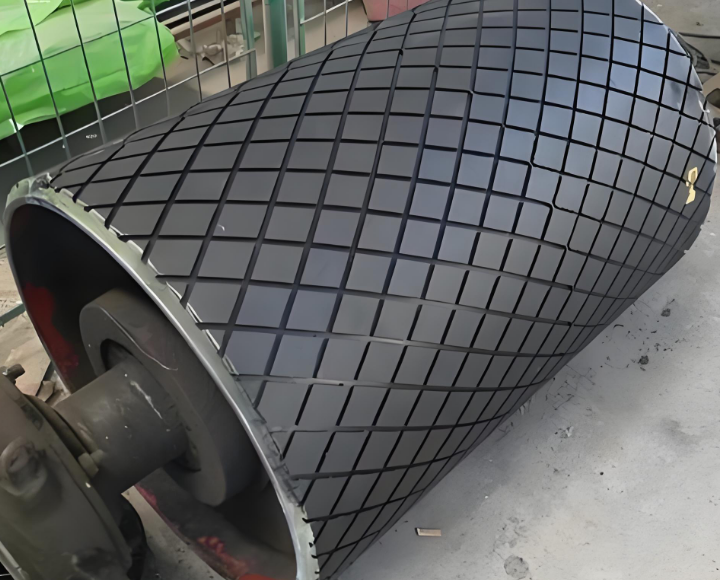
Rubber testing applies to materials including natural rubber, SBR, butyl, EPDM, nitrile, neoprene, silicone, fluorosilicones, fluoroelastomers, polyurethane, and polysulfide.
Material Property Tests
Hardness Testing (ASTM D2240 / ISO 7619 / ISO 48)
Hardness measures resistance to indentation and indicates stiffness, affecting sealing, cushioning, and fit quality.
Shore Scales:
- Shore A: Flexible molded rubbers (normal hardness range)
- Shore D: Hard rubbers
- Shore AO: Soft rubbers
- Shore AM: Micro method for thin test pieces
IRHD (International Rubber Hardness Degrees): Developed by ISO for improved accuracy. Uses deadweight loading with ball-shaped probe, reading taken after 30 seconds. Scale corresponds to Shore A.
Test procedure: Press truncated cone (Shore) or ball (IRHD) into rubber surface under specified load; reading shows hardness on 0-100 scale where 0 is infinitely soft and 100 is infinitely hard.
Tensile Testing (ASTM D412 / ISO 37)
Determines tensile strength, elongation, and modulus of elasticity—critical for evaluating durability and deformation resistance.
Properties measured:
- Stress at elongation: Force at 100% or 300% elongation (MPa), often called "rubber modulus"
- Tensile strength: Maximum stress at break (MPa)
- Elongation at break: Percentage extension before failure
Test procedure: Dumbbell-shaped specimens punched from 2mm test sheets are pulled in tensile testing machine at 500 mm/min. Extensometer measures elongation.
Tear Strength Testing (ASTM D624 / ISO 34)
Measures resistance to tearing forces, critical for hoses, gaskets, seals, and products subject to crack propagation.
Test methods:
- Trouser test piece (Method A): Rectangular strip with notch, pulled at 100 mm/min; median peak force reported
- Angle test piece (Method B): 90° angle specimen pulled at 500 mm/min, with or without nick
- Crescent test piece (Method C): Crescent-shaped specimen with 1mm nick, pulled at 500 mm/min
Results reported in kN/m (N/mm) of specimen thickness.
Compression Testing (ASTM D575 / ISO 7743)
Determines compressive strength, stiffness, spring constant, and deformation characteristics for load-bearing applications.
Test procedure: Cylindrical specimens compressed 25% in tensile tester. Mechanical conditioning (3 compression cycles) before measurement on 4th cycle. Results shown as load/deformation curve with force at 10% and 20% deformation.
Compression Set Testing (ASTM D395)
Measures ability to return to original thickness after prolonged compressive stress—critical for sealing applications.
Test procedure: Specimens compressed to specified deflection (usually 25%) at given temperature for defined time period. After load removal and recovery period, permanent deformation measured.
Results: Reported as percentage; lower percentage indicates better resistance to permanent deformation.
Thermal and Aging Tests
Heat Aging Test (ASTM D573)
Evaluates material stability and durability under high-temperature conditions. Rubber aging is continuous but accelerated testing uses elevated temperatures in air oven.
Test parameters: Specimens exposed to specified temperature (typically 70-100°C) for defined duration (24-168 hours), then retested for hardness, tensile strength, and elongation changes.
Glass Transition Temperature (Tg)
Critical temperature where amorphous polymer transforms from rigid glass state to rubber-like state. Determined using Differential Scanning Calorimetry (DSC) or Dynamic Mechanical Analysis (DMA).
Ozone and Weather Resistance (ASTM D1149)
Prevents surface cracking and aging caused by environmental exposure. Specimens stretched and exposed to controlled ozone concentration at specified temperature and humidity.
Chemical and Environmental Resistance Tests
Oil and Fluid Resistance (ASTM D471)
Ensures stable performance after exposure to oils, fuels, and chemicals. Specimens immersed in test fluid at specified temperature for defined duration, then measured for volume change, weight change, and property changes.
Chemical Resistance Testing (ASTM D6284)
Evaluates effect of specific chemicals on rubber properties. Tests compatibility with aqueous solutions, chloramines, acids, bases, and solvents.
Flammability Testing (FMVSS 302 / ASTM D5132)
Measures burn rate and flame resistance for automotive interior components and other safety-critical applications.
Electrical Insulation Testing (ASTM D149)
Guarantees dielectric strength and insulation performance for electronic and electrical products.
Testing of Uncured Rubber
Viscosity Testing (ISO 289 - Mooney Viscometer)
Determines processing characteristics of uncured rubber compounds. Proper viscosity ensures good processability during mixing, extrusion, and molding.
Test procedure: Rubber placed in heated die (typically 100°C), rotor rotates at 2 rpm. Torque measured in Mooney units (100 MU = 8.3 Nm).
Typical results:
- Below 40 MU: Low viscosity
- 40-80 MU: Normal range
- Above 80 MU: High viscosity
Cure Curve Testing (ISO 6502)
Determines curing characteristics using oscillating disc rheometer or rotorless curemeter. Measures:
- Scorch time (ts1): Time until curing begins—prevents premature vulcanization during processing
- Cure rate (tc50, tc90): Speed of curing after vulcanization starts—impacts production productivity
- Minimum viscosity (ML): Processability before curing
- Maximum stiffness (MH): Crosslink density after cure
- Reversion: Degradation at high temperature during overcure
Test conditions: Batch control uses ~190°C for short test time; development testing uses 150-170°C for better resolution.
Dynamic and Fatigue Testing
Dynamic Mechanical Analysis (DMA) (ISO 4664)
Measures modulus and damping as function of deformation, frequency, and temperature. Critical for products under dynamic stress like vibration dampers and engine mounts.
Properties measured:
- Complex dynamic modulus
- Loss angle (δ) and damping (tan δ)
- Temperature-dependent behavior
Test procedure: Specimen vibrated at frequencies 0-30 Hz in temperature chamber (-70°C to +200°C). Temperature sweeps show modulus vs. temperature.
Rebound Resilience (ISO 4662)
Basic property measuring energy absorption. Pendulum or ball bounced against rubber; rebound height as percentage of fall height indicates resilience.
Dynamic Fatigue Testing
Simulates cyclic loading to verify fatigue resistance and long-term durability. Servo-hydraulic equipment tests products up to 100 Hz under conditions mimicking actual service.
Adhesion Testing
Rubber-to-Substrate Bond Tests (ISO 36, ISO 813, ISO 814, ISO 1827)
Tests adhesion between rubber and reinforcement materials (metal, textile) used in tires, conveyor belts, and reinforced products.
Failure modes:
- Good: Break in rubber layer (cohesive failure)
- Poor: Break at reinforcement surface (adhesive failure)
Results reported in N/mm test width from peeling tests similar to tear tests.
Specialized Tests
Shear Modulus (ISO 1827)
Important for engineering calculations. Quadruple shear test piece (four rubber pieces 4mm thick, 20mm wide, 25mm long) tested at 5 mm/min to 30% deformation; modulus calculated at 25% deformation.
Tension Set (ISO 2285)
Measures permanent elongation after loading. Specimens loaded at 2.5 MPa for 1 hour, then unloaded; tension set measured after 10 minutes recovery.
Density (ISO 2781)
Specimen weighed in air and water. Density = weight ÷ volume. Quality control for batch consistency.
Test Specimen Preparation
Standard Test Sheets
Nearly all testing uses 2mm ±0.2mm thick sheets vulcanized in molds (typically 150 x 150mm cavities). Cylindrical pieces (13mm diameter × 6.3mm height or 29mm × 12.5mm) used for compression tests.
Punching and Cutting
Sharp cutting dies essential for punching tensile and tear specimens. Dull cutters cause notch defects leading to incorrect results.
Conditioning (ISO 23529)
All specimens must equilibrate to standard climate conditions befOre testing:
- Temperature: 23°C ±2°C
- Relative humidity: 50% ±5%
- Minimum 16 hours after vulcanization before testing
- Additional conditioning time for temperature equilibrium (hours depending on thickness)
Industry Standards and Specifications
| Standard | Application |
|---|---|
| ASTM D2000 | Classification system for rubber materials |
| MIL-A-A specifications | Military application requirements |
| MIL-DTL specifications | Detailed military specifications |
| SAE AMS specifications | Aerospace material specifications |
| ISO 9000 | Quality management systems |
| ISO 14000 | Environmental management |
Laboratory Accreditation
ISO/IEC 17025 accredited laboratories provide:
- Regular equipment calibration
- Procedure validation
- Accurate, repeatable, credible results
- Traceability to international standards
- Technical competence verification
ANAB (ANSI National Accreditation Board) accreditation ensures lab consistently meets quality standards.
Choosing the Right Tests
| Application | Priority Tests |
|---|---|
| Seals and gaskets | Hardness, compression set, tensile, fluid resistance |
| Vibration dampers | Dynamic testing, stiffness, fatigue, temperature resistance |
| Hoses | Tear strength, burst pressure, flexibility, fluid compatibility |
| Tires | Tensile, tear, abrasion, adhesion, dynamic properties |
| Medical devices | Biocompatibility, extractables, sterility resistance |
| Automotive components | Heat aging, ozone, flammability, fatigue |
Effective rubber testing combines material property tests with application-specific performance tests. Partner with ISO/IEC 17025 accredited laboratories, follow international standards, and design testing programs matched to your product requirements and operating environment for reliable quality assurance.