What Is Cleanroom Testing and Why Does It Matter
Cleanroom testing is the systematic process of verifying that a controlled environment meets its designated classification and performs within defined operational limits. Tests confirm airflow patterns, particle levels, pressure differentials, filtration integrity, and environmental stability so that your cleanroom consistently protects products, patients, and research outcomes.
Cleanrooms are designed to control airborne particulate and environmental conditions. However, just because a cleanroom is designed to be clean does not mean it stays that way. Filters degrade over time, airflow can shift, and small issues can compound without obvious warning signs. Routine testing catches problems early and keeps your facility sterile, stable, and ready for high-precision operations.
In pharmaceuticals, biotech, medical devices, electronics, and aerospace, even a single speck of dust or a stray microbe can cause significant safety issues. Failed product batches, inconsistent quality, costly recalls, and regulatory penalties can all follow from inadequate cleanroom testing. In healthcare settings specifically, the risks are even greater because patient safety depends on sterile environments for medications and procedures.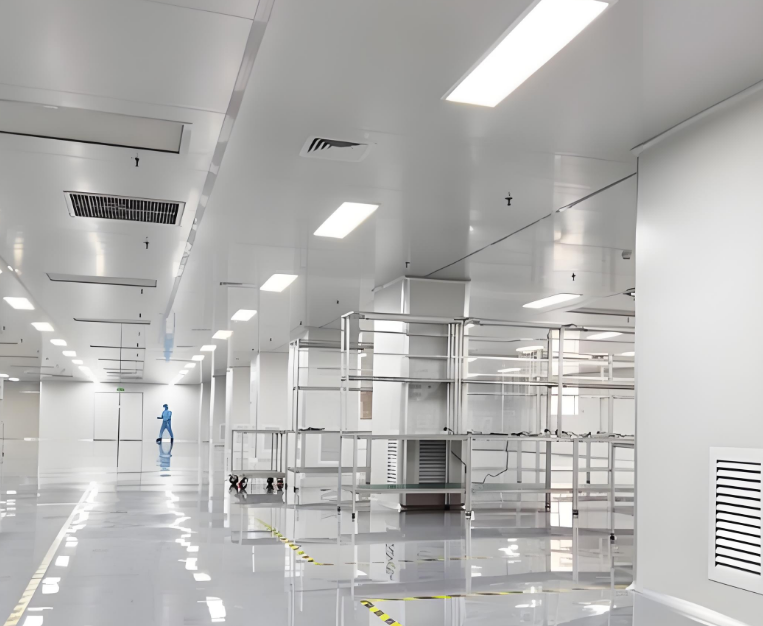
Cleanroom Classification Standards You Need to Know
Understanding cleanroom classification is the foundation of any testing program. Cleanrooms are classified by how clean their air is—specifically, by how many particles of specific sizes are present per cubic meter (or cubic foot) of air.
ISO 14644-1 Particle Count Limits
The ISO 14644-1 standard defines nine classification levels based on maximum permitted particle concentrations:
|
ISO Class |
0.1 µm |
0.2 µm |
0.3 µm |
0.5 µm |
1 µm |
5 µm |
|---|---|---|---|---|---|---|
|
ISO 1 |
10 |
2 |
— |
— |
— |
— |
|
ISO 2 |
100 |
24 |
10 |
4 |
— |
— |
|
ISO 3 |
1,000 |
237 |
102 |
35 |
8 |
— |
|
ISO 4 |
10,000 |
2,370 |
1,020 |
352 |
83 |
— |
|
ISO 5 |
100,000 |
23,700 |
10,200 |
3,520 |
832 |
29 |
|
ISO 6 |
1,000,000 |
237,000 |
102,000 |
35,200 |
8,320 |
2,930 |
|
ISO 7 |
NS |
NS |
NS |
352,000 |
83,200 |
2,930 |
|
ISO 8 |
NS |
NS |
NS |
3,520,000 |
832,000 |
29,300 |
|
ISO 9 |
NS |
NS |
NS |
35,200,000 |
8,320,000 |
2,930,000 |
To put this in perspective, an ISO Class 1 cleanroom allows only about 2 to 10 particles smaller than 0.2 micrometers per cubic meter. Normal room air contains millions. That makes the cleanest cleanrooms roughly a million times cleaner than typical indoor air.
EU GMP Annex 1 Acceptance Criteria
Pharmaceutical facilities operating under EU GMP must also comply with Annex 1 grade classifications:
|
Grade |
At Rest 0.5 µm |
At Rest 5 µm |
In Operation 0.5 µm |
In Operation 5 µm |
|---|---|---|---|---|
|
A |
3,520 |
20 |
3,520 |
20 |
|
B |
3,520 |
29 |
352,000 |
2,900 |
|
C |
352,000 |
2,900 |
3,520,000 |
29,000 |
|
D |
3,520,000 |
29,000 |
Not Defined |
Not Defined |
Key Design Parameters by Classification
Different cleanroom classes require different design approaches to achieve and maintain their target cleanliness levels:
|
Parameter |
ISO 4 |
ISO 5 |
ISO 6 |
ISO 7 |
ISO 8 |
|---|---|---|---|---|---|
|
Air Changes Per Hour |
500–600 |
300–480 |
180 |
60 |
20 |
|
Filter Coverage |
90–100% |
60–70% |
20–30% |
7–15% |
4–5% |
|
CFM Per Sq Ft |
85–90 |
36–65 |
18–32 |
9–16 |
4–8 |
|
Filter Efficiency |
99.9997% ULPAs |
99.997% HEPAs |
99.997% HEPAs |
99.997% HEPAs |
99.97% HEPAs |
|
Flooring |
Welded Vinyl or Epoxy |
Welded Vinyl or Epoxy |
Welded Vinyl or Epoxy |
Sheet Vinyl or VCT |
Sheet Vinyl or VCT |
|
Air Returns |
Raised Floor or Center Returns |
Low Wall on Long Axis |
Low Wall at Perimeter |
Low Wall |
Low Wall or Ceiling |
Other Applicable Standards
Depending on your industry, additional standards may apply:
-
ISO 14644-2: Covers ongoing monitoring of cleanroom performance for air cleanliness by particle concentration
-
ISO 14644-3: Recommends test methods to confirm a cleanroom meets its required classification
-
GMP (Good Manufacturing Practices): Governs how cleanrooms should be designed, built, and operated in pharmaceutical and biotech industries
-
USP 797: Addresses pharmaceutical compounding of sterile preparations
-
USP 800: Covers handling of hazardous drugs, requiring negative pressure rooms
-
ISO 13485: Specifies quality management system requirements for medical device manufacturing
-
ASTM E2352: Outlines best practices for aerospace cleanroom operations
Core Cleanroom Testing Methods Explained
A comprehensive cleanroom testing program includes multiple methods, each targeting a specific aspect of environmental control. Here are the essential tests:
Airborne Particle Count Testing
Particle count testing confirms your cleanroom classification using an optical laser counter and a mapped grid. Technicians measure non-viable particle concentrations in both "at rest" (empty, systems running) and "operational" (normal work with personnel and processes active) states. Results are compared against ISO 14644-1 limits for your target class.
Grid mapping and adequate sample volumes are critical to accurate results. Each classification has strict particle limits—if counts exceed the threshold, the cleanroom fails and corrective action is required before operations can continue.
HEPA and ULPA Filter Integrity Testing
HEPA filter integrity testing uses PAO (Polyalphaolefin) or DOP (Dioctyl Phthalate) aerosol to scan filter media and seals for leaks. The test reveals filter leak thresholds, gasket and seating issues, and plenum defects that could allow contaminated air to bypass filtration.
For higher cleanliness grades (ISO 3–4), ULPA (Ultra-Low Penetration Air) filter testing may also be required. ULPA filters provide 99.9997% efficiency, compared to 99.97–99.997% for standard HEPA filters.
Airflow Velocity and Uniformity Testing
Using calibrated anemometers, technicians measure airflow velocity at multiple points to confirm even distribution across the cleanroom. From these readings, the air change rate per hour (ACH) is calculated and verified against design specifications.
For laminar flow cleanrooms (ISO 3–5), this test also assesses flow directionality over critical zones to ensure uniform, unidirectional air movement that sweeps contaminants away from sensitive areas.
Airflow Visualization (Smoke Testing)
Smoke or fog generators create visible tracers that reveal how air moves through the cleanroom space. The goal is to confirm smooth, controlled, directional airflow—typically unidirectional (laminar) flow that pushes contaminants away from critical areas.
Without proper airflow, areas of turbulence, stagnant air, or backflow can develop, leading to particle accumulation in zones where cleanliness matters most.
Pressure Differential Testing
Cleanrooms can be positive or negative pressure environments. Stable pressure differential monitoring protects clean areas from contamination by dirtier adjacent spaces. Pressure measurements compare controlled spaces against surrounding areas to verify correct pressurization.
This is especially critical for facilities with multiple pressure zones, such as pharmaceutical manufacturing, where airflow must remain strictly controlled between clean and less-clean areas. USP 800 hazardous material rooms specifically require negative pressure environments.
Temperature and Relative Humidity Monitoring
Temperature and humidity control checks verify that HVAC systems are functioning properly and uniformly throughout the cleanroom. These parameters affect both process stability and personnel comfort. Continuous sensors feed data into your environmental monitoring program and trigger alarms when conditions drift outside acceptable ranges.
Room Pressurization and Recovery Testing
The recovery test measures how quickly a cleanroom can return to acceptable particle levels after a temporary disruption—such as a door opening or equipment being wheeled in. A fast recovery time indicates a well-designed and properly functioning cleanroom that can handle real-world interruptions.
Microbial and Surface Contamination Testing
Viable monitoring tests for the detection and enumeration of bacteria, yeast, and mold. Methods include settle plates, contact plates, and swabs for surfaces and air. Results are trended against action and alert limits, and excursions trigger investigation.
EU GMP Annex 1 specifies recommended microbial contamination limits:
|
Grade |
Air Sample (cfu/m³) |
Settle Plates (cfu/4 hours) |
Contact Plates (cfu/plate) |
Glove Print (cfu/glove) |
|---|---|---|---|---|
|
A |
<1 |
<1 |
<1 |
<1 |
|
B |
10 |
5 |
5 |
5 |
|
C |
100 |
50 |
25 |
— |
|
D |
200 |
100 |
50 |
— |
Containment Leak Testing
For cleanrooms with containment requirements, pressure decay or tracer gas tests detect leaks in walls, pass-throughs, gloveboxes, and other barriers. This is vital for preventing cross-contamination between zones of different cleanliness levels.
Optional Advanced Testing
Additional tests may be performed for sensitive operations:
-
Lighting level testing: Ensures adequate illumination without glare
-
Sound level testing: Verifies noise levels are acceptable for personnel and processes
-
Vibration testing: Protects delicate equipment and sensitive manufacturing processes
When and How Often Should Cleanroom Testing Be Performed
Regular Testing Schedule
A risk-based approach to testing frequency is recommended:
-
Daily/Weekly: Housekeeping logs, pressure checks, visible inspections
-
Quarterly: Trending review, spot verification, small corrective actions
-
Every 6 months: Required for some pharmaceutical operations (USP 797/800)
-
Every 6–12 months: Full cleanroom validation or requalification per ISO 14644-2
Typical certification testing is performed annually. Some pharmaceutical operations are required to test every 6 months.
Situations That Require Retesting
Beyond the regular schedule, retesting should be performed after:
-
HVAC system changes or modifications
-
HEPA or ULPA filter replacement
-
Room reconfiguration or renovation
-
Construction activities near or within the cleanroom
-
Contamination events or environmental monitoring excursions
-
Any major change to airflow, pressure, or occupancy patterns
Signs Your Cleanroom Needs Immediate Testing
Watch for these indicators that suggest your cleanroom may not be performing as designed:
-
Visible dust or contamination on surfaces, carts, benches, or grilles
-
Increased product defects or failed sterility tests
-
Airflow imbalance — door pull changes, fluttering wipes, or drifting smoke
-
HVAC or filter issues — abnormal fan speeds, unusual noise, or high differential pressures
If any of these signs appear, schedule controlled environment testing immediately.
Step-by-Step Cleanroom Testing Procedure
Step 1: Preparation and Planning
Review drawings, previous deviations, and user requirement specifications. Confirm acceptance criteria and sampling point locations. Lock acceptance criteria before test day—last-minute changes derail validation schedules.
Pre-clean the cleanroom per SOP, stage materials, remove temporary clutter, and label sampling points. Confirm diffuser access and safe ladder placements. Set gowning levels appropriate for the area class and train teams to prevent garment shedding during testing.
Step 2: Site Inspection and Setup
Walk the facility with the testing team. Review documentation including room classifications, previous test reports, and known issues. Export recent pressure, temperature, and humidity trends from your environmental monitoring system and note any alarms or out-of-trend behavior.
Limit traffic during testing, coordinate with production schedules, control door openings, and protect aseptic zones with shields where necessary.
Step 3: COre testing Execution
Map sampling points by room and height. Then perform the following tests in sequence:
-
Particle count testing in defined states (at rest and operational)
-
HEPA/ULPA filter scanning for leaks across media and seals
-
Airflow visualization with smoke testing to verify directional flow
-
Velocity measurement and ACH calculation
-
Pressurization verification (Pa readings between adjacent spaces)
-
Temperature and humidity recording at multiple locations
-
Microbial sampling if within scope (settle plates, contact plates, air samplers)
Step 4: Data Analysis
Compare all results against ISO 14644-1 limits, GMP acceptance criteria, and site SOP targets. Document any deviations with root cause analysis and plan corrective actions and retests where necessary.
Step 5: Reporting and Certification
Compile the complete cleanroom testing report including:
-
Cleanroom inspection checklist results
-
Instrument list with current calibration certificates
-
Photographs and room maps with pass/fail overlays
-
Raw data tables and calculated values
-
Deviation reports with root cause and corrective actions
-
Final sign-offs and certification statement
A clear room map with pass/fail overlays speeds audits and makes corrective actions obvious to reviewers.
DIY vs Professional Cleanroom Testing: What You Need to Know
Not every facility has the in-house expertise or equipment for comprehensive cleanroom testing. Here is how the two approaches compare:
|
Factor |
Self-Testing |
Professional Testing |
|---|---|---|
|
Instruments |
Limited, not always calibrated |
NIST-traceable equipment, full kit |
|
Scope Coverage |
Partial spot checks |
Full ISO/GMP scope with proof |
|
Accuracy |
Operator-dependent |
Repeatable methods with trained technicians |
|
Documentation |
Basic logs |
Complete validation report with CAPA support |
|
Compliance Risk |
High |
Low — certified cleanroom testing services |
|
Total Cost of Quality |
Can rise significantly after failures |
Lower over time via fewer repeat tests |
Professional testing providers arrive with NIST-traceable equipment (such as METONE or HACH particle counters and Short Ridge manometers with VELGRID), deep ISO/GMP experience, and sample reports that pass audits. While self-testing can supplement between formal qualifications, it rarely covers the full scope required for certification.
Common Challenges in Cleanroom Testing
Cleanroom testing involves several practical challenges that facilities should plan for:
-
Access and downtime: Testing is disruptive and usually requires temporary shutdown or clearance of cleanroom activity. Coordinate testing around production schedules to minimize impact.
-
Environmental variability: External factors like seasonal temperature changes or HVAC fluctuations can affect test results. Schedule testing under representative conditions.
-
Data overload: Testing generates substantial data, and interpreting it correctly requires experience. False alarms or overreactions to minor deviations can cause unnecessary delays and costs.
-
Complex multi-zone setups: The more zones, classifications, or pressure gradients a cleanroom has, the more complex the testing becomes. Detailed planning and experienced technicians are essential.
Benefits of a Consistent Cleanroom Testing Program
Making cleanroom testing a priority delivers measurable returns:
-
Maintains compliance with industry regulations and standards
-
Minimizes the risk of contamination events
-
Reduces product loss and costly recalls
-
Protects safety for both patients and products, especially in healthcare and pharma
-
Prepares your facility for audits with solid, defensible documentation
-
Supports continuous improvement in processes and environmental control
-
Reduces waste, fewer setbacks, and more reliable product output
By investing in regular, professional cleanroom testing, you are investing in both product quality and operational efficiency.
Environmental Monitoring: The Ongoing Testing Program
Environmental monitoring (EM) is a continuous program that demonstrates control of viable (living microorganisms) and non-viable particles in critical areas. These areas include cleanrooms, laminar flow hoods, biological safety cabinets, isolators, glove boxes, molding machines, and assembly lines.
The monitoring program covers several key areas:
-
Personnel monitoring: Gloves and gowning assessments
-
Air monitoring: Particle counts, viable counts, temperature, humidity, and HEPA filter performance
-
Surface monitoring: Floors, walls, and equipment using swabs and contact plates
-
Airflow verification: Visualization and directional confirmation through smoke testing
-
Pressure monitoring: Differential pressures of all classified rooms
-
Lighting levels: Illumination adequacy verification
-
Water testing: Microbiological and chemical analysis
-
Compressed air monitoring: Viable and non-viable particle detection
-
Disinfectant qualification: Verification of cleaning agent effectiveness
By monitoring the manufacturing environment from a microbial perspective, facilities can demonstrate control of contamination, reducing both the risk to products and the possibility of sterilization failures.
Frequently Asked Questions About Cleanroom Testing
What is the difference between cleanroom validation and routine monitoring?
Cleanroom validation is a comprehensive, documented process performed when a new cleanroom is built, major modifications are made, or the room is being reclassified. Routine monitoring is the ongoing program of regular checks that confirm the cleanroom continues to perform within its validated parameters.
What does a cleanroom testing report include?
A complete report includes test methodologies, instrument calibration certificates, raw data tables, calculated values (ACH, particle counts, pressure differentials), pass/fail assessments against acceptance criteria, deviation reports, photographs, and formal sign-offs.
Who can perform cleanroom testing?
Use certified cleanroom testing services with NIST-traceable equipment, ISO/GMP experience, and strong documentation standards. Professional technicians bring calibrated instruments and standardized methodologies that produce defensible results for regulatory review.
How long does cleanroom testing take?
Testing duration depends on the cleanroom size, classification level, and scope of tests required. A single ISO 7 room may take a few hours, while a multi-zone pharmaceutical facility with ISO 5 areas may require several days of testing and documentation.
What happens if a cleanroom fails testing?
If results exceed acceptance criteria, the root cause must be identified and corrected. Common issues include filter leaks, HVAC imbalances, or gowning protocol failures. After corrective actions are implemented, retesting is performed to confirm the cleanroom meets its classification requirements.