Gear oil testing is the systematic analysis of lubricating oils used in gearboxes, drive systems, and power transmission equipment to evaluate oil condition, detect contamination, and measure wear debris. It is a cornerstone of predictive maintenance programs across manufacturing, mining, energy, and transportation industries.
A gearbox is only as reliable as the oil that lubricates it. Gear oil performs four critical functions simultaneously: it forms a lubricating film between meshing teeth, dissipates heat from friction zones, suspends contaminants for filtration, and protects metal surfaces from corrosion. When any of these functions degrades, the consequences range from accelerated tooth wear to catastrophic seizure — and the cost of unscheduled gearbox replacement can exceed the cost of the entire maintenance budget for a quarter.
The industry has moved decisively toward condition monitoring as the preferred strategy. Rather than changing oil on a fixed calendar schedule — which may discard serviceable oil or, worse, leave degraded oil in service too long — oil analysis provides data on the actual condition of both the lubricant and the machine. This enables maintenance teams to make informed decisions: extend oil drain intervals when the oil is healthy, or intervene early when the data signals degradation.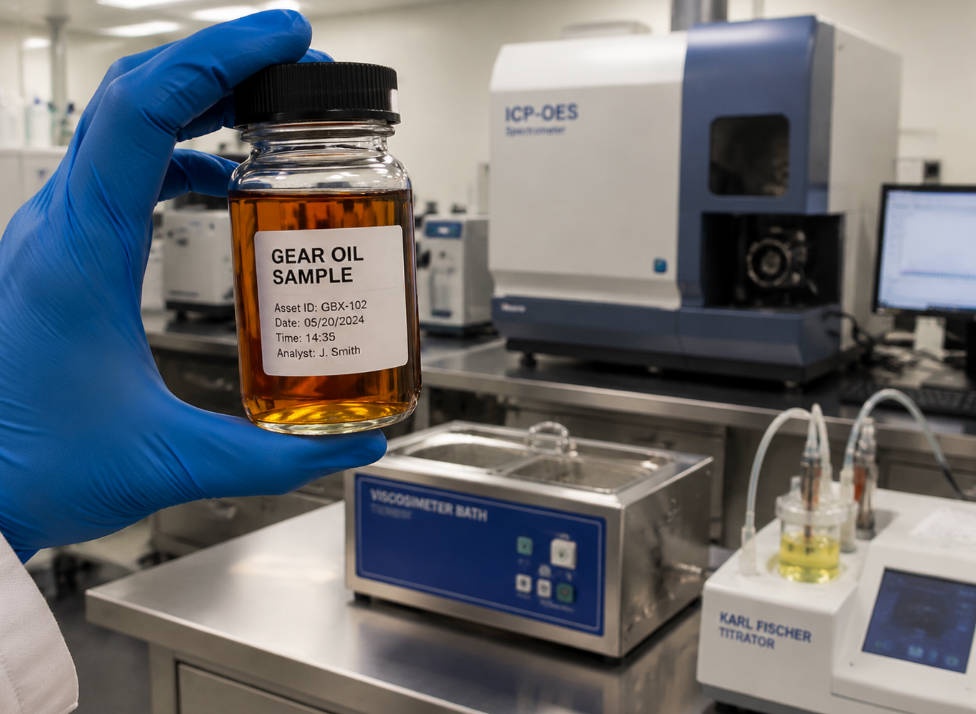
Key Gear Oil Testing Standards
Gear oil testing draws from multiple ASTM, ISO, and DIN standards. The table below summarizes the most widely referenced standards and their scope.
|
Standard |
Title |
Scope |
|---|---|---|
|
ASTM D445 |
Kinematic Viscosity of Transparent and Opaque Liquids |
Measures oil flow resistance at 40 °C and 100 °C |
|
ASTM D6304 |
Water in Petroleum Products by Coulometric Karl Fischer Titration |
Quantifies dissolved and free water down to ppm level |
|
ASTM D2272 |
Oxidation Stability of Steam Turbine Oils by RPVOT |
Evaluates oxidation resistance via rotating pressure vessel |
|
ASTM D943 |
Oxidation Characteristics of Inhibited Mineral Oils (TOST) |
Measures hours to reach acid number 2.0 mg KOH/g |
|
ASTM D664 |
Acid Number of Petroleum Products by Potentiometric Titration |
Detects acidic oxidation byproducts in used oil |
|
ASTM D5185 |
Multi-Element by ICP-AES |
Simultaneous measurement of wear metals, contaminants, and additives |
|
ASTM D7647 |
Particle Count and Size Distribution by Automatic Light Obscuration |
Cleanliness classification per ISO 4406 |
|
ASTM D4739 |
Base Number by Potentiometric Titration |
Measures remaining alkaline reserve (additive depletion) |
|
ASTM D892 |
Foaming Characteristics of lubricating oils |
Evaluates foam tendency and stability |
|
ISO 4406:1999 |
Hydraulic Fluid Power — Fluids — Solid Contamination Code |
Three-number cleanliness code for particle counts |
|
ASTM D130 |
Copper Strip Corrosion Test |
Evaluates corrosiveness toward yellow metals |
|
AGMA 9005 |
Industrial Gear Lubrication |
Specification for gear oil grades, viscosity, and performance |
Core Gear Oil Test Methods
Viscosity Testing (ASTM D445)
Viscosity is the single most important physical property of gear oil. It determines whether an adequate lubricating film forms between gear teeth under the specific load, speed, and temperature conditions of the application.
The test measures kinematic viscosity in centistokes (cSt) at 40 °C and 100 °C. These two values are used to calculate the viscosity index (VI), which indicates how much the oil's viscosity changes with temperature. A high VI (above 95) means the oil maintains stable viscosity across a wide temperature range.
Alarm thresholds: If viscosity deviates more than +20% or −10% from the nominal grade, the oil should be investigated or replaced. A viscosity drop suggests contamination with a lighter fluid or severe shearing of viscosity index improvers. A viscosity increase signals oxidation, contamination with solids, or wrong oil top-up.
Common gear oil viscosity grades and their typical applications:
|
ISO VG Grade |
Viscosity at 40 °C (cSt) |
Typical Application |
|---|---|---|
|
ISO VG 68 |
61.2–74.8 |
High-speed, lightly loaded spur gears |
|
ISO VG 150 |
135–165 |
General industrial gearboxes |
|
ISO VG 220 |
198–242 |
Medium-duty helical and bevel gears |
|
ISO VG 320 |
288–352 |
Heavy-duty industrial gearboxes |
|
ISO VG 460 |
414–506 |
Worm gears, high-load low-speed drives |
Water Contamination Testing (ASTM D6304)
Water is one of the most destructive contaminants in gear oil. Even at concentrations below 0.1%, water can cause accelerated bearing fatigue, promote rust on internal surfaces, and hydrolyze certain additive compounds — rendering them ineffective.
Three forms of water exist in oil: dissolved (molecular level, invisible), emulsified (suspended droplets, cloudy appearance), and free (separate layer at the bottom). Karl Fischer titration quantifies total water content across all three forms with accuracy to single-digit ppm.
Alarm thresholds: Below 0.05% (500 ppm) is generally acceptable. Between 0.05% and 0.1% warrants investigation and corrective action (e.g., fixing seal leaks, installing desiccant breathers). Above 0.1% requires immediate action — oil change, water removal via vacuum dehydration, or centrifugal separation.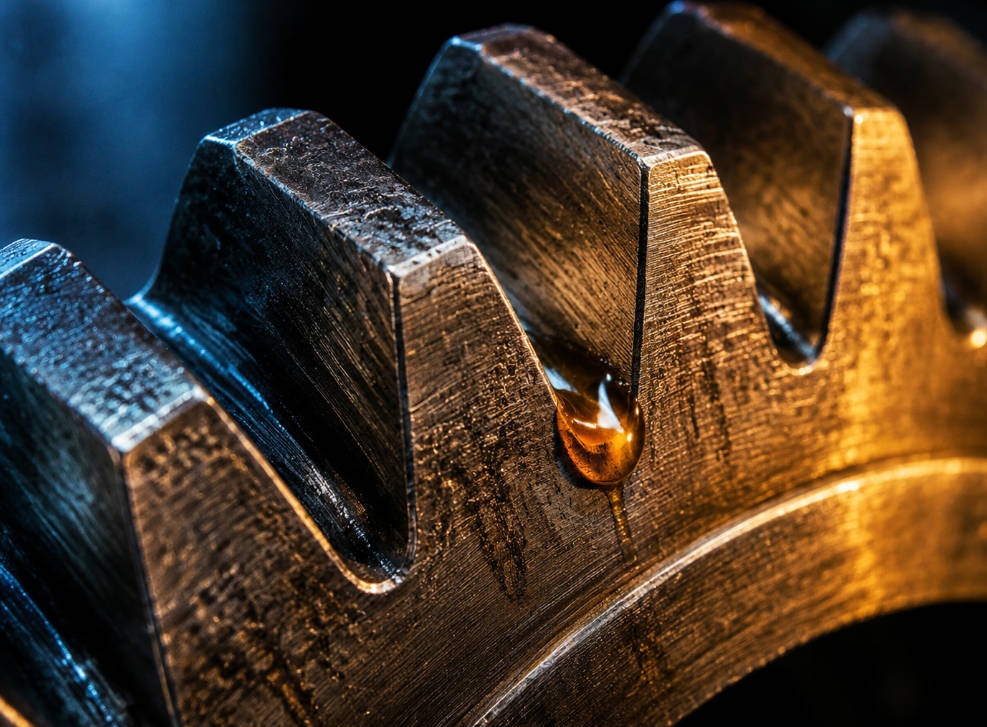
Particle Count and Cleanliness (ISO 4406 / ASTM D7647)
Particle count analysis measures the size and quantity of solid contaminants suspended in the oil. Results are expressed as an ISO 4406 three-number code representing particle counts at ≥4 μm, ≥6 μm, and ≥14 μm per milliliter of fluid.
For a typical industrial gearbox, target cleanliness levels range from ISO 18/16/13 to ISO 20/18/15 depending on the application severity. An increase of one or two ISO codes between samples may signal filter bypass, seal failure, or abnormal wear generation.
Example interpretation:
|
ISO 4406 Code |
Particles ≥4 μm |
Particles ≥6 μm |
Particles ≥14 μm |
Assessment |
|---|---|---|---|---|
|
16/14/11 |
320–640 |
80–160 |
10–20 |
Clean — effective filtration |
|
18/16/13 |
1,300–2,500 |
320–640 |
40–80 |
Acceptable for standard gearboxes |
|
20/18/15 |
5,000–10,000 |
1,300–2,500 |
160–320 |
Elevated — investigate source |
|
22/20/17 |
20,000–40,000 |
5,000–10,000 |
640–1,300 |
Critical — immediate action required |
Oxidation Stability (ASTM D2272 / ASTM D943)
Oxidation is the chemical reaction between the oil's base stock and oxygen, accelerated by heat, metal catalysts, and water. As oxidation progresses, the oil thickens, acid number rises, and varnish-forming deposits begin to coat internal surfaces.
Two primary tests evaluate oxidation resistance:
RPVOT (ASTM D2272): The Rotating Pressure Vessel Oxidation Test subjects the oil to elevated temperature, pressure, water, and a copper catalyst in a sealed vessel. The result is reported in minutes — the time until the pressure drops by a specified amount, indicating oxygen consumption. A result below 25% of the new oil baseline signals antioxidant depletion and imminent end of useful oil life.
TOST (ASTM D943): The Turbine Oil Oxidation Stability Test runs oil at 95 °C with water and metal catalysts, measuring the hours required for the acid number to reach 2.0 mg KOH/g. Gear oils with robust antioxidant packages may exceed 2,000 hours; a significant drop from baseline indicates the oil can no longer resist degradation.
Wear Metals Analysis (ASTM D5185)
inductively coupled plasma Atomic Emission Spectroscopy (ICP-AES) simultaneously measures up to 25 elements in a single oil sample. The data reveals three distinct categories:
|
Category |
Elements |
What They Indicate |
|---|---|---|
|
Wear metals |
Fe, Pb, Cu, Cr, Al, Ag, Sn |
Component wear from gears, bearings, bushings |
|
Contaminants |
Si, Na, K, B, Ca (external) |
Dirt ingress, coolant leaks, process contamination |
|
Additives |
Zn, P, S, Ca, Mg, Ba, Mo |
Additive package health and oil type verification |
Typical alarm limits for wear metals in gear oil:
|
Element |
Normal (ppm) |
Caution (ppm) |
Critical (ppm) |
Likely Source |
|---|---|---|---|---|
|
Iron (Fe) |
<100 |
100–300 |
>300 |
Gear teeth, shafts, housing wear |
|
Copper (Cu) |
<50 |
50–275 |
>275 |
Bronze bushings, bearings |
|
Lead (Pb) |
<25 |
25–75 |
>75 |
Bearing overlays, solder |
|
Chromium (Cr) |
<10 |
10–30 |
>30 |
Roller bearings, seals |
|
Aluminum (Al) |
<15 |
15–40 |
>40 |
Thrust washers, pistons, casings |
Trending is more valuable than absolute limits. A sudden spike in any element — even within "normal" range — warrants investigation, as it indicates a change in wear rate.
Acid Number (ASTM D664)
The acid number (AN) quantifies acidic byproducts from oil oxidation and additive degradation. For new gear oil, AN typically ranges from 0.5 to 2.5 mg KOH/g depending on the additive package (EP oils with sulfur-phosphorus additives tend to start higher).
An increase of 0.5 mg KOH/g above the new oil baseline is a cause for concern. An increase of 1.0 mg KOH/g or more generally indicates the oil has reached the end of its useful life. Rising acid number correlates with corrosion risk to bearings, gears, and seals.
Ferrous Density and Ferrography
Ferrous density testing uses magnetometry to measure the total amount of ferrous (iron-based) debris in the oil, reported in ppm. Unlike ICP-AES, which detects particles only up to approximately 5 μm, ferrous density captures the full size range from sub-micron to visible chips.
Analytical ferrography takes this a step further by depositing magnetic particles onto a glass slide (a ferrogram) for microscopic examination. A trained analyst can distinguish between normal rubbing wear, cutting wear (from abrasive contamination), rolling contact fatigue (from bearings), and severe sliding wear (from gear tooth distress). This visual diagnosis pinpoints the wear mode and likely component, enabling targeted maintenance.
Gear Lubricant Formulations and Additive Monitoring
Three primary gear oil formulations serve different operating conditions:
|
Formulation |
Key Additives |
Best Application |
Monitoring Focus |
|---|---|---|---|
|
R&O (Rust & Oxidation Inhibited) |
Antioxidants, corrosion inhibitors, antifoam |
High-speed, low-load, uniform loading |
Oxidation stability, acid number, water |
|
EP (Extreme Pressure) |
Sulfur-phosphorus compounds, boron |
High-load, shock loading, low-speed |
Phosphorus and sulfur levels, viscosity, wear metals |
|
Compounded |
Synthetic fatty acids (e.g., acidless tallow) |
Worm gears with yellow metals |
Copper content, lubricity, acid number |
Additive depletion is a primary indicator of remaining oil life. As the additive package weakens, viscosity increases, sludge begins to form, corrosive acids attack metal surfaces, and wear accelerates. Monitoring additive elements (Zn, P, S, Ca, Mg) by ICP-AES alongside performance tests (RPVOT, acid number) provides a complete picture of oil health.
For EP gear oils, a documented case showed that using an unapproved 150 cSt oil in an application requiring higher viscosity resulted in doubled ferrous wear rates. After switching to the correct viscosity grade, the ferrous wear rate dropped by more than half — demonstrating that oil selection and ongoing testing directly impact equipment life.
Interpreting Gear Oil Test Results
Interpreting results requires comparing three data points: the new oil baseline, previous sample results (trending), and current sample results. No single test result should be evaluated in isolation.
|
Scenario |
What to Check |
Likely Action |
|---|---|---|
|
Viscosity drop >10% |
Wrong oil top-up, fuel dilution, shear thinning |
Verify oil grade, check for leaks |
|
Viscosity increase >20% |
Oxidation, contamination, additive thickening |
Check acid number, oxidation stability |
|
Water >0.1% |
Seal leaks, condensation, cooler failure |
Fix source, dehydrate or replace oil |
|
Iron spike (trending) |
Gear or bearing wear |
Ferrography, vibration analysis, inspection |
|
Silicon spike |
Dirt ingress |
Check seals, breathers, filters |
|
Acid number increase >0.5 |
Oxidation, additive depletion |
Check RPVOT, consider oil change |
|
ISO cleanliness code shift +2 |
Filter failure, contamination event |
Inspect filters, check seals |
Key principle: trending reveals what a single snapshot cannot. A sample with 200 ppm iron may appear acceptable in isolation, but if the previous three samples showed 50, 80, and 140 ppm respectively, the exponential increase signals an active wear problem requiring immediate attention.
Gear Oil Testing by Industry Application
|
Industry |
Equipment |
Key Concerns |
Recommended Test Frequency |
|---|---|---|---|
|
Manufacturing |
Industrial gearboxes, conveyors |
Continuous operation, heat buildup |
Every 3 months |
|
Mining |
Crushers, haul trucks, draglines |
Shock loading, contamination |
Monthly |
|
Wind Energy |
Turbine gearboxes |
Remote locations, costly replacement |
Every 3–6 months |
|
Marine |
Reduction gears, thrusters |
Saltwater contamination, corrosion |
Every 3 months |
|
Power Generation |
Turbine gear drives |
High reliability requirement |
Every 3 months |
|
Automotive |
Transmissions, differentials |
EP additive depletion, thermal stress |
Per manufacturer schedule |
|
Steel / Metals |
Rolling mill gearboxes |
Extreme heat, water from cooling |
Monthly |
|
Food & Beverage |
Food-grade gearboxes |
NSF H1 compliance, contamination |
Every 3 months |
Wind turbine gearboxes deserve special mention. A single gearbox replacement at a wind farm can cost $250,000–$500,000 including crane rental and downtime. Oil analysis programs for wind turbines typically include the full test slate plus particle count trending, ferrography, and Fourier Transform Infrared (FTIR) spectroscopy to detect early-stage varnish precursors.
Sampling Best Practices for Reliable Results
The quality of oil analysis depends entirely on the quality of the sample. A poorly collected sample produces misleading data that can lead to wrong maintenance decisions.
Sampling location: Never sample from the drain port — oil at the bottom of the sump accumulates settled debris and water that are not representative of the oil circulating through the bearings and gears. The ideal location is a dedicated sampling valve installed on a circulating return line, upstream of the filter.
Sampling procedure:
|
Step |
Action |
Reason |
|---|---|---|
|
1 |
Sample while equipment is running or within 30 minutes of shutdown |
Ensures contaminants are suspended, not settled |
|
2 |
Flush the sampling valve with 3–5x the valve volume before collecting |
Removes stagnant oil and debris from the valve |
|
3 |
Use clean, dry sample bottles (minimum ISO 3749 cleanliness) |
Prevents cross-contamination from dirty containers |
|
4 |
Label immediately with date, equipment ID, and operating hours |
Enables accurate trending and traceability |
|
5 |
Fill bottle to 80–90% capacity |
Leaves headspace for mixing before analysis |
Sampling intervals: Every machine is unique in its intended performance, environment, and criticality. Most machinery manufacturers recommend a fixed interval (typically quarterly), but intervals should also be adjusted based on oil condition trends and reliability objectives. Critical assets warrant more frequent sampling; non-critical assets may extend intervals if trend data remains stable.
Benefits of a Regular Gear Oil Testing Program
-
Extended equipment life: Early detection of wear, contamination, and oil degradation prevents progressive damage. A well-managed testing program can extend gearbox life by 20–30%.
-
Optimized oil drain intervals: Condition-based oil changes eliminate the waste of discarding serviceable oil while preventing the risk of running on degraded oil. Many facilities report 30–50% longer oil life with testing compared to fixed-interval changes.
-
Reduced unplanned downtime: Trending data provides early warning — typically weeks or months before a failure — enabling scheduled maintenance during planned outages rather than emergency shutdowns.
-
Lower total maintenance cost: The cost of a routine oil analysis sample ($15–$40 per test) is negligible compared to the cost of a gearbox rebuild ($5,000–$100,000 depending on size). The return on investment typically exceeds 10:1.
-
Documentation for warranty and compliance: Oil analysis records provide documented evidence of proper maintenance practices, supporting warranty claims and regulatory compliance (ISO 55001 asset management, OSHA general duty clause).
Summary
Gear oil testing transforms maintenance from a calendar-based guessing game into a data-driven discipline. By monitoring viscosity, water content, particle contamination, oxidation stability, wear metals, and acid number on a regular cadence, maintenance teams can detect problems months before they manifest as equipment failure. The key is consistency: same sampling point, same operating conditions, same test slate, evaluated as a trend — not as a single snapshot. For any operation that depends on gear-driven equipment, oil analysis is not an optional expense; it is one of the highest-return investments in the maintenance budget.