What Is Sealant Testing and Why Does It Matter
Sealant testing is the systematic evaluation of sealant materials against standardized performance criteria—adhesion, cohesion, flexibility, weatherability, and fire safety—to verify that a seal will perform reliably over its design life. Sealants are used in every sector of construction and manufacturing: glazing joints in curtain walls, expansion joints in bridges, crack sealing in highway pavements, waterproofing below grade, and structural bonding in façade systems.
A single sealant failure can cost far more than the material itself. Water intrusion through a failed curtain-wall joint can damage interior finishes, corrode structural steel, and trigger mold growth—easily reaching hundreds of thousands of dollars in remediation. In highway applications, adhesive failure of crack sealants allows water to infiltrate pavement base layers, accelerating structural deterioration and cutting service life by years. A Texas DOT study found that many sealants failed within the first few years of service, with adhesive failure identified as the dominant failure mode in over 90 % of cases.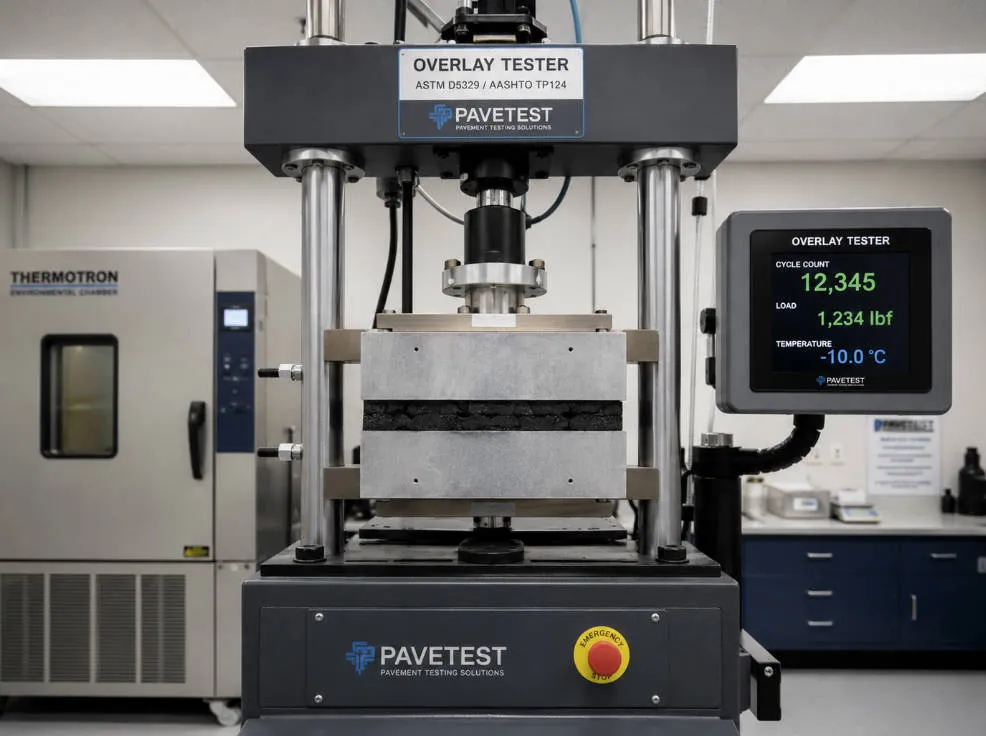
Testing gives designers, specifiers, and contractors proof that a product will work on their specific substrates, in their specific climate, and under their specific movement demands—before the sealant is installed in the field.
Key Sealant Testing Standards (ASTM / ISO / DIN)
The following table summarizes the most widely referenced sealant testing standards across North America, Europe, and international practice.
|
Standard |
Scope |
Key Property Measured |
|---|---|---|
|
ASTM C719 |
Adhesion and cohesion under cyclic movement (Hockman cycle) |
Movement capability |
|
ASTM C661 |
Indentation hardness of elastomeric sealants |
Shore A hardness |
|
ASTM C793 |
Effects of accelerated weathering on elastomeric joint sealants |
UV / weathering resistance |
|
ASTM C794 |
Adhesion-in-peel of elastomeric joint sealants |
Peel adhesion strength |
|
ASTM C920 |
Specification for elastomeric joint sealants |
Comprehensive compliance |
|
ASTM C1135 |
Tensile properties of structural silicone glazing sealants |
Tensile strength, elongation |
|
ASTM C1183 |
Extrusion rate of elastomeric sealants |
Workability / extrusion |
|
ASTM C1246 |
Heat aging: weight loss, cracking, chalking |
Thermal aging resistance |
|
ASTM C1247 |
Durability under continuous liquid immersion |
Chemical / water immersion |
|
ASTM C1339 |
Epoxy grout flow |
Flow / workability |
|
ASTM C1521 |
Guide for use of joint sealants (field adhesion test) |
On-site adhesion verification |
|
ASTM D2240 |
Rubber property—durometer hardness |
Hardness (Shore A scale) |
|
ASTM D638 |
Tensile properties of plastics |
Tensile strength, elongation |
|
ASTM G154 |
Fluorescent UV exposure of non-metallic materials |
Accelerated UV weathering |
|
ISO 11600 |
Classification and requirements for sealants |
Movement class, modulus |
|
EN 26627 / ISO 7390 |
Sag resistance on vertical surfaces |
Vertical sag resistance |
Adhesion Testing Methods for Sealants
Adhesion is the single most critical property for sealant performance. If the sealant cannot bond to the substrate, no other property matters. There are several established methods for evaluating adhesion.
Peel Adhesion (ASTM C794)
A strip of cured sealant is bonded to the substrate and pulled at a controlled angle and rate. The force required to separate the sealant from the substrate is recorded. This test directly measures the bond strength between sealant and substrate, and is essential for structural silicone glazing applications where wind loads transfer through the sealant bond.
Cut-and-Peel (Ribbon Bead) Test
A simpler, faster screening method: sealant is applied to the substrate, cured (typically 72 hours), then cut at 90° and peeled by hand. This qualitative test tells you quickly whether the sealant sticks at all—useful for initial substrate compatibility screening before investing in full laboratory testing.
Shear Adhesion Testing
Shear adhesion evaluates resistance to forces parallel to the bond line. A sealant bead between two substrates is loaded in shear until failure. ASTM C1227 addresses shear testing for structural silicone glazing sealants. High shear adhesion is critical in load-transfer applications such as structural glazing and façade panels.
Cataplasma (Climate Durability) Testing
The sealant is subjected to environmental conditions simulating its end-use climate (extreme cold, heat, humidity cycles), then tested for adhesion retention. This combined exposure-plus-adhesion test reveals whether the sealant's bond will survive real-world weathering.
Mechanical Property Testing: Hardness, Tensile Strength, and Elongation
Hardness Testing (ASTM C661 / ASTM D2240)
Hardness is measured using a durometer pressed into the cured sealant surface. Shore A is the standard scale for elastomeric sealants. Typical values range from 15 Shore A (very soft, high movement) to 50+ Shore A (firm, high puncture resistance). Hardness affects both movement capability and durability—softer sealants accommodate more joint movement but may be more vulnerable to mechanical damage.
|
Application |
Typical Hardness Range (Shore A) |
Rationale |
|---|---|---|
|
Bathroom / interior joints |
15–25 |
High flexibility, mild exposure |
|
Exterior building joints |
20–35 |
Balanced flexibility and durability |
|
Pavement crack sealing |
40–60 |
Traffic loading, debris resistance |
|
Structural silicone glazing |
30–45 |
Load transfer, UV resistance |
Tensile Strength and Elongation (ASTM C1135 / ASTM D638)
Dumbbell-shaped specimens are pulled in a tensile testing machine until failure. Two results are recorded:
-
Tensile strength: Maximum load divided by original cross-sectional area (psi or MPa)
-
Elongation at break: Increase in length at failure, expressed as percentage of original length
Structural silicone sealants typically achieve tensile strengths of 200–350 psi (1.4–2.4 MPa) with elongation at break of 200–500 %. High elongation is essential in joints that experience significant thermal movement.
Compression Set and Recovery
After sustained compression (simulating a closed joint in hot weather), the sealant's ability to recover its original shape is measured. Poor compression recovery means the sealant will not re-fill the joint when it opens in cold weather, creating a gap for water and air infiltration.
Movement Capability and Cyclic Movement Testing
Buildings move constantly—thermal expansion and contraction, wind sway, seismic events, foundation settlement. Sealant movement capability, measured under ASTM C719, quantifies how much joint movement a sealant can tolerate while maintaining adhesion and cohesion.
How ASTM C719 Works
Cured sealant specimens are subjected to repeated extension and compression cycles at controlled temperatures. The standard test runs at ±25 % or ±50 % of joint width. After cycling, specimens are inspected for adhesive failure (loss of bond to substrate) and cohesive failure (splitting within the sealant body).
|
Movement Class |
Typical Application |
Examples |
|---|---|---|
|
±12.5 % |
Low-movement joints |
Interior partitions |
|
±25 % |
Standard exterior joints |
Curtain walls, windows |
|
±50 % |
High-movement joints |
Expansion joints, bridges |
|
+100/−50 % |
Extreme movement |
Seismic joints, industrial |
Low-Temperature Flexibility
Some sealants become brittle in cold weather. Low-temperature flexibility testing bends the sealant at specified sub-zero temperatures (commonly −20 °C to −40 °C) and checks for cracking. This is critical for sealants used in cold climates, where a brittle sealant will crack at the first freeze-thaw cycle.
Environmental Durability Testing: Weathering, UV, and Chemical Resistance
Accelerated Weathering (ASTM G154 / ASTM C793)
Sealant samples are exposed to concentrated UV radiation, moisture, and temperature cycling in a weathering chamber. Weeks of accelerated testing simulate years of outdoor exposure. Key observations:
-
Color change and yellowing (especially relevant for transparent sealants)
-
Surface chalking or cracking
-
Loss of adhesion at the sealant-substrate interface
-
Hardness change (hardening or softening)
QUV Testing
A specific form of UV weathering where samples are exposed to high-intensity UV light in a QUV chamber. This is particularly relevant for sealants in high-UV environments—coastal, high-altitude, and desert regions where UV degradation can cause sealants to yellow and lose elasticity within months.
Chemical Resistance and Immersion Testing (ASTM C1247)
Sealants may be exposed to cleaning agents, solvents, pollutants, salt spray, or standing water. Chemical compatibility testing immerses cured sealant in specified chemicals for a defined period, then examines changes in hardness, weight, appearance, and adhesion.
Staining Test (ASTM C510)
Some sealants exude plasticizers or oils that stain adjacent building materials—particularly natural stone (marble, granite) and certain metals. The staining test places sealant in contact with sensitive substrates under load and evaluates any discoloration over time.
Field Adhesion Testing: On-Site Quality Verification
Laboratory testing confirms that the sealant can perform. Field testing confirms that it was installed correctly. The field adhesion test, documented in ASTM C1521, is a hand-pull test performed on installed sealant joints.
Field Adhesion Test Procedure
-
Cut through the sealant across the full joint width
-
Make two additional cuts (~75 mm long) along the sealant-substrate interface on both sides
-
Grasp the resulting tab 25 mm from the bonded edge
-
Pull at 90° with steady force
-
Record the failure mode (adhesive, cohesive, or substrate failure) and the force required
Testing Frequency
|
Phase |
Recommended Frequency |
|---|---|
|
First 1,000 ft (305 m) of joint |
Every 100 ft (31 m) |
|
After initial validation |
Every 1,000 ft (305 m) |
|
Per floor per elevation |
Minimum 1 test |
|
Per crew per week |
Minimum 1 test |
What the Results Tell You
-
Cohesive failure: The sealant tears within itself—bond is stronger than the sealant. This is generally a good sign.
-
Adhesive failure: The sealant separates cleanly from the substrate. This indicates a bond problem—wrong primer, inadequate cleaning, or incompatible substrate.
-
Substrate failure: The substrate itself breaks. The sealant bond exceeds the substrate strength.
Common Problems Detected by Field Testing
-
Contaminated or expired sealant / primer
-
Improper substrate cleaning
-
Incorrect primer selection
-
Three-sided adhesion (missing or improper backer rod)
-
Excessive substrate movement beyond sealant capability
-
Incomplete fill of joint
Crack Sealant Adhesion Testing: The Overlay Tester Method
Pavement crack sealing is a preventive maintenance practice that prevents water infiltration into pavement base layers. The Texas Transportation Institute (TTI) developed a performance-related adhesion test using the Overlay Tester—a device originally designed to evaluate reflective cracking resistance of asphalt overlays.
How the Overlay Tester Works
The device consists of two steel plates: one fixed, one movable. A crack sealant specimen is molded between two aluminum blocks (3 in × 1 in × 0.5 in gap) and clamped to the plates. The movable plate cycles horizontally, simulating the opening and closing of pavement cracks under thermal contraction.
Key test parameters:
-
Maximum opening displacement: 0.1 inches (2.5 mm)
-
Cycle time: 10 seconds (5 s opening + 5 s closing)
-
Failure criterion: 80 % load drop from first-cycle maximum
-
Maximum cycles: 2,000 (approximately 5.5 hours)
Sealant Classification from Overlay Tester Results
A study of 13 sealants from four vendors produced a clear performance-based classification system:
|
Sealant Type |
Cycles to Failure |
Test Temperature |
Recommended Climate Zone |
|---|---|---|---|
|
Unacceptable |
< 100 |
45 °F (7 °C) |
Not recommended |
|
Type A |
100–400 |
45 °F (7 °C) |
Hot climates (South Texas, subtropical) |
|
Type B |
≥ 400 |
45 °F (7 °C) |
Warm climates (Central Texas, temperate) |
|
Type C |
≥ 400 |
33 °F (0.5 °C) |
Cold climates (North Texas Panhandle, freezing) |
Adhesive Failure Types Observed
-
Typical adhesive failure: One block face is clean—no sealant remaining
-
Partial adhesive failure: Some sealant left on block face
-
Minor adhesive failure: Small cracks at interface; most bond intact
-
No adhesive failure: Sealant survives 2,000+ cycles with intact bond
Screening Procedure
-
Step 1: Test at 45 °F. If < 100 cycles → unacceptable. If 100–400 → Type A. If > 400 → proceed to Step 2.
-
Step 2: Test at 33 °F. If < 400 → Type B. If ≥ 400 → Type C.
Additionally, a minimum peak load of 100 lb at 45 °F on the first cycle is used to screen out sealants that are too soft for summer conditions—overly soft sealants can be pulled from cracks by vehicle tires in hot weather.
Fire Resistance and safety testing
Fire Resistance Testing
Sealants used in fire-rated assemblies must maintain integrity under fire exposure. Testing subjects sealant-filled joints to controlled fire conditions per ASTM E814 (UL 1479 for through-penetration fire stops) or EN 1366-4 (expansion joints). The sealant must prevent flame passage and limit temperature rise on the unexposed side for the rated duration (1, 2, 3, or 4 hours).
Fire Retardance vs. Fire Resistance
These are distinct properties. Fire retardance measures how readily the sealant ignites and how quickly flames spread across its surface (surface-level property). Fire resistance measures how long the sealed joint prevents fire passage through a rated assembly (system-level property). Both are relevant but apply at different scales.
Flash Point (ASTM D92 / T 48)
For hot-applied sealants (crack sealants, joint fillers), the flash point must be high enough for safe heating and application. The Texas DOT specification requires a minimum flash point of 400 °F (204 °C).
Industry Applications of Sealant Testing
|
Industry |
Primary Sealant Types |
Critical Test Properties |
Key Standards |
|---|---|---|---|
|
Building construction |
Silicone, polyurethane, acrylic |
Movement, adhesion, weathering |
ASTM C719, C920, C794 |
|
Highway / pavement |
Hot-pour rubberized asphalt |
Adhesion, low-temp flexibility |
ASTM D5329, Overlay Tester |
|
Structural glazing |
Structural silicone |
Tensile, peel, UV, shear |
ASTM C1135, C794, C1227 |
|
Marine / offshore |
Polysulfide, silicone |
Chemical resistance, immersion |
ASTM C1247, D2240 |
|
Aerospace |
Silicone, fluorosilicone |
Extreme temperature, outgassing |
AMS, MIL-SPEC |
|
Automotive |
Polyurethane, butyl |
Vibration, temperature cycling |
OEM-specific |
|
Waterproofing (below grade) |
Bentonite, polymer modified |
Water immersion, hydrostatic pressure |
ASTM C1247, D7088 |
Common Sealant Testing Failures and How to Prevent Them
|
Failure Mode |
Root Cause |
Detection Method |
Prevention |
|---|---|---|---|
|
Adhesive failure (clean separation) |
Poor surface prep, wrong primer |
Field adhesion test, peel test |
Proper cleaning, correct primer selection |
|
Cohesive failure (split within sealant) |
Under-cured sealant, excessive joint movement |
Tensile test, movement capability test |
Full cure before service, specify correct movement class |
|
Three-sided adhesion |
Missing or improper backer rod |
Field inspection, adhesion test |
Install proper backer rod / bond breaker tape |
|
UV degradation / yellowing |
Non-UV-stable formulation |
Accelerated weathering (ASTM G154) |
Specify UV-stable grade for exposed applications |
|
Cold-weather cracking |
Brittle formulation at low temperature |
Low-temperature flexibility test |
Select sealant rated for minimum service temperature |
|
Soft / tacky in hot weather |
Overly soft formulation |
Hardness test at elevated temperature |
Specify minimum Shore A hardness for application |
|
Staining of adjacent materials |
Plasticizer migration |
Staining test (ASTM C510) |
Use non-staining formulations on sensitive substrates |
|
Premature pull-out (pavement) |
Sealant too soft for traffic loading |
Overlay Tester peak load criterion |
Require minimum first-cycle peak load ≥ 100 lb |
Summary
Sealant testing is the bridge between a product's data sheet and its real-world performance. Adhesion testing—whether in the laboratory (ASTM C794, C719) or in the field (ASTM C1521)—confirms that the sealant will bond to the substrate and stay bonded through thousands of thermal cycles. The Overlay Tester method, developed for pavement crack sealants, provides a quantitative, performance-based alternative to traditional crumb-rubber-content specifications, classifying sealants into three temperature-based grades (Type A/B/C) with clear pass/fail cycle thresholds.
Three numbers define sealant testing rigor: 80 % load drop (the adhesive failure criterion in cyclic testing), 400 cycles (the minimum for acceptable performance at screening temperature), and 100 lb peak load (the softness limit for traffic-loaded sealants). Test before you seal, and test after you seal—because a failed sealant always costs more to fix than to get right the first time.