What Is Plastic Wrap Testing?
Plastic wrap testing is the laboratory verification of food-grade plastic wrap (cling film, food wrap) against the food-contact material regulations that govern its safe use in direct contact with food — GB 31604 series and GB 4806 series in China, Commission Regulation (EU) No 10/2011 together with the framework Regulation (EC) No 1935/2004 in the European Union, and FDA 21 CFR Parts 174–186 in the United States. A complete program confirms migration safety (overall and specific), mechanical performance, and microwave-heat stability in one coordinated test package.
Plastic wrap is a food-contact article: every square centimeter in contact with food is governed by migration law, not general plastics law. That distinction is what makes wrap testing different from industrial film testing. Beijing ZKGX Research Institute structures its plastic wrap programs around the food-contact framework, with each measurement traceable to the exact clause being verified.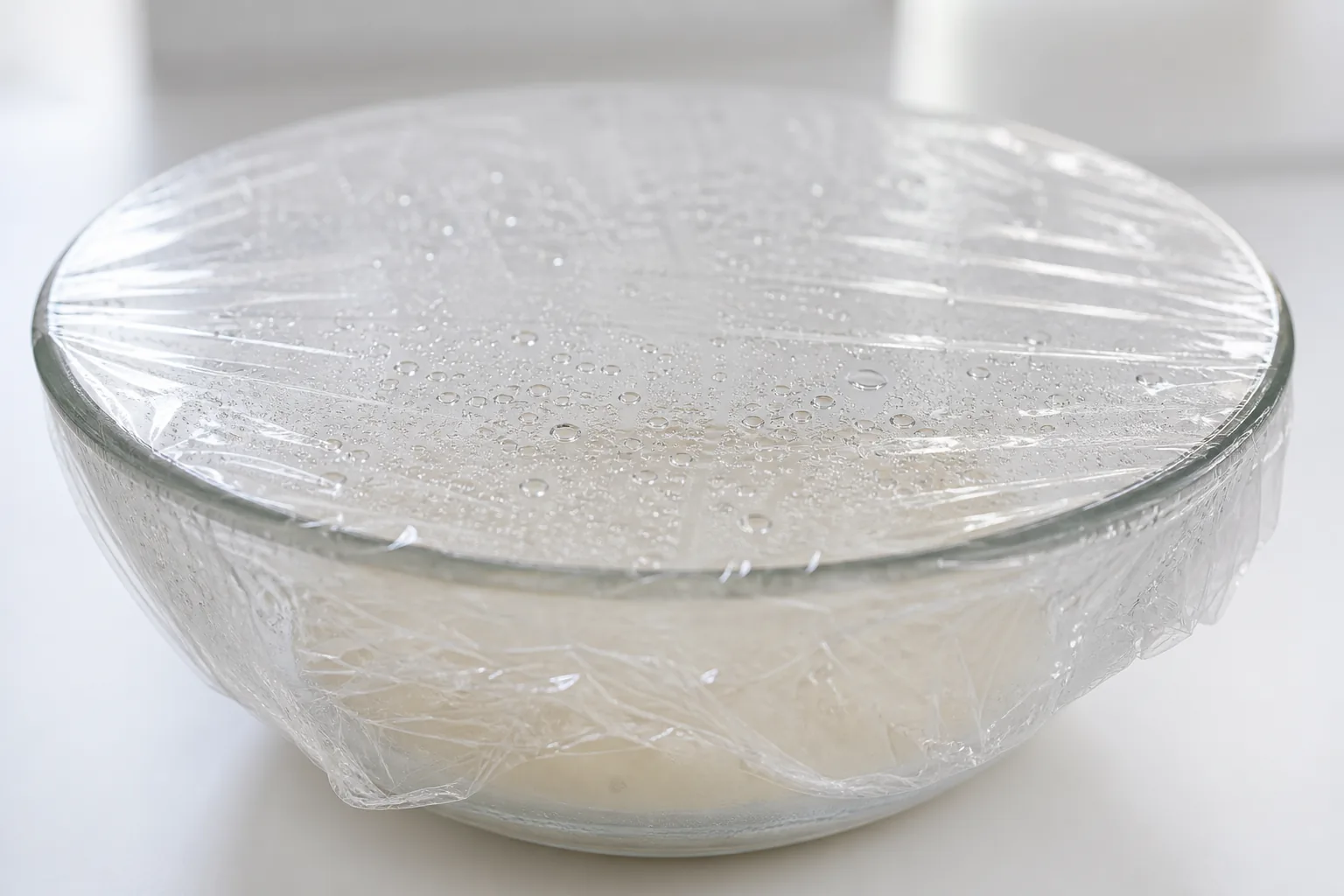
Why Plastic Wrap Testing Matters
A food-contact material is, by definition, a material whose substances can transfer into food. For plastic wrap, three failure modes drive the test program:
- Overall migration exceedance — the total mass of all substances transferring from the wrap into a food simulant exceeds the regulatory ceiling, indicating the wrap is releasing too much material overall
- Specific migration exceedance — a single regulated substance (a monomer, plasticizer, or additive) exceeds its individual limit; for plasticized PVC wraps this is historically the dominant failure, with DEHA, DEHP, and other plasticizers migrating into fatty foods
- Mechanical failure — a wrap that tears, punctures, or loses seal strength fails its primary function of protecting food from contamination and drying
For these reasons, food-contact regulations in every major market treat plastic wrap as a high-scrutiny category. Sale without a supporting test dossier means rejection at customs, recall from retail shelves, or, worse, a consumer exposure incident that triggers liability.
Which Standards Govern Plastic Wrap Testing?
There is no single global wrap standard; the framework is layered across food-contact law plus product-specific plastics standards:
| Standard / Regulation | Scope | What it answers |
|---|---|---|
| GB 4806.1-2016 | China — General safety of food-contact materials | The baseline framework rule for all FCMs in China |
| GB 4806.7-2016 | China — Plastic food-contact materials & articles | The plastic-specific requirements: allowable substances, migration limits |
| GB 31604.1-2015 | China — General migration testing rules | How is migration testing conducted (simulants, time, temperature)? |
| GB 31604.x series | China — Per-substance migration methods | e.g. GB 31604.8 (heavy metals), GB 31604.30 (adipates), GB 31604.32 (phthalates) |
| Commission Regulation (EU) No 10/2011 | EU — Plastic food-contact materials | The Union List of authorized substances, overall & specific migration limits |
| Regulation (EC) No 1935/2004 | EU — Framework regulation for all FCMs | The general safety principle: no transfer that endangers health |
| FDA 21 CFR Part 177 | US — Indirect food additives: polymers | Polymer-specific clearances (e.g. §177.1520 olefins for PE wrap) |
| FDA Food Contact Notification (FCN) | US — New FCS clearance pathway | Manufacturer-specific clearances for new substances |
| ASTM D882 / ISO 527-3 | Tensile properties of thin films | Mechanical verification of wrap strength |
| ASTM D1922 / ISO 6383-2 | Tear propagation (Elmendorf) | Tear resistance of the wrap |
Beijing ZKGX builds every wrap test report against this matrix so the client can see which clause of which regulation each measurement satisfies — not just a pass/fail verdict.
What Are the Core Plastic Wrap Test Items?
A complete wrap program divides into five blocks. Each item maps to a clause, and each has a measurable acceptance threshold.
1. Overall Migration Test (GB 31604.1 / EU 10/2011 §17-18)
Expose a specimen of the wrap to designated food simulants under time-temperature conditions that represent worst-case intended use. China and the EU both use the same four standard simulants:
- 10% ethanol (aqueous foods)
- 3% acetic acid (acidic foods)
- 20% ethanol (alcoholic foods) (or 50% / 95% for high-alcohol)
- vegetable oil (fatty foods) — modified polyethylene oxide (Tenax®) used as a dry-food simulant
Typical exposure conditions: 10 days at 40 °C for long-term room-temperature storage, or 1–2 hours at 70 °C for hot-fill. After exposure, the simulant is evaporated and residue weighed.
Acceptance per EU 10/2011 and GB 4806.7: overall migration ≤ 10 mg/dm² of wrap surface area (or ≤ 60 mg/kg food for items intended for infants). Exceeding 10 mg/dm² is the most common overall failure mode for under-formulated or recycled-resin wraps.
2. Specific Migration of Regulated Substances
For plasticized PVC wraps and multi-layer wraps, individual regulated substances are measured by GC-MS, LC-MS, or ICP-MS depending on chemistry. The most-tested substances in wrap programs:
| Substance | Why it matters | Typical SML (EU 10/2011) |
|---|---|---|
| DEHA (di(2-ethylhexyl) adipate) | Primary PVC plasticizer; migrates fast into fatty foods | 18 mg/kg (subject to ongoing revision) |
| DEHP (di(2-ethylhexyl) phthalate) | Banned plasticizer, found as contaminant | 1.5 mg/kg |
| DBP (dibutyl phthalate) | Banned plasticizer | 0.3 mg/kg |
| VCM (vinyl chloride monomer) | Residual monomer in PVC | 0.01 mg/kg (China: ≤ 1 mg/kg in resin) |
| Heavy metals (Pb, Cd, Hg, Cr⁶⁺) | Contaminants | ≤ 1 mg/kg total (GB 4806.7) |
| Primary aromatic amines | From azo-colorants or polyurethane adhesives | ≤ 0.01 mg/kg (sum) |
LDPE wraps have a much shorter specific-migration list — mostly the olefin oligomers and slip agents — which is why LDPE has displaced PVC as the dominant household wrap chemistry.
3. Mechanical Tests (ASTM D882 / ISO 527-3, ASTM D1922)
Even food-safe wraps must perform mechanically. Three tests cover the basics:
- Tensile strength and elongation at break — verify the wrap can stretch and recover without tearing under normal handling
- Elmendorf tear resistance (ASTM D1922 / ISO 6383-2) — the force to propagate a tear from a slit; catches brittle or thin spots
- Puncture resistance — for wraps used over containers with edges or sharp corners
Acceptance is typically against the manufacturer's declared spec, not a universal limit — wraps range from light household grade (~8–12 µm) to heavy catering grade (~20–30 µm), each with its own tensile envelope.
4. Coefficient of Friction and Cling (ASTM D1894 / ISO 8295)
The "cling" behavior that distinguishes wrap from ordinary film is governed by surface friction and tackifier additives. COF is measured film-to-film and film-to-stainless-steel under standard load. Acceptance: wrap must cling (high film-to-film COF) while still dispensing cleanly from the roll (moderate film-to-steel COF). A wrap that clings too aggressively tears on the roll; one that clings too little fails to seal bowls.
5. Microwave and Hot-Contact Stability
For wraps labeled "microwave safe," an additional test verifies that migration and mechanical integrity remain within limits after exposure to microwave heating conditions — typically 10 minutes at full power in direct contact with a fatty simulant. Many wraps on the market are not microwave-rated; the USDA advises consumers to keep wrap at least 1 inch off the food surface during microwave use unless specifically labeled.
Type vs. Production vs. Surveillance Testing — Don't Confuse Them
Three regimes apply to plastic wrap over its life cycle:
- Type / declaration of compliance (DoC) testing — done once per formulation to support the declaration of compliance required by EU 1935/2004 Article 16 and GB 4806.1; establishes that the formulation complies and produces the supporting documentation
- Production batch testing — periodic verification of overall migration and key specific migration on production batches
- Market surveillance testing — conducted by regulators (customs, market supervision bureaus) on wraps pulled from retail; commonly catches undeclared plasticizers in PVC wraps and counterfeit food-grade marks
A common error is treating a single overall-migration pass as proof of full compliance. It is not — the supporting dossier requires specific migration of every relevant Union List / GB 4806.7 substance, plus the documentation chain back to the resin supplier. Beijing ZKGX labels every report with which regime the result serves.
How Long Does Plastic Wrap Testing Take?
A complete plastic wrap declaration-of-compliance test package takes 4 to 6 weeks, dominated by the 10-day overall migration exposure plus the analytical time for specific migration. Mechanical tests typically return within 3 to 5 working days; heavy-metal and plasticizer specific migration returns within 7 to 10 working days.
Sample requirements: typically enough wrap to cover 1 m² total surface area (cut into exposure specimens) for the full food-contact package, plus a separate set for mechanical testing. Production-batch testing uses less material.
A formal test report is delivered within 5 to 7 working days after completion of each testing block, including raw data, instrument traces (GC-MS / LC-MS chromatograms, ICP-MS spectra), and a clear statement of which clauses were met.
What Makes a Plastic Wrap Test Report Usable?
A report that only says "PASS" is useless when a regulator, retailer, or consumer challenges the compliance claim. A defensible report — accepted by NMPA in China, EFSA-supported authorities in the EU, FDA under the FCN system, or retailer compliance reviews — must contain:
- Simulant and condition identification — which food simulant, what time and temperature, supporting the relevance of the result
- Measured values with units and uncertainty — not "compliant," but "overall migration 4.2 mg/dm² (LOQ 1 mg/dm², limit 10 mg/dm²)"
- LOQ / LOD reporting — so a "not detected" is interpretable against the SML
- Standard-clause traceability — which paragraph of EU 10/2011 or GB 31604.x each result is judged against
- Chromatographic evidence — actual GC-MS / LC-MS traces for specific migration, not single numbers
- Signed conclusion — accredited laboratory stamp and ISO/IEC 17025 reference
Beijing ZKGX plastic wrap reports follow this structure as standard and are issued under the laboratory's ISO/IEC 17025 accreditation framework, with each measurement traceable to a recognized national or international standard.
Frequently Asked Questions
Is plastic wrap testing mandatory?
Yes, in every major market. Sale in China requires GB 4806.1 / GB 4806.7 compliance and declaration; in the EU, EU 10/2011 / EC 1935/2004 compliance and declaration; in the US, an FDA clearance (21 CFR or FCN) and supporting data. Exported wraps without a compliance dossier face rejection at customs.
How is plastic wrap testing different from general plastic film testing?
General plastic film testing covers mechanical and physical properties for industrial film applications — stretch wrap, packaging film, agricultural film — without a food-contact focus. Plastic wrap testing adds the migration-testing regime that food-contact law imposes. The two share mechanical methods (ASTM D882, D1922) but plastic wrap requires the GB 31604 / EU 10/2011 migration layer on top.
Are PVC cling films banned?
Not universally. Some countries (Japan, South Korea) and several EU member states have effectively phased out plasticized PVC for direct food contact due to plasticizer migration concerns, but it is not EU-banned outright. Most household wraps have moved to LDPE for this reason. Industrial PVC wraps are still used where their gas-barrier properties justify the migration controls.
Can a wrap be tested as microwave-safe?
Yes, but it is a separate test. The wrap is exposed to microwave conditions in contact with a fatty simulant, then migration and mechanical properties are re-checked. Wraps without this test cannot be labeled microwave-safe. See also our express packaging material testing program for the analogous hot-fill and takeaway-container test regimes.
Does "BPA-free" or "phthalate-free" labeling need verification testing?
Yes — negative claims must be substantiated by specific-migration testing showing the named substance is below detection (or below its SML). A claim without test data is a regulatory risk under both FTC labeling rules in the US and EU unfair commercial practices law. The biodegradable plastic product testing program covers a different but related claim-substantiation regime for compostable wraps.
References & Further Reading
- GB 4806.1-2016 — China general safety standard for food-contact materials (openstd.samr.gov.cn)
- GB 4806.7-2016 — China plastic food-contact materials and articles (openstd.samr.gov.cn)
- GB 31604.1-2015 — China migration testing general rules (openstd.samr.gov.cn)
- Commission Regulation (EU) No 10/2011 — Plastic food-contact materials (eur-lex.europa.eu)
- Regulation (EC) No 1935/2004 — Framework regulation for food-contact materials (eur-lex.europa.eu)
- FDA 21 CFR Part 177 — Indirect food additives: polymers (fda.gov)
- ASTM D882 / ISO 527-3 — Tensile properties of thin plastic films (astm.org)
- ASTM D1922 / ISO 6383-2 — Tear propagation resistance by Elmendorf (astm.org)
- Petersen JH (1998) — Specific migration of DEHA from cling films: 46 of 49 films exceeded 3 mg/dm² (pubmed.ncbi.nlm.nih.gov/9829046/)