Table of Contents
- What standards apply to sports drink testing?
- How is sports drink classified by osmolality?
- What are the GB 15266 physicochemical limits for a sports drink?
- How are sodium, potassium and soluble solids measured?
- How is sugar composition profiled in a sports drink?
- What microbiological limits must a sports drink meet?
- Why do undeclared ingredients show up in testing?
- FAQ
- Our sports drink testing service
What standards apply to sports drink testing?
Sports drink testing is governed by a layered set of standards rather than a single specification. The product must satisfy a definition standard that says what a sports drink is, a hygiene standard that says what every beverage must not contain, a battery of method standards that say how to measure each parameter, and a labelling standard that says what to declare. A test report that quotes only one of these layers is usually incomplete.
The standards our laboratory works to on a sports drink project are:
- GB 15266, National food safety Standard for Sports Drinks (std.samr.gov.cn) — the definition standard in China. It defines a sports drink as a beverage whose nutrient content is adapted to the physiological characteristics of people engaged in sports or physical exertion, supplying water, electrolytes and energy for rapid absorption, and sets the physicochemical limits that distinguish a sports drink from an ordinary soft drink.
- GB 7101, National Food Safety Standard for Beverages — the horizontal hygiene and quality standard that every beverage category, sports drinks included, must satisfy for microbial limits, contaminants and other general requirements.
- GB 5009 series — the validated test methods. Sodium and potassium are determined under GB 5009.91; calcium under GB 5009.92; the food additives that may appear in a formulation under GB 2760; contaminants such as lead and arsenic under their respective GB 5009 sub-standards.
- GB 7718 and GB 13432 — the labelling standards. GB 15266 explicitly requires a sports drink label to declare the content range of soluble solids, sodium and potassium, in addition to the general prepackaged-food labelling rules.
- AOAC International and ISO methods — used as cross-references or when an export market requires a method recognized outside China.
A common mistake in specifications we receive is to quote GB 15266 alone as if it were a complete test programme. GB 15266 defines the product and its physicochemical targets; it does not by itself specify microbial limits (those come from GB 7101) or full contaminant screening. A complete conformity project draws from all three layers.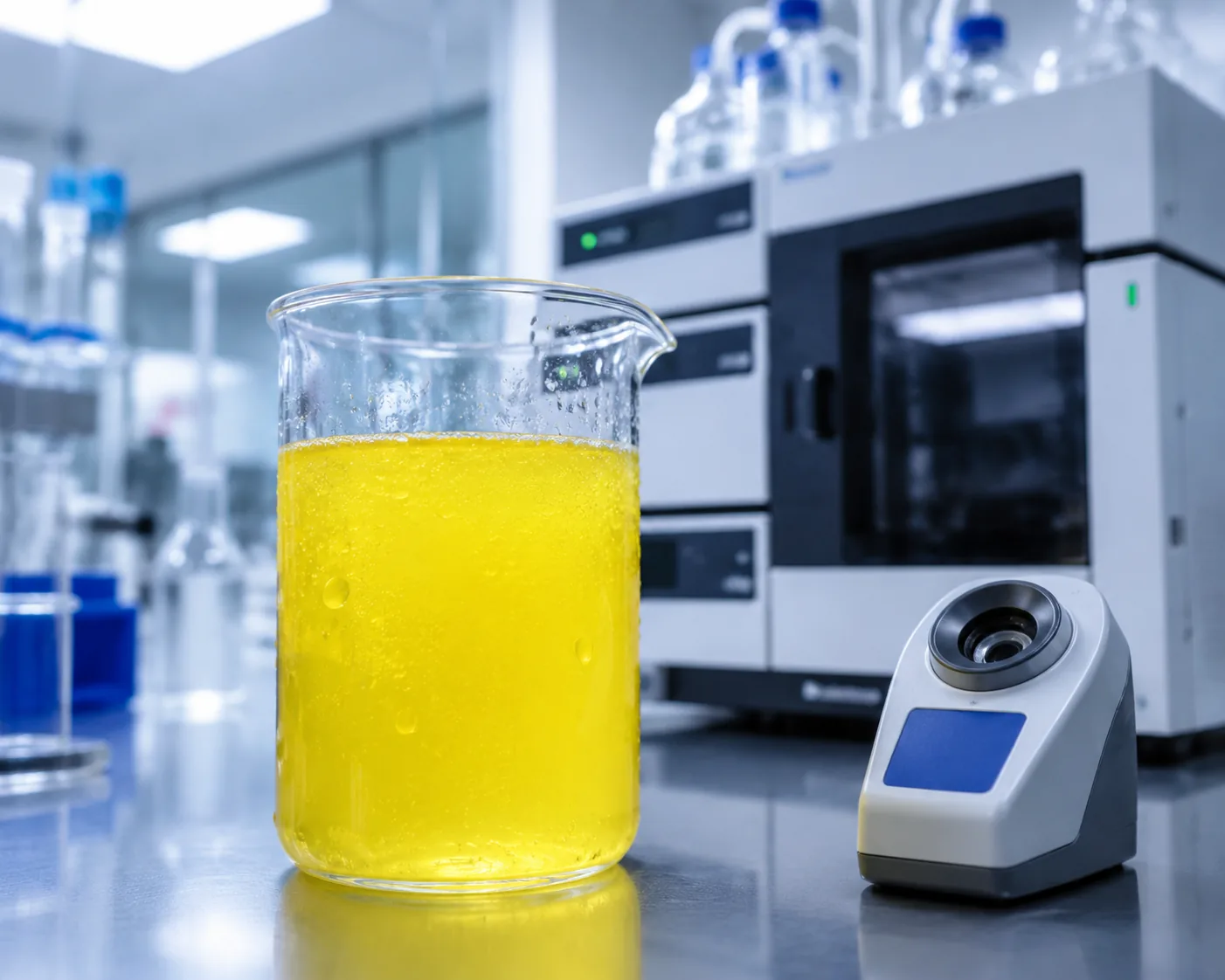
How is sports drink classified by osmolality?
Osmolality — the concentration of dissolved solutes per kilogram of water — is the property that places a sports drink into one of three functional classes, and it is the property the body actually responds to during absorption. Human blood plasma sits at roughly 280–300 mOsm/kg, often cited as approximately 290 mOsm/kg, and the classification of a sports drink is defined by where its measured osmolality sits relative to that baseline.
The three classes are:
- Hypotonic — osmolality below plasma, typically below 270 mOsm/kg, with carbohydrate content usually below 3 g per 100 mL. Absorbed faster than plain water; used when rapid rehydration matters more than energy supply.
- Isotonic — osmolality close to plasma, in the 270–330 mOsm/kg band that GB 15266 references. Provides a balance of fluid and energy; the general-purpose endurance category.
- Hypertonic — osmolality above plasma, generally above 330 mOsm/kg, with carbohydrate content above 8 g per 100 mL. Absorbed more slowly than water; used for energy replenishment and post-exercise glycogen restoration rather than for hydration during exertion.
A subtlety that matters in testing is the distinction between osmolality and tonicity. Osmolality counts every dissolved particle; tonicity counts only the particles that cannot cross cell membranes. A drink that measures isotonic by osmolality can behave as hypertonic in the body if a meaningful fraction of its solute is membrane-permeable. This is why the osmolality figure on a test report is a necessary but not always sufficient description of how the drink will perform in vivo, and why the carbohydrate source — glucose, fructose, sucrose, maltodextrin — is reported alongside the osmolality rather than folded into it. The osmolality-versus-tonicity distinction for isotonic beverages is discussed in detail in the physiology literature.
Osmolality is measured by freezing-point depression, the basis of the validated method for osmotic pressure determination in foods. The instrument reports milliosmoles per kilogram directly from the measured freezing-point depression of the sample.
What are the GB 15266 physicochemical limits for a sports drink?
GB 15266 sets four physicochemical targets that together define whether a beverage qualifies as a sports drink. These are the numbers a conformity report is judged against:
- Sodium — content generally in the range of 50 to 1200 mg/L.
- Potassium — content generally in the range of 50 to 250 mg/L.
- Soluble solids — generally in the range of 3.0% to 8.0%.
- Osmolality — generally in the 270 to 330 mOsm/kg isotonic band.
Each of these targets exists for a functional reason, and understanding the reason makes the testing defensible rather than rote. Sodium replaces the sodium lost in sweat — sweat sodium concentration runs in the tens of millimoles per litre — and is the electrolyte most directly tied to fluid retention; a sports drink with sodium below the GB 15266 floor is functionally a flavored water. Potassium works intracellularly and is included at a lower concentration because the potassium losses through sweat are smaller. Soluble solids, principally carbohydrates, supply the energy component and also drive osmolality; the 3.0–8.0% window is the band in which the drink delivers useful energy without crossing into hypertonic territory that would slow absorption. Osmolality is the integrative check — it is determined by the combined solute load, so a formulation can hit each individual ingredient target and still miss the osmolality target if the solute balance is wrong.
The label-declaration requirement in GB 15266 is the other side of these limits. A sports drink label must state the content range of soluble solids, sodium and potassium, and the stated ranges must be consistent with the measured values in the conformity report. A discrepancy between the labelled range and the laboratory-measured range is a non-conformity in its own right, independent of whether the measured values fall inside the GB 15266 windows.
How are sodium, potassium and soluble solids measured?
The sodium and potassium content of a sports drink is determined under GB 5009.91, Determination of Potassium and Sodium in Foods, which specifies four validated methods. The choice among them is driven by sample matrix, expected concentration and the laboratory's instrumentation:
- Flame atomic absorption spectrometry (FAAS) — the classical method; potassium and sodium ground-state atoms absorb light at their characteristic wavelengths, and absorbance is proportional to concentration. Mature, widely deployed.
- Flame atomic emission spectrometry (FAES) — measures the emission from potassium and sodium atoms excited in a flame; favoured for higher-concentration samples such as those in electrolyte beverages.
- inductively coupled plasma optical emission spectrometry (ICP-OES) — simultaneous multi-element determination with a wide linear range; the practical choice when a project also needs calcium, magnesium and trace minerals from the same digestion.
- inductively coupled plasma mass spectrometry (ICP-MS) — the highest sensitivity, lowest detection limits; the method of choice when the same run must also screen trace contaminants such as lead, arsenic and cadmium.
Soluble solids are measured by refractometry — a refractometer reading converted to a Brix value, which for a sugar-and-electrolyte solution approximates the soluble-solids percentage directly. The measurement is fast, but the sample preparation matters: dissolved gas, suspended matter and temperature must be controlled, because each perturbs the refractive index. For sports drinks containing vegetable gum or food coloring, a cleanup step removes particulate and color before the reading, because both bias the refractometer.
The choice between ICP-OES and ICP-MS in a real project is usually settled by what else the client wants measured. A sports drink conformity project that also screens contaminants under GB 2762 is more efficiently run on ICP-MS, because the major cations and the trace contaminants come off one digestion. A project limited to the four GB 15266 targets is more economically run on FAAS or FAES. We scope the method set to the project, not the other way around.
How is sugar composition profiled in a sports drink?
The total sugar figure reported as soluble solids tells the formulator nothing about which sugars are present, and the carbohydrate source matters — glucose, fructose, sucrose and maltose have different absorption kinetics and different effects on osmolality and gastrointestinal tolerance. Profiling the sugar composition requires a chromatographic separation, not a bulk measurement.
The analytical challenge is that sports drinks contain three chemically distinct groups — anions, cations and sugars — that traditionally need separate instruments. Electrolytes are separated by ion exchange; sugars, which are neutral and highly polar, are separated under hydrophilic-interaction chromatography (HILIC) conditions. A single multi-mode column can resolve all three groups in two runs on one instrument: an ion-exchange run for the electrolytes, followed by an isocratic HILIC run with a mobile phase of roughly 80% acetonitrile and 20% buffer for the sugars.
Detection is the other half of the problem. The sugars and many of the organic ions in a sports drink lack a strong UV chromophore, so UV absorbance detection fails them. Refractive-index detection is incompatible with the gradient elution that ion-exchange separation requires. The detector that resolves both problems is charged aerosol detection (CAD), which converts the column effluent into a dry aerosol, charges the particles, and measures a current proportional to analyte mass — independent of chromophores and compatible with gradients. On a single multi-mode column with CAD, a laboratory can quantify fructose, glucose and residual maltose alongside sodium, potassium, chloride, phosphate, citrate, calcium and magnesium from one sample preparation.
A practical point from this work: many commercial sports drinks are sweetened with high-fructose corn syrup, so the dominant carbohydrates are fructose and glucose with a small amount of residual maltose, and these sugars exist in solution as an equilibrium mixture of anomeric forms. At acidic and neutral pH the interconversion is slow enough to cause peak broadening as the anomers partially separate, which is why sugar separations on this type of sample are typically run at elevated column temperature (around 60 °C) to collapse the anomer equilibrium into clean peaks.
What microbiological limits must a sports drink meet?
Microbiological conformity is governed by GB 7101, the horizontal beverage hygiene standard, and is evaluated against sampling-plan limits rather than single-value limits. The sampling plan notation used in Chinese food standards is n–c–m–M: n samples are taken, c is the number allowed to exceed the marginal limit m, and none may exceed the absolute limit M.
The microbiological indicators routinely evaluated for a sports drink include:
- Aerobic plate count — indicator of general hygienic condition of the production line and the finished product.
- Coliforms — indicator of potential contamination by enteric pathogens; the presence of coliforms flags a risk that Salmonella, pathogenic E. coli or Shigella may also be present.
- Pathogens — Salmonella, Staphylococcus aureus, and others under GB 29921, the pathogen-limit standard for prepackaged foods.
- Mould and yeast — relevant for beverage categories susceptible to spoilage.
The indicator organisms are not themselves the hazard in most cases — a sports drink that fails a coliform limit is not necessarily making anyone sick. They are signals that the production hygiene, the heat treatment, the packaging integrity or the post-pasteurization handling has broken down somewhere, and that a pathogen could plausibly have entered at the same breach. This is why a microbial non-conformity is treated as a process failure to be investigated, not merely a number to be retested.
For sports drinks packaged and processed to commercial sterility, the microbial conformity argument is made on the sterility demonstration rather than on plate counts. For non-commercially-sterile products — which includes most sports drinks sold refrigerated or with preservatives — the GB 7101 plate-count and coliform limits apply directly.
Why do undeclared ingredients show up in testing?
A recurring finding in sports drink testing is that the chromatogram shows peaks that do not correspond to any ingredient declared on the label. The most common example is sulfate: an ion-exchange run resolves phosphate, sodium, potassium, chloride, malate, bromide, nitrate, citrate, fumarate, sulfate, magnesium and calcium as discrete peaks, and the sulfate peak frequently appears in a sports drink whose label does not list any sulfur-containing ingredient.
There are several legitimate explanations for this. The water used as the beverage base may carry sulfate from its mineral content. The acidity regulator, the processing aid, or the carrier for a flavor or color may introduce an anion that is not itself a declared ingredient. A processing aid used below the declaration threshold is legally present but not legally declared, and a sensitive method will still detect it.
This is why a laboratory finding of an undeclared peak is reported as a finding, not as an immediate non-conformity. The interpretation step asks whether the peak corresponds to a permitted additive, a processing aid, a water-borne mineral or a contaminant, and whether its presence is consistent with the declared formulation. The laboratory's job is to identify the peak and quantify it; the regulatory interpretation of whether the identification constitutes a labelling or formulation problem is made against GB 2760, GB 7718 and the declared ingredient list together.
The corollary is that a competent sports drink test report lists not only the targeted analytes but also the significant unidentified peaks, with a retention-time match where one can be assigned. A report that lists only the requested target analytes can miss the most informative finding in the whole run.
FAQ
Does a sports drink have to be isotonic?
No. GB 15266 sets an osmolality band of 270–330 mOsm/kg, but the standard defines a sports drink by its functional adaptation to physical exertion, not by being strictly isotonic. Hypotonic and hypertonic products can qualify as sports drinks under the definition if they meet the sodium, potassium and soluble-solids targets; the osmolality figure is reported and labelled, not used as a single pass/fail gate.
What sample volume do you need for a full GB 15266 project?
A full project — physicochemical targets plus microbial limits plus the method cross-checks — typically requires several hundred millilitres per lot, drawn and sealed in the specified sample containers. We confirm the exact volume and container set after scoping the method list, because a project that adds contaminant screening or sugar profiling needs more volume than the four core targets alone.
Can you confirm the declared sodium and potassium ranges on our label?
Yes. Label-range confirmation is one of the most common sports drink projects. We measure sodium and potassium under GB 5009.91 and report whether the measured values fall within the ranges declared on the label under GB 7718 and GB 13432. A mismatch between the declared range and the measured value is reportable as a non-conformity even when both figures are individually reasonable.
How do you handle a sports drink that contains food coloring or vegetable gum?
These matrices foul chromatographic columns and bias refractometer readings, so the sample preparation includes a cleanup step — typically a polyvinylpyrrolidone solid-phase extraction cartridge that removes color and particulate from the aqueous sample — before analysis. This is a standard step, not an extra; without it, the soluble-solids reading and the chromatographic baseline are both unreliable.
Do you test to standards other than GB for export markets?
Yes. Where an export market requires it, we run cross-reference methods recognized outside China — AOAC International methods, ISO methods, and the test approaches accepted by the destination regulator. The GB methods and the international methods usually agree on the result; the choice is driven by which report the customer's regulator will accept.
Our sports drink testing service
Our laboratory provides sports drink testing across the full standard stack — GB 15266 for the sports-drink definition and physicochemical targets, GB 7101 for beverage microbial and hygiene conformity, GB 5009.91 and the wider GB 5009 series for the validated test methods, and the labelling cross-checks under GB 7718 and GB 13432. Each project begins with a scoping step that maps your product to the correct method set, so the report you receive answers the question your regulator, your customer or your quality system will actually ask.
We measure sodium and potassium by FAAS, FAES, ICP-OES or ICP-MS selected to the project; soluble solids by refractometry with matrix-appropriate cleanup; osmolality by freezing-point depression; sugar profiles by multi-mode chromatography with charged aerosol detection; microbial conformity under the GB 7101 sampling plans; and we report unidentified peaks with retention-time assignments where they can be made. Reports are issued with the standard, the method, the measured value, the limit and the conformity conclusion explicitly stated, in a format suitable for regulatory submission, label-range confirmation, customer qualification or internal quality audit.
To start a project, send us the product type, the declared ingredient list with the labelled sodium, potassium and soluble-solids ranges, the target market, and any contaminant or sugar-profiling requirements beyond the core GB 15266 set. We will return a project scope, method list, sample volume requirement, schedule and quotation, and begin testing on your confirmation.