When someone pays a premium for flaxseed oil or a specialty omega-3 supplement, they're really paying for alpha-linolenic acid. The lab just calls it ALA. Measuring it sounds routine — dissolve, inject, get a number. The reality is messier, because ALA sits in a forest of other fatty acids that look almost identical to the machine, and the difference between a genuine high-ALA oil and something cleverly blended can come down to a few tenths of a percent. The test items that catch those differences aren't just instrument settings. They start the moment the sample arrives and don't end until the final ratio makes sense to a human who's seen real oils before.
Getting the Oil Ready Without Losing the ALA
Sample Storage and Handling
ALA has three double bonds, which makes it hungry for oxygen. A sample left in a warm, half-empty vial will oxidize, and the measured value will drop before the analysis even starts. The first test item is therefore a visual and olfactory check: does the oil smell faintly painty or fishy? If it does, oxidation has already set in, and the ALA number will be low regardless of what was originally in the bottle. Samples are kept cold, headspace is minimized, and if a sample arrives in a clear glass bottle that's been sitting on a sunny loading dock, the analyst notes it. That note is as much a part of the test record as the chromatogram.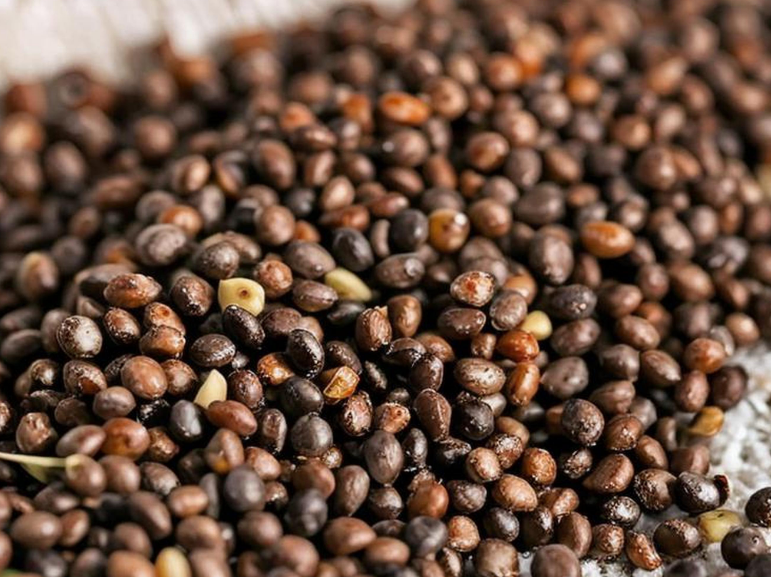
Methylation Efficiency and Completeness
Fatty acids don't fly through a gas chromatograph in their free form. They have to be turned into fatty acid methyl esters, and for ALA, the methylation step is a moment of genuine risk. Base-catalysed transesterification with methanolic potassium hydroxide is fast and gentle, but it won't touch free fatty acids. If the oil has any hydrolysis, a portion of the ALA escapes methylation and goes undetected. Acid-catalysed methylation covers both bound and free acids, but it can also isomerize the double bonds if the temperature or time drifts too high. The test item here is a completeness check: a drop of the methylated mixture on a thin-layer plate can reveal whether any unreacted polar lipids remain, or the analyst runs a quick test injection and looks for the absence of a free fatty acid hump at the start of the chromatogram. A partial methylation is worse than none, because it gives you a number that looks plausible but is quietly wrong.
Chromatographic Separation: Telling ALA from Its Look-Alikes
Column Polarity and Oven Temperature Profile
ALA is an 18-carbon chain with three double bonds at positions 9, 12, and 15. That's all-cis alpha-linolenic acid. Its close relative, gamma-linolenic acid, has double bonds at 6, 9, and 12 — a different omega-6 fatty acid with completely different biological activity. These two can co-elute or partially overlap on a poorly chosen column. The test item is a resolution check between the methyl esters of alpha-linolenic acid and gamma-linolenic acid, if the latter is present. A highly polar cyanopropyl column, with a slow temperature ramp through the C18 region, is the usual answer. The analyst verifies the separation by injecting a mixed standard containing both isomers and measuring the valley between the peaks. If the valley doesn't dip below fifty percent of the smaller peak's height, the run is rejected. For oils that might contain eicosanoic acid or other long-chain polyunsaturates, the temperature ramp is extended to make sure nothing hides under the ALA peak's tail.
Detection: Flame Ionization and the Carbon Count
A flame ionization detector gives a response roughly proportional to the number of carbon atoms, which makes it the workhorse for quantitative fatty acid work. The test item here is the relative response factor for ALA. Theoretically, ALA's response factor is close to that of the internal standard, usually tridecanoic acid or nonadecanoic acid. In practice, the lab checks this by running a certified reference mixture with known weight percentages and comparing the peak area percentages to the true values. If the ALA area percentage consistently reads lower than the gravimetric value, the detector sensitivity or the split ratio has drifted, and the correction factor gets updated. For samples that may contain conjugated linolenic acid isomers from processing or hydrogenation, the analyst also checks that no unusual peak appears on the shoulder of the ALA signal, because even a small co-elution will inflate the result.
Quantification: From Peak Area to a Defensible Number
Internal Standard Method and Calibration Linearity
Most labs use an internal standard that's added before methylation, so it goes through the entire process with the sample. The test item is the recovery and stability of that internal standard. A known amount of tridecanoic acid methyl ester should give a consistent peak area across the batch. If the area suddenly jumps or drops, something happened — a pipetting error, a dirty inlet liner, or a partial methylation. The calibration itself is checked with a series of mixed fatty acid methyl ester standards that bracket the expected ALA range. Linearity is confirmed by a correlation coefficient above a threshold, but the practical check is a mid-range calibration standard run every ten or so samples. If that standard's measured ALA content drifts by more than a few percent, the whole bracket is re-injected.
Result Expression and Total Fatty Acid Summation
ALA can be reported as a percentage of total fatty acids or as grams per hundred grams of sample. The test item that decides which one is appropriate is the total fatty acid content of the sample. For pure oils, total fatty acids are close to ninety-five percent or more, and reporting as a percentage of total fatty acids is clean and reproducible. For encapsulated supplements or ground seeds mixed with other materials, the total fat is extracted and weighed first, and then ALA is expressed relative to that extract weight. The analyst verifies the total fat determination gravimetrically and checks that the sum of all identified fatty acid peaks in the chromatogram accounts for at least ninety-five percent of the injected fat. If large unknown peaks appear, ALA's percentage may be understated, and the result gets qualified.
Authenticity and Adulteration: Beyond a Single Number
Expected ALA Ranges by Oil Type
ALA doesn't exist in isolation. Flaxseed oil should contain somewhere around fifty to sixty percent ALA. Perilla oil sits in a similar range. Walnut oil has maybe ten to fifteen percent. Soybean oil around seven percent. Canola oil a bit higher, but if a cheap vegetable oil has been blended with a small amount of flaxseed oil to boost the ALA label claim, the total fatty acid profile will betray it. The test item is the full fatty acid spectrum compared against a known authentic reference. The analyst looks at the ratio of ALA to linoleic acid, the stearidonic acid content, and the presence of minor fatty acids that are characteristic of the claimed source. A flaxseed oil that contains measurable amounts of erucic acid, for instance, has been cut with something from the mustard family, no matter what the ALA number says.
Isomer Check and Trans Fatty Acid Screening
Heat, hydrogenation, or certain chemical deodorization processes can convert cis double bonds into trans isomers or shift them along the chain. Trans alpha-linolenic acid isomers are not the same as the natural all-cis form, but they can co-elute or contribute to the total C18:3 signal on non-polar columns. The test item is a dedicated trans fatty acid analysis using a highly polar column that resolves the trans C18:3 peaks from the cis. If the trans content is abnormally high, the ALA value may need to be corrected downward, or the sample may be flagged as containing partially hydrogenated or refined oils that shouldn't be there. This isn't just a purity item — in many markets, trans fat declaration is mandatory, and a failure to separate these isomers is a labeling violation.
quality controls That Hold the Chain Together
Reagent Blank and Carryover Check
A solvent blank injection at the start of each sequence confirms the system is clean. Then a sample blank — solvent carried through the entire methylation procedure — checks for contamination introduced by the glassware and reagents. If a tiny ALA peak shows up in the blank, every sample's value is a little bit wrong. The analyst checks the blank area and subtracts it if possible, but if the blank is significant, the batch is re-run. A carryover check, injecting pure solvent after a high-ALA sample, confirms that the injection system isn't leaving a ghost of the previous run that inflates the next sample's reading. That ghost can fool you into thinking a low-ALA sample is slightly higher than it really is.
Reference Material Verification
A certified reference oil with a known ALA concentration is run alongside the samples. The acceptance range is tight — often within five percent of the assigned value. If the reference oil's measured ALA falls outside that window, no sample result from that batch can be reported. The reference material is stored under nitrogen in a freezer, and its use-by date is as much a test item as the injection itself. An expired reference that has slowly oxidized will give a low bias that the analyst might not notice until the entire system looks out of calibration.
Duplicate and Replicate Precision
One sample from the batch is prepared and injected in duplicate. The relative percent difference between the two ALA values must stay below a defined threshold. This catches both preparation errors — like a pipette that didn't aspirate correctly — and injection variability. If the duplicate fails, the entire batch is flagged, and the analyst goes looking for the root cause before any data leaves the lab.
Results Interpretation: Reading Between the Numbers
Cross-Checking with Sensory and Chemical Indices
A high ALA oil that's been mishandled will taste awful. The lab might measure peroxide value and anisidine value to gauge oxidation. A sample with sky-high ALA on paper but a rancid taste and a peroxide value through the roof has probably lost some of that ALA to oxidation, and the chromatographic result may not reflect what was originally present. The analyst reconciles the ALA number with the oxidation markers. If the story they tell is contradictory — high ALA but also high oxidation products — something about the storage or the extraction is suspect, and the result gets a cautionary note.
Batch Consistency and Trend Monitoring
For manufacturers, a single ALA measurement is less valuable than a trend chart. The analyst plots ALA content by batch over time. A sudden dip can indicate a change in seed source, an extraction problem, or a deliberate reformulation. The test item isn't just the number; it's the comparison to the historical fingerprint. A batch that falls outside two standard deviations of the running mean is re-tested, and if confirmed, it triggers an investigation upstream. This kind of trending turns a routine quality check into an early warning system.
Every one of these test items — from the smell of the oil at intake to the trans isomer baseline on the chromatogram — is there because someone once trusted a number and got burned. ALA testing looks easy on a certificate. Doing it so the number actually means what it says takes a chain of small, obsessive checks that no one ever sees, unless they're the ones running the sequence.