Carpet testing is the systematic evaluation of carpet products through controlled laboratory methods to measure performance, safety, chemical composition, and long-term appearance. It covers physical properties such as wear resistance and pile height, chemical analysis for substances like PFAS and phthalates, flammability ratings, colorfastness under light and ozone exposure, and dimensional stability under varying environmental conditions.
Carpet is the dominant flooring choice in the United States, holding a 60% share of the flooring market with 11 billion square feet sold per year. Approximately 3.5% of all waste disposed in US landfills is discarded carpet, equivalent to 2 million tons per year. Less than 5% of carpet discards are recycled, and only 1% are recycled back into new carpet in a closed loop. Testing ensures that products entering the market meet safety thresholds, perform as advertised, and do not introduce hazardous chemicals into indoor environments.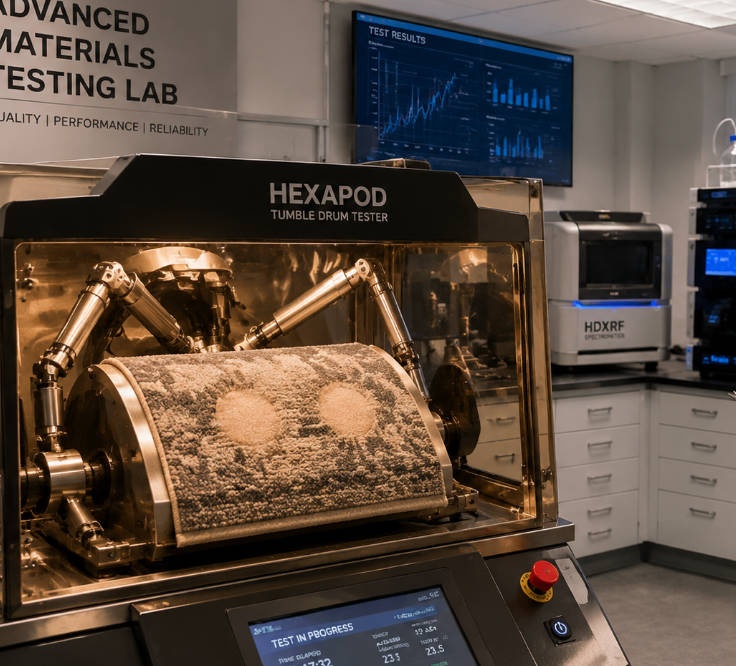
For manufacturers, carpet testing provides data that supports product development, quality control, material selection, specification documentation, and performance claims. For architects, specifiers, retailers, and end users, test data offers documented evidence when evaluating product suitability for a given space — whether a high-traffic commercial corridor, a healthcare facility, or a residential living room.
Key Carpet Testing Standards You Need to Know
Carpet testing draws on standards from multiple organizations. The table below summarizes the most widely referenced standards, their scope, and what they evaluate.
|
Standard |
Organization |
Scope |
What It Tests |
|---|---|---|---|
|
ASTM D418 |
ASTM International |
Constructional properties |
Pitches per unit length, backing density |
|
ASTM D1335 |
ASTM International |
Tuft withdrawal force |
Force required to pull tufts from backing |
|
ASTM D5252 |
ASTM International |
Hexapod appearance change |
Surface appearance after tumbling with polyurethane stud |
|
ASTM F970 |
ASTM International |
Static loading thickness loss |
Thickness recovery after static weight |
|
ASTM F1370 |
ASTM International |
Carpet cushion performance |
Underlay compression and recovery |
|
16 CFR Part 1630/1631 |
US CPSC |
Surface flammability |
Ignition resistance of small and large carpets |
|
ISO 10361 |
ISO |
Hexapod appearance change |
Appearance change under simulated traffic (international) |
|
ISO 105-B02 |
ISO |
Colorfastness to light |
Color retention after xenon arc light exposure |
|
ISO 11856 |
ISO |
Dimensional changes |
Size stability after humidity and temperature cycling |
|
AATCC 137 |
AATCC |
Rug back staining |
Color transfer from rug backing to vinyl tile |
|
AATCC 138 |
AATCC |
Shampooing colorfastness |
Color retention after cleaning |
|
BS 4790 / BS 5287 |
BSI (UK) |
Small ignition source |
Hot metal nut test for floor coverings |
|
BS 4939 |
BSI (UK) |
Tuft withdrawal force |
Force to extract tufts (UK method) |
|
EN 1307 |
CEN (EU) |
Classification |
Carpet classification by pile height and density |
Types of Carpet Testing Methods
Durability and Appearance Retention Testing
Durability testing measures how carpet fibers, texture, pile height, and overall appearance change after repeated use. Foot traffic causes fiber wear, crushing, matting, and visual changes that directly affect customer satisfaction.
The Hexapod test (ASTM D5252 / ISO 10361) is the most widely used method. It tumbles a polyurethane stud with six feet across the carpet surface inside a rotating drum for a set number of cycles. The resulting appearance change is rated on a standardized scale, providing a reproducible measure of how the carpet will look after sustained use.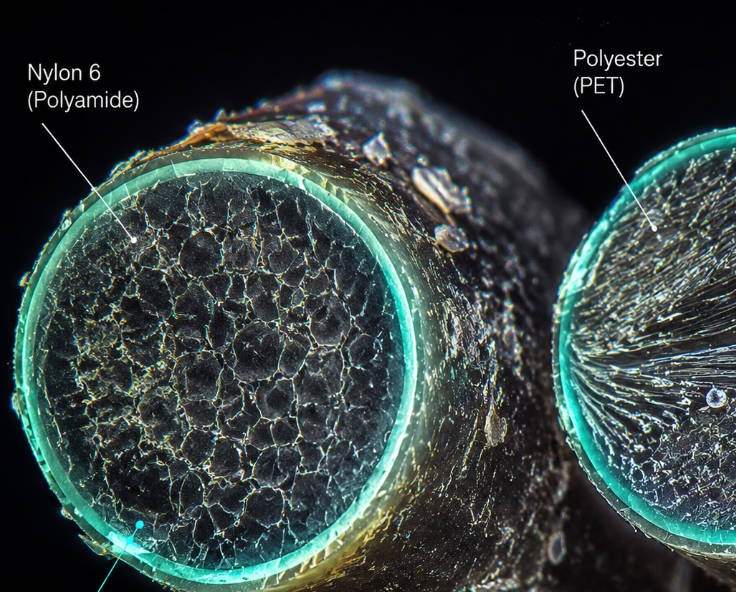
Tuft withdrawal force testing (ASTM D1335 / BS 4939) measures the force required to pull individual tufts from the carpet backing. Low withdrawal force indicates poor construction integrity — tufts may shed or fall out during normal use, particularly in cut-pile products.
Thickness loss under static loading (ASTM F970) evaluates how much carpet pile compresses under sustained weight and whether it recovers after the load is removed. This metric is critical for commercial installations where heavy furniture or equipment sits on carpet for extended periods.
Chemical and Toxic Substance Testing
Chemical testing of carpet products has become a major focus area, driven by research identifying over 40 toxic substances frequently used in US carpet manufacturing. Testing targets several chemical groups:
-
Per- and polyfluoroalkyl substances (PFAS): Used as stain and water repellents. Detected via Particle Induced Gamma-ray Emission (PIGE) spectroscopy for total fluorine screening, with confirmatory analysis by LC-MS/MS for individual compounds such as PFOA, PFOS, PFHxA, PFBA, PFBS, and PFPeA.
-
Phthalates: Used as plasticizers in PVC carpet backing. DEHP, DNOP, and DIBP are the most commonly detected. Analyzed by GC-MS after solvent extraction.
-
Nonylphenol: Used as adhesive or antioxidant in PVC backing. 4-Nonylphenol (branched) is a known endocrine disruptor.
-
Heavy metals: Antimony, lead, mercury, arsenic quantified by High Definition X-Ray Fluorescence (HD XRF) spectrometry.
-
Bisphenol A (BPA), flame retardants, isocyanates, and polycyclic aromatic hydrocarbons (PAHs): Screened via ambient mass spectrometry methods.
Testing typically follows a two-phase approach: a rapid screening phase using direct-probe ambient mass spectrometry (DIP-APCI-HR-TOF-MS) to detect compounds above a limit of detection (0.05%), followed by targeted quantitative analysis using GC-MS or LC-MS/MS with detection limits down to sub-ng/g levels.
Flammability and safety testing
Flammability testing determines whether a carpet will ignite and spread flame when exposed to a small ignition source. In the United States, the Consumer Product Safety Commission (CPSC) enforces flammability standards under 16 CFR Part 1630 (large carpets and rugs) and 16 CFR Part 1631 (small carpets and rugs). These tests use a timed ignition source placed on the carpet surface; the burning char length must not exceed a specified threshold.
In the UK and EU markets, the hot metal nut test (BS 4790 / BS 5287) evaluates ignition resistance using a heated hexagonal brass nut placed on the carpet surface. Additional flammability tests evaluate smoke generation, toxic gas emission, and heat release rates.
Colorfastness Testing
Colorfastness tests evaluate whether carpet maintains its intended appearance after exposure to light, ozone, crocking (rubbing), shampooing, and other environmental factors. The most common methods include:
-
Lightfastness (ISO 105-B02): Exposes carpet samples to a xenon arc lamp that simulates sunlight. Color change is rated on a 1–8 Blue Wool scale.
-
Crocking (AATCC 8/165): Measures color transfer from carpet to a white cloth under dry and wet rubbing conditions.
-
Shampooing colorfastness (AATCC 138): Evaluates color retention after simulated carpet cleaning.
-
Ozone resistance: Assesses color change after exposure to ozone concentrations representative of indoor environments.
Consistent color performance is essential for large commercial installations where carpet from different production runs must match visually.
Dimensional Stability Testing
Carpet tiles and modular flooring must maintain size and shape after installation. Temperature, humidity, moisture, and backing construction all affect dimensional stability and may cause curling, gaps, buckling, or edge lift.
ISO 11856 evaluates dimensional changes in textile floor coverings after exposure to humidity and temperature cycling. ASTM F2195 measures dimensional stability of carpet modules. These tests are critical for modular carpet installations where tiles must align precisely and remain flat over the building's service life.
Soiling, Staining, and Cleanability Testing
Soiling and staining tests evaluate how carpet performs in occupied environments where spills, dirt, and maintenance routines are part of daily use.
-
Accelerated soiling tests simulate months of foot traffic soil accumulation in hours using standardized soil mixtures applied under controlled conditions.
-
Stain resistance testing applies common staining agents (coffee, red wine, mustard, ink) and measures residual discoloration after cleaning.
-
Cleanability testing evaluates the effectiveness of cleaning methods on soiled or stained carpet, documenting both soil removal and any damage to fiber or color.
Toxic Chemicals Found in Carpets: What Testing Reveals
Independent testing of carpets sold by the six largest US manufacturers — Engineered Floors (J+J Flooring), Interface, Milliken, Mohawk, Shaw, and Tarkett (Tandus Centiva) — has revealed widespread presence of hazardous chemicals:
|
Chemical Group |
Specific Compounds Detected |
Carpets Affected |
Primary Health Concerns |
|---|---|---|---|
|
PFAS (stain repellents) |
PFOA, PFOS, PFBA, PFBS, PFHxA, PFHpA, PFPeA, 6:2FTS |
6 of 12 tested |
Carcinogenic, reproductive toxicant, developmental disorders, endocrine disruption |
|
Phthalates (plasticizers) |
DEHP, DNOP, DIBP |
5 of 12 tested |
Reproductive toxicity, endocrine disruption, developmental disorders, asthma |
|
Nonylphenol |
4-Nonylphenol (branched) |
1 of 12 tested |
Endocrine disruption, developmental and reproductive toxicity |
|
Heavy metals |
Lead, antimony, iron |
Multiple samples |
Neurological damage, carcinogenicity |
Key findings:
-
Every carpet with recycled content tested positive for one or more chemical contaminants.
-
PFAS were detected in 6 of 12 US carpets versus only 1 of 15 EU carpets, indicating significant regional differences in chemical management.
-
DNOP was found at 20% concentration in a J+J Flooring carpet with recycled PVC backing.
-
Phthalates DEHP and DIBP are banned in US children's toys at concentrations above 1,000 ppm, yet the same chemicals are unregulated in carpet — despite the similar exposure pathway for infants and toddlers who spend significant time on carpeted floors.
Carpet Testing for Regulatory Compliance and Certification
Multiple certification programs govern carpet products, but their coverage of toxic chemicals varies dramatically:
|
Certification |
Administered By |
Chemicals Addressed |
Gaps |
|---|---|---|---|
|
Blue Angel |
German Federal Government |
34 of 44 known carpet toxics banned |
Limited EU market reach |
|
Nordic Swan |
Nordic Countries |
Extensive chemical restrictions; PVC banned |
Only applies in Scandinavia |
|
CRI Green Label Plus |
Carpet & Rug Institute (US) |
VOC emissions only |
Does not address phthalates, PFAS, or non-volatile toxic substances |
|
Cradle to Cradle (C2C) |
C2C Products Innovation Institute |
8 chemicals banned at Silver level |
Only 95% of product assessed; substances allowed up to 1,000 ppm at Basic/Bronze |
|
NSF/ANSI 140 |
NSF International |
Long-chain PFAS restricted; VOC focus |
Short-chain PFAS alternatives not restricted |
|
Red List Declare |
ILFI |
21 of 44 chemicals |
Exemptions granted for "market limitations" |
The CRI Green Label Plus certification — the most common label on US carpets — only limits certain volatile organic compounds (VOCs). It does not test for or restrict phthalates, PFAS, or other non-volatile toxic substances found in carpets. This gap has enabled manufacturers to market "green" certified products that still contain hazardous chemicals.
How to Choose a Carpet Testing Laboratory
When selecting a carpet testing laboratory, evaluate these critical factors:
-
Accreditation: Look for ISO 17025 accreditation and CPSC-recognized laboratory status for flammability testing.
-
Scope of capabilities: Ensure the lab covers all test types you need — physical performance, chemical analysis, flammability, colorfastness, and dimensional stability.
-
Standards coverage: Verify the lab can test to ASTM, ISO, AATCC, BS, and CFR methods relevant to your target markets.
-
Experience with flooring: Specialized flooring laboratories understand carpet-specific variables (fiber type, backing construction, pile density) that general testing labs may overlook.
-
Turnaround time and reporting: Request clear timelines and detailed test reports with pass/fail criteria, raw data, and interpretation.
-
Custom testing programs: The best labs develop customized testing protocols to address unique product requirements, material changes, or failure investigation.
Major carpet testing service providers include Intertek (Professional Testing Laboratory), Bureau Veritas, , and independent university laboratories with specialized capabilities such as PIGE spectroscopy for fluorine analysis.
Common Challenges in Carpet Testing
-
Recycled content contamination: Recycled PVC, nylon, and fly ash used in carpet backing frequently introduce phthalates, heavy metals, and other contaminants into new products. Testing recycled feedstock before manufacturing is essential but rarely performed.
-
Certification loopholes: Many "eco" certifications allow toxic substances at low concentrations or exempt a percentage of the product from assessment. C2C Silver certification, for example, only requires 95% of the product to be assessed for CMR substances.
-
PFAS screening gaps: Total fluorine testing (PIGE) detects fluorine as an element but does not identify specific PFAS compounds. Conversely, targeted PFAS analysis only detects compounds on the screening list — potentially missing novel PFAS variants.
-
Cumulative exposure: Regulatory limits for individual chemicals do not account for the cumulative effect of multiple chemicals co-occurring in indoor environments. A carpet may contain PFAS, phthalates, and nonylphenol simultaneously, each below its individual threshold.
-
Regional regulatory fragmentation: The US has no federal restrictions on toxic chemicals in carpet. California, Washington, and Vermont regulate some chemicals in children's products but not in carpet. EU regulations are significantly stricter.
Summary
Carpet testing encompasses physical performance evaluation, chemical safety analysis, flammability certification, and environmental compliance — each addressing a distinct aspect of product quality and consumer safety. The most critical gap in current practice is chemical testing: independent investigations have found PFAS, phthalates, nonylphenol, and heavy metals in carpets from every major US manufacturer, yet the most common industry certification (CRI Green Label Plus) only addresses VOC emissions and ignores these non-volatile toxic substances entirely. Manufacturers, specifiers, and regulators should treat chemical safety testing as a prerequisite — not an option — for any carpet product entering the market.
Frequently Asked Questions About Carpet Testing
What chemicals are most commonly found in carpet testing?
PFAS (per- and polyfluoroalkyl substances used as stain repellents), phthalates (plasticizers in PVC backing), nonylphenol, and heavy metals including lead and antimony are the most frequently detected chemical groups. PFAS were found in half of carpets tested in independent studies, and phthalates appeared in five of twelve products.
Is CRI Green Label Plus certification sufficient to guarantee a safe carpet?
No. The CRI Green Label Plus certification only addresses volatile organic compound (VOC) emissions. It does not test for or restrict non-volatile toxic substances such as PFAS, phthalates, or heavy metals. A carpet can carry this certification and still contain multiple hazardous chemicals.
What is the difference between PIGE screening and targeted PFAS analysis?
PIGE (Particle Induced Gamma-ray Emission) spectroscopy detects total fluorine content above approximately 25 ppm, serving as a rapid screening tool for the possible presence of PFAS. It does not identify specific compounds. Targeted PFAS analysis uses LC-MS/MS to identify and quantify individual PFAS compounds such as PFOA, PFOS, and PFHxA at detection limits down to sub-ng/g levels.
How does carpet testing differ between the US and EU?
EU carpet manufacturers face stricter chemical regulations, including REACH restrictions and ecolabels such as Blue Angel and Nordic Swan that ban most toxic substances found in US carpets. Independent testing found no toxic chemicals in 3 of 15 EU carpets tested, including products with recycled content, whereas toxic substances were found in virtually all US samples.
Why is recycled content in carpet a testing concern?
Recycled materials — particularly recycled PVC backing, post-consumer nylon, and fly ash filler — frequently carry chemical contaminants from their previous use. Phthalates, heavy metals, and other toxic substances persist through the recycling process and appear in new products. Testing recycled feedstock before manufacturing is essential but not yet common practice.