Understanding Surge (Impulse) Immunity Testing
Purpose of Surge Testing
Surge immunity testing evaluates the ability of electronic equipment to withstand high-energy voltage and current transients caused by lightning strikes and switching events in power grids. These surges can couple into power lines and signal cables, leading to immediate failure or latent damage. The test simulates such conditions to verify that the equipment under test continues to operate safely and as intended.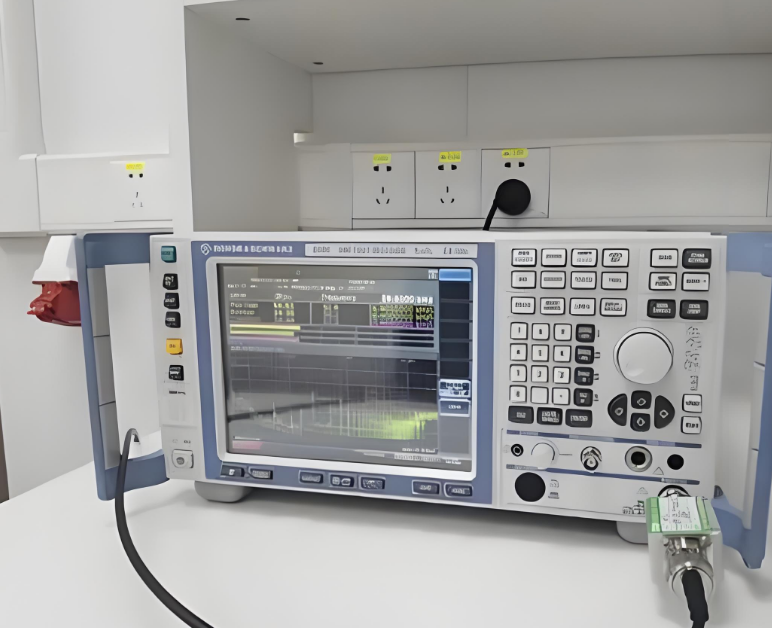
Typical Surge Waveform Characteristics
The transient applied during testing follows a defined waveform shape. An open-circuit voltage surge rises to its peak in 1.2 microseconds and decays to half value in 50 microseconds, commonly described as a 1.2/50 μs wave. The corresponding short-circuit current waveform has an 8 μs rise time and a 20 μs duration to half value, noted as 8/20 μs. These parameters represent the energy and timing of real-world surge events.
Core Surge Test Parameters and Levels
Test Voltage Levels
Surge tests are conducted at progressively higher voltage levels depending on the installation environment and expected exposure. Typical test levels include 0.5 kV, 1 kV, 2 kV, and 4 kV for both line-to-line and line-to-earth configurations. Higher immunity levels may require testing up to 6 kV or more for industrial and outdoor equipment.
Line-to-Line and Line-to-Earth Application
Surge pulses are applied in two coupling modes. Line-to-line testing, also called differential mode, injects the surge between power conductors to check for insulation breakdown and functional upset. Line-to-earth testing, known as common mode, applies the surge between each line and protective earth to assess ground isolation and cabling immunity. Both modes are essential for a complete immunity profile.
Test Setup and Coupling Methods
Coupling and Decoupling Networks
A coupling network feeds the high-energy surge from the generator onto the active lines without disrupting the normal power supply. A decoupling network protects the auxiliary power source and ensures that the full surge energy reaches the equipment. Dedicated coupling methods exist for AC mains, DC power ports, and unshielded symmetrical signal lines, each designed to replicate real coupling paths.
Generator and Monitoring Equipment
A combination wave generator produces the 1.2/50 μs voltage and 8/20 μs current pulses with the required energy. The test setup includes a reference ground plane, appropriate cabling, and monitoring instruments to observe the equipment’s functional behavior during and after each surge. Power and signal ports are tested separately according to a pre-defined test plan.
Performing the Surge Immunity Test and Interpreting Results
Test Execution Sequence
Testing begins with verifying normal operation. At each selected voltage level and coupling mode, a sequence of five positive and five negative pulses is applied, with intervals long enough to allow recovery of any protective devices. Pulses are synchronized with the AC mains phase angle at 0, 90, and 270 degrees to cover worst-case timing. After each set, the equipment is checked for performance degradation.
Performance Criteria Classification
The immunity response is classified into four categories. Criterion A requires normal performance during and after the test with no operator intervention. Criterion B permits a temporary loss of function or degradation that self-recovers when the surge stops. Criterion C allows a loss that needs a system reset or power cycle. Criterion D indicates permanent hardware damage or non-recoverable failure. The test report documents the achieved immunity level for each port against the selected performance criterion.