Overview of Fatigue Stress Testing
Purpose and Scope
Fatigue stress testing evaluates how a material, component, or assembly performs under repeated cyclic loading. The test simulates conditions that lead to progressive and localized structural damage, ultimately determining the endurance limit and fatigue life. This process is essential for ensuring long-term reliability in applications where fluctuating stresses occur, such as rotating machinery, aerospace structures, and automotive parts.
Key Inspection Items in Fatigue Testing
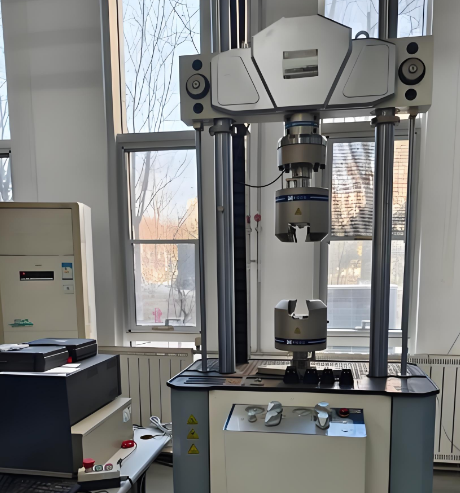
Applied Stress Parameters
The most fundamental inspection items are the stress amplitude, mean stress, and stress ratio. During a test, the maximum and minimum stresses of each cycle are precisely controlled and monitored using load cells and extensometers. These values define the loading spectrum and are used to construct S-N curves that relate stress amplitude to the number of cycles to failure.
Cycle Counting and Fatigue Life Measurement
Accurate cycle counting is central to any fatigue evaluation. Electronic counters track the total number of applied cycles until a predefined failure criterion is met, such as complete fracture, a stiffness drop, or the appearance of a visible crack. This data directly yields the fatigue life for the specified loading condition.
Strain and Displacement Monitoring
Strain gauges and displacement transducers capture the local deformation response of the test specimen throughout the fatigue process. Monitoring the evolution of strain range and hysteresis loops allows the detection of cyclic hardening or softening behaviors. Sudden changes in strain readings often indicate crack initiation long before final fracture occurs.
Crack Detection and Propagation Tracking
For fracture mechanics-based tests, the crack length is measured at intervals using methods such as direct current potential drop, compliance techniques, or high-resolution imaging. The inspection focuses on the crack growth rate plotted against the stress intensity factor range. This provides the material constants needed to predict the residual life of cracked components under service loads.
Surface and Microstructural Examination
Post-test fractography and surface inspection reveal the failure origin and mode. Optical and scanning electron microscopy identify features like beach marks, striations, and inclusion sites. These observations confirm whether failure initiated from a surface defect, inclusion, or intrinsic microstructure, and they help validate the test validity and quality of the specimen preparation.
Test Environment and Condition Checks
Temperature and Environmental Control
In many applications, fatigue behavior is sensitive to temperature, humidity, or corrosive media. Testing may be performed in controlled chambers with continuous monitoring of these parameters. The environmental data is recorded as part of the inspection protocol to ensure the test conditions match the intended service environment.
Frequency and Waveform Verification
The loading frequency and waveform shape influence fatigue results. Inspection items include verifying that the sinusoidal, triangular, or arbitrary waveform is applied as specified and that the frequency remains stable throughout the test. Deviations can affect strain rate and temperature rise, altering the measured life.
Interpreting Fatigue Test Data
All collected inspection items feed into a final analysis. The S-N curve, fatigue limit, crack growth curve, and fracture features are evaluated together. Test reports summarize the stress levels, cycles endured, failure mode, and any deviations observed. This comprehensive set of data supports engineering decisions on material selection, design improvements, and maintenance scheduling.