Understanding Stone Chip Resistance Testing
Purpose and Application
Stone chip resistance testing simulates the impact of road debris and gravel on painted and coated surfaces. This evaluation is essential for automotive body panels, protective coatings, and components exposed to harsh road environments. The test uses controlled, high-speed projectiles to measure a coating system's ability to resist chipping, cracking, and delamination without exposing the underlying substrate.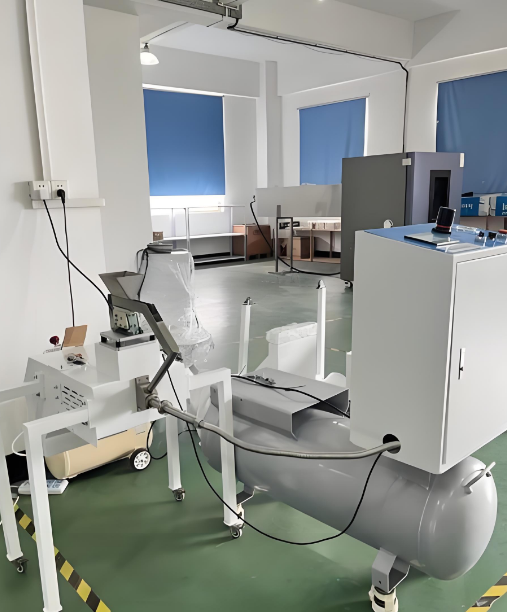
Key Inspection Items During Stone Chip Testing
Impact Media Verification
The type, size, sharpness, and hardness of the impact media are critical inspection parameters. Standardized chilled iron grit or steel shot with defined edges is typically used. Before and after testing, the particle size distribution and edge condition are checked, because worn or rounded media produce inconsistent damage and compromise test validity.
Impact Angle and Velocity Control
The angle at which projectiles strike the coated panel is set and verified, commonly at 45 degrees or 90 degrees to replicate different driving conditions. Impact velocity is regulated by air pressure and monitored using high-speed sensors. Both angle and velocity must remain stable throughout the test to ensure repeatable results.
Shot Quantity and Coverage Uniformity
A precise mass or volume of media is directed at a defined test area within a specific time. Inspectors record the shot quantity and visually assess the impact pattern. Uniform distribution of impacts across the target zone is necessary, as clustered or sparse areas can lead to misleading damage assessments.
Visual Damage Assessment and Adhesion Testing
After impact, the panel undergoes a detailed visual examination. Chipped areas, cracks, and any exposed substrate are identified and documented. A standardized tape adhesion pull-off test is then performed over the impacted region. The amount of coating removed by the tape indicates the interlayer adhesion strength and the overall stone chip resistance.
Quantitative Damage Evaluation
Digital image analysis software measures the total chipped area, maximum chip diameter, and the percentage of exposed metal or primer. These metrics are compared against acceptance thresholds. The evaluation also categorizes the failure mode, noting whether detachment occurs within a coating layer or at the interface between layers, which guides formulation improvements.
Environmental Conditions and Reporting
Stone chip tests are often conducted at controlled sub-ambient temperatures to simulate winter conditions where coatings are more brittle. The test report documents all inspection data, including media type, angle, velocity, temperature, and the quantitative damage ratings. This complete set of information supports coating development and quality verification.