What Is Bacillus Coagulans and Why Testing Matters
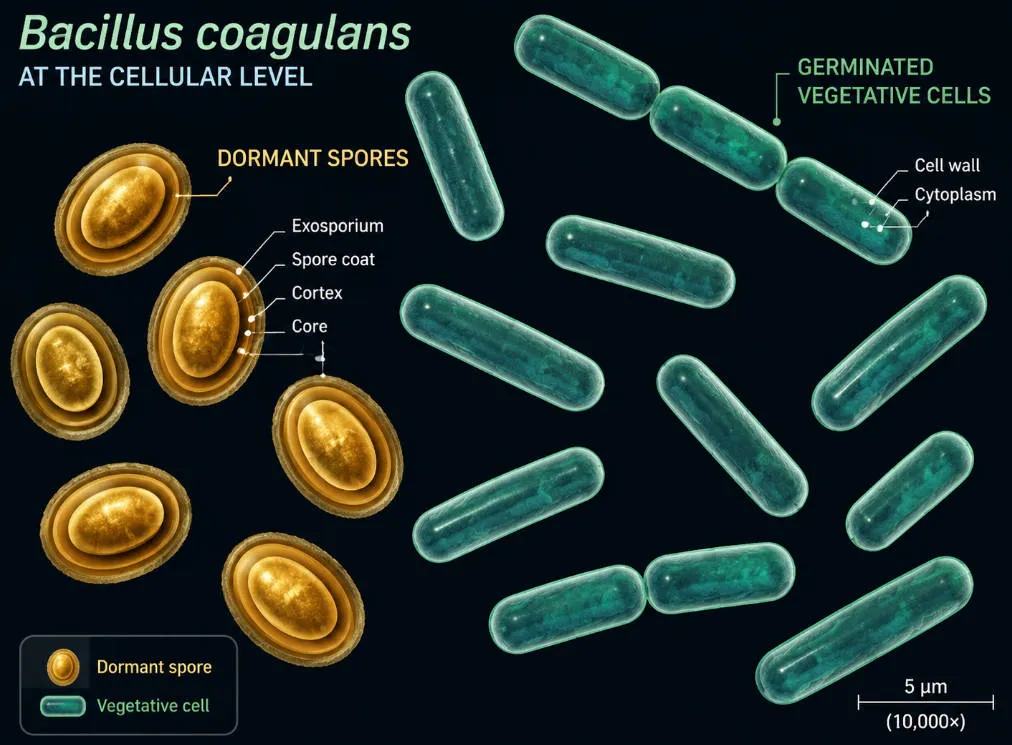
Bacillus coagulans is a Gram-positive, spore-forming, facultatively anaerobic bacterium that produces L-lactic acid. First described in 1915 at the Iowa Agricultural Experiment Station, it occupies a unique position among probiotic organisms because it combines characteristics of both the Bacillus and Lactobacillus genera. Unlike traditional Lactobacillus probiotics, B. coagulans forms resilient endospores that survive stomach acidity, high temperatures, and harsh manufacturing processes — making it exceptionally suitable for functional foods, dietary supplements, and animal feed.
Because B. coagulans produces lactic acid, it is frequently misclassified as a Lactobacillus species. The key differentiator is its spore-forming capability, which fundamentally changes how it must be tested. Spores are dormant; they must be activated before enumeration, and standard plate count techniques will dramatically undercount viable organisms if the activation step is omitted.
Testing B. coagulans matters for three reasons: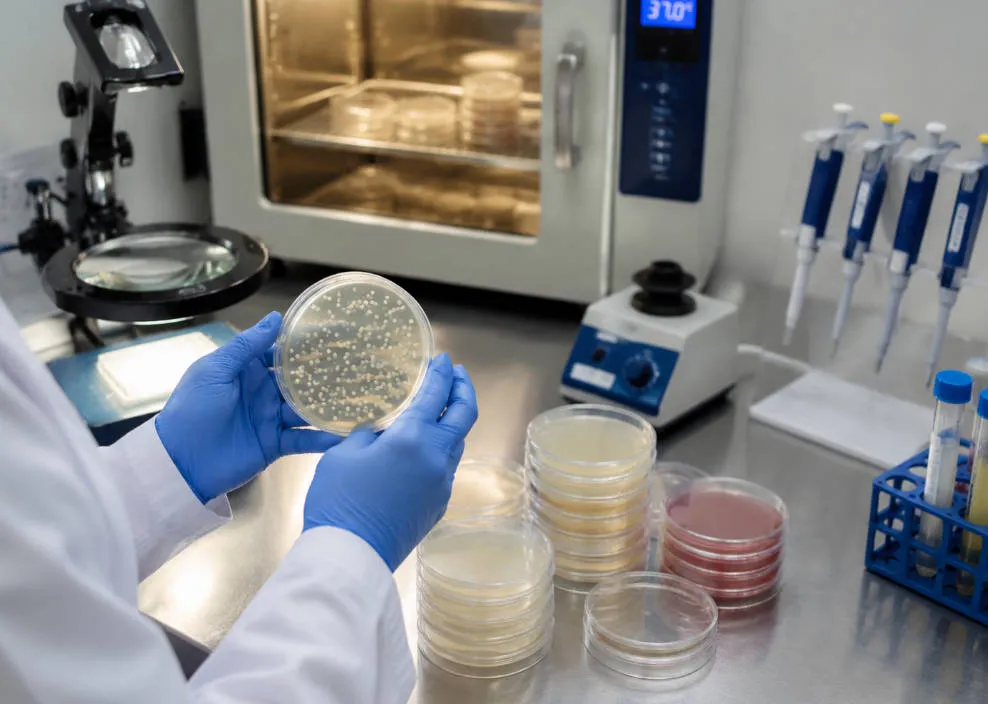
-
Product efficacy: Consumers and clinicians rely on label claims for colony-forming units (CFUs). Without rigorous enumeration testing, there is no guarantee the product delivers the studied dose.
-
Regulatory compliance: In the United States, 21 CFR 111 (GMPs for dietary supplements) requires manufacturers to "establish product specifications for the identity, purity, strength, and composition" of every finished batch. Health Canada's Quality of Natural Health Products Guide (Appendix 4) specifically mandates probiotic enumeration.
-
Safety: Strain-level identity testing ensures that the organism in the product matches the strain with documented safety studies — not a different strain or contaminant.
Bacillus Coagulans Strains: GBI-30, 6086 and MTCC 5856
Not all B. coagulans strains are equivalent. Safety and efficacy studies are connected to specific strains, making strain-level identification critical.
|
Strain |
Designation |
Key Milestone |
Primary Applications |
|---|---|---|---|
|
GBI-30, 6086 |
GanedenBC30 |
First Bacillus to receive FDA GRAS "no questions" (2012); first USP FCC probiotic monograph (2013) |
Foods, beverages, supplements, baked goods |
|
MTCC 5856 |
LactoSpore |
Extensive stability and clinical research |
Dietary supplements, functional foods |
|
Unique IS-2 |
— |
Clinical studies for IBS and diarrhea |
Supplements |
B. coagulans GBI-30, 6086 was the first strain from the Bacillus family to be notified as GRAS (Generally Recognized as Safe) and receive a "no questions" letter from the FDA. It can be incorporated into baked goods, breakfast cereals, dairy products, coffee, tea, and pasta because its spores survive baking temperatures. The USP Food Chemicals Codex (FCC) monograph for this strain represents the first publicly proposed documentary standard for any probiotic ingredient.
Regulatory Standards for Bacillus Coagulans Testing (USP / FCC / FDA / Health Canada)
|
Standard / Regulation |
Scope |
Key Requirement |
|---|---|---|
|
USP FCC Bacillus coagulans GBI-30, 6086 monograph |
Identity, enumeration, purity for food ingredient |
Validated activation + enumeration procedure; nucleic acid-based strain-level ID |
|
USP <64> |
General probiotic enumeration |
Cultural methods for viable count |
|
USP strain-specific monographs |
Individual probiotic strains |
Species- and strain-specific methods |
|
21 CFR 111 (USA) |
Dietary supplement GMPs |
Identity, purity, strength, composition specifications for every batch |
|
Health Canada Appendix 4 |
Natural health product quality |
Mandatory probiotic enumeration |
|
GRAS Notification No. 399 |
B. coagulans GBI-30, 6086 |
Safety for use in specified food categories |
|
CMMEF Chapter 20 |
Compendium methods |
Cultural enumeration methods |
The USP FCC monograph is particularly significant because it fills a gap in the probiotic industry: prior to its publication, no substantive public standard existed for verifying the identity and viable count of any probiotic ingredient independently. Purchasers had to rely solely on manufacturer-provided data.
Viability and Enumeration Testing: Spore Activation and Plate Count Methods
Why Spore Activation Is Essential
B. coagulans spores are metabolically dormant. If standard plate count techniques are applied without an activation step, only a small fraction of viable organisms will germinate and form colonies, producing counts that are dramatically and unpredictably lower than the true viable count. The USP FCC monograph includes a validated activation procedure specifically to address this challenge.
Enumeration Workflow
-
Sample preparation: Weigh a representative sample under aseptic conditions
-
Homogenization: Dissolve or suspend the sample in a suitable diluent. For gummy matrices, high-speed blending followed by sonication may be necessary to break up microscopic clumps
-
Serial dilution: Prepare 10-fold serial dilutions in buffered peptone water or phosphate-buffered saline
-
Spore activation: Heat treatment (typically 65–80 °C for 10–30 minutes) to trigger germination of dormant spores
-
Plating: Spread plate or pour plate on selective or non-selective agar (e.g., tryptic soy agar, nutrient agar)
-
Incubation: 37 °C for 24–48 hours under aerobic or facultatively anaerobic conditions
-
Colony counting: Count colonies at the appropriate dilution; calculate CFU per gram or per serving
|
Parameter |
Typical Range for B. coagulans |
|---|---|
|
Activation temperature |
65–80 °C |
|
Activation time |
10–30 minutes |
|
Growth medium |
Tryptic soy agar (TSA), nutrient agar (NA), or strain-specific medium |
|
Incubation temperature |
37 °C (some methods specify 45–55 °C for optimal recovery) |
|
Incubation time |
18–48 hours |
|
Typical label claim |
1–6 billion CFU/serving |
|
Safety studied dose |
Up to 6 billion CFU/day for up to 3 months |
Critical Factors Affecting Enumeration Accuracy
-
Homogenization: Insufficient mixing in complex matrices (gummies, baked goods) leads to clumping and undercounting. High-speed blending + sonication may be required
-
Growth medium selection: Different media yield different recovery rates. Method development should compare multiple media formulations
-
Incubation temperature: Higher temperatures (45–55 °C) may improve recovery for some B. coagulans strains
-
Activation protocol: Temperature and duration must be validated for each product matrix
Identity and Strain-Level Verification: Molecular Methods
Identifying the microorganism to the strain level is critical because safety and efficacy studies are strain-specific. Using a different B. coagulans strain than the one studied could compromise both safety and effectiveness.
Methods
|
Method |
Level of Identification |
Application |
|---|---|---|
|
16S rRNA gene sequencing |
Species-level |
Confirms organism is B. coagulans |
|
Whole genome sequencing (WGS) |
Strain-level |
Definitive Strain Identification |
|
RAPD-PCR / AFLP |
Strain-level |
Fingerprinting for batch consistency |
|
PFGE (Pulsed-Field Gel Electrophoresis) |
Strain-level |
Gold standard for strain differentiation |
|
rep-PCR |
Strain-level |
Rapid strain verification |
|
MALDI-TOF MS |
Species to genus |
Rapid screening |
|
Biochemical profiling (API, VITEK) |
Species-level |
Complementary confirmation |
The USP FCC monograph for GBI-30, 6086 includes a nucleic acid-based identification technique, enabling purchasers to independently verify that the ingredient matches the GRAS-notified strain — not some other B. coagulans isolate.
Purity and Contamination Testing
Purity testing ensures that the B. coagulans ingredient is free from harmful contaminants.
|
Test |
Standard |
Acceptance Criterion |
|---|---|---|
|
Total aerobic microbial count |
USP <61> |
Per product specification |
|
Total yeasts and molds |
USP <61> |
Per product specification |
|
Coliforms / E. coli |
USP <62> |
Absent |
|
Salmonella |
USP <62> |
Absent |
|
Staphylococcus aureus |
USP <62> |
Absent |
|
Heavy metals |
USP <231> / ICP-MS |
Below regulatory limits |
|
Mycotoxins |
LC-MS/MS |
Below detectable limits |
|
Residual solvents |
USP <467> |
Below limits (if applicable) |
Stability Testing: Shelf Life and Process Survival
B. coagulans spores are remarkably resilient, but viability still declines over time and under stress conditions. Stability testing quantifies this decline and establishes shelf life and storage conditions.
Factors Affecting Stability
|
Factor |
Effect on Viability |
Mitigation |
|---|---|---|
|
Temperature |
Higher storage temperature accelerates viability loss |
Store at cool, controlled temperatures |
|
Humidity / moisture |
Moisture ingress triggers premature germination |
Use moisture-barrier packaging |
|
Oxygen |
Oxidative stress degrades cells |
Use oxygen-barrier packaging, nitrogen flush |
|
Light (UV) |
UV damages cellular components |
Use opaque packaging |
|
Food processing (heat) |
B. coagulans spores survive baking temperatures (>100 °C) |
Spore form provides inherent protection |
|
pH |
Extreme pH can reduce viability |
Formulate with compatible excipients |
Stability Study Design
-
Real-time stability: Store at labeled conditions (e.g., 25 °C / 60% RH) and test CFU counts at 0, 3, 6, 9, 12, 18, and 24 months
-
Accelerated stability: Store at 40 °C / 75% RH for 6 months to predict shelf life
-
Process stability: Test CFU counts before and after manufacturing steps (mixing, baking, extrusion, tableting)
-
In-use stability: Test after opening packaging at defined intervals
B. coagulans GBI-30, 6086 has demonstrated survival through baking, extrusion, pasteurization, and high-pressure processing — a key advantage over non-spore-forming probiotics like Lactobacillus and Bifidobacterium.
Antimicrobial Activity Testing: MIC, MBC, and Agar Diffusion Methods
B. coagulans exerts antimicrobial effects through secreted metabolites including coagulin (a bacteriocin), lactic acid, and other antimicrobial peptides. Testing these effects is important for characterizing the probiotic's functional properties.
Test Methods
|
Method |
What It Measures |
B. coagulans Typical Results |
|---|---|---|
|
Agar well-diffusion |
Zone of inhibition around supernatant-filled well |
Often no visible zone (low secretion vs. agar diffusion limits) |
|
Agar disc-diffusion |
Zone of inhibition around supernatant-impregnated disc |
Often no visible zone |
|
Broth microdilution (MIC) |
Lowest concentration inhibiting visible growth |
E. coli: 25 ug/mL; S. typhi: 50 ug/mL; Sh. flexneri: 3.1 ug/mL; B. cereus: 100 ug/mL |
|
MBC (minimum bactericidal concentration) |
Lowest concentration killing the organism |
Often not achieved at MIC concentrations |
|
Co-culture assay |
Growth inhibition in shared liquid culture |
Pathogen-dependent inhibition |
Research Findings
Published research (Ostad et al., 2024, Shiraz E-Medical Journal) demonstrated that B. coagulans cell-free supernatant:
-
Showed no inhibition zones in agar well-diffusion or disc-diffusion against E. coli, S. typhi, Sh. flexneri, or B. cereus
-
Showed significant MIC activity against all four pathogens (P < 0.0001)
-
Did not achieve bactericidal effect at the concentrations tested (MBC not reached)
This pattern — MIC activity without diffusion-based inhibition — is attributed to the relatively lower secretion of antimicrobial substances compared to lactic acid bacteria. The broth microdilution method concentrates the antimicrobial compounds in liquid contact with the pathogen, whereas agar methods rely on diffusion through a solid matrix.
Matrix-Specific Testing Challenges: Gummies, Powders, and Functional Foods
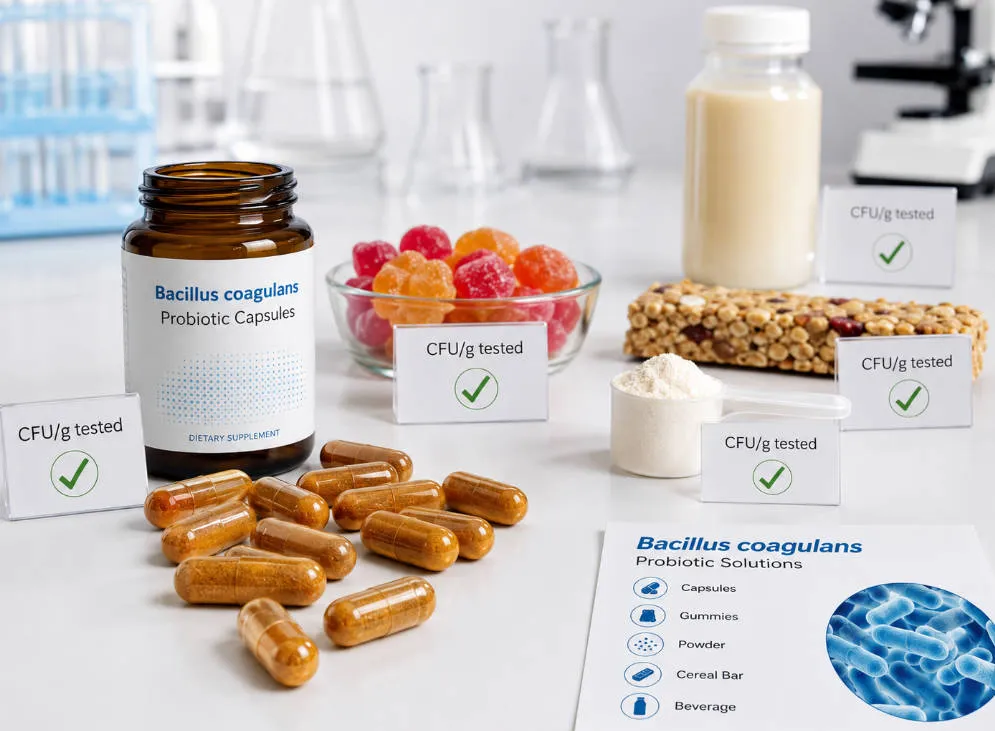
Different product matrices present unique challenges for B. coagulans enumeration:
|
Matrix |
Key Challenge |
Solution |
|---|---|---|
|
Gummy candies |
Incomplete dissolution; B. coagulans trapped in gelatin/gelling agent matrix |
High-speed blending followed by sonication; alternative growth media; higher incubation temperature |
|
Powders / capsules |
Generally straightforward |
Standard serial dilution and plating |
|
Baked goods |
Heat exposure during processing; complex food matrix |
Process survival testing; validated extraction method |
|
Dairy products |
Competing microbiota |
Selective media for B. coagulans |
|
Beverages |
Low concentration per serving |
Large sample volume; membrane filtration |
Case Study: Gummy Matrix Challenge (Eurofins)
A client launching a B. coagulans gummy product found enumeration results far below expected levels using the strain manufacturer's prescribed method. Investigation revealed:
-
Root cause: The homogenization steps in the manufacturer's method were insufficient to dissolve the gummy matrix
-
Solution: Two-step dissolution — high-speed blend followed by sonication to break up microscopic clumps
-
Further optimization: Alternative growth media at higher incubation temperature yielded better recovery
-
Outcome: A validated, matrix-specific enumeration method was developed and the product launched on time
This case illustrates why method development and validation should not be overlooked for novel product formats.
Safety and Toxicology Testing
|
Test |
Purpose |
Expected Result for B. coagulans |
|---|---|---|
|
Acute oral toxicity (rodent) |
LD50 determination |
Non-toxic at maximum tested dose |
|
90-day subchronic toxicity |
Repeated dose safety |
No adverse effects at typical dose levels |
|
Hemolytic activity |
Blood cell lysis potential |
Non-hemolytic (gamma-hemolytic) |
|
Mucin degradation |
Ability to degrade intestinal mucin |
Non-degrading |
|
Antibiotic resistance profiling |
Transferable resistance genes |
No acquired antibiotic resistance |
|
Genome analysis for virulence genes |
Toxin and pathogenicity genes |
Absent |
|
Bacterial translocation potential |
Ability to cross intestinal barrier |
Low risk for immunocompetent individuals |
B. coagulans is classified as non-pathogenic and safe for human consumption. It has been used safely at doses up to 6 billion CFU/day for up to 3 months in adults, and up to 100 million CFU/day for up to one year in infants.
Special populations: Immunocompromised individuals, those with short bowel syndrome, central venous catheters, cardiac valve disease, and premature infants may be at higher risk for adverse events (bacterial translocation, bacteremia). Probiotic therapy parameters (strain, dose, frequency, duration) are not yet fully established for these populations.
In Vitro and In Vivo Efficacy Testing
In Vitro Models
|
Model |
What It Tests |
|---|---|
|
Simulated gastric fluid survival |
Spore survival at pH 2–3 |
|
Bile salt tolerance |
Growth in presence of 0.3–3% bile |
|
Adhesion to Caco-2 / HT-29 cells |
Intestinal epithelial adhesion potential |
|
Dynamic computer-controlled gastrointestinal model (TIM-1) |
Digestion, absorption, and survival through simulated upper GI tract |
|
Co-culture with pathogens |
Antimicrobial activity against specific organisms |
B. coagulans GBI-30, 6086 has been shown to increase plant protein digestion in the TIM-1 dynamic model, demonstrating functional benefit beyond simple viability.
Clinical Application Areas
|
Condition |
Evidence Level |
|---|---|
|
Irritable bowel syndrome (IBS) |
Multiple clinical studies; improvement in abdominal pain and bloating |
|
Constipation |
Supported by clinical data |
|
Diarrhea (antibiotic-associated, infectious) |
Moderate evidence |
|
Dyslipidemia |
Emerging evidence |
|
Immune modulation |
Preliminary studies |
|
Rheumatoid arthritis |
Limited studies |
|
Inflammatory bowel disease |
Preclinical and limited clinical data |
Upon oral administration, B. coagulans spores pass through the stomach and germinate in the duodenum. The vegetative cells multiply in the small intestine and colon, producing L-lactic acid. Viable cells are slowly excreted through feces for up to seven days after consumption stops.
Quality Control Workflow: From Raw Material to Finished Product
-
Raw material incoming testing
-
Identity confirmation (molecular method)
-
Enumeration (CFU/g with validated activation protocol)
-
Purity (microbial limits, heavy metals)
-
-
In-process testing
-
Environmental monitoring
-
CFU count after blending / mixing
-
-
Finished product testing
-
Enumeration (matrix-specific validated method)
-
Identity (strain-level confirmation)
-
Purity (microbial limits, contaminants)
-
Label claim verification (CFU per serving)
-
-
Stability program
-
Real-time and accelerated stability
-
Ongoing annual stability batches
-
-
Release specification
-
CFU count meets or exceeds label claim
-
All purity tests pass
-
Identity confirmed to strain level
-
Summary
Bacillus coagulans testing encompasses four pillars: viability (enumeration with proper spore activation), identity (strain-level molecular verification), purity (absence of contaminants), and stability (shelf life and process survival). The spore-forming nature of B. coagulans makes it both a uniquely robust probiotic and a uniquely challenging organism to test — standard plate count methods will fail without the activation step mandated by the USP FCC monograph.
Three principles define quality B. coagulans testing: test to the strain level (safety and efficacy are strain-specific), use matrix-validated methods (gummies, baked goods, and powders each require different sample preparation), and verify at every stage from raw material through finished product stability. The result is consumer confidence that the product on the shelf delivers the CFU count on the label, the strain in the clinical studies, and the safety that regulators require.