What Is Self-Priming Pump Testing?
Self-priming pump testing is the laboratory verification of a self-priming centrifugal pump against ISO 9906:2012 (rotodynamic pumps — hydraulic performance acceptance tests, Grades 1, 2, and 3), its Chinese adoption GB/T 3216-2016, and the product-specific self-priming performance tests for suction lift and priming time. A complete program confirms hydraulic performance (flow, head, power, efficiency), cavitation margin (NPSH), and self-priming capability (priming time at rated suction lift) in one coordinated test package.
Unlike a standard centrifugal pump that must be manually filled with liquid before start-up, a self-priming pump evacuates air from the suction line and lifts liquid automatically — which is exactly why its self-priming performance is a separately tested characteristic, not just an inferred side-effect of good hydraulic design. Beijing ZKGX Research Institute structures its self-priming pump test programs against the ISO 9906 / GB/T 3216 clause matrix, supplemented by the priming-time and suction-lift procedures defined in the relevant product standards.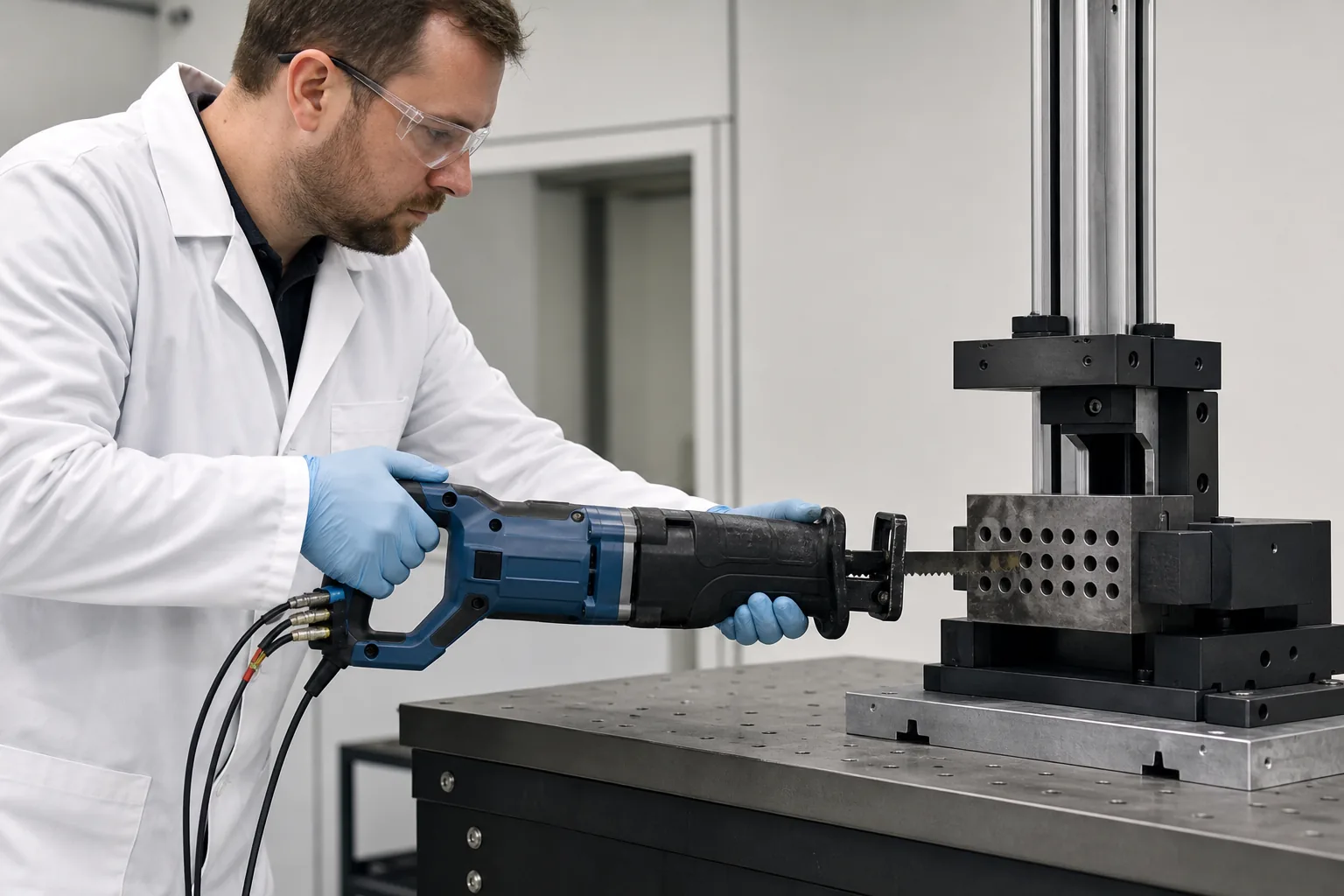
Why Self-Priming Pump Testing Matters
A self-priming pump is selected specifically because the installation cannot rely on a flooded suction — the pump sits above the liquid source and must draw liquid up through the suction pipe. That single fact drives every failure mode the test program targets:
- Priming failure — if the air-evacuation path is poorly designed or worn, the pump runs dry indefinitely, overheats, and destroys its mechanical seal
- Insufficient NPSH margin — cavitation erodes the impeller and destroys hydraulic performance within hours of operation
- Head and flow shortfall — a pump that meets nameplate only at the best efficiency point but collapses at the system's required duty point is unfit for service
- Efficiency deficit — a poorly matched impeller or worn wear rings waste energy across thousands of operating hours
- Vibration and noise — misalignment, imbalance, or cavitation manifest as vibration that destroys bearings and couplings
For these reasons, ISO 9906 acceptance testing is mandatory under most procurement contracts for water, wastewater, chemical, and industrial process pumping. Failure to test means acceptance of unverified performance — and the cost falls on the buyer when the pump underperforms.
Which Standards Govern Self-Priming Pump Testing?
There is no single self-priming pump standard; the framework is layered:
| Standard | Scope | What it answers |
|---|---|---|
| ISO 9906:2012 | Rotodynamic pumps — hydraulic performance acceptance tests, Grades 1, 2, 3 | Does the pump meet its guaranteed Q, H, P, and η within tolerance? |
| GB/T 3216-2016 | Chinese adoption of ISO 9906:2012 | Same content for the Chinese market — the contractual default for domestic procurement |
| GB/T 3214 | Pump testing method general rules | How are flow, pressure, speed, and torque instrumented? |
| GB/T 18149 / ISO 3555 (legacy) | Older acceptance test framework | Historical reference; superseded by ISO 9906 |
| Hydraulic Institute HI 14.6 | North American acceptance testing | US equivalent to ISO 9906, with the same three-grade structure |
| API 610 | Centrifugal pumps for petroleum, petrochemical, and natural gas industries | Higher-bar specification for oil & gas service self-priming pumps |
| Product standards (e.g., JB/T 6664 for self-priming pumps) | Self-priming-specific requirements | What priming time and suction lift must the pump achieve? |
Beijing ZKGX structures every self-priming pump test report against this matrix so the client can see which clause of which standard each measurement satisfies — not just a pass/fail verdict.
What Are the Core Self-Priming Pump Test Items?
A complete program divides into five blocks. Each item maps to an ISO 9906 / GB/T 3216 clause, and each has a measurable acceptance tolerance.
1. Hydraulic Performance Test (Q–H, P, η Curves)
Run the pump on a calibrated test bed at rated speed (or speed-corrected to rated), throttling the discharge from shutoff (zero flow) to well beyond the best efficiency point. Measure flow rate Q (m³/h), differential head H (m), shaft power P (kW), and compute efficiency η (%) at typically 8–15 operating points. Plot the characteristic curves and overlay the guarantee point.
Acceptance per ISO 9906 (tolerance bands at the guarantee point):
- Grade 1 (high precision): flow tolerance ±5%, head tolerance ±3%, efficiency tolerance −3% of the guaranteed value
- Grade 2 (medium precision): flow tolerance ±8%, head tolerance ±5%, efficiency tolerance −5%
- Grade 3 (low precision): broader tolerances for low-cost or low-criticality pumps
The guarantee point must lie within the tolerance ellipse defined by the Q and H tolerance bands — a common error is checking Q and H independently when the standard requires the combined ellipse.
2. NPSH (Cavitation) Test
NPSH testing measures the suction conditions at which the pump's head drops by 3% due to incipient cavitation — the NPSH-required (NPSHR) value. The test is conducted by holding flow constant and progressively reducing suction pressure (by vacuum, throttle, or suction-level adjustment) until the 3% head drop occurs.
Acceptance: the system's available NPSH (NPSHA) must exceed NPSHR by a margin — typically 0.5–1.0 m for clean-water self-priming pumps, larger for hot or hydrocarbon service. A pump that fails its NPSH test at the duty point will cavitate in service.
3. Self-Priming Performance Test (the defining characteristic)
This is the test that distinguishes a self-priming pump from any other centrifugal pump. With the pump casing initially filled to the specified level and the suction line air-filled, start the pump at rated suction lift and measure:
- Priming time — the elapsed time from start to steady liquid delivery at the discharge
- Maximum suction lift — the highest static suction lift at which the pump can still prime within a defined time (commonly 5 m for standard designs, up to 7–8 m for high-performance models)
- Re-priming capability — ability to re-prime after an air pocket re-enters the suction line (relevant for installations with intermittent flow)
Acceptance (per JB/T 6664 and typical industry specification): priming time at 5 m suction lift is typically ≤ 90 seconds for pumps up to ~50 mm bore; larger pumps allow longer times proportionally. The pump must re-prime after the suction line is broken and reconnected.
4. Run-Out and Shutoff Verification
Verify two extremes of the characteristic curve:
- Shutoff head — the head at zero flow; confirms the pump can build pressure without discharge
- Run-out point — the maximum flow the pump can deliver before head collapses (typically 120–150% of BEP flow)
These two points bracket the operating envelope. A self-priming pump that cannot reach its specified shutoff head will fail to prime in high-lift applications.
5. Vibration and Noise Test
Measure vibration velocity at the pump bearing housing per ISO 10816 (or GB/T 29531 for Chinese installations) and sound power level per ISO 3744 / ISO 11201. Acceptance: vibration in the unrestricted-operation zone (typically ≤ 3.5 mm/s RMS for rigidly mounted small pumps; category-dependent); noise typically specified as ≤ 75–85 dB(A) at 1 m depending on size and application.
Acceptance Grades vs. Procurement Grades — Don't Confuse Them
Three regimes apply to a self-priming pump, each with a different tolerance philosophy:
- Bid/quote grade — what the manufacturer promises in the proposal (typically Grade 2)
- Acceptance test grade — the ISO 9906 grade applied during the witnessed test (must match the contract; Grade 1 for high-criticality, Grade 2 typical, Grade 3 for low-cost)
- Field/run-time performance — what the pump actually delivers in service, which may differ from the test bed due to piping losses, fluid properties, and speed
A common error is running a Grade 3 acceptance test against a Grade 1 promise. Beijing ZKGX labels every measurement with which grade's tolerance was applied, so there is no ambiguity about whether the result meets the contract.
How Long Does Self-Priming Pump Testing Take?
For a single self-priming pump, a complete ISO 9906 acceptance test program takes 2 to 5 working days on the test bed, including setup, hydraulic characterization, NPSH sweep, self-priming time trials, and disassembly/inspection. Larger pumps (above ~200 mm bore) take longer due to rig setup and stabilization times.
Sample requirements: typically 1 production pump (or a representative prototype) mounted on the test bed with the suction and discharge piping configured per ISO 9906 §5. Fluid: clean cold water at the standard's specified temperature range.
A formal test report is delivered within 5 to 7 working days after test completion, including raw data, instrument calibration certificates, characteristic curves, NPSH plot, self-priming time log, and a clear statement of which guarantee points met which acceptance grade.
What Makes a Self-Priming Pump Test Report Usable?
A report that only says "PASS" is useless when the pump underperforms in the field and a contractual dispute follows. A defensible report — accepted by EPC contractors, water utilities, and industrial buyers — must contain:
- Instrument calibration certificates — every flow meter, pressure transmitter, torque sensor, and speed pickup serial number and its last calibration date
- Measured values with uncertainty — not "compliant," but "Q = 48.2 m³/h (uncertainty ±1.5%)"
- Standard-clause traceability — which paragraph of ISO 9906 or GB/T 3216 each result is judged against
- Characteristic curves with guarantee point and tolerance ellipse — visual proof of acceptance
- NPSH plot with the 3% head-drop point marked
- Self-priming time log with suction lift, initial fill volume, and time-to-deliver
- Signed conclusion — accredited laboratory stamp and ISO/IEC 17025 reference
Beijing ZKGX self-priming pump test reports follow this structure as standard and are issued under the laboratory's ISO/IEC 17025 accreditation framework, with each measurement traceable to a recognized national or international standard.
Frequently Asked Questions
Is self-priming pump testing mandatory?
ISO 9906 / GB/T 3216 acceptance testing is the contractual default for most procurement of self-priming pumps in water, wastewater, and industrial service. For pumps in safety-critical or regulated service (fire pumps, chemical process, oil & gas per API 610), witnessed acceptance testing is mandatory.
Can a self-priming pump be tested on a standard centrifugal pump test bed?
Mostly yes, with one critical addition: a self-priming test circuit that allows the suction line to be drained and re-filled with air to verify priming time. A test bed without this capability cannot test the defining characteristic of the pump.
What's the difference between NPSHR and NPSHA?
NPSHR is a pump property — the suction head the pump needs to avoid cavitating, measured by the 3% head-drop test. NPSHA is a system property — the suction head the installation actually provides. The rule is NPSHA must exceed NPSHR by a margin; otherwise the pump will cavitate. See also our electric motor testing page for the analogous pump-motor integration tests.
How is a self-priming pump different from a submersible or mag-drive pump?
A self-priming pump sits above the liquid and draws it up — tested for priming time and suction lift. A submersible is submerged in the liquid — no priming test needed, but IP water resistance testing is critical. A mag-drive pump has no dynamic shaft seal — tested for containment integrity. Our Heat pump testing program covers a different but related fluid-handling appliance category, and shut-off valve testing addresses the valve hardware that surrounds any pump installation.
Can a self-priming pump really lift water 8 meters?
The theoretical atmospheric-pressure limit is about 10.3 m of water at sea level; practical self-priming pump designs deliver 5–7 m reliably and occasionally 8 m under optimal conditions with a well-designed suction line. Above that, a submersible or a vacuum-primed pump is the better choice.
References & Further Reading
- ISO 9906:2012 — Rotodynamic pumps — Hydraulic performance acceptance tests — Grades 1, 2 and 3 (iso.org)
- GB/T 3216-2016 — Chinese adoption of ISO 9906:2012 (openstd.samr.gov.cn)
- GB/T 3214 — General rules for pump testing methods (openstd.samr.gov.cn)
- Hydraulic Institute HI 14.6 — Rotodynamic pumps for performance acceptance tests (pumps.org)
- API 610 — Centrifugal pumps for petroleum, petrochemical and natural gas industries (api.org)
- ISO 10816 — Mechanical vibration — Evaluation of machine vibration by measurements on non-rotating parts (iso.org)
- ISO 9906 NPSH test procedure — Inspection for Industry reference (inspection-for-industry.com/pump-net-positive-suction-head-test.html)