What Is IP Water Resistance Testing?
IP water resistance testing is a standardized method for evaluating how well electrical enclosures, devices, and packaging protect against water ingress. The IP (Ingress Protection) rating system, defined by the international standard IEC 60529, provides a two-digit classification that indicates the degree of protection against both solid objects and liquids.
The second digit of the IP code specifically rates water resistance on a scale from 0 (no protection) to 9 (protection against high-pressure, high-temperature water jets). This testing is crucial for manufacturers across industries—from consumer electronics and automotive components to medical devices and industrial equipment—ensuring their products can withstand real-world water exposure scenarios.
Understanding IP Water Resistance Ratings
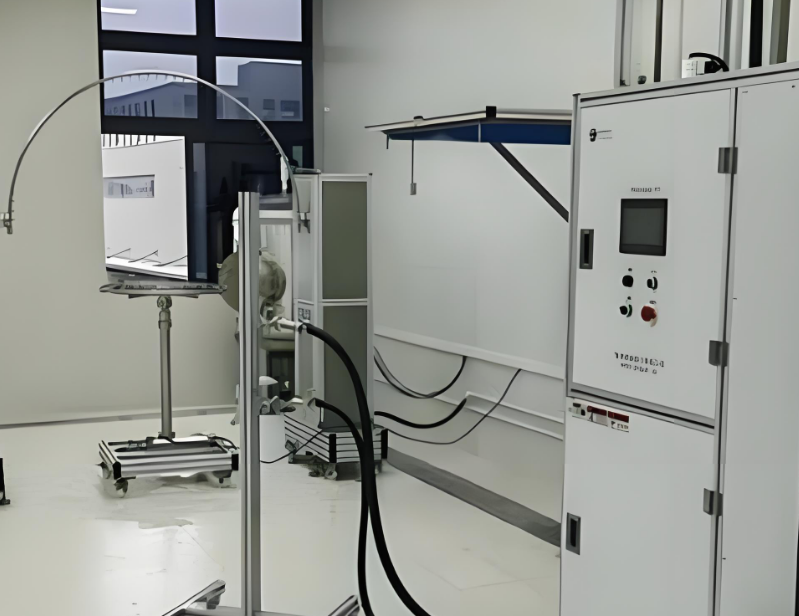
The IP code uses a simple two-digit format where the second digit represents water protection level. Here's what each rating means:
IPX0: No Protection
The enclosure provides no special protection against water ingress.
IPX1: Protection Against Vertically Falling Water Drops
The device withstands vertically falling water drops, such as condensation. Testing involves exposure to dripping water for 10 minutes.
IPX2: Protection Against Dripping Water at 15° Tilt
The enclosure resists vertically falling water drops when tilted up to 15° from its normal position. Testing occurs at four fixed positions, 2.5 minutes each direction.
IPX3: Protection Against Spraying Water
The device is protected against water sprayed at angles up to 60° from vertical using oscillating nozzles. Test duration is typically 10 minutes.
IPX4: Protection Against Splashing Water
The enclosure withstands water splashing from any direction. This is tested using oscillating nozzles or handheld spray equipment for at least 10 minutes.
IPX5: Protection Against Water Jets
The device resists water projected by a nozzle (6.3mm diameter) against the enclosure from any direction. Flow rate is 12.5 liters per minute.
IPX6: Protection Against Powerful Water Jets
The enclosure withstands powerful water jets from any direction. This uses a 12.5mm diameter nozzle with a flow rate of 100 liters per minute.
IPX7: Protection Against Temporary Immersion
The device can be immersed in water up to 1 meter depth for 30 minutes without harmful water ingress.
IPX8: Protection Against Continuous Immersion
The enclosure is suitable for continuous immersion in water under conditions specified by the manufacturer. Depth and duration exceed IPX7 requirements and are typically agreed upon between manufacturer and customer.
IPX9: Protection Against High-Pressure, High-Temperature Water Jets
The device withstands high-pressure water jets at elevated temperatures, commonly used for testing equipment that will undergo steam cleaning or high-pressure washdown.
IP Testing Standards and Methods
IEC 60529: The Foundation of IP Testing
IEC 60529 is the international standard that defines the IP code and specifies test methods for each protection level. This standard, prepared by IEC Technical Committee 70, provides a single document that consolidates requirements for enclosure protection, replacing earlier separate standards for motors and low-voltage switchgear.
The standard defines:
-
Test apparatus specifications for each IPX level
-
Water flow rates, pressures, and durations
-
Acceptance criteria (no harmful quantity of water ingress)
-
Test result documentation requirements
ISO 20653: Road Vehicles IP Testing
For automotive applications, ISO 20653 extends IP testing requirements specifically for road vehicles and their electrical equipment. This standard addresses protection against foreign objects, water, and access to hazardous parts in vehicular environments.
EN 60529: European Standard
EN 60529 is the European harmonized version of IEC 60529, applicable across EU member states for IP classification testing.
IP Water Resistance Test Equipment
IP-X1/2 System: Drip Testing
The IP-X1/2 system measures approximately 1×1 meter with 1.8 meters height, enabling water resistance tests per IPX-1 and IPX-2 standards. This equipment ensures accurate water distribution at defined angles and distances, suitable for testing resistance to vertical dripping water (IPX-1) and splashes at angles up to 15 degrees (IPX-2).
IP-X3/4 System: Spray Testing
Designed to meet IEC standards for IPX-3 and IPX-4 tests, this system enables spray testing at varying pressures and angles. It features precise pressure and angle control mechanisms, delivering accurate water resistance testing for civilian products exposed to everyday environmental conditions.
IP-X5/6 System: Water Jet Testing
This system performs tests according to IPX-5 and IPX-6 standards using high pressures to ensure maximum protection against water ingress. It's suited for testing products requiring resistance to strong water flows, using powerful jets to evaluate enclosure strength and sealing capabilities.
IP-X7/8 System: Immersion Testing
The IP-X7/8 system is designed for water immersion testing with capabilities for immersion at depths up to 50 meters or more, based on manufacturer requirements. Advanced systems like the LISUN JL-XC Series Waterproof Test Chamber use pressure regulation within sealed stainless-steel chambers to simulate various immersion depths.
The JL-XC Series features:
-
Programmable logic controller (PLC) for precise pressure regulation
-
Pressure range of 0 to 100 kPa (simulating depths from 0 to ~10 meters)
-
Digital pressure gauge with 0.25% full-scale accuracy
-
Fully programmable test profiles including multi-stage pressure ramps
-
Data logging for quality records and ISO 17025 compliance
The IP Testing Process
Sample Preparation
BefOre testing, the sample must be clean and properly sealed if required by its design. Any cable glands, ports, or openings should be sealed using manufacturer-specified methods or standardized blanking plugs.
Test Execution
For IPX1 to IPX4: Testing uses calibrated equipment including drip boxes, oscillating nozzles, or handheld sprays. The equipment maintains specified water flow rates and exposure durations while systematically exposing the enclosure to water from required angles.
For IPX5 to IPX6: Controlled water jet testing uses nozzles of specified diameters (6.3mm for IPX5, 12.5mm for IPX6) at defined flow rates and pressures. The jet is directed at the enclosure from all required directions.
For IPX7 and IPX8: Controlled water immersion tanks with pressure and depth monitoring are used. For IPX8 testing, pressure test chambers can apply external air pressure to the water column, simulating greater depths without requiring impractically tall tanks. The relationship follows the hydrostatic pressure formula: P = ρgh, where P is pressure in Pascals, ρ is water density, g is gravitational acceleration, and h is depth.
Monitoring During Testing
Real-time observation tracks water exposure and checks for any signs of water ingress. For sophisticated testing, pressure decay monitoring can detect minute leaks before visible water accumulation occurs.
Post-Test Inspection
After testing, the device undergoes:
-
Visual examination for water ingress
-
Functional testing to verify continued operation
-
Moisture detection using indicators or precise weight measurement
-
Documentation of any water penetration, failures, or physical damage
The test passes only if no harmful quantity of water has entered the enclosure and the device functions properly.
Physics of Water Ingress: Why Testing Matters
Water ingress during testing involves complex physical mechanisms:
Hydrostatic Pressure
During immersion, hydrostatic pressure increases linearly with depth—approximately 0.1 bar per meter of freshwater. This pressure exploits microscopic defects in seals, gaskets, welded joints, or cable glands.
Thermal Effects
Temperature differences between the device's internal air and the water can create pressure differentials due to air contraction or expansion. This "breathing" effect can draw water past seals even without gross defects.
Capillary Action
Water can wick along threads, between laminated surfaces, or through microscopic material porosity, making thorough testing essential for identifying latent failure points.
Applications Across Industries
Consumer Electronics
Smartphones, tablets, wearables, and portable speakers require IP ratings to validate waterproof claims. IP68 testing is particularly common for flagship smartphones, though test parameters are manufacturer-specific.
Automotive Components
Electric vehicle battery management systems, onboard chargers, ADAS sensors, lighting, and electrical connectors require IP68 or IP69K validation. Testing often includes thermal shock cycles per ISO 20653.
Medical Devices
Surgical tools, implantable device programmers, and portable diagnostic equipment must withstand immersion cleaning and autoclaving. IP68 testing validates seal integrity prior to biological validation.
Telecommunications Equipment
Submarine cable repeaters, waterproof fiber-optic connectors, and outdoor base station electronics require long-duration IP68 testing, sometimes at depths exceeding 5 meters.
Industrial Equipment
Sensors and actuators in food processing, chemical plants, and offshore platforms face constant moisture and washdown. IP testing validates protection against these harsh conditions.
Outdoor and Marine Applications
Underwater luminaires for pools, fountains, and marine applications undergo prolonged immersion testing. Building materials, roofing membranes, and outdoor enclosures also require IP-rated protection.
Why IP Water Resistance Testing Is Critical
Product Reliability and Durability
Water ingress can damage electrical and electronic equipment instantly. IP testing ensures products maintain functionality when exposed to water hazards, improving reliability and customer satisfaction.
Regulatory Compliance
Safety regulations like NFPA 70E require electrical enclosures in certain applications to carry specific IP ratings. Testing provides documentation for compliance verification.
International Validity
The IP rating system based on IEC 60529 is recognized globally across the EU, Asia, and North America, enabling businesses in international markets to confidently specify waterproof requirements.
Marketing Claims Validation
Independent testing by accredited laboratories (ISO 17025) provides objective verification of waterproof claims, supporting marketing statements with documented evidence.
Quality Assurance and Process Control
Beyond pass/fail determination, IP testing data supports:
-
Design optimization of seal geometries and gasket materials
-
failure analysis to identify specific ingress pathways
-
Statistical process control for manufacturing consistency
Common Testing Mistakes to Avoid
Inadequate Sample Preparation
Failing to properly seal ports or prepare the sample according to specifications can lead to false failures or misleading results.
Ignoring Thermal Effects
Not accounting for temperature differences between the device and test water can miss failure modes related to pressure differentials from thermal expansion/contraction.
Insufficient Post-Test Inspection
Relying only on visual inspection without functional testing or moisture detection may miss subtle water ingress that affects long-term reliability.
Using Non-Accredited Laboratories
Testing by non-accredited facilities may produce results that aren't recognized internationally or by regulatory bodies.
Choosing the Right IP Rating for Your Application
Selecting the appropriate IP rating requires evaluating:
-
Environmental Hazards: What water exposure scenarios will the device encounter? Consider rain, splashes, hose-directed water, temporary submersion, or prolonged immersion.
-
Industry Standards: What do applicable regulations and industry standards require?
-
Application Context: Where will the device be used? Outdoor installations, marine environments, medical facilities, and industrial settings have different protection needs.
-
Safety Margins: It's usually better to specify a higher rating than the minimum required. For example, if uncertain about submersion depth or duration, choose IP68 over IP67.
What IP Ratings Cannot Tell You
Resistance to Other Liquids
IP ratings only measure water resistance. Protection against oils, coolants, solvents, or other liquids requires additional testing.
Corrosion Resistance
The IP scale doesn't evaluate resistance to salt water or corrosive chemicals. For corrosion resistance, look for NEMA 4X ratings or equivalent specifications.
Ice Resistance
In cold climates, ice formation can affect locks and hinges. This requires additional testing beyond IP ratings.
IP68 Specific Parameters
IP68 doesn't specify exact depth and duration—these are manufacturer-defined. Always verify specific IP68 test parameters for your application.
Conclusion
IP water resistance testing provides a standardized, internationally recognized method for validating how well enclosures and devices protect against water ingress. From basic drip resistance (IPX1) to continuous immersion (IPX8), the IP rating system enables engineers, manufacturers, and consumers to communicate protection requirements clearly and verify compliance through rigorous testing.
Testing conducted by ISO 17025 accredited laboratories using calibrated equipment like the LISUN JL-XC Series ensures reliable, reproducible results that support product development, regulatory compliance, and marketing claims. As electronic devices increasingly operate in demanding environments—from underwater applications to automotive systems and medical devices—IP water resistance testing remains essential for ensuring safety, reliability, and performance.
Frequently Asked Questions
Q1: What is the difference between IPX7 and IPX8?
IPX7 tests temporary immersion at up to 1 meter depth for 30 minutes. IPX8 tests continuous immersion under more severe conditions, with depth and duration specified by the manufacturer—always exceeding IPX7 requirements.
Q2: How long does IP water resistance testing take?
Testing duration varies by rating. Simple spray tests (IPX3-4) take about 10 minutes. Immersion tests (IPX7-8) require 30 minutes or longer depending on specifications. Complete testing including preparation and inspection may take several hours.
Q3: Is IP68 the highest water resistance rating?
IP68 represents the highest standard immersion rating, but IPX9 provides protection against high-pressure, high-temperature water jets, which is more demanding for certain applications like steam cleaning.
Q4: Can IP testing detect small leaks?
Yes. Advanced test chambers can monitor pressure decay during the soak period. A slow pressure drop can indicate minute leaks before visible water ingress occurs.
Q5: Do IP ratings expire?
IP ratings don't expire, but seals and gaskets can degrade over time. Regular retesting may be necessary for critical applications or when products have been in service for extended periods.
Q6: What happens if a device fails IP testing?
Failed testing indicates water ingress occurred. This requires design modifications to seals, gaskets, enclosure design, or assembly methods before retesting.
Q7: Are IP ratings recognized globally?
Yes. The IP rating system is defined by IEC 60529, an international standard recognized across Europe, Asia, North America, and most other regions.
Q8: What's the relationship between pressure and depth in IPX8 testing?
Pressure correlates directly to depth via hydrostatic pressure: P = ρgh. For freshwater, approximately 9.8 kPa per meter of depth. A pressure chamber applying 19.6 kPa simulates 2-meter immersion.