What Is Vault door testing?
Vault door testing evaluates the security performance, structural integrity, and compliance of high-security vault doors against federal specifications and international standards. Testing verifies that vault doors provide the required protection levels against forced entry, covert entry, and surreptitious attacks while maintaining operational reliability.
GSA-approved vault doors undergo rigorous qualification testing at government facilities to ensure they meet stringent security criteria for protecting classified information, arms, ammunition, and explosives (AA&E), and other sensitive materials. Testing covers mechanical operation, lock functionality, structural strength, and resistance to various attack methods.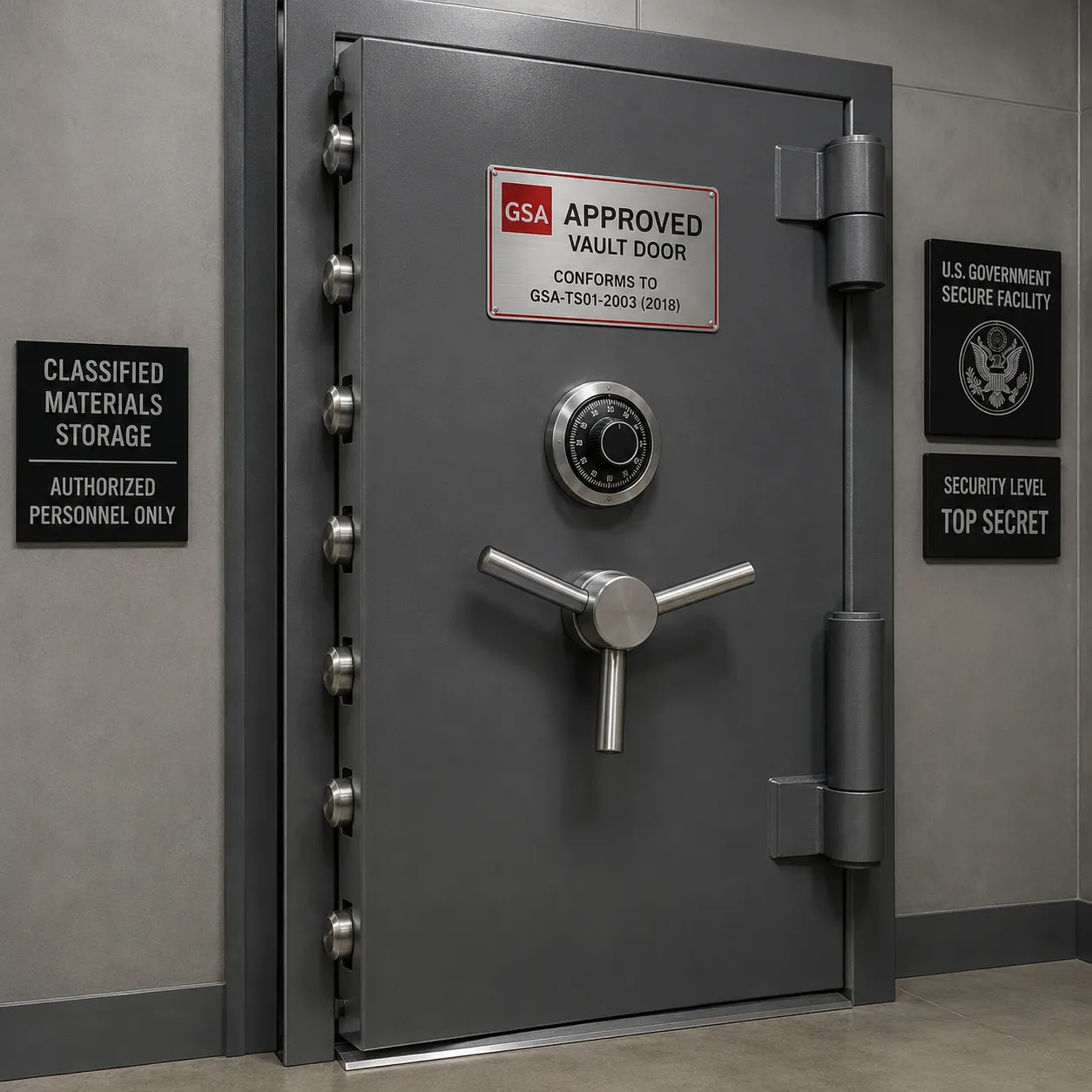
Why Is Vault Door Testing Critical for Security?
Vault doors protect millions of dollars in assets and sensitive materials, making their reliable performance essential for national security, banking operations, and institutional asset protection.
Critical Protection Applications
Government Facilities
- Classified information storage (National Security Information)
- Arms, ammunition, and explosives (AA&E) protection
- Embassy security applications
- Military installations
Financial Institutions
- Currency and valuables storage
- Critical documents and records
- Safety deposit boxes
- Reserve assets
Commercial Applications
- Pharmaceutical storage
- Data center security
- High-value inventory
- Intellectual property protection
Consequences of Testing Failures
Security Breaches
- Unauthorized access to classified materials
- Asset theft from financial institutions
- Regulatory violations and penalties
- Liability exposure from security failures
Operational Consequences
- GSA inspection failures requiring corrective work
- Temporary suspension of storage authorization
- Delayed facility approvals
- Additional compliance costs
What Are GSA-Approved Vault Doors?
GSA-approved vault doors are certified high-security doors manufactured to Federal Specification AA-D-600D and tested by government facilities for the General Services Administration. These doors meet stringent physical security requirements for military, embassy, and federal applications.
Armory Vault Doors vs. Security Vault Doors
Armory Vault Doors (Class 5-A)
- Purpose: Protect arms, ammunition, and explosives (AA&E)
- Lock type: FF-L-2937 mechanical combination lock
- Label: Silver with red letters stating "GSA Approved Armory Vault Door"
- Restriction: NOT authorized for classified information protection
Security Vault Doors (Class 5-V)
- Purpose: Protect National Security Information (classified materials)
- Lock type: FF-L-2740B electromechanical lock
- Label: Silver with red letters stating "GSA Approved Security Vault Door"
- Application: Classified document storage
Black Label Phase-Out
Critical Compliance Update: Per ISOO Notice 2022-03, all black label vault doors (manufactured before 1990) must be replaced by 1 October 2035.
| GSA Class | Federal Spec | Years Produced | End of Service |
|---|---|---|---|
| Class 5 | AA-D-600 A-B | 1963-1989 | October 1, 2035 |
| Class 6 | AA-D-600 A-C | 1963-1989 | October 1, 2035 |
Black label vault doors cannot be recertified or relabeled. Federal agencies and contractors must develop risk-based replacement plans.
Understanding Federal Specification AA-D-600D
Federal Specification AA-D-600D governs vault door design and performance requirements for physical security equipment. The specification ensures vault doors provide minimum protection standards mandated by the Information Security Oversight Office (ISOO).
Specification Coverage
Design Requirements
- Structural strength and material specifications
- Locking mechanism integration standards
- Installation requirements and guidelines
- Labeling and identification requirements
Performance Standards
- Forced entry resistance times
- Covert entry protection duration
- Surreptitious entry resistance
- Ballistic resistance (for Class 5-B doors)
Important Note: GSA-approved vault doors are not insulated. The specification focuses on security performance rather than thermal or fire protection.
Lock Specifications
FF-L-2937 Mechanical Combination Locks
- Required for armory vault doors (Class 5-A)
- Mechanical operation without electronic components
- Cannot be used for classified information storage
- Recommended replacement for X-07, X-08, or X-09 lock failures
FF-L-2740B Electromechanical Locks
- Required for security vault doors (Class 5-V)
- Electronic combination with mechanical backup
- Authorized for National Security Information protection
- Provides enhanced security features
What Are the Different Vault Door Classes?
GSA classifies vault doors based on protection levels and intended applications, with each class offering specific resistance times against different attack methods.
Class 5-A Armory Vault Doors
Protection Levels
- Forced entry: 10 minutes resistance
- Covert entry: 30 minutes resistance
- Surreptitious entry: Not rated
Applications
- Arms storage facilities
- Ammunition depots
- Explosive material storage
- Military installations
Key Features
- FF-L-2937 mechanical combination lock
- Silver label with red lettering
- NOT approved for classified information
- Available for new installations
Class 5-B Ballistic-Resistant Vault Doors
Protection Levels
- Forced entry: 10 minutes resistance
- Covert entry: 30 minutes resistance
- Surreptitious entry: 20 hours resistance
- Ballistic protection: Rated for firearm resistance
Applications
- High-security facilities requiring ballistic protection
- Embassy security
- Law enforcement evidence storage
- Critical infrastructure protection
Key Features
- FF-L-2740B electromechanical lock
- Enhanced barrier materials
- Ballistic-rated construction
- Silver label with red lettering
Class 5-V Security Vault Doors
Protection Levels
- Forced entry: 10 minutes resistance
- Covert entry: 30 minutes resistance
- Surreptitious entry: 20 hours resistance
Applications
- National Security Information storage
- Classified document protection
- Federal agency secure facilities
- Government contractor vaults
Key Features
- FF-L-2740B electromechanical lock
- Highest surreptitious entry rating
- Silver label with red lettering
- Primary choice for classified materials
Class 6 and Class 8 (Superseded)
Class 6 (No Longer Produced)
- AA-D-600C specification (superseded)
- 30 minutes covert entry resistance
- 20 hours surreptitious entry resistance
- No forced entry requirement
Class 8 (Specification Canceled)
- AA-D-2757 specification (canceled)
- 15 minutes forced entry resistance
- 30 minutes covert entry resistance
- 20 hours surreptitious entry resistance
How to Test Vault door security Performance?
Vault door security testing involves standardized attack methods to verify resistance times and protection levels meet federal specifications.
Testing Methodologies
Forced Entry Testing
- Objective: Measure time required to breach door using tools and force
- Tools allowed: Sledgehammers, pry bars, cutting torches, drills
- Success criteria: Door resists penetration for rated time period
- Documentation: Video recording and detailed attack logs
Covert Entry Testing
- Objective: Measure time required to breach door without detection
- Methods: Drilling, manipulation, specialized tools
- Success criteria: Door resists undetected entry for rated time
- Documentation: Time-stamped evidence of detection methods
Surreptitious Entry Testing
- Objective: Measure time required to breach door leaving no evidence
- Methods: Lock manipulation, impressioning, specialized techniques
- Success criteria: Door resists undetected, unmarked entry for rated time
- Documentation: Detailed forensic examination
Ballistic Resistance Testing (Class 5-B)
- Objective: Verify resistance to firearm attacks
- Weapons: Various calibers as specified
- Success criteria: No penetration or spalling that compromises security
- Documentation: Ballistic test reports and certification
Testing Frequency
Initial Testing
- Conducted at GSA-approved test facilities
- Required for new product certification
- Full compliance verification
- Documentation for GSA approval label
Recertification Testing
- Required when security integrity questioned
- Necessary if GSA approval label missing
- Conducted by GSA-authorized inspectors only
- Must meet current federal standards
Important: Black label vault doors (pre-1990) cannot be recertified or relabeled per ISOO Notice 2021-01.
What Are the International Vault Door Standards?
International standards complement GSA specifications for vault doors used in commercial and non-government applications worldwide.
European Standards (EN)
EN 11143-1: Strong Rooms and Vault Doors
- Grades T1 and T2 classification
- Progressive resistance levels
- Testing for drilling and explosive attacks
- Insurance-approved certification
EN 1522: Bullet Resistance
- Grades 0 through XIII
- Ballistic protection levels
- Ammunition type specifications
- Testing protocols for firearms resistance
EN 1300: High Security Locks
- Classes A through D
- Lock mechanism security levels
- Testing requirements for combination locks
- Compliance with European insurance requirements
UL Standards (North America)
UL 608: Vault Doors
- Class M: ¼ hour fire resistance
- Class 1: ½ hour fire resistance
- Class 2: 1 hour fire resistance
- Class 3: 2 hours fire resistance
Indian Standards (BIS)
IS 11188: Vault Doors
- Grades C through AAA
- Progressive security levels
- Testing for burglary resistance
- Compliance with Indian insurance requirements
Burglary Resistance Testing
COre testing Methods
- Core drilling resistance: Measures protection against drilling attacks
- Explosive attack resistance: Evaluates blast protection
- Tool attack resistance: Tests against pry bars, hammers, torches
- Insurance certification: Ensures compliance for coverage
Certification Benefits
- Insurance-approved security rating
- Risk reduction documentation
- Customer confidence enhancement
- Regulatory compliance verification
How Often Should Vault Doors Be Inspected?
Regular inspection schedules ensure vault doors maintain security integrity and operational reliability throughout their service life.
Daily Inspection Requirements
Door Alignment Check
- Verify proper closure and frame alignment
- Check for gaps or misalignment indicating hinge wear
- Document any operational irregularities
- Report alignment issues immediately
Locking Mechanism Operation
- Test smooth operation of locking wheel
- Verify all locking bolts extend and retract fully
- Listen for unusual sounds indicating mechanical problems
- Confirm bolts engage completely in frame
Visual Damage Assessment
- Inspect door surface for tampering evidence
- Check frame and surrounding area for damage
- Document scratches, dents, or modifications
- Report security concerns to appropriate personnel
Weekly Maintenance Procedures
Lubrication Requirements
- Apply manufacturer-approved lubricants to hinges
- Lubricate locking bolts and mechanism
- Service combination dial mechanism
- Avoid over-lubrication that attracts debris
Combination Lock Testing
- Test combination multiple times for consistency
- Verify lock opens only with correct combination
- Check dial for wear or irregular operation
- Document any operational changes
Time Lock Verification
- Verify proper operation and accurate settings
- Check battery levels for electronic components
- Test backup power supplies
- Confirm time delay functions correctly
Monthly Professional Inspections
Comprehensive Security Assessment
- Test all locking mechanisms thoroughly
- Verify alarm system integration
- Check access control functionality
- Document vulnerabilities or concerns
Structural Integrity Check
- Examine door frame and mounting bolts
- Inspect surrounding structure for stress
- Check for corrosion or deterioration
- Verify anchoring remains secure
Electronic Systems Testing
- Test all sensors and monitoring systems
- Verify communication with central security
- Check backup power systems
- Confirm alarm integration functions
Annual Professional Service
Complete Mechanism Overhaul
- Professional disassembly of locking mechanism
- Thorough cleaning and inspection
- Replacement of worn components
- Recalibration to manufacturer specifications
Compliance Certification
- Verify compliance with current regulations
- Update certifications as required
- Review federal specification changes
- Maintain documentation for inspections
Emergency Procedures Review
- Update emergency access procedures
- Test emergency opening mechanisms
- Train staff on proper protocols
- Document procedure changes
Vault Door Maintenance Best Practices
Preventive maintenance extends vault door service life and ensures reliable security performance for decades.
Lubrication Guidelines
Approved Products
- Use only manufacturer-recommended lubricants
- Avoid WD-40 or penetrating oils
- Select lubricants appropriate for load-bearing surfaces
- Apply according to manufacturer intervals
Application Points
- Hinge pins and bearings
- Locking bolt tracks
- Combination dial mechanism
- Cam and follower surfaces
Frequency
- Weekly for high-traffic facilities
- Monthly for standard operations
- After any service or repair work
- When operational irregularities noticed
Documentation Requirements
SF-89 Maintenance Record
- Document all maintenance activities
- Record lock changes and repairs
- Note inspection findings
- Maintain chronological records
Required Documentation
- GSA approval certificates
- Engineering drawings and specifications
- Installation records
- Service and repair history
Record Retention
- Maintain records for door service life
- Store documentation in secure location
- Make records available for inspections
- Update records promptly after service
Lock Change Protocols
When Lock Changes Are Required
- X-07, X-08, or X-09 lock failures on Class 5 doors
- Compromised combinations
- Regulatory requirement changes
- Security incident response
Proper Procedures
- Use only GSA-approved replacement locks
- Document change on SF-89 form
- Verify new lock meets specification
- Update security documentation
Important Note: When changing from electromechanical to mechanical locks on security vault doors, the door cannot be used for classified information storage afterward.
Preparing for GSA Inspections: Complete Checklist
GSA inspections verify that vault systems meet federal security requirements for protecting sensitive materials.
Vault Structure Checklist
Walls, Ceilings, and Floors
- ✔ Meet required construction standards
- ✔ Modular panels properly installed and secured
- ✔ No unapproved modifications or openings
- ✔ Continuous security barrier maintained
- ✔ Proper seam and joint construction
Structural Integrity
- ✔ No signs of stress or deterioration
- ✔ Mounting bolts secure
- ✔ Frame properly anchored
- ✔ No corrosion or damage
Vault Door Checklist
Door Compliance
- ✔ GSA-approved or UL-rated certification
- ✔ Proper installation and frame alignment
- ✔ Functional locking mechanisms
- ✔ Operational day gates (if installed)
- ✔ Secure hardware and devices
Lock Performance
- ✔ Correct lock type for application
- ✔ Smooth combination operation
- ✔ All locking bolts functional
- ✔ Time lock operational (if equipped)
Documentation
- ✔ Door certification available
- ✔ Installation records on file
- ✔ Maintenance documentation current
Penetrations and Utilities Checklist
Electrical Penetrations
- ✔ All penetrations properly sealed
- ✔ Security-rated methods used
- ✔ No oversized openings
- ✔ Conduits properly coordinated
HVAC Penetrations
- ✔ Appropriate security protection installed
- ✔ Properly sealed ductwork
- ✔ No unapproved modifications
- ✔ Security grilles in place
Communications Penetrations
- ✔ Sealed and compliant
- ✔ Security-rated materials
- ✔ No field-drilled openings
- ✔ Proper coordination documentation
Security Systems Checklist
Intrusion Detection
- ✔ System operational and tested
- ✔ Door position switches functional
- ✔ Sensors properly placed
- ✔ Communication with monitoring confirmed
Access Control
- ✔ Hardware functional
- ✔ Integration with vault complete
- ✔ Backup systems operational
- ✔ Emergency procedures documented
Alarm Integration
- ✔ Tested and operational
- ✔ Proper sensor placement
- ✔ Backup power verified
- ✔ Communication confirmed
Documentation Checklist
Certification Documents
- ✔ Vault system specifications
- ✔ GSA or UL door documentation
- ✔ Engineering drawings and shop drawings
- ✔ Installation records
Operational Records
- ✔ Inspection reports current
- ✔ Maintenance records organized
- ✔ Service documentation available
- ✔ Security incident reports (if any)
Common Vault Door Testing Failures to Avoid
Understanding common failures helps facilities prevent inspection issues and maintain compliance.
Installation-Related Failures
Door Alignment Problems
- Misalignment causing operational issues
- Improper frame installation
- Incorrect anchoring methods
- Gap inconsistencies around perimeter
Prevention: Use qualified installers and verify alignment during installation with proper documentation.
Penetration Seal Failures
Unsealed or Improperly Sealed Openings
- Electrical conduits not properly secured
- HVAC penetrations oversized
- Communication cables unsealed
- Field modifications without engineering review
Prevention: Coordinate all penetrations before installation and use only approved sealing methods.
Documentation Failures
Missing or Incomplete Records
- No GSA approval certificates
- Missing installation documentation
- Incomplete maintenance records
- Lack of engineering drawings
Prevention: Maintain organized documentation system with all required records readily accessible.
Maintenance Failures
Neglected Regular Maintenance
- Lack of lubrication causing mechanism wear
- Unaddressed operational irregularities
- Missing regular inspections
- No documentation of service work
Prevention: Implement scheduled maintenance programs with documentation for all activities.
Unauthorized Modifications
Unapproved Changes
- Field modifications without engineering review
- Lock changes to non-compliant types
- Structural alterations
- Addition of unapproved access points
Prevention: Require engineering review for all modifications and maintain change documentation.
Bottom Line
Vault door testing and compliance ensure protection of critical assets and classified materials through verified security performance. GSA-approved vault doors meeting Federal Specification AA-D-600D provide standardized protection levels that government agencies and contractors can rely upon for secure storage.
Implement regular inspection schedules, maintain comprehensive documentation, and prepare thoroughly for GSA inspections to ensure ongoing compliance. Partner with experienced vault manufacturers and inspectors to maintain security integrity throughout the door's service life.