Cutting fluid testing is the systematic analysis of metalworking fluids (MWFs) used in machining, grinding, drilling, and milling operations to evaluate fluid condition, detect contamination, and verify that performance parameters remain within specification. It is essential for maintaining machining quality, extending tool life, protecting worker health, and controlling operating costs.
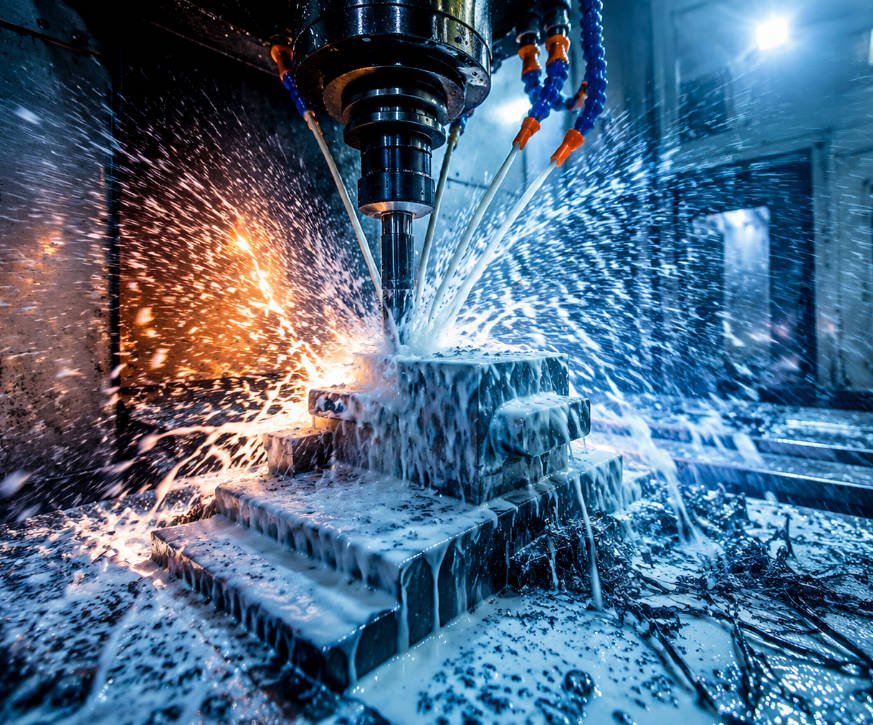
Cutting fluids perform at least six simultaneous functions during metalworking: heat dissipation at the tool-chip interface, lubrication of cutting edges, chip flushing and removal, corrosion protection of machined surfaces, welding prevention on tool rake faces, and improvement of workpiece surface integrity. When any of these functions degrades — due to microbial growth, contamination, additive depletion, or concentration drift — the consequences include dimensional rejects, accelerated tool wear, machine downtime, and potential health hazards for operators.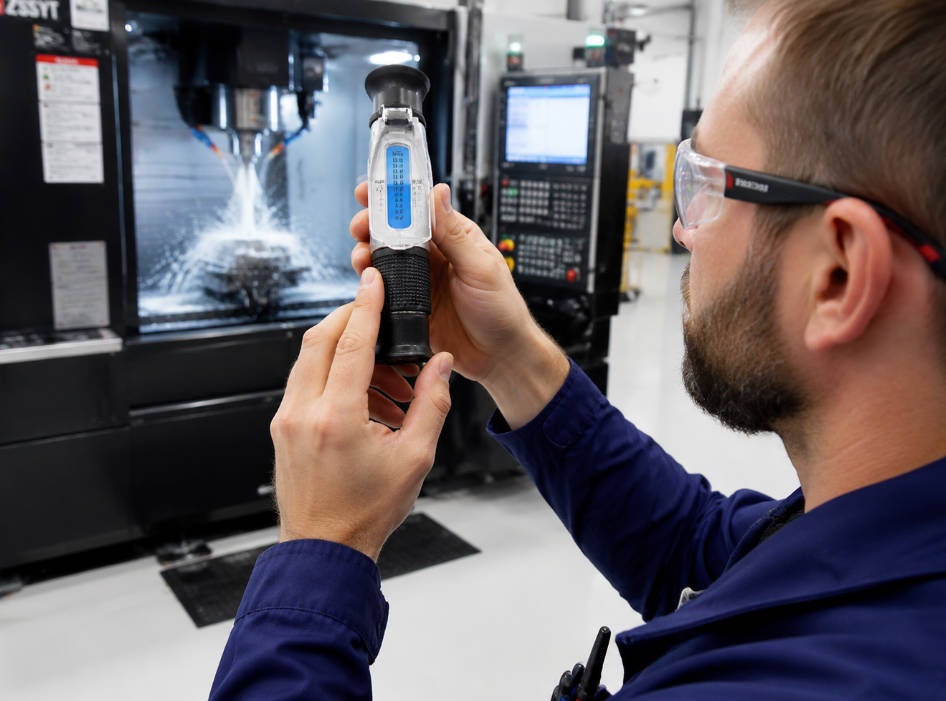
The cost impact is significant. A single CNC machining center running with degraded cutting fluid can produce scrap rates exceeding 5%, compared to a target of less than 0.5% with properly maintained fluid. Tool life may drop by 30–50%, and bacterial contamination can force complete fluid disposal and system cleaning — costing $5,000–$15,000 per event depending on system volume. Regular testing prevents these failures by catching problems early.
Key Cutting Fluid Testing Standards
Cutting fluid testing draws from DIN, ASTM, ISO, and industry-specific standards. The table below summarizes the most widely referenced standards.
|
Standard |
Title |
Scope |
|---|---|---|
|
DIN 51368 |
Testing of Lubricants — Acid Split of Aqueous Metalworking Fluids |
Measures oil content and emulsion stability |
|
DIN 51369 |
Testing of Lubricants — Determination of the pH Value of Aqueous Metalworking Fluids |
pH measurement for water-miscible fluids |
|
DIN 51360/2 |
Corrosion Test for Water-Miscible Cutting Fluids |
Chip/filter method for corrosion protection |
|
DIN 51412 |
Determination of the Electrical Conductivity of Lubricants |
Conductivity measurement at 20 °C |
|
ASTM D445 |
Kinematic Viscosity of Transparent and Opaque Liquids |
Viscosity of neat cutting oils |
|
ASTM D892 |
Foaming Characteristics of lubricating oils |
Foam tendency and stability evaluation |
|
ASTM D130 |
Copper Strip Corrosion Test |
Corrosiveness toward yellow metals |
|
ASTM D6304 |
Water in Petroleum Products (Karl Fischer) |
Moisture content in neat oils |
|
ISO 12922 |
Metalworking Fluids — Specification |
Classification and performance requirements |
|
ASTM E2149 |
Antimicrobial Activity Under Dynamic Contact Conditions |
Biocide efficacy testing |
|
TRGS 611 (Germany) |
Technical Rules for Hazardous Substances — Metalworking Fluids |
Regulatory limits for nitrite, pH, and health parameters |
|
ASTM D5185 |
Multi-Element by ICP-AES |
Wear metal and additive analysis |
Types of Cutting Fluids and Their Testing Needs
Cutting fluids fall into two broad categories, each requiring different testing approaches.
|
Type |
Description |
Key Tests |
Typical Concentration |
|---|---|---|---|
|
Water-miscible (emulsions/synthetics/semi-synthetics) |
Oil or synthetic base diluted with water at 3–12% |
Concentration, pH, microbial, corrosion, tramp oil, conductivity, foam |
3–12% by volume |
|
Neat cutting oils |
Undiluted mineral or synthetic oil |
Viscosity, flash point, acid number, moisture, oxidation stability, elemental analysis |
100% (no dilution) |
Water-miscible fluids dominate the market (approximately 80% of all machining applications) and require more frequent monitoring because they are susceptible to microbial growth, concentration drift, and water-quality-related instability. Neat oils are used primarily in heavy-duty machining and grinding where maximum lubricity is required.
Core Cutting Fluid Test Methods
Concentration Measurement by Refractometer
Concentration is the single most critical parameter for water-miscible cutting fluids. It directly affects lubrication, corrosion protection, tool life, and foam behavior. Concentration that is too low leads to poor machining performance and corrosion; concentration that is too high wastes product, promotes foam, and may cause skin irritation.
Measurement uses a handheld refractometer that reads the Brix scale. The actual concentration is calculated using the refractive index specified on the product data sheet:
Actual Concentration = Refractometer Reading × Refractive Index
For example, if the refractometer reads 5.0% and the refractive index is 1.5, the actual concentration is 7.5%.
|
Refractive Index |
Refractometer Reading |
Actual Concentration |
|---|---|---|
|
1.0 |
8.0% |
8.0% |
|
1.0 |
6.0% |
6.0% |
|
1.5 |
5.0% |
7.5% |
|
1.5 |
4.0% |
6.0% |
Target: During machining tests, typical starting concentrations are 8% for general machining and 4% for grinding. In production, target concentration should stay within ±0.5% of the specified value. Daily concentration checks are recommended.
pH Value Testing
pH indicates the acidity or alkalinity of water-miscible cutting fluids and is a primary indicator of fluid health. Most cutting fluids operate in the pH range of 8.5–9.5. A drop below 8.5 suggests bacterial activity, acid contamination, or additive depletion. A rise above 10.0 may indicate contamination with alkaline cleaners or over-concentration.
Two methods are available:
|
Method |
Accuracy |
Cost |
Best For |
|---|---|---|---|
|
pH test strips (per TRGS 611) |
±0.5 pH units |
Very low ($0.10/test) |
Routine daily checks, shop floor |
|
Electronic pH meter |
±0.01 pH units |
Moderate ($200–$500 instrument) |
Laboratory analysis, critical applications |
Important: When using test strips, dip into clean emulsion below the surface — not into fluid with tramp oil floating on top. Observe the reading time specified by the strip manufacturer (typically 10–30 seconds). Expired strips produce inaccurate color readings.
Water Hardness and Conductivity
Water quality directly impacts cutting fluid stability and performance. The two key parameters are hardness (dissolved calcium and magnesium ions) and conductivity (total dissolved solids).
|
Water Hardness (°dH) |
Classification |
Impact on Cutting Fluid |
|---|---|---|
|
0–7 |
Soft |
Increased foam tendency, emulsion may separate |
|
7–21 |
Medium |
Ideal range for most cutting fluids |
|
21–35 |
Hard |
Reduced emulsion stability, shorter sump life |
|
>35 |
Very hard |
Soap scum formation, instability, fluid breakdown |
Hardness is measured with test strips or titration. Conductivity measured per DIN 51412 indicates total dissolved solids and should be tracked as a trend — a rising conductivity value signals contaminant buildup and may indicate the need for fluid replacement.
Some facilities use demineralized (RO/DI) water and add calcium acetate to achieve the target hardness specified on the product data sheet, ensuring consistent fluid performance regardless of local water quality.
Microbial Contamination Testing
Bacteria, fungi, and yeast thrive in warm, aerated water-miscible cutting fluids. Microbial contamination is the leading cause of premature fluid failure. Bacteria produce acids that lower pH and cause corrosion; fungi form slimy deposits that clog filters and nozzles; both produce odors ("Monday morning stink") and can cause occupational health issues.
|
Test Method |
What It Detects |
Turnaround |
Detection Limit |
|---|---|---|---|
|
Dip slides (dipslides) |
Total bacteria and fungi |
24–48 hours incubation |
10³ CFU/mL |
|
ATP bioluminescence |
Total viable organisms |
5–10 minutes |
10² CFU/mL |
|
Plate count (laboratory) |
Specific species identification |
3–7 days |
10¹ CFU/mL |
|
FTIR spectroscopy |
Microbial metabolites |
Minutes |
Indirect — detects byproducts |
Action levels: Below 10³ CFU/mL is considered clean. Between 10³ and 10⁵ CFU/mL requires monitoring and possible biocide addition. Above 10⁵ CFU/mL demands immediate treatment or fluid replacement.
Biocide efficacy should be verified periodically using ASTM E2149 or equivalent methods. Over-reliance on a single biocide chemistry can lead to resistant microbial populations.
Tramp Oil and Foreign Oil Detection
Tramp oil — hydraulic oil, way lube, spindle oil, or other machine lubricants that leak into the cutting fluid system — is one of the most common contamination problems in machining. At low levels (below 2%), tramp oil may be tolerable. Above 2%, it degrades fluid performance, provides nutrients for microbes, reduces oxygen transfer, and can cause smoke and mist.
|
Test Method |
Standard |
What It Measures |
|---|---|---|
|
Acid split |
DIN 51368 |
Total oil content and emulsion stability |
|
Cream release / oil release |
Visual / centrifuge |
Free and emulsified tramp oil |
|
FTIR spectroscopy |
ASTM E2412 |
Oil type identification and degradation byproducts |
Good cutting fluids do not dissolve tramp oil — instead, it floats on the surface where it can be removed by skimmers. Belt skimmers, disk skimmers, and coalescers are common removal devices. Regular tramp oil removal extends sump life significantly.
Corrosion Protection Testing
Corrosion protection is a fundamental function of cutting fluids. The chip/filter method per DIN 51360/2 is the standard test: cast iron chips are placed on a filter paper saturated with the cutting fluid, and rust stains on the filter are evaluated after a set time.
|
Rating |
Filter Appearance |
Interpretation |
|---|---|---|
|
0 |
No stains |
Excellent corrosion protection |
|
1 |
1–3 light spots |
Good — within specification |
|
2 |
4–6 spots |
Marginal — investigate concentration and pH |
|
3 |
Numerous spots or area staining |
Poor — immediate action required |
Low concentration, low pH, high chloride contamination, and bacterial activity are the most common causes of corrosion test failure.
Foam Testing
Excessive foam causes fluid overflow, pump cavitation, reduced cooling at the tool, and inaccurate concentration readings. Foam is evaluated per ASTM D892 by aerating the fluid and measuring foam volume immediately and after 10 minutes of settling.
Common causes and remedies:
|
Cause |
Remedy |
|---|---|
|
Soft water (<7 °dH) |
Adjust water hardness, use demineralized water with controlled reconstitution |
|
High concentration |
Reduce to recommended range |
|
Wrong filter paper |
Change to compatible filter media |
|
High flow rate / agitation |
Reduce pump speed, increase tank volume |
|
Contamination (cleaners, other fluids) |
Identify and eliminate source |
|
Defoamer depletion |
Add defoamer per manufacturer instructions; always dilute with water before adding |
Critical note: Defoamers should only be added when good mixing can be guaranteed. Adding upstream of filters may cause the defoamer to be filtered out before it takes effect. Overdosing defoamers can worsen air release properties and actually increase foam stability.
Wear Metal and Elemental Analysis
ICP-AES analysis (ASTM D5185) measures metallic elements in cutting fluid to detect machine wear and verify additive levels.
|
Element |
Source in Cutting Fluid Systems |
|---|---|
|
Iron (Fe) |
Tool wear, workpiece material, machine component wear |
|
Chromium (Cr) |
stainless steel workpiece or tool wear |
|
Nickel (Ni) |
Nickel alloy machining, stainless steel |
|
Copper (Cu) |
Brass/copper workpiece, bearing wear |
|
Aluminum (Al) |
Aluminum workpiece, bearing wear |
|
Zinc (Zn) |
Galvanized components, additive element |
|
Phosphorus (P) |
EP additive indicator |
|
Boron (B) |
Biocide or corrosion inhibitor |
|
Silicon (Si) |
Dirt contamination, antifoam additive |
|
Calcium (Ca) |
Water hardness, additive element |
Trending wear metal concentrations over time reveals developing problems that cannot be detected by a single measurement.
Troubleshooting Guide: Interpreting Test Results
|
Problem |
Likely Cause(s) |
Diagnostic Tests |
Corrective Action |
|---|---|---|---|
|
Low concentration |
Evaporation, fluid loss, improper mixing |
Refractometer |
Top up with correct concentration mix |
|
High concentration |
Over-concentration during top-up |
Refractometer |
Dilute with water to target |
|
Low pH (<8.5) |
Bacterial activity, acid contamination |
pH strips/meter, dipslide |
Add biocide, check for contamination source |
|
High pH (>10) |
Contamination with alkaline cleaner |
pH strips/meter |
Identify and eliminate cleaner drag-in |
|
Corrosion on parts |
Low concentration, low pH, bacteria, chlorides |
DIN 51360/2, pH, microbial test |
Adjust concentration, add biocide, check water quality |
|
Excessive foam |
Soft water, high concentration, wrong filter, contamination |
Foam test, water hardness, concentration |
Adjust hardness, reduce concentration, change filter paper |
|
Short sump life |
Microbial growth, contamination, water quality |
Microbial test, tramp oil, conductivity |
Biocide treatment, tramp oil removal, fluid replacement |
|
Poor machining quality |
Contamination, wrong concentration, fluid degradation |
Full test slate |
Comprehensive analysis and corrective plan |
|
Skin irritation |
High concentration, biocide, pH extreme |
Concentration, pH |
Reduce concentration, verify biocide type and dosage |
|
Mist / smoke |
Excessive tramp oil, high temperature |
Tramp oil analysis |
Remove tramp oil, install mist collectors |
Cutting Fluid Testing by Industry Application
|
Industry |
Typical Fluid Type |
Key Concerns |
Recommended Test Frequency |
|---|---|---|---|
|
Automotive machining |
Water-miscible semi-synthetic |
High throughput, multi-metal, tight tolerances |
Weekly concentration/pH, monthly full analysis |
|
Aerospace |
Neat oil / synthetic |
Exotic alloys, surface integrity, strict specifications |
Weekly, per OEM requirements |
|
Medical devices |
Synthetic / semi-synthetic |
Biocompatibility, cleanliness, contamination control |
Weekly to bi-weekly |
|
Heavy industry / steel |
Water-miscible emulsion |
Large volumes, contamination, thermal stress |
Weekly concentration/pH, monthly full analysis |
|
Grinding operations |
Synthetic / neat oil |
Fine particle generation, wheel loading, surface finish |
Weekly |
|
General job shop |
Water-miscible emulsion |
Variable materials, intermittent operation |
Weekly concentration/pH, quarterly full analysis |
|
Die/mold making |
Neat oil |
High precision, long cycle times, surface finish |
Monthly |
|
Aluminum machining |
Semi-synthetic |
Staining, aluminum reactivity, lubricity |
Weekly |
Best Practices for Cutting Fluid Sampling and Maintenance
Sampling procedure:
|
Step |
Action |
Reason |
|---|---|---|
|
1 |
Sample from the active fluid stream or just before the return to the sump |
Captures representative fluid in circulation |
|
2 |
Avoid sampling from stagnant zones or immediately after top-up |
Prevents dilution artifacts |
|
3 |
Record machine ID, fluid product name, concentration, and date |
Enables trending and traceability |
|
4 |
Use clean, dedicated sample containers |
Prevents cross-contamination |
|
5 |
Test concentration and pH on-site immediately |
Some parameters change with time |
Fluid management best practices:
-
Machine cleaning before initial fill: Thoroughly clean the machine sump, fluid lines, and tank before charging with new fluid. Residual contaminants, bacteria, and degraded fluid from the previous charge will rapidly infect the new fluid.
-
Use water of appropriate hardness: Follow the product data sheet recommendation. If local water is too hard or too soft, treat the water accordingly.
-
Maintain concentration within ±0.5%: Use low-concentration top-up to compensate for evaporation rather than adding full-strength product. This maintains stable concentration over time.
-
Remove tramp oil continuously: Install and maintain belt or disk skimmers. Do not allow tramp oil to accumulate.
-
Monitor and control microbial growth: Use dipslides weekly. Add biocide proactively at the first sign of rising counts — do not wait until the fluid smells bad.
-
Replace filter paper regularly: Use only filter paper compatible with the cutting fluid. Incompatible paper can dissolve foam-promoting compounds into the fluid.
-
Track trends, not just snapshots: Maintain a log of all test results. A gradual pH decline over four weeks is far more meaningful than a single "normal" reading.
Benefits of a Regular Cutting Fluid Testing Program
-
Extended fluid life: Proactive monitoring and timely corrective actions can extend sump life by 50–100%, reducing fluid purchase and disposal costs.
-
Consistent machining quality: Stable fluid chemistry produces consistent surface finishes, dimensional accuracy, and tool life — reducing scrap rates by 50–80%.
-
Reduced tool consumption: Properly maintained cutting fluid extends tool life by 20–40%, representing significant savings in high-volume machining operations.
-
Worker health and safety: Regular microbial monitoring and pH control reduce the risk of occupational dermatitis and respiratory irritation. Compliance with TRGS 611 (or equivalent local regulations) protects both workers and the organization.
-
Lower total cost of ownership: The cost of a comprehensive fluid testing program ($50–$150 per machine per month) is recovered many times over through reduced fluid purchases, fewer tool changes, less scrap, and avoided emergency fluid changes.
-
Environmental compliance: Documented fluid management records support compliance with waste disposal regulations (e.g., hazardous waste classification, discharge limits for spent fluid).
Summary
Cutting fluid testing transforms metalworking fluid management from reactive firefighting into a controlled, data-driven process. By monitoring concentration, pH, microbial contamination, tramp oil levels, corrosion protection, foam behavior, and wear metals on a regular cadence, machine shops can extend fluid life, maintain machining quality, protect worker health, and reduce operating costs. The discipline of daily concentration checks, weekly pH and microbial testing, and periodic comprehensive laboratory analysis pays for itself through reduced scrap, longer tool life, and fewer emergency fluid changes.