What Is a Firefighter Distress Signal Unit (PASS Device)?
A firefighter distress signal unit — also called a PASS device (Personal Alert Safety System), DSU (Distress Signal Unit), or ADSU (Automatic Distress Signal Unit) — is a personal safety device worn primarily by firefighters entering hazardous or "immediately dangerous to life and health" (IDLH) environments such as burning buildings, confined spaces, and industrial incidents. The device sounds a loud (minimum 95 dB) audible alert to notify others that the firefighter is in distress, triggering an immediate rescue response on the fireground.
PASS devices are small, battery-powered units typically integrated into the self-contained breathing apparatus (SCBA) harness. They serve two activation modes: manual activation when a firefighter is lost, trapped, or otherwise in distress; and automatic activation when the device detects no motion from the wearer for a preset period (typically 20–30 seconds), ensuring the alarm sounds even if the firefighter is incapacitated.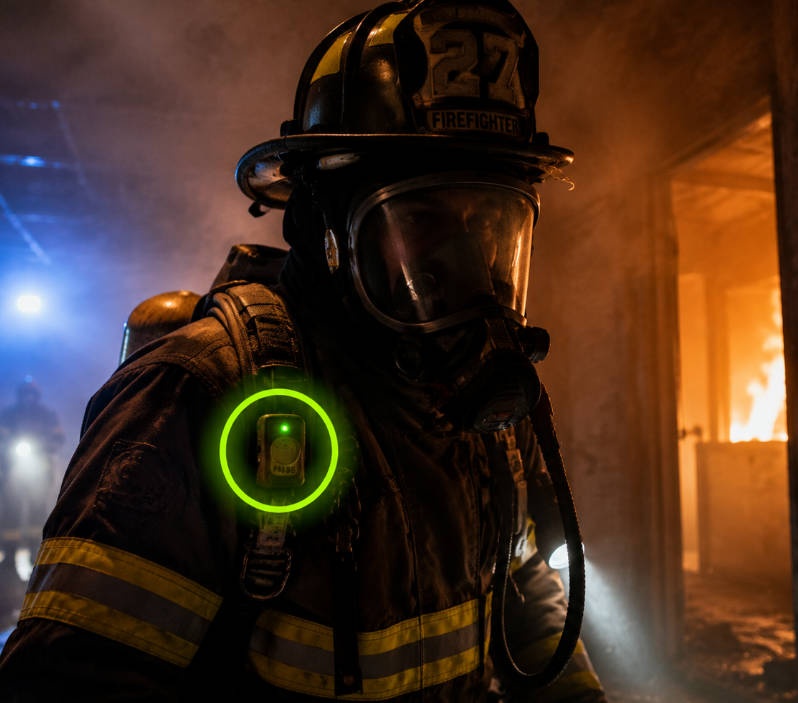
The device is considered essential safety equipment. On September 11, 2001, the sound of many activated PASS devices could be heard beneath the rubble of the collapsed World Trade Center, where 343 FDNY firefighters were killed. The device's reliability is literally a matter of life and death — which is why rigorous testing to NFPA 1982, BS 10999, and related standards is critical before any unit enters service.
Key Standards for Distress Signal Unit Testing
| Standard | Organization | Scope | Key Requirements |
|---|---|---|---|
| NFPA 1982 | National Fire Protection Association (US) | PASS devices for fire service | Pre-alarm at 20 s inactivity; full alarm at 30 s; pre-alarm 100–110 dBA in 6 s; primary alarm ≥95 dBA at 1 m for ≥1 h |
| BS 10999-2:2010 | British Standards Institution (UK) | Distress signal units for fire and rescue service | 30 s inactivity triggers 10 s pre-alarm; locks to full alarm if no movement; manual activation immediate or delayed |
| EN 137 | CEN (EU) | SCBA including integrated DSU | DSU requirements as part of SCBA type testing |
| ISO 10238 | ISO | SCBA with personal alert safety systems | International harmonization of PASS requirements |
| 16 CFR Part 1630/1631 | US CPSC | Flammability of floor coverings | Referenced for overall fireground safety equipment testing context |
| IEC 60079 | IEC | Equipment for explosive atmospheres | Intrinsic safety certification for PASS electronics in flammable environments |
| NFPA 1981 | NFPA | SCBA open-circuit | Integration requirements for PASS devices within SCBA systems |
How Distress Signal Units Work
A PASS device operates through three functional layers:
-
Motion detection: Early models used a ball bearing on a track; modern devices use accelerometers or infrared beams against a mirror mounted on a spring. The sensor continuously monitors for movement.
-
Alarm sequence: When no motion is detected for a preset period (20 seconds under NFPA 1982, 30 seconds under BS 10999), the device enters a pre-alarm phase — emitting a muted warning tone for a few seconds. If the wearer does not move during this window (indicating they are not merely stationary but truly incapacitated), the device locks into full alarm mode.
-
Alert output: Full alarm activates a piercing electronic tone at ≥95 dBA (measured at 1 meter), often accompanied by a flashing strobe light. Some modern units also transmit a radio distress signal to a telemetry entry control board at the incident command point.
Current-generation devices integrate into the SCBA system and arm automatically when the air circuit is opened or when the SCBA is removed from its mounting bracket — eliminating the human error factor of forgetting to arm the device.
Distress Signal Unit Testing Methods
Audible Alarm Sound Level Testing
The audible alarm is the primary rescue notification mechanism. Testing verifies that the alarm meets minimum sound pressure level requirements under controlled conditions.
NFPA 1982 requirements: The pre-alarm must reach a maximum level between 100 dBA and 110 dBA within six seconds of activation. The primary alarm must produce a minimum of 95 dBA at one meter distance and sustain this level for at least one hour of continuous operation.
Test method: A calibrated sound level meter (IEC 61672 Class 1) is positioned at 1 meter from the device in an anechoic or semi-anechoic chamber. The device is activated and the sound pressure level is recorded throughout the pre-alarm ramp-up and the full alarm duration. Frequency analysis ensures the alarm tone falls within specified bands for maximum detectability in noisy fireground environments.
BS 10999 requirements: Similar sound level thresholds with specified pre-alarm durations and alarm tone patterns that must be clearly distinguishable from other fireground sounds.
Motion Sensor and Inactivity Activation Testing
This test verifies that the device correctly detects the absence of motion and triggers the alarm sequence within the specified time window.
Test method: The PASS device is mounted on a stationary test fixture in a controlled environment. Technicians verify:
- The device does not activate when subjected to normal firefighter movements (walking, crawling, tool use)
- The device does activate after the prescribed inactivity period (20 s for NFPA 1982, 30 s for BS 10999)
- Brief movement during the pre-alarm phase successfully resets the activation timer
- The motion sensor responds correctly across the full range of operational orientations (device mounted upright, inverted, on side)
For devices using ball-bearing motion sensors, testing also verifies that the ball moves freely on its track without binding. For accelerometer-based devices, sensitivity calibration is verified against known motion profiles.
Pre-Alarm and Full Alarm Sequence Testing
This test validates the complete alarm timing sequence from inactivity detection through pre-alarm to full alarm lock-in.
NFPA 1982 sequence: After 20 seconds of inactivity → pre-alarm begins → pre-alarm must reach 100–110 dBA within 6 seconds → if no movement detected, full alarm activates at 30 seconds of total inactivity → full alarm locks in and cannot be reset by movement alone.
BS 10999 sequence: After 30 seconds of inactivity → 10-second pre-alarm sounds → if no movement during pre-alarm, unit locks into full alarm.
Testing uses precision timing equipment to verify each transition meets the standard's requirements with acceptable tolerances. The pre-alarm-to-full-alarm transition must be seamless, with no gap in audible output.
Manual Activation Testing
Manual activation must be operable by a firefighter wearing heavy structural gloves (NFPA 1971 glove ensemble) under stressful conditions.
Test method: Test subjects wearing full turnout gear and structural gloves attempt to activate the manual alarm while:
- Standing upright
- Crawling on the ground
- Lying supine (simulating a fallen firefighter)
- In reduced visibility conditions
The manual activation switch must be easily located by touch, require minimal force to activate, and provide positive tactile or audible feedback that activation has occurred. The button or switch must be large enough to operate with gloved hands and positioned to prevent accidental activation during normal firefighting operations.
Battery Life and Endurance Testing
PASS devices must maintain full functionality throughout extended incidents. Battery endurance testing verifies that the device can sustain the primary alarm for the required minimum duration.
NFPA 1982 requirement: Primary alarm must maintain ≥95 dBA at 1 meter for at least one hour of continuous operation.
Test method: Fully charged batteries (or new batteries per manufacturer specification) are installed. The device is activated into full alarm mode and the sound pressure level is monitored continuously. Testing is conducted at room temperature and at temperature extremes (typically -20°C and +60°C) to verify battery performance across the operational range.
Additional battery tests include:
- Battery life indicator accuracy
- Low-battery warning functionality
- Battery retention under impact and vibration
- Shelf life verification for spare batteries
Environmental and Thermal Resistance Testing
PASS devices must function in extreme fireground conditions. Environmental testing subjects the device to conditions that simulate real-world operational stressors.
thermal testing: Devices are exposed to elevated temperatures to verify functionality in hot environments. This typically includes:
- Operational testing at 60°C ambient for extended periods
- Short-duration exposure to radiant heat flux simulating proximity to fire
- Thermal cycling between temperature extremes to verify no condensation or material degradation affects performance
Water and moisture resistance: Devices are subjected to water spray, immersion, and humidity exposure to verify continued operation after exposure to firefighting water, rain, or humid conditions.
Vibration and shock testing: Simulates the rigors of transport on fire apparatus, normal wear, and potential impact from falls or structural collapse.
Corrosion resistance: Salt spray and chemical exposure testing verifies that device housings, switches, and connectors resist degradation from fireground chemicals, smoke residue, and decontamination solutions.
Intrinsic Safety and Electromagnetic Compatibility Testing
Because PASS devices are used in flammable and explosive atmospheres, they must be certified as intrinsically safe — meaning they cannot produce a spark or thermal effect capable of igniting an explosive atmosphere.
IEC 60079 series: Testing verifies compliance with intrinsic safety requirements including:
- Maximum energy stored in circuits below ignition thresholds
- No spark generation under normal or fault conditions
- Temperature of all surfaces below auto-ignition temperatures of common flammable gases
Electromagnetic compatibility (EMC): Testing per IEC 61000 verifies the device does not emit electromagnetic interference that could affect other fireground electronics (radio communications, telemetry systems) and is not susceptible to interference from external sources.
Integration Testing with SCBA Systems
Modern PASS devices are integrated into SCBA units. Integration testing verifies:
- Automatic arming when the SCBA air circuit is opened
- Automatic arming when the SCBA is removed from its mounting bracket
- No interference between PASS alarm and SCBA low-pressure warning whistle
- Correct mechanical and electrical connection between PASS and SCBA
- PASS functionality maintained throughout SCBA operational duration
- Telemetry distress signal transmission (for equipped units) reaches the entry control board at specified range
Operational Testing Procedures for Fire Services
Beyond factory certification testing, fire and rescue services conduct routine operational testing to ensure ongoing readiness:
Daily/Shift Check (General Check):
- Verify the distress signal unit operates effectively
- Check battery indicator shows adequate charge
- Confirm manual activation switch functions
- Verify device arms when SCBA air circuit is engaged
Monthly Test:
- Full wearing duration test (minimum 50 bar cylinder consumption)
- Examination of attachment points for the distress signal unit
- Check of all connection points in the air supply system
- Verify radio communications (where fitted) operate effectively
- Complete operational test of alarm sequence and sound output
Annual Test:
- Comprehensive maintenance and testing per manufacturer specifications
- Calibration verification for motion sensors
- Full battery replacement and endurance verification
- Structural inspection of housing, switches, and connectors
- Software/firmware update verification (for digital units)
All test results must be recorded in a permanent log book maintained with each BA set, including date, time, result, type of test, identity of tester, and any defects found. These records may be relied upon in civil or criminal proceedings during incident investigations.
Common Failure Modes and Testing Challenges
- False alarms in high-vibration environments: Motion sensors may interpret apparatus vibration as firefighter movement, preventing alarm activation when a firefighter is actually incapacitated aboard a moving vehicle.
- Thermal degradation of electronics: Extended exposure to elevated temperatures can degrade circuit boards, batteries, and piezoelectric alarm elements, reducing sound output below the required threshold.
- Motion sensor miscalibration: Accelerometers may drift over time, changing the sensitivity threshold and either causing excessive false alarms or failing to detect genuine inactivity.
- Battery failure at temperature extremes: Battery capacity drops significantly at low temperatures, potentially reducing alarm duration below the one-hour minimum.
- Acoustic masking in high-noise environments: Fireground noise from apparatus, ventilation fans, and fire itself may mask the PASS alarm tone, especially in enclosed structures. Testing verifies alarm frequency and intensity exceed typical background noise levels.
- Water ingress: Compromised seals allow water into the electronics housing, causing short circuits or corrosion that disables the device.
- Integration failures: Loose connections between integrated PASS and SCBA systems may prevent automatic arming, leaving the firefighter unprotected.
- Human factors: Older devices requiring manual arming introduce risk of the firefighter forgetting to activate the unit before entering the hazard zone.
How to Select a PASS Device Testing Laboratory
- NFPA 1982 and BS 10999 accreditation: Verify the laboratory is accredited to test to the specific standards governing PASS/DSU devices.
- Intrinsic safety certification capability: The lab should hold IEC 60079 accreditation for testing intrinsically safe equipment.
- Acoustic testing facilities: Anechoic or semi-anechoic chambers with IEC 61672 Class 1 sound level meters are essential for accurate alarm level measurement.
- Environmental chamber capability: Thermal, humidity, and corrosion testing requires specialized environmental chambers calibrated to relevant standards.
- Fire service experience: Laboratories with experience testing fire service equipment understand the operational context and can identify failure modes that generic electronics testing labs may overlook.
- SCBA integration testing: The ability to test PASS devices both standalone and integrated with SCBA systems provides comprehensive validation.
Summary
Firefighter distress signal unit (PASS/DSU) testing ensures that a device designed to summon rescue when a firefighter is incapacitated will perform reliably under the extreme conditions of the fireground. The critical standards — NFPA 1982 in the US and BS 10999 in the UK — define precise requirements for alarm sound levels (≥95 dBA sustained for one hour), inactivity detection timing (20–30 seconds to full alarm), manual activation with gloved hands, intrinsic safety for explosive atmospheres, and endurance across temperature extremes. Factory certification testing must be complemented by rigorous operational testing regimes at the fire service level, with full documentation maintained for each device throughout its service life. When a PASS device fails on the fireground, the consequence is measured in human lives — making thorough, standards-compliant testing an absolute imperative.