Safety footwear testing ensures work boots and shoes meet strict protective standards before reaching job sites. Independent laboratories subject safety footwear to rigorous tests—impacts, compressions, electrical hazards, and punctures—to verify they protect workers from real-world dangers.
Without proper testing and certification, workers face risks from falling objects, electrical shocks, rolling equipment, and sharp debris. ASTM International and OSHA collaborate to establish, test, and enforce these safety standards across industries.
Who Sets Safety Footwear Standards?
ASTM International
ASTM International (formerly American Society for Testing and Materials) develops global safety standards through volunteer experts. Two key documents govern safety footwear:
- ASTM F2413: Defines protection levels and labeling requirements for safety footwear
- ASTM F2412: Outlines laboratory testing methods for researchers
ASTM labels appear directly on footwear tongues, certifying specific protective capabilities.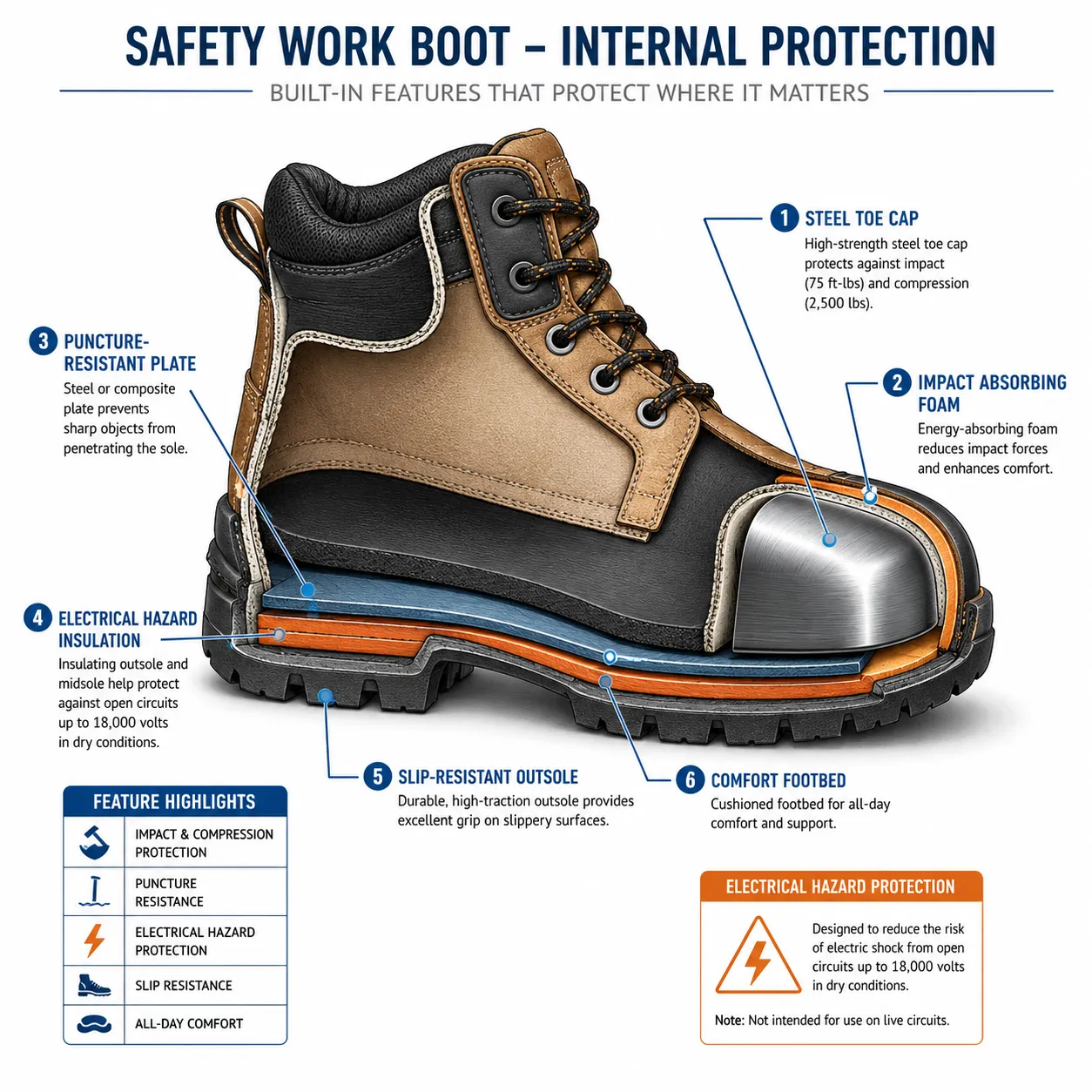
OSHA Requirements
The Occupational Safety and Health Administration (OSHA) enforces workplace safety regulations. Under 29 CFR 1910.136, employers must provide safety footwear when workers face:
- Falling or rolling objects
- Puncture hazards
- Electrical shock risks
- Static discharge dangers
OSHA relies on ASTM standards to determine which footwear qualifies as protective equipment. Your employer conducts hazard assessments to identify required safety features for your specific work environment.
What Are the 8 Essential Safety Footwear Features?
ASTM F2413 certifies eight distinct protective features:
- Impact protection (I) – Protects toes from falling objects
- Metatarsal protection (Mt) – Guards upper foot bones
- Compression protection (C) – Withstands rolling loads
- Electrical hazard protection (EH) – Insulates against electric shock
- Static dissipation (SD) – Prevents static buildup
- Puncture resistance (PR) – Blocks sharp objects from penetrating soles
- Dielectric insulation (DI) – Provides heavy-duty electrical protection
- Chainsaw protection (CS) – Shields against chainsaw injuries
Each feature undergoes specific laboratory tests to earn ASTM certification.
How to Read Safety Footwear Labels?
Safety footwear labels follow a standardized format. For example:
ASTM F2413-18 I/75 C/75 EH
This label breaks down as:
- F2413-18: ASTM standard, 2018 edition
- I/75: Impact protection rated for 75 foot-pounds
- C/75: Compression protection up to 2,500 pounds
- EH: Electrical hazard protection certified
Labels appear on the tongue of boots or in product descriptions when purchasing online. Always verify your footwear carries the correct certifications for your job requirements.
What Safety Toe Protection Do You Need?
Impact Protection Ratings
Safety toe caps—made from steel, aluminum, or composite materials—protect toes from falling objects. ASTM certifies three impact levels:
| Label | Protection Level |
|---|---|
| ASTM F2413 I/75 | Protects against 75 foot-pound impacts |
| ASTM F2413 I/50 | Protects against 50 foot-pound impacts |
| ASTM F2413 I/30 | Protects against 30 foot-pound impacts |
A foot-pound measures force: a 75-pound object dropped from 1 foot exerts 75 foot-pounds. Most employers require I/75 rated footwear for maximum protection.
What Does This Mean in Practice?
An I/75 rated boot protects your toes from:
- A 75-pound object dropped from 1 foot
- A 150-pound object dropped from 6 inches
- A 37.5-pound object dropped from 2 feet
Safety toe materials affect comfort and protection:
- Steel toes: Maximum protection, heavier, conducts temperature
- Composite toes: Lighter, non-metallic, doesn't conduct temperature
- Aluminum toes: Lighter than steel, thinner profile, still metallic
How Does Compression Protection Work?
Compression protection defends against rolling objects that could crush feet. Unlike impact protection, compression ratings cover much heavier loads.
| Label | Protection Level |
|---|---|
| ASTM F2413 C/75 | Protects against 2,500 pounds of compression |
| ASTM F2413 C/50 | Protects against 1,750 pounds of compression |
| ASTM F2413 C/30 | Protects against 1,000 pounds of compression |
Real-world example: If a 2,400-pound car rolls over a mechanic's foot, C/75 rated boots prevent serious injury. Most workplaces require C/75 certification for maximum safety.
Who Needs Compression Protection?
Workers in these environments benefit most:
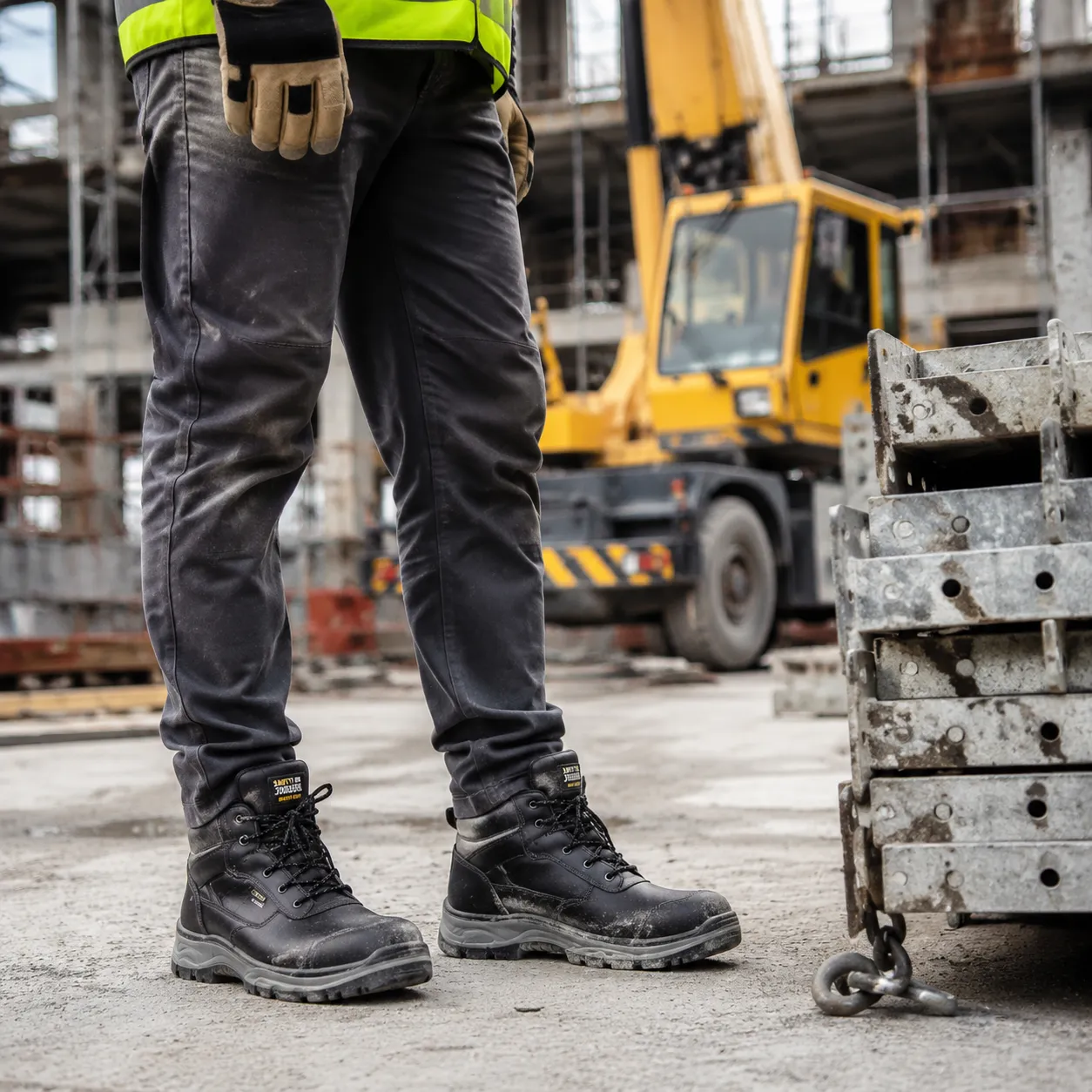
- Construction sites with heavy equipment
- Warehouses with forklifts and pallet jacks
- Manufacturing plants with rolling machinery
- Automotive repair shops
What Is Electrical Hazard Protection?
EH Rated Footwear
Electrical hazard (EH) protection insulates against accidental contact with live circuits. EH-rated footwear provides protection against open circuits up to 600 volts in dry conditions.
For perspective: standard wall outlets deliver 120 volts. 600-volt protection covers most workplace electrical hazards.
How EH Protection Works
EH boots use:
- Non-conductive outsoles that block electrical current
- Insulated midsoles to prevent ground pathways
- Composite toe caps instead of metal
Critical limitation: EH protection only works in dry conditions. Water and moisture compromise electrical insulation.
Who Requires EH Protection?
Workers at risk include:
- Electricians and electrical contractors
- Utility workers
- Maintenance personnel
- Construction workers near power sources
EH protection does not replace other safety measures like lockout/tagout procedures or personal protective equipment.
Why Is Static Dissipation Important?
Understanding Static Discharge Risks
Static electricity buildup creates serious hazards in environments with:
- Flammable vapors (fuel stations, chemical plants)
- Explosive atmospheres (grain elevators, powder handling)
- Sensitive electronics (clean rooms, electronics manufacturing)
A single static spark can ignite fires or explosions. Static dissipative (SD) footwear prevents dangerous charge accumulation.
SD Ratings Explained
SD footwear conducts static electricity safely to grounded floors. ASTM certifies three resistance levels:
| Label | Resistance Range |
|---|---|
| ASTM F2413 SD 100 | 1 to 100 megaohms |
| ASTM F2413 SD 35 | 1 to 35 megaohms |
| ASTM F2413 SD 10 | 1 to 10 megaohms |
Lower resistance = faster static dissipation. SD 10 provides the quickest discharge.
Important Note
SD footwear requires conductive flooring to function properly. Standard concrete or rubber floors may not provide adequate grounding.
How Does Puncture Resistance Work?
PR Protection Standards
Puncture-resistant (PR) footwear prevents sharp objects from penetrating soles. ASTM F2413 requires:
- No cracks after 1.5 million flexes
- Minimum puncture resistance of 270 pounds
Construction Methods
PR footwear uses:
- Steel or composite plates embedded between insole and outsole
- Kevlar or similar materials for flexible protection
- Thick rubber compounds as additional barriers
Who Needs PR Protection?
Workers facing these hazards require puncture-resistant footwear:
- Construction sites with nails and screws
- Manufacturing with metal shavings
- Landscaping with thorns and sharp debris
- Demolition sites with broken glass
PR plates add weight but provide essential protection against foot injuries.
How to Choose the Right Safety Footwear?
Step 1: Identify Workplace Hazards
Request a hazard assessment from your employer's safety personnel. This identifies specific risks requiring protection.
Step 2: Match Required Certifications
Ensure your footwear carries all necessary ASTM labels:
- I/75 C/75 for impact and compression (most common)
- EH for electrical hazards
- PR for puncture risks
- SD for static-sensitive environments
Step 3: Prioritize Fit and Comfort
Poorly fitting safety footwear causes:
- Blisters and hot spots
- Toe pressure from safety caps
- Arch and heel pain
- Fatigue and reduced productivity
Try boots at end of day when feet are slightly swollen for accurate fit. Wear your work socks when trying on footwear.
Step 4: Consider Your Work Environment
- Hot conditions: Choose moisture-wicking linings and breathable materials
- Cold environments: Insulated boots with thermal barriers
- Wet conditions: waterproof membranes (Gore-Tex, etc.)
- Slippery surfaces: Oil- and slip-resistant outsoles
Common Mistakes When Buying Safety Shoes
Mistake 1: Ignoring Fit for Price
Ill-fitting boots lead to foot problems, regardless of protection level. Invest time in proper fitting.
Mistake 2: Assuming One Boot Fits All Jobs
Different hazards require different protections. Match certifications to your specific workplace risks.
Mistake 3: Overlooking Comfort Features
Studies show worker complaints focus on:
- Excessive heat
- Rigid insoles
- Heavy weight
- Pressure from toe caps
Modern safety footwear addresses these issues with lighter materials, flexible soles, and ergonomic designs.
Mistake 4: Buying Without Trying
Online purchases require extra care:
- Check return policies
- Read size reviews
- Verify ASTM certifications in descriptions
- Order multiple sizes to compare
Mistake 5: Wearing Worn-Out Footwear
Safety features degrade over time. Replace boots when:
- Toe caps show damage
- Outsoles wear thin
- Midsoles compress flat
- Protective plates become visible
Bottom Line
Safety footwear testing through ASTM standards ensures workers receive verified protection against workplace hazards. Understanding labels, matching certifications to job requirements, and prioritizing fit protects both your feet and your career.
Always verify your footwear carries the correct ASTM F2413 certifications, replace worn boots promptly, and consult your employer's safety team when uncertain about required protections.