Pesticide Residues and Chemical Contaminants
Multi-Pesticide Screen
Tea is notorious for attracting a long list of pests, and the residue profile reflects that. A single sample gets screened for hundreds of compounds — organophosphates, pyrethroids, neonicotinoids, triazoles, and more. Because tea is consumed as an infusion, the test item isn’t just the concentration on the dried leaf; the brewing factor is also measured. A residue that stays trapped in the leaf and doesn’t transfer into the cup is assessed differently from one that readily infuses. The maximum residue limits are set on the dry tea, but risk assessments often consider the infused liquor separately. A screen that misses a metabolite — like omethoate from dimethoate — can give a falsely clean result, so the target list is updated constantly against what’s actually used in tea-growing regions.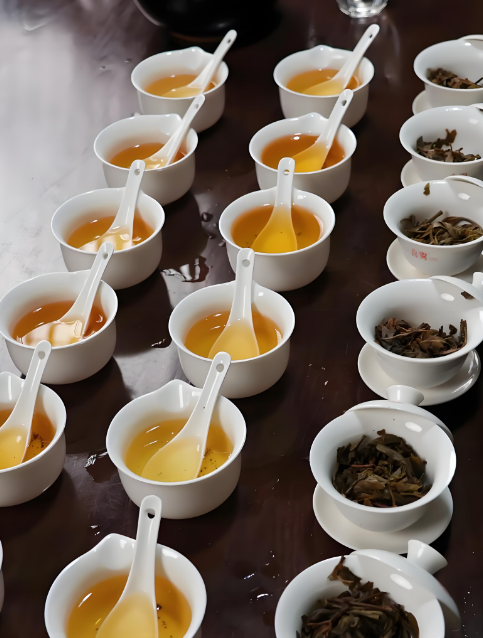
Heavy Metals
Lead, cadmium, arsenic, and copper are the metals that show up most often. Tea plants are natural accumulators, especially of aluminum and manganese, but the toxic metals get the regulatory attention. The dried leaves are digested and analyzed by inductively coupled plasma mass spectrometry. The test item is the total concentration in the leaf, but a second, more practical item is the transfer rate into the infusion. A high lead level in the dry leaf may be concerning, but if the infused liquor carries only a tiny fraction, the exposure is far lower. The lab often performs a simulated infusion and measures the extractable metals to provide that context.
Unauthorized Dyes and Adulterants
Tea leaves that are already spent can be dried, colored, and sold as fresh. Artificial colors like tartrazine, sunset yellow, and even non-food dyes have been found in adulterated tea. The test item is a chromatographic scan — often liquid chromatography with diode array detection — that checks for synthetic dyes. Natural colorants like turmeric are also screened because their presence in a product labeled as pure tea is an economic fraud. This item is especially common for powdered tea and tea dust, where visual inspection alone is useless.
Physical Identity and Composition of the Dry Leaf
Moisture and Water Activity
A tea that’s too wet grows mold. A tea that’s too dry shatters into dust and loses aroma. The moisture content, usually determined by oven drying or Karl Fischer titration, is a universal pass-fail item. White and green teas are held to tighter moisture limits than fully fermented black teas because they’re more susceptible to enzymatic degradation. Water activity is measured separately because it predicts microbial stability better than total moisture. Even a tea with seemingly acceptable moisture can have a high water activity if sugars or other humectants are present, and that’s what fungi really respond to.
Ash Content and Purity
Total ash measures the inorganic residue left after burning off all the organic matter. Tea leaves naturally contain around four to six percent ash. A higher number can indicate contamination with soil, sand, or deliberate addition of exhausted leaves that were loaded with minerals during processing. The ash is also tested for its solubility in water and acid. The ratio of water-soluble to total ash reflects the genuine mineral content of the leaf, while acid-insoluble ash picks up silica from dirt. These ratios are classic test items that catch both sloppy harvesting and deliberate adulteration.
Extraneous Matter and Sieve Analysis
A sample of tea gets spread on a light table and picked through. The analyst looks for stems, stalk fibers, insects, metal fragments, and anything that isn’t tea. Sieve analysis grades the particle size and catches dust that’s been added to boost weight. For whole-leaf and broken-leaf grades, the proportion of leaf to stalk is a quality parameter. For tea bags, the cut size is checked against the specification, because a grind that’s too fine will over-extract and turn bitter instantly.
Chemical Quality Markers in the Leaf
Caffeine and Polyphenol Content
Tea’s stimulant punch and its astringent bite come from caffeine and polyphenols, primarily catechins in green tea and theaflavins plus thearubigins in black tea. Caffeine is measured by liquid chromatography, and the result must match the declared type — a green tea claiming low caffeine needs the numbers to back it up. Total polyphenols, often determined by the Folin-Ciocalteu method, give an overall antioxidant measure. Individual catechin profiling goes a step further: epigallocatechin gallate is the star compound, and its level tells you whether the green tea was processed correctly or overheated and degraded.
Theaflavin and Thearubigin Ratio
For black tea, the color and briskness of the infusion are driven by the ratio of theaflavins to thearubigins. A high theaflavin content gives a bright, coppery liquor and a live, tangy taste. Too much thearubigin and the tea tastes flat and stewed. The ratio is measured by spectrophotometry, and it’s one of the most direct chemical tests for black tea quality. A batch that falls outside the typical range for its grade gets flagged for sensory review, because the taste will almost certainly be off.
Sensory Evaluation and the Brewed Liquor
Professional Cupping and Tasting Panel
No machine has replaced the human palate for tea. The sensory test item is a structured cupping where trained tasters assess the dry leaf appearance, the infused leaf color, the liquor color, the aroma, and the taste. They score for briskness, body, flavor, and any off-notes like mustiness, smokiness, or metallic tang. The panel doesn’t just describe the tea; they assign numerical scores that determine the commercial grade. A tea that passes every chemical test but tastes flat or stale fails the only test that the consumer actually cares about.
Infusion Clarity and Turbidity
After brewing, the liquor should be bright and clear, or intentionally cloudy for certain specialty teas. Turbidity is measured with a nephelometer or simply by visual comparison against a standard. A dull, murky infusion can indicate poor processing, high amounts of dust, or microbial spoilage. For iced tea products, cold haze is a specific test item: the brewed tea is chilled and checked for precipitate formation, which will ruin the appearance on a store shelf.
Microbiological Safety of Processed Tea
Total Aerobic Count and Moulds
Though tea is brewed with boiling water, microbiological quality still matters, especially for cold-brew products and tea extracts. The dried leaf is tested for total aerobic plate count, yeast, and mould. High mould counts often point to poor drying or storage in a humid warehouse. The test item also includes a screen for potentially toxigenic fungi like Aspergillus, because certain species can produce ochratoxin A, a mycotoxin that has been found in tea.
Pathogen Screening for Ready-to-Drink Products
For bottled teas and tea-based beverages, the microbial test items expand to cover Salmonella, Listeria monocytogenes, and coliforms. These products are handled as high-risk ready-to-drink foods, and the testing mirrors what’s done for juice or dairy. A single positive on a pathogen screen locks the entire batch from release, and the investigation traces back through the brewing, filling, and capping line.
Authenticity: Is It Really What the Label Claims?
Geographic Origin Verification
A tea labeled as Darjeeling or Longjing commands a premium. The test item that confirms origin is often a combination of stable isotope ratios, mineral fingerprinting, and volatile aroma profiling. The ratio of deuterium to hydrogen in the water extracted from the leaves can tie a tea to a specific elevation and region. Multi-element profiles by ICP-MS provide a soil fingerprint. When a tea’s price seems too good to be true, these items are what the lab reaches for to settle the argument.
Added Sugar and Flavoring Detection
Some teas are legitimately flavored — jasmine, bergamot, vanilla. Others have sugar sprayed on the leaves to appeal to a sweet-tooth market, and the label may not declare it. The test item is a simple sugar analysis by liquid chromatography, checking for sucrose, glucose, and fructose. A tea that contains measurable sugar without a label declaration is adulterated. Artificial flavor compounds are screened by gas chromatography-mass spectrometry, and the presence of synthetic vanillin or ethyl maltol in a tea labeled as naturally flavored is a mislabeling violation.
Botanical Species Confirmation
Tea should come from Camellia sinensis. Other plant leaves have been mixed in or substituted entirely. The test item uses DNA barcoding or chemical markers like theanine, which is almost unique to tea. A product that lacks theanine or shows DNA sequences from willow or fireweed leaves is not tea, regardless of what the packaging says. This item protects both the consumer and honest producers from economic substitution.
Packaging Safety and Shelf-Life Stability
Migration Testing from Tea Bag Materials
Tea bags are often made from paper, nylon, or plant-based plastics. Hot water extracts not just the tea but also anything that can migrate from the bag. The test items check for epichlorohydrin derivatives from wet-strength paper resins, plasticizers from nylon mesh, and total migration into the brew. A tea bag that passes for room-temperature water may fail at boiling, so the test simulates the actual steeping conditions exactly.
Shelf-Life and Accelerated Aging
Tea is shelf-stable for months or years, but quality declines. Accelerated aging at elevated temperature and humidity tests how the moisture content, polyphenol level, and sensory score change over time. The item is a side-by-side comparison of the aged sample against a fresh control. If the aged sample’s aroma score drops below the acceptable threshold, the shelf-life claim is shortened. This test ties all the chemical items together into a practical promise about how long the tea will stay good once it leaves the factory.
The testing items for tea form a long, interlocking chain. A moisture check catches the risk of mold before it happens. A pesticide screen catches what the farmer may have used and forgotten. A sensory panel catches the stale note that no instrument was designed to measure. Take any one item away, and you’re trusting something that has burned people before. That’s why, in a good tea lab, every number on the certificate has a story — and a reason it was measured.