Few contaminants carry the same weight as aflatoxins. These are not just moldy spots you scrape off; they are invisible, heat-stable molecules that survive most processing and end up in foods and feeds that look perfectly fine. Testing for them isn't a quick dipstick. It's a sequence of check items that starts long before any instrument fires up, and each one—sampling, extraction, cleanup, separation, detection, and a heap of quality checks stacked on top—has to work, or the result you get is worthless. Walk through them with me, and you'll see where the number on the certificate actually comes from.
Sampling and Sample Preparation: The Very First Check Item
Representative Sampling and Grinding
Aflatoxins are notoriously uneven in a bulk lot. One peanut kernel can carry a thousand times the toxin of the one next to it. That means the first test item isn't the chemical analysis; it's the sampling plan itself. How many incremental samples, from how many points, combined into what size aggregate, and then reduced by riffling or quartering to a final test portion—all of that is a defined check item. A lab that receives a bag of whole nuts and just grabs a handful has already failed. The entire aggregate sample gets ground to a fine paste or powder, and the homogeneity of that grind is checked visually. A gritty grind means some particles escaped the extraction that follows.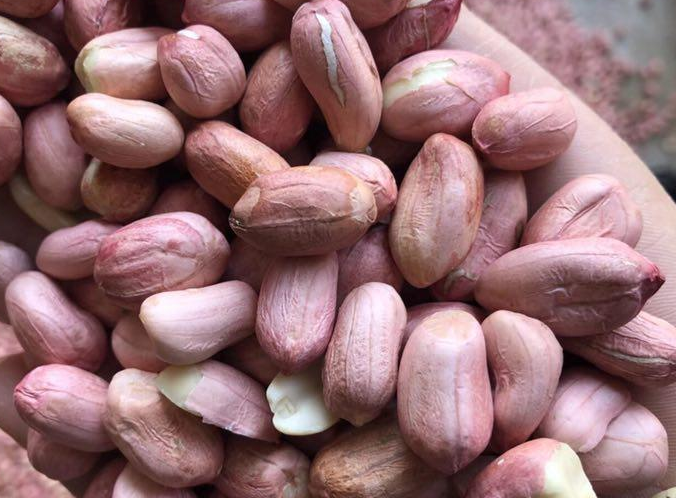
Sub-Sampling and Moisture Correction
From the ground mass, a small test portion is weighed. The item here is the weight precision and the sample-to-solvent ratio. For oily matrices like peanuts, too large a portion can overload the cleanup column later. For dried figs or maize, the moisture content is measured separately so that results can be expressed on a dry-weight basis if required. A moisture check isn't a side note; it's a quiet correction item that prevents dilution error.
Extraction: Getting the Toxins into Solution
Solvent Composition and Extraction Time
Aflatoxins are extracted with a mixture of methanol and water, often around 70–80% methanol. The exact ratio is a test item because too much water drags polar interferences, and too little wets the matrix poorly. The sample is blended or shaken for a set time, and the extraction efficiency is checked during validation using spiked samples. If the shaking speed or time drifts, the recovery drops, and the batch is flagged. The extract is then filtered, and the clarity of the filtrate is a quick visual check—cloudy extracts clog the immunoaffinity column ahead.
Extract Dilution and pH Check
The filtered methanolic extract is diluted with water or a buffer before loading onto the clean-up column. The dilution factor becomes a calculation item that must be tracked. If the pH of the diluted extract is too low or too high, antibody binding on the column can suffer. Some methods specify a phosphate-buffered saline dilution. The pH is measured with a test strip or meter, and if it's off, the column will let aflatoxins slip through uncaptured.
Immunoaffinity Cleanup: The Selectivity Engine
Column Conditioning and Flow Rate
This is the step that separates aflatoxin testing from a generic chemical screen. A glass column packed with antibodies specific to aflatoxins B1, B2, G1, and G2 captures the toxins while allowing everything else to wash away. The test item is the flow rate as the diluted extract passes through. Too fast and the antibodies don't have time to bind; too slow and the run time stretches and interferences can settle. A drop counter or a stopwatch is used to verify a steady, slow drip. If the flow rate varies by more than a few seconds per millilitre, the operator notes it.
Wash and Elution Volumes
After the sample passes, the column is washed with water to remove unbound material. The wash volume is a fixed item—usually ten to twenty millilitres—and it's checked that no column runs dry during the wash. Then the aflatoxins are eluted with a small volume of methanol or acetonitrile. The exact elution volume is critical because it becomes the final sample volume for quantification. A column that's been dried too long before elution can shrink and recover poorly. The eluate is collected in a graduated vial, and the volume is verified by weight or marking. Any discrepancy here feeds directly into the final calculation.
Chromatographic Separation and Detection: The Moment of Truth
HPLC Mobile Phase and Flow Rate
The eluate is injected onto a C18 reverse-phase column with a mobile phase of water, methanol, and acetonitrile. The item checked daily is the retention time stability of all four aflatoxins. A system suitability standard is run first; the peaks for G2, G1, B2, and B1 must appear within a tight window and be resolved to baseline. The resolution between aflatoxin B1 and B2 is particularly watched, as they can merge if the column ages or the mobile phase ratio drifts.
Post-Column Derivatisation or Photochemical Reactor
Aflatoxin B1 and G1 are weakly fluorescent in their native form. To boost sensitivity, the method uses post-column bromination or a photochemical reactor that converts them to more fluorescent derivatives. This is a critical check item. If the bromine reagent is exhausted or the UV lamp in the photochemical reactor dims, the B1 and G1 peaks shrink dramatically, leading to false low results. The system suitability test includes a peak area check for B1 relative to B2; if the ratio falls outside the expected range, the derivatisation system is the first place looked at.
Fluorescence Detection Wavelengths and Sensitivity
The detector excites at around 360 nanometres and reads emission at around 440 nanometres. The test item here is the baseline noise and the signal-to-noise ratio for the lowest calibrant. A noisy baseline reduces the effective limit of detection, and the lamp energy is logged. If the lamp has exceeded its rated hours, it gets replaced proactively rather than waiting for a drift.
Quantification and Method Validation Items
Calibration Curve Linearity and Range
A series of mixed aflatoxin standards are injected, and the peak area is plotted against concentration. The curve must have a correlation coefficient above 0.999, and the residuals should scatter randomly. A single high point that pulls the curve off is removed or the whole curve is remade. A mid-range check standard is run after every ten samples to confirm the calibration holds. If the check standard deviates by more than a set percentage, the bracket is re-injected.
Limit of Detection and Limit of Quantification
These are determined by repeatedly injecting a low-level standard and calculating the standard deviation. The limit of detection is three times that noise, and the limit of quantification is ten times. These values are method-specific and must be recalculated whenever the instrument configuration changes. A result reported below the limit of quantification is marked with a less-than sign—not as a number that someone might misinterpret.
Recovery and Repeatability
A blank matrix is spiked at two or three levels with known amounts of aflatoxins and carried through the entire procedure. The percentage recovery for each toxin must fall within a defined range. Intra-day and inter-day repeatability is checked by running the same spiked sample multiple times. A recovery outside the range or a relative standard deviation that's too high triggers a root cause investigation before any real samples are reported.
quality control Items That Keep the Whole Thing Honest
Blank and Reagent Background
A solvent blank is injected at the start of the sequence to prove the system is clean. A reagent blank—carried through the entire extraction and cleanup—checks for contamination from glassware, solvents, or the immunoaffinity column itself. If aflatoxin peaks appear in the blank, the batch is halted and the source is identified.
Certified Reference Material and Control Charts
A certified reference material, such as a contaminated peanut butter or maize flour with assigned values, is run in every batch. The measured results are plotted on a control chart with warning and action limits. If the result for any aflatoxin exceeds the action limit, the entire batch of samples is rejected and re-run after troubleshooting. This item catches gradual column degradation, lamp drift, and analyst errors that individual calibration checks might not.
In-Spike and Duplicate Analysis
One sample from the batch is split, and one portion is spiked with a known addition. The recovery of the spike confirms that the sample matrix isn't suppressing the signal. Another sample is run in duplicate, and the relative percent difference is calculated. If duplicates disagree beyond the set tolerance, the batch is flagged for re-preparation.
Result Reporting and Interpretation: Beyond the Number
Expression of Results and Measurement Uncertainty
Aflatoxin results are expressed in micrograms per kilogram, equivalent to parts per billion. The reported value should carry its measurement uncertainty, typically expanded to a ninety-five percent confidence level. When a result sits near a regulatory limit, the uncertainty decides compliance. A result of 20.2 µg/kg with an uncertainty of ±2.1 µg/kg might not be a clear exceedance of a 20.0 µg/kg limit, and that nuance is reported.
Sum of Aflatoxins and Ratio Checks
Often, the total of B1, B2, G1, and G2 is reported alongside the individual values. The ratio of B1 to B2 or B1 to the total can indicate the fungal strain responsible. An unusual ratio sometimes points to a misreported matrix or a processing issue. This ratio item is a quiet flag that prompts a second look at the chromatograms.
Frequently Asked Questions
- Why is sampling the most critical item in aflatoxin testing?
- Aflatoxins are heterogeneously distributed in a lot. One highly contaminated kernel can skew the result if the sample isn't properly aggregated and ground. A rigorous sampling plan is what makes the subsequent analytical result representative of the whole batch.
- What does immunoaffinity cleanup remove that solvent extraction alone cannot?
- Immunoaffinity columns use antibodies to selectively bind aflatoxins. They wash away fats, pigments, and other matrix co-extractives that would otherwise interfere with chromatography or suppress fluorescence, giving a much cleaner baseline and lower detection limits.
- Why is post-column derivatisation necessary for aflatoxin B1 and G1?
- The natural fluorescence of B1 and G1 is weak in aqueous mobile phases. Post-column bromination or UV photochemical reaction converts them into highly fluorescent derivatives, boosting sensitivity by an order of magnitude and making low-level quantification possible.
- How is the calibration curve verified during a sample batch?
- A mid-range calibration check standard is injected after every ten samples or so. If its measured concentration deviates by more than a specified percentage from the true value, the calibration is no longer valid and the affected samples are re-run.
- What quality control samples are run with every batch?
- A certified reference material, a reagent blank, a spiked sample for recovery, and a duplicate are typically run. These items together confirm that the entire procedure—from extraction to detection—is performing within validated limits.