Biosafety cabinet testing encompasses a comprehensive range of evaluation methods used to verify that biological safety cabinets (BSCs) provide effective containment, protect personnel, and maintain product integrity. These testing procedures are critical for ensuring laboratory safety when handling infectious agents, hazardous biological materials, and sensitive experimental work.
This comprehensive guide covers all major biosafety cabinet testing methodologies, from NSF/ANSI 49 certification requirements to HEPA filter integrity testing. You'll learn how to evaluate airflow patterns, verify containment performance, understand compliance requirements, and maintain certification throughout the equipment lifecycle.
What you'll learn in this guide:
- NSF/ANSI 49 certification requirements
- HEPA filter integrity testing methods
- Airflow velocity and pattern testing
- Cabinet integrity and pressure decay tests
- Smoke pattern visualization
- Alarm and safety system verification
- Compliance and regulatory requirements
- Certification renewal and maintenance
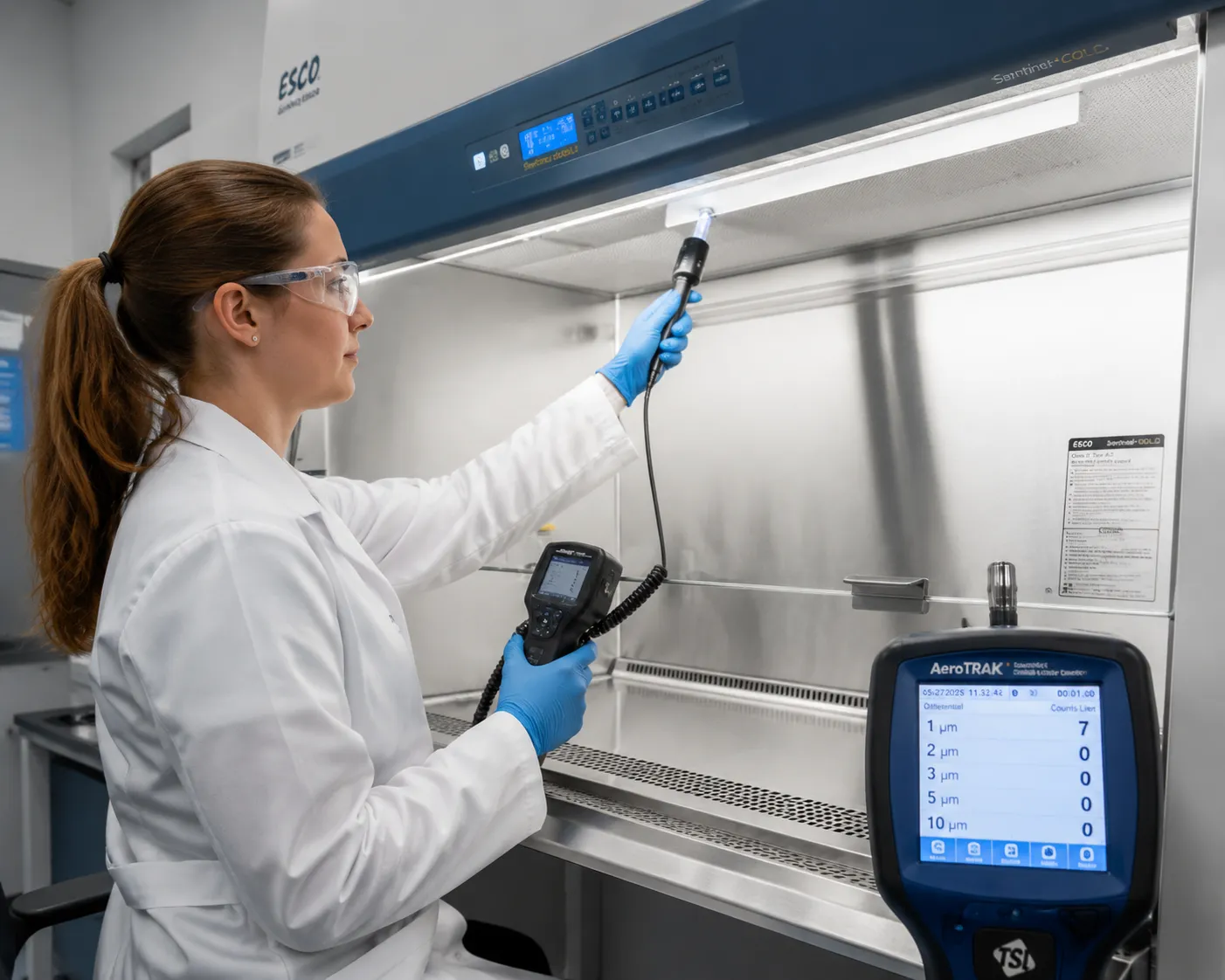
Importance of Biosafety Cabinet Testing
Testing biosafety cabinets serves critical functions for laboratory safety, regulatory compliance, and research integrity.
Key benefits of biosafety cabinet testing:
Personnel protection: Testing verifies that cabinets maintain proper containment, protecting researchers from exposure to infectious agents and hazardous biological materials.
Product protection: Validated airflow patterns prevent contamination of sensitive experimental materials, ensuring research integrity and reproducibility.
Environmental protection: Testing confirms that filtered exhaust air prevents release of biohazardous materials into the laboratory environment and atmosphere.
Regulatory compliance: Certification provides documentation required by OSHA, CDC/NIH, and institutional biosafety committees for handling regulated pathogens.
Quality assurance: Regular testing identifies performance degradation before it compromises safety, enabling proactive maintenance.
Research validity: Certified cabinets provide controlled, reproducible conditions essential for valid scientific results.
Biosafety Cabinet Classes and Types
Class I Biosafety Cabinets
Design:
- Open-fronted, negative pressure enclosure
- Provides personnel and environmental protection
- No product protection (unfiltered room air enters work area)
Applications:
- Handling low to moderate risk biological agents
- Enclosing equipment that generates aerosols
- Supplemental containment for specific procedures
Testing Requirements:
- Inflow velocity measurement
- HEPA filter integrity testing
- Airflow smoke pattern testing
Class II Biosafety Cabinets
Class II Type A1:
- 30% recirculated air, 70% exhausted
- Positive pressure contaminated plenum
- Suitable for work with low to moderate risk agents
- Not suitable for volatile chemicals or radionuclides
Class II Type A2:
- 30% recirculated air, 70% exhausted
- Negative pressure contaminated plenum
- Suitable for minute quantities of volatile chemicals
- Most common type for general laboratory use
Class II Type B1:
- 70% recirculated air, 30% exhausted
- Negative pressure contaminated plenum
- Suitable for trace quantities of chemicals
- Requires dedicated exhaust system
Class II Type B2:
- 100% exhausted (total exhaust)
- No recirculation
- Suitable for work with volatile chemicals
- Requires significant exhaust airflow capacity
Class III Biosafety Cabinets
Design:
- Gas-tight, totally enclosed containment
- Negative pressure maintained at all times
- Work performed through attached gloves
- Highest level of containment
Applications:
- Work with Risk Group 3 and 4 pathogens
- Maximum containment operations (BSL-4)
- Procedures requiring highest security
Testing Requirements:
- Pressure decay test for cabinet integrity
- HEPA filter integrity testing
- Glove integrity testing
- Inflow velocity verification
NSF/ANSI 49 Certification Requirements
Standard Overview
NSF/ANSI 49 is the primary North American standard for biosafety cabinetry, developed jointly by NSF International and the American National Standards Institute. The standard specifies:
- Design and construction requirements
- Performance criteria
- Testing methodologies
- Certification procedures
Certification Triggers
Biosafety cabinets must be certified:
Time-based requirements:
- Upon initial installation
- Annually thereafter (mandatory)
- More frequently for cGMP or USP sterile compounding environments (typically 6 months)
Event-based requirements:
- After relocation or movement
- After HEPA filter replacement
- After repairs affecting airflow or containment
- After maintenance to interior surfaces
- After blower or motor service
- After control system modifications
Required Field Tests
Primary tests (mandatory for all certifications):
1. Inflow Velocity Test:
- Measures air velocity entering the cabinet front opening
- Ensures proper containment for personnel protection
- Typical requirement: 100-125 fpm (0.5-0.64 m/s) for Class II Type A2
- Must maintain negative pressure relative to laboratory
2. Downflow Velocity Test:
- Measures vertical air velocity within the work zone
- Ensures unidirectional downward airflow
- Prevents cross-contamination
- Provides product protection
- Typical requirement: 50-70 fpm (0.25-0.36 m/s)
3. HEPA Filter Integrity Test:
- Verifies filter efficiency and seal integrity
- Challenges filter with polydisperse aerosol (PAO or DOP)
- Scans entire filter face, seal, and housing
- Maximum penetration: 0.01% (99.99% efficiency)
- Tests both supply and exhaust filters
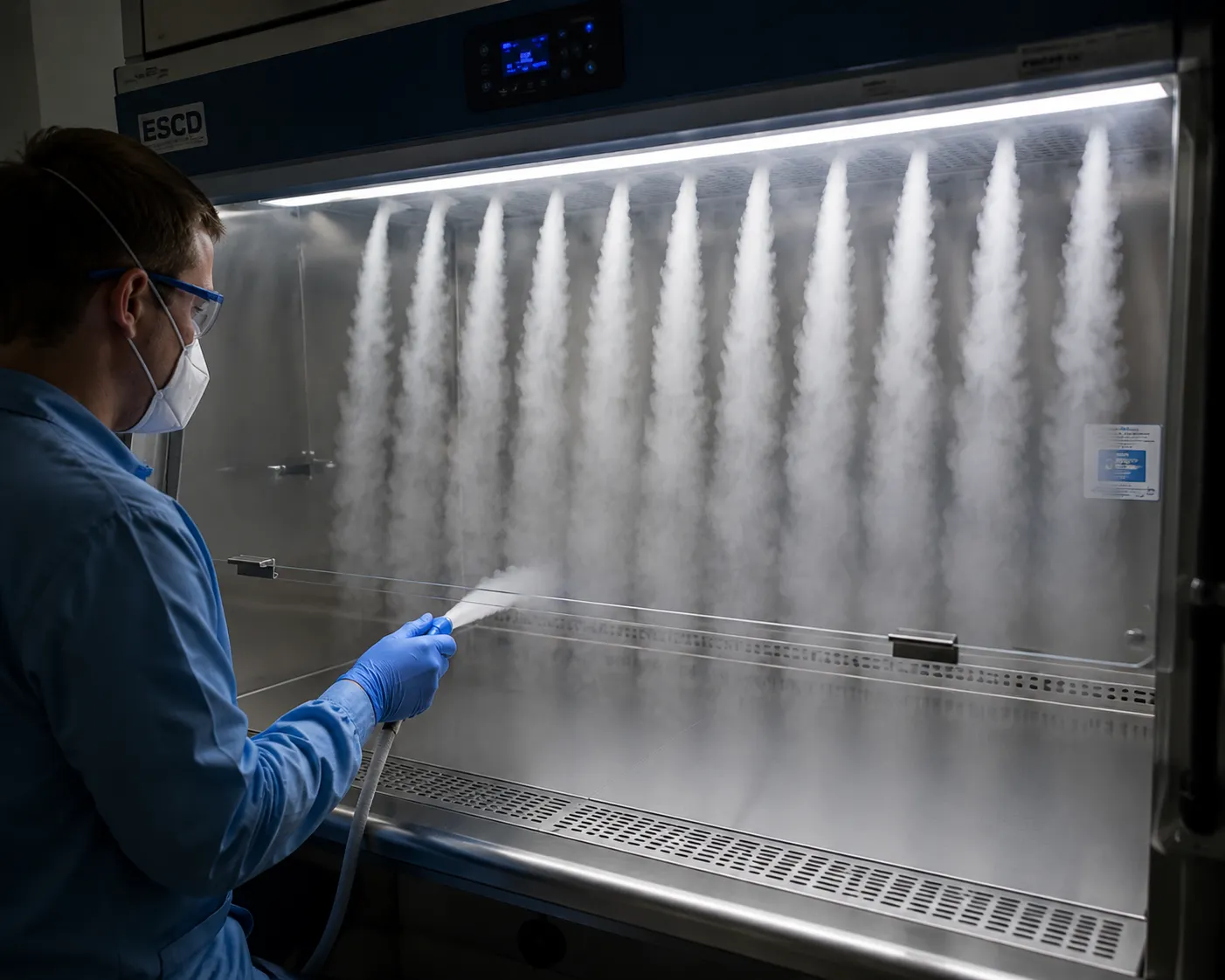
4. Airflow Smoke Pattern Test:
- Qualitative visualization of airflow patterns
- Uses smoke or fog generator
- Verifies unidirectional flow
- Identifies dead spots or turbulence
- Confirms no air escapes through front opening
5. Site Installation Test:
- Verifies proper installation and connections
- Checks exhaust system connections (if applicable)
- Confirms adequate clearance and access
- Verifies alarm function
Optional Tests
Non-viable Particle Counting:
- Quantitative air quality measurement
- Per ISO 14644-1 or EU Annex 1
- Verifies cleanroom conditions within work area
Electrical safety testing:
- Grounding resistance measurement
- Maximum resistance: 0.1 ohm
- Verifies electrical safety and shock protection
Illumination Testing:
- Measures light levels in work area
- Minimum requirement: 1000 lux
- Prevents operator fatigue and errors
UV Light Testing:
- Verifies UV lamp output
- Measures UVC intensity
- Confirms effective decontamination capability
Vibration Testing:
- Measures cabinet vibration levels
- Prevents damage to sensitive procedures
- Identifies mechanical issues
Noise Level Testing:
- Measures operational noise
- Prevents worker fatigue and stress
- Typically should not exceed 67 dBA
HEPA Filter Integrity Testing
Test Principles
High-Efficiency Particulate Air (HEPA) filters are the critical containment barrier in biosafety cabinets. Testing verifies:
- Filter media integrity
- Filter-to-housing seal integrity
- Housing integrity
- Overall filtration efficiency
Test Methods
Aerosol Challenge Method:
1. Preparation:
- Generate polydisperse aerosol upstream of filter
- Common challenge agents: PAO (Polyalphaolefin), DOP (Dioctyl Phthalate), or PSL (Polystyrene Latex)
- Concentration: 10-20 micrograms per liter of air
2. Scanning Procedure:
- Use photometer or particle counter
- Scan entire filter face in overlapping passes
- Scan filter seal and housing
- Probe distance: 1-2 inches from filter face
- Scan rate: maximum 2 inches per second
3. Acceptance Criteria:
- Maximum penetration: 0.01%
- Equivalent to 99.99% efficiency on 0.3 micron particles
- Any leak exceeding threshold requires repair or replacement
Filter Integrity Failures
Common causes of test failures:
Filter media damage:
- Punctures from improper handling
- Moisture damage
- Age-related degradation
- Chemical exposure
Seal failures:
- Gasket deterioration
- Improper installation
- Housing distortion
- Temperature cycling effects
Housing leaks:
- Weld defects
- Joint failures
- Penetration seal failures
Airflow Testing Methods
Inflow Velocity Measurement
Purpose: Verify adequate capture velocity at cabinet opening
Equipment:
- Calibrated thermal anemometer or vane anemometer
- Manometer for pressure measurement
Procedure:
- Measure velocity at multiple points across front opening
- Calculate average inflow velocity
- Verify within manufacturer specifications
- Compare to NSF/ANSI 49 requirements
Acceptance Criteria:
- Class II Type A1: 75-125 fpm minimum
- Class II Type A2: 100-125 fpm typical
- Must maintain negative pressure
Downflow Velocity Measurement
Purpose: Verify uniform downward airflow in work zone
Equipment:
- Thermal anemometer
- Grid template for measurement points
Procedure:
- Divide work surface into equal grid sections
- Measure velocity at each grid point
- Calculate average and uniformity
- Identify any areas outside tolerance
Acceptance Criteria:
- Typical: 50-70 fpm (varies by cabinet type)
- Uniformity: within ±20% of average
- No reverse flow or turbulence
Airflow Smoke Pattern Testing
Purpose: Visualize airflow patterns qualitatively
Equipment:
- Smoke generator or fog source
- Glycol-based smoke or titanium tetrachloride
Procedure:
- Generate smoke at various points inside cabinet
- Observe smoke movement and direction
- Test at work surface, near sash, and at edges
- Document any irregularities
Acceptance Criteria:
- Unidirectional downward flow in work zone
- No reverse flow or turbulence
- No smoke escape through front opening
- Proper capture at front opening edges
Cabinet Integrity Testing
Pressure Decay Test (Class III BSCs)
Purpose: Verify gas-tight integrity of cabinet shell
Equipment:
- Pressure gauge or transducer
- Sealing materials for openings
Procedure:
- Seal all cabinet openings
- Pressurize cabinet with air (typically 2-4 inches w.g.)
- Isolate cabinet from pressure source
- Measure pressure drop over specified time
- Calculate decay rate
Acceptance Criteria:
- Pressure decay rate within standard limits
- Indicates no significant shell leaks
- Verifies integrity of welds, seals, and penetrations
Glove Integrity Testing (Class III BSCs)
Purpose: Verify glove and glove port integrity
Methods:
Visual Inspection:
- Check for visible damage, holes, or tears
- Inspect glove-to-port seal
- Verify proper glove installation
Pressure Hold Test:
- Inflate gloves to specified pressure
- Monitor for pressure loss
- Indicates glove integrity
Alarm and Safety System Testing
Alarm Function Verification
Tests performed:
Airflow alarm:
- Simulate low airflow condition
- Verify alarm activation
- Check alarm threshold accuracy
Sash alarm:
- Move sash to improper position
- Verify alarm activation
- Test sash position sensor
Filter alarm (if equipped):
- Simulate filter loading condition
- Verify alarm response
Interlock Testing
Tests performed:
Sash interlock:
- Verify cabinet operation only with sash at proper height
- Test interlock response to sash movement
Blower interlock (Type B cabinets):
- Verify exhaust system interlock function
- Test response to exhaust failure
UV light interlock (if equipped):
- Verify UV light deactivates when sash opened
- Test safety interlock function
Certification Documentation
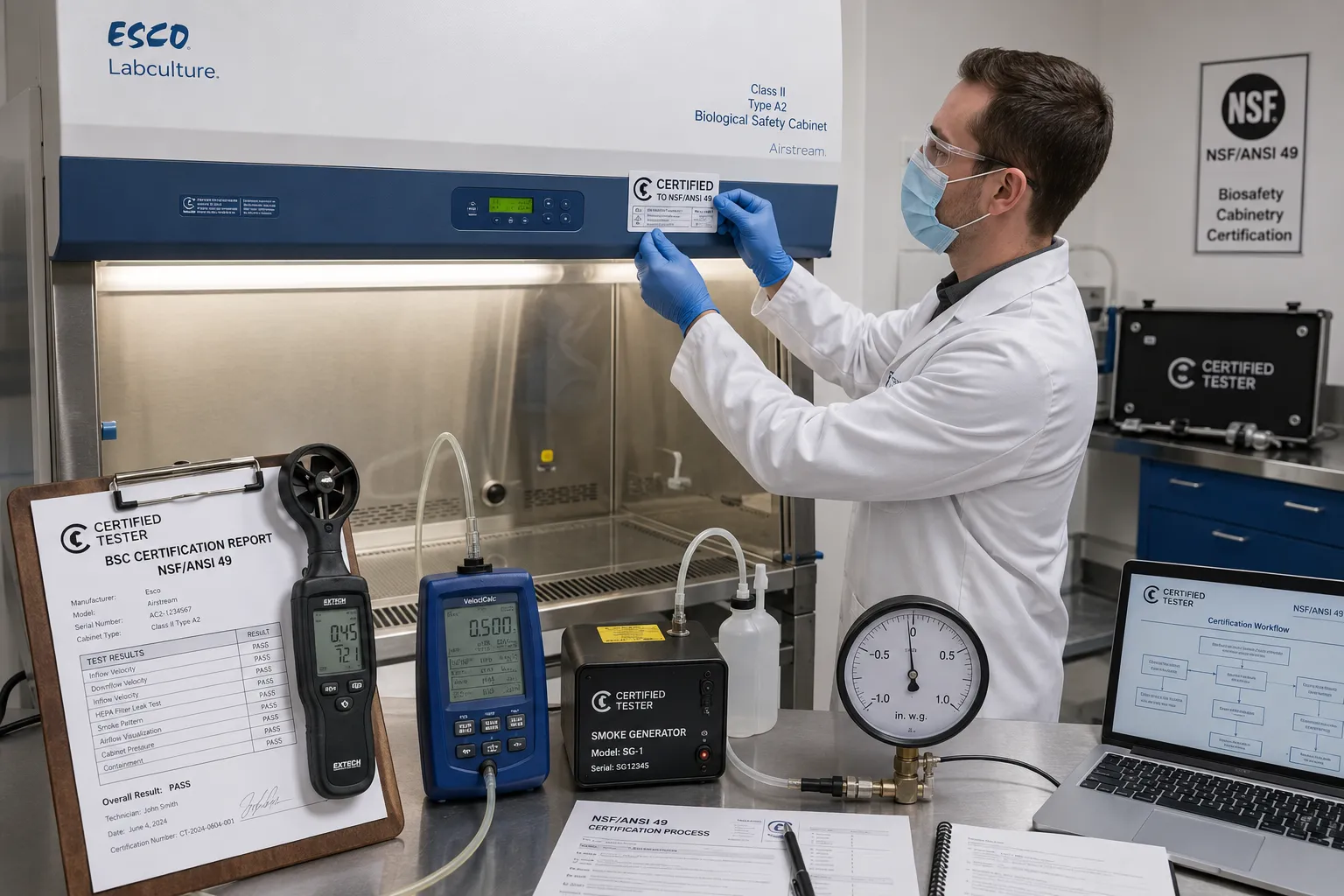
Certification Report Contents
Required documentation:
1. Certification Label:
- Certification status (pass/fail)
- Date of certification
- Expiration date (typically 1 year)
- Certifier identification and signature
- Applicable standard (NSF/ANSI 49)
2. Test Report:
- Complete test results for each parameter
- Instrumentation used with calibration dates
- Reference standards applied
- Cabinet identification (model, serial number)
- Environmental conditions during testing
- Any deficiencies noted
- Corrective actions taken
3. Maintenance Records:
- Filter change dates
- Repair history
- Relocation records
- Previous certification results
Record Keeping Requirements
Documentation retention:
- Maintain certification records for minimum 5 years
- Include all test reports and labels
- Document corrective actions
- Track certification history
Regulatory audit preparation:
- Maintain accessible certification files
- Document compliance with all applicable standards
- Prepare summary reports for inspectors
Regulatory Compliance Requirements
Primary Standards
NSF/ANSI 49:
- Primary North American standard for BSC certification
- Specifies design, construction, and performance requirements
- Defines testing methodologies and acceptance criteria
- Updated regularly (current: 2024 revision)
CDC/NIH BMBL:
- Biosafety in Microbiological and Biomedical Laboratories
- Provides guidelines for BSC use and placement
- Specifies biosafety level requirements
- Addresses work practices and procedures
OSHA Standards:
- 29 CFR 1910.1030 (Bloodborne Pathogens)
- General duty clause for workplace safety
- Requires proper containment for hazardous work
ISO 14644-1:
- Cleanroom classification standard
- Applied to air cleanliness within BSC work area
- Relevant for pharmaceutical applications
International Standards
EN 12469:
- European standard for biosafety cabinetry
- Harmonized with NSF/ANSI 49 for most requirements
- Required for CE marking
AS 2252 (Australia/New Zealand):
- Regional standard for biosafety cabinets
- Based on international standards
Common Certification Failures
Airflow Failures
Causes:
- Clogged pre-filters reducing airflow
- Blower performance degradation
- Improper cabinet balancing
- Exhaust system problems
- Sash position errors
Solutions:
- Clean or replace pre-filters
- Service or replace blower motor
- Rebalance cabinet airflow
- Verify exhaust connections
- Train users on proper operation
HEPA Filter Failures
Causes:
- Filter media damage
- Seal deterioration
- Improper filter installation
- Housing damage
- Age-related degradation
Solutions:
- Replace damaged filters
- Reseal filter-to-housing connection
- Reinstall filters properly
- Repair or replace housing
- Implement filter change schedule
Cabinet Integrity Failures
Causes:
- Damaged glove ports (Class III)
- Worn window gaskets
- Failed sealant at penetrations
- Weld failures
- Structural damage
Solutions:
- Replace glove port components
- Install new window gaskets
- Reseal penetrations
- Repair welds (professional service)
- Document and repair structural damage
Maintenance and Troubleshooting
Routine Maintenance
Daily:
- Wipe work surface with appropriate disinfectant
- Check sash operation
- Verify UV light function (if equipped)
- Listen for unusual sounds
Weekly:
- Clean cabinet interior thoroughly
- Check pre-filter condition
- Verify alarm function
- Inspect for visible damage
Monthly:
- Clean or replace pre-filters as needed
- Check work surface for damage
- Verify proper operation
- Document maintenance activities
Troubleshooting Guide
Problem: Low airflow alarm
- Check pre-filter condition
- Verify sash position
- Inspect for obstructions
- Check exhaust connection
- Contact certifier if problem persists
Problem: Turbulent airflow
- Reduce materials inside cabinet
- Verify proper work practices
- Check for blocked grilles
- Schedule recertification
Problem: Excessive noise
- Check blower motor
- Verify proper installation
- Inspect for loose components
- Schedule maintenance service
Problem: Failed HEPA test
- Do not use cabinet for hazardous work
- Contact certified service provider
- Schedule filter replacement
- Recertify before returning to service
Selecting a Certification Provider
Qualifications to Verify
Accreditation:
- NSF Biosafety Cabinet Field Certifier Accreditation
- Current accreditation status
- Accreditation for specific cabinet classes
Experience:
- Years in business
- Experience with your cabinet models
- References from similar facilities
Capabilities:
- Geographic coverage
- Response time for service calls
- Emergency service availability
- Documentation quality
Equipment:
- Calibrated test instruments
- Proper challenge aerosols
- Documentation systems
Service Logistics
Considerations:
- Regional service network density
- Average response time
- Parts inventory
- Certification report quality
- Online access to records
Frequently Asked Questions
How often should biosafety cabinets be certified?
Biosafety cabinets must be certified at least annually as required by NSF/ANSI 49. Additional certification is required after installation, relocation, HEPA filter replacement, and any repair that could affect containment. Some applications, such as USP sterile compounding, require semi-annual certification.
What is the difference between NSF certification and field certification?
NSF certification refers to the NSF/ANSI 49 standard that cabinets must meet. Field certification is the process of testing a cabinet at its installation location to verify it meets NSF/ANSI 49 requirements. Only NSF-accredited field certifiers can perform valid field certification.
Can I perform biosafety cabinet testing myself?
No. Biosafety cabinet certification must be performed by NSF-accredited field certifiers with proper training, equipment, and documentation. Self-testing does not satisfy regulatory requirements and may not identify safety-critical issues.
What does HEPA filter integrity testing involve?
HEPA filter integrity testing challenges the filter upstream with a polydisperse aerosol (PAO or DOP) and scans the entire filter face, seal, and housing with a photometer or particle counter to detect any leakage. The test verifies 99.99% efficiency on 0.3-micron particles.
How long does biosafety cabinet certification take?
Certification typically takes 1-2 hours per cabinet, depending on cabinet type, size, condition, and the number of tests performed. Class III cabinets with pressure decay testing may require additional time.
What is the lifespan of a biosafety cabinet?
With proper maintenance and regular certification, biosafety cabinets typically last 15-20 years. Some units remain functional for 25+ years with excellent care. Regular maintenance and prompt repairs extend cabinet life.
What happens if my cabinet fails certification?
If a cabinet fails certification, it must not be used for work with hazardous materials until the issue is corrected and the cabinet is recertified. Common failures can often be corrected with maintenance, but HEPA filter failures require filter replacement and recertification.
How do I prepare for biosafety cabinet certification?
Before certification, ensure the cabinet is accessible, clean, and empty of experimental materials. Have maintenance records available. Ensure the cabinet has been operating for at least 30 minutes befOre testing to stabilize airflow.
Conclusion
Biosafety cabinet testing provides the essential foundation for laboratory safety when handling infectious agents and hazardous biological materials. Comprehensive testing programs that include NSF/ANSI 49 certification, HEPA filter integrity testing, and airflow verification ensure that cabinets provide reliable containment and protection.
Understanding testing methods, maintaining certification schedules, and addressing failures promptly enables laboratories to protect personnel, maintain research integrity, and comply with regulatory requirements. The investment in proper testing and certification pays dividends through enhanced safety, regulatory compliance, and research quality.
Key takeaways:
- NSF/ANSI 49 certification is mandatory for all biosafety cabinets
- Annual recertification is required, with additional testing after specific events
- HEPA filter integrity testing validates the critical containment barrier
- Airflow testing verifies personnel, product, and environmental protection
- Only NSF-accredited certifiers can perform valid field certification
- Proper documentation supports regulatory compliance and quality assurance
- Proactive maintenance prevents certification failures and extends cabinet life
The commitment to regular testing and certification demonstrates institutional dedication to laboratory safety and research excellence.
Note: This article provides general guidance on biosafety cabinet testing methods. Always consult NSF/ANSI 49, CDC/NIH BMBL, manufacturer specifications, and institutional biosafety requirements for detailed testing procedures and acceptance criteria. Reference authoritative sources including NSF International, CDC, and NIH for current standards and guidelines.