What Is Dust Collector Testing?
Dust collector testing evaluates the performance, efficiency, and safety of industrial dust collection systems through systematic analysis of dust characteristics, filtration effectiveness, and compliance with regulatory standards. Testing ensures dust collectors operate at optimal efficiency while protecting workers, facilities, and the environment from hazardous particulate emissions.
Comprehensive dust collector testing includes particle size analysis, abrasion resistance evaluation, leak detection, combustibility screening, and explosion parameter testing. These tests provide critical data for proper equipment selection, system design, and regulatory compliance under OSHA and NFPA standards.
Why Is Dust Collector Testing Essential for Industrial Safety?
Dust collection systems represent major capital investments that can become costly operating expenses without proper testing and validation. Testing eliminates guesswork and ensures wise investment decisions.
Critical Safety Applications
Worker Health Protection
- Respiratory hazard prevention
- Air quality compliance in breathing zones
- Long-term health risk mitigation
- PPE requirement determination
Facility Safety
- Fire and explosion prevention
- Combustible dust hazard assessment
- Equipment protection from abrasive dust
- Structural integrity preservation
Environmental Compliance
- Emissions standards achievement
- Air permit requirements
- Environmental reporting obligations
- Community health protection
Consequences of Inadequate Testing
Safety Incidents
- Dust explosions causing facility damage and injuries
- Fire hazards from combustible particulate accumulation
- Respiratory illnesses among workers
- Regulatory violations and citations
Operational Problems
- Premature filter failure from incorrect media selection
- System inefficiency from improper sizing
- Excessive maintenance costs from abrasive dust damage
- Production downtime from equipment failures
What Are the Key Dust Testing Methods?
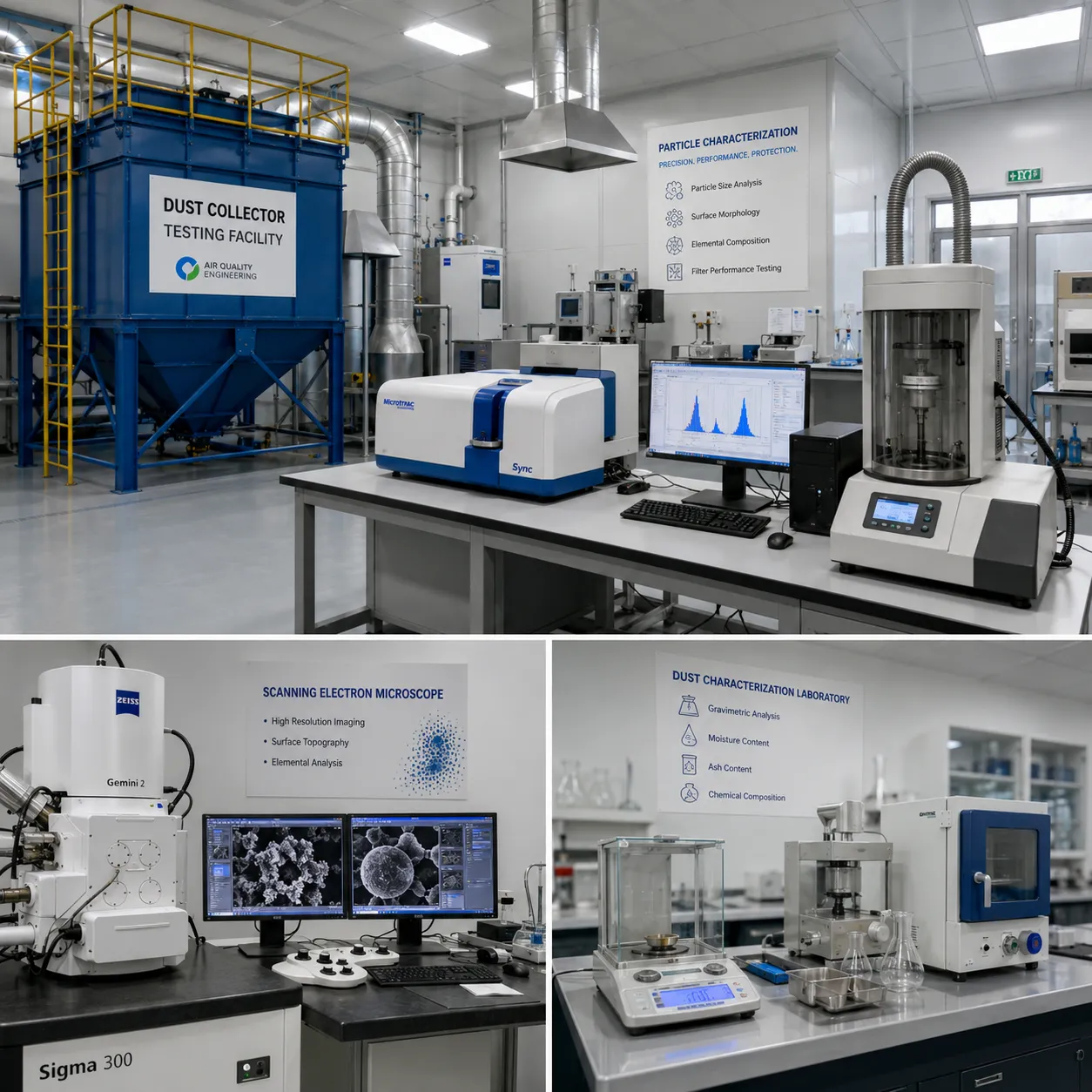
Professional dust testing facilities provide comprehensive analysis to determine optimal collection system design and filter media selection.
COre testing Methods
Particle Size Analysis
- Reveals dust particle size distribution down to submicron range
- Determines filtration efficiency requirements for emissions compliance
- Dual-laser analysis for count and volume distribution
- Sieve analysis for particles larger than 100 microns
Video Microscope Analysis
- Scanning electron microscope (SEM) visual analysis
- Reveals dust shape and structural characteristics
- Identifies crystalline vs. spherical particulate
- 4000x magnification for nanofiber filter media inspection
Pycnometer Testing
- Determines true specific gravity vs. bulk density
- Critical for cyclonic collector efficiency calculations
- Example: Aluminum solid = 165 lb/ft³; aluminum dust = 1-2 lb/ft³
- Affects dust handling and discharge design
Abrasion Testing
- Measures relative dust abrasiveness
- Determines optimal inlet velocity design
- Prevents premature filter and component wear
- Critical for abrasive dusts like cast iron grindings
Terminal Velocity Testing
- Identifies air velocity required to lift dust
- Determines correct filter housing size
- Horizontal convey velocity for ductwork design
- Sliding angle/angle of repose for hopper design
How to Perform Particle Size Analysis for Dust Collectors?
Particle size analysis is fundamental to dust collector design and filter selection, revealing the complete size distribution including submicron particles invisible to standard testing.
Dual-Laser Particle Analysis
Count Distribution
- Number of particles at each size range
- Critical for filter efficiency calculations
- Identifies fine particle concentrations
- Determines emissions compliance requirements
Volume/Mass Distribution
- Weight distribution across particle sizes
- Important for dust loading calculations
- Affects hopper and discharge design
- Influences cleaning cycle requirements
Mixed Dust Considerations
Real-World Examples
- Plasma cutter exhaust: Submicron carbon particles mixed with larger steel particles
- Welding fumes: Metal oxide fumes with larger spatter particles
- Grinding operations: Fine metal dust with larger chip material
- Woodworking: Fine sander dust mixed with larger sawdust
Testing Importance
- Scientific testing identifies tiny particles invisible to standard methods
- Proper filter media selection requires complete size data
- Mixed dusts may require multi-stage collection
- Emissions compliance depends on finest particle capture
Sieve Analysis
Application Range
- Particles larger than 100 microns
- Complements laser analysis for complete distribution
- Standard mesh sizes for consistent results
- Important for pre-collector sizing
Results Application
- Pre-filter or cyclone sizing
- Dust handling equipment selection
- Storage and discharge design
- Material recovery system design
What Is Abrasion Testing and Why Does It Matter?
Abrasion testing measures the relative abrasiveness of dust particles, directly impacting equipment longevity and maintenance costs.
Abrasion Impact on Equipment
Components Affected by Abrasive Dust
- Filter media and cartridges
- Filter housings and tubesheets
- Inlet ductwork and transitions
- Discharge valves and rotary airlocks
- Fan blades and housings
Abrasive Dust Examples
- Cast iron grindings
- Silica sand
- Metal shot and grit
- Foundry dust
- Glass grinding particulate
Design Implications
Inlet Velocity Optimization
- Low inlet velocity required for highly abrasive dusts
- High velocity causes dust to abrade filters prematurely
- Proper velocity extends filter life significantly
- Testing determines optimal velocity range
Component Material Selection
- Abrasion-resistant liners for high-wear areas
- Hardened steel for valves and airlocks
- Ceramic coatings for extreme abrasion
- Reinforced filter cages and supports
Maintenance Planning
- Predictable replacement intervals
- Spare parts inventory planning
- Maintenance cost forecasting
- Equipment life cycle optimization
How to Identify and Troubleshoot Dust Collector Leaks?
Continuous dust discharge from collectors indicates system integrity problems requiring systematic troubleshooting to identify and correct.
Common Leak Causes
Filter Media Issues
- Blown, torn, or damaged filter bags or cartridges
- Filter media abrasion damage
- Temperature excursion damage
- Chemical attack on filter material
- Improper cleaning cycle damage
Installation Problems
- Incorrect filter installation orientation
- Missing or damaged gaskets
- Improperly seated snap-band bags
- Missing or loose attachment hardware
- Filter element misalignment
Mechanical Failures
- Tubesheet abrasion or corrosion
- Cracked filter housing welds
- Damaged filter assembly components
- Filter access cover issues
- Ductwork connection failures
Systematic Troubleshooting Process
Visual Inspection Steps
- Observe emission characteristics - plume from clean-side indicates leak
- Check filter access covers - loose, misaligned, or damaged
- Inspect gaskets - torn, missing, or poorly compressed
- Examine filter installation - correct orientation and seating
- Check attachment hardware - all bolts present and tightened
Bag Filter Specific Checks
- Snap-band proper seating in tubesheet
- Excess bag cuff material interference
- Kinked snap-bands allowing bypass
- Bag filter detachment
Cartridge Filter Specific Checks
- Correct gasket orientation (in or out)
- Proper cartridge seating
- Gasket compression adequacy
- Filter element damage
Advanced Leak Detection
Fluorescent Tracing Powder Method
- Introduce fine fluorescent powder to dirty side
- Run collector briefly
- Shut down and inspect clean side with black light
- Leaks glow brightly from powder penetration
- Mark and repair all identified leak points
Professional Testing Benefits
- Precise leak location identification
- Multiple color powders for zone confirmation
- Post-repair verification testing
- Documentation for compliance records
Corrective Action Best Practices
Repair Sequence
- Address each leak before moving to next zone
- Clean tubesheet and surrounding areas thoroughly
- Replace damaged components with correct parts
- Verify proper installation and sealing
- Document all repairs and locations
Pre-Restart Cleaning
- Clean air plenum thorough cleaning
- Exhaust duct cleaning
- Fan and fan housing cleaning
- Prevents accumulated dust re-entrainment
What Are Combustible Dust Testing Requirements?
Combustible dust testing is mandated by NFPA standards to protect workers and facilities from explosion hazards. Testing determines explosion potential and required protection measures.
Essential Combustibility Tests
Go/No Go Explosibility Screening
- Determines if dust is explosive or combustible
- First step in explosion hazard assessment
- Required by NFPA standards
- Guides need for additional testing
Minimum Ignition Energy (MIE)
- Threshold energy required for dust combustion
- Critical for electrostatic discharge protection
- Guides equipment grounding requirements
- Determines spark detection needs
Minimum Explosive Concentration (MEC)
- Minimum dust concentration for explosion
- Allows design below explosive threshold
- Reduces protection equipment requirements
- Important for system operating parameters
Kst and Pmax Testing
- Kst: Explosion propagation rate constant
- Pmax: Maximum explosion pressure
- Required for explosion protection design
- Determines venting and suppression requirements
Minimum Auto-Ignition Temperature (MIT)
- Temperature at which dust auto-ignites
- Critical for high-temperature applications
- Guides process temperature limits
- Important for dryer and oven applications
Limited Oxygen Concentration (LOC)
- Minimum oxygen for combustion
- Enables inerting system design
- Nitrogen blanketing calculations
- Important for oxygen-deficient operation
NFPA Standards Requirements
NFPA 652 - Fundamentals of Combustible Dust
- Requires dust hazard analysis (DHA)
- Mandates combustibility testing
- Establishes management systems
- Requires documented compliance
NFPA 654 - Manufacturing of Dusts
- Facility-specific requirements
- Housekeeping standards
- Equipment protection requirements
- Explosion protection systems
Industry-Specific Standards
- NFPA 664: Wood processing
- NFPA 484: Combustible metals
- NFPA 655: Sulfur
- NFPA 61: Agricultural and food
How to Test Explosion Parameters (Kst, Pmax, MIE)?
Explosion parameter testing provides quantitative data for designing explosion protection systems and determining safe operating conditions.
Kst Testing Methodology
Test Equipment
- Standardized test vessel (20L or 1m³ sphere)
- Controlled dust dispersion system
- Ignition source
- Pressure measurement instrumentation
Test Procedure
- Disperse known dust concentration in vessel
- Initiate ignition source
- Measure pressure rise over time
- Calculate Kst from pressure rise rate
- Test multiple concentrations for maximum Kst
Kst Classification Classes
| Kst Value (bar·m/s) | Dust Class | Explosion Severity |
|---------------------|------------|-------------------|
| 0 | St-0 | Non-explosive |
| 0-200 | St-1 | Weak explosion |
| 200-300 | St-2 | Strong explosion |
| >300 | St-3 | Very strong explosion |
Pmax Testing
Definition
- Maximum pressure developed in contained explosion
- Used for vessel strength requirements
- Determines protection system design pressure
- Critical for explosion venting calculations
Application
- Vessel design pressure requirements
- Explosion vent sizing calculations
- Suppression system design
- Structural protection requirements
MIE Testing
Test Method
- Energy-dispersed ignition testing
- Spark energy variation
- Statistical determination of threshold
- Multiple trials for confidence
Application Guidelines
- MIE < 1 mJ: Extremely sensitive, requires strict static control
- MIE 1-10 mJ: Sensitive, requires grounding and bonding
- MIE 10-100 mJ: Moderately sensitive, standard precautions
- MIE > 100 mJ: Less sensitive, basic precautions adequate
Dust Collector Performance Testing Best Practices
Performance testing validates that dust collection systems meet design specifications and regulatory requirements.
Pre-Installation Testing
Dust Characterization
- Complete particle size analysis
- Abrasion testing for material selection
- Combustibility screening for safety design
- Terminal velocity for system sizing
System Design Validation
- Airflow calculations verification
- Filter media selection confirmation
- Ductwork sizing validation
- Fan selection verification
Commissioning Testing
Airflow Verification
- Measure actual airflow at key points
- Compare to design specifications
- Balance system branches
- Verify capture velocities at sources
Pressure Drop Measurement
- Initial clean filter pressure drop
- Design operating pressure drop
- Final pressure drop alarm setpoint
- Cleaning system verification
Emissions Testing
- Stack testing for compliance
- Particulate concentration measurement
- Visible emission observation
- Opacity measurement if required
Ongoing Performance Monitoring
Regular Testing Schedule
- Quarterly emissions testing
- Annual comprehensive inspection
- Filter condition monitoring
- System efficiency trending
Key Performance Indicators
- Emission concentration
- System pressure drop
- Filter life and replacement frequency
- Energy consumption
NFPA Compliance Testing Requirements
NFPA compliance requires documented testing and analysis to protect facilities from combustible dust hazards.
Dust Hazard Analysis (DHA)
DHA Requirements
- Identify all combustible dust materials
- Evaluate dust characteristics through testing
- Identify potential ignition sources
- Evaluate existing safeguards
- Recommend additional protections
Testing Documentation
- Material identification records
- Test results and analysis
- Hazard classification
- Protection system specifications
- Management of change procedures
Required Testing Frequency
Initial Testing
- All new materials before introduction
- Process changes affecting dust characteristics
- New equipment installations
- Facility modifications
Periodic Revalidation
- Annual review of DHA
- Testing when material sources change
- Revalidation after process upsets
- Five-year comprehensive review recommended
Documentation Requirements
Test Records
- Laboratory test reports
- Sample identification and source
- Test dates and conditions
- Results interpretation
Compliance Documentation
- DHA documentation
- Protection system specifications
- Inspection and maintenance records
- Training records
Common Dust Collector Testing Failures to Avoid
Understanding common testing failures helps facilities avoid costly mistakes and ensure accurate results.
Sample Collection Errors
Inadequate Sample Representation
- Sampling only easy-to-reach locations
- Missing fine particle fractions
- Ignoring process variation
- Single point sampling
Prevention: Collect multiple samples from representative locations under various operating conditions.
Testing Scope Errors
Incomplete Testing Packages
- Skipping combustibility testing
- Missing particle size analysis
- Ignoring abrasion testing
- Inadequate moisture analysis
Prevention: Develop comprehensive testing protocols based on application requirements.
Interpretation Errors
Misapplying Test Results
- Using wrong Kst for protection design
- Ignoring MIE in static protection
- Overlooking MEC in concentration control
- Misinterpreting particle size data
Prevention: Work with experienced testing laboratories and qualified engineers for result interpretation.
Maintenance Testing Gaps
Infrequent Revalidation
- No testing after material changes
- Ignoring process modifications
- Extended periods without retesting
- Missing annual review requirements
Prevention: Establish testing schedules and change management procedures.
Bottom Line
Dust collector testing provides essential data for safe, efficient, and compliant dust collection system design and operation. Comprehensive testing eliminates guesswork, ensures proper equipment selection, and protects workers and facilities from dust-related hazards.
Partner with accredited testing laboratories to perform complete dust characterization including particle size analysis, abrasion testing, and combustibility screening. Implement systematic leak detection and troubleshooting procedures to maintain system integrity. Document all testing and maintain compliance with NFPA standards for combustible dust safety.