What Is Anti-Static Clothing Testing?
Anti-static clothing testing evaluates the electrostatic properties of protective garments to ensure they prevent dangerous static charge accumulation in hazardous environments. Specialized test methods measure surface resistance, charge decay rates, and electric charge levels to verify that clothing meets safety standards for explosion-risk areas, electronics manufacturing, and other static-sensitive applications.
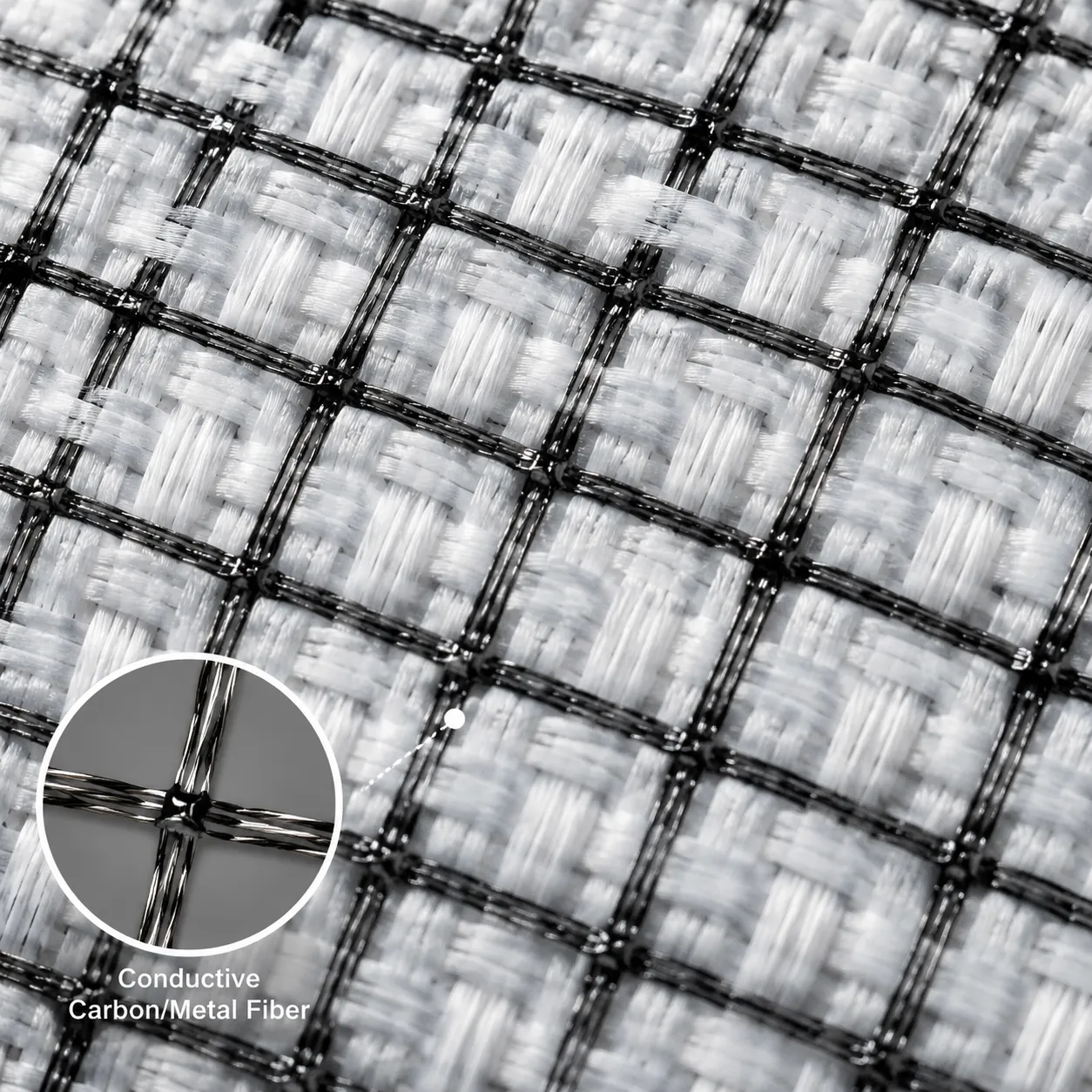
Static electricity accumulates when materials rub together or separate, creating electric charges on surfaces. Anti-static clothing dissipates these charges through conductive fibers or treatments, preventing sparks that could ignite flammable atmospheres or damage sensitive electronic components.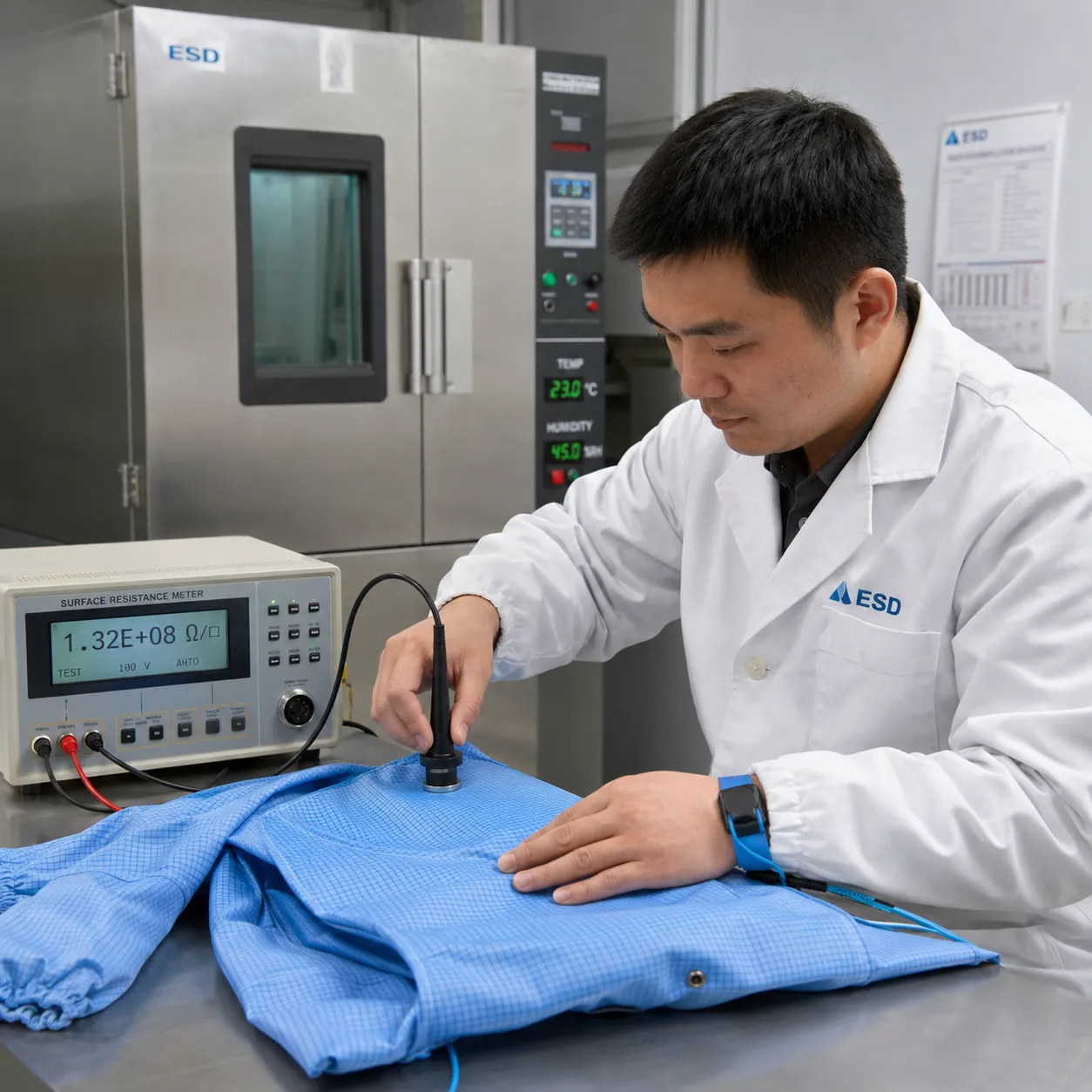
Why Is Anti-Static Testing Essential for Workplace Safety?
Static electricity poses serious hazards in industrial environments. Uncontrolled electrostatic discharge can trigger explosions, fires, and equipment damage, while also causing discomfort and health concerns for workers.
Critical Safety Applications
Explosion-Hazard Environments
- Oil and gas processing facilities
- Chemical manufacturing plants
- Pharmaceutical production areas
- Grain handling and processing
- Paint and solvent operations
Electronics Manufacturing
- Semiconductor fabrication
- Circuit board assembly
- Clean room environments
- Data centers and server rooms
Healthcare Settings
- Operating rooms with anesthesia gases
- Oxygen-enriched environments
- Medical device manufacturing
Consequences of Inadequate Anti-Static Protection
Safety Incidents
- Fire and explosion from electrostatic sparks igniting flammable atmospheres
- Personnel injury from electric shocks
- Equipment damage from static discharge
Operational Problems
- Product contamination from dust attraction
- Process disruptions from static-related malfunctions
- Quality defects in sensitive manufacturing
What Are the Key Anti-Static Performance Parameters?
Anti-static testing evaluates multiple electrical properties that determine how effectively clothing manages static charges.
Surface Electrical Resistance
Surface resistance measures how easily electric charges flow across fabric surfaces. Lower resistance indicates better conductivity and faster charge dissipation.
- Measurement: Ohms (Ω)
- Acceptable range: Typically 10⁵ to 10¹¹ Ω depending on application
- Test standards: EN 1149-1, AATCC 76, GB/T 12703.4
Point-to-Point Resistance
Point-to-point resistance measures electrical resistance between two specific locations on a garment surface, evaluating charge flow paths.
- Level 1: 10⁵ to 10⁷ Ω (highly conductive)
- Level 2: 10⁷ to 10¹¹ Ω (dissipative range)
Charge Decay Time
Charge decay time indicates how quickly static charges dissipate from fabric surfaces. Faster decay means better anti-static performance.
- Half-life measurement: Time for voltage to reduce to 50% of initial value
- Acceptable performance: Typically <4 seconds for protective clothing
- Test standards: EN 1149-3, GB/T 12703.1
Electric Charge
Electric charge measures the total static charge accumulated on clothing after friction.
- Measurement: Microcoulombs (µC)
- Level 1 requirement: ≤0.20 µC/piece
- Level 2 requirement: ≤0.60 µC/piece
How Does Surface Resistance Testing Work?
Surface resistance testing applies a direct current voltage between electrodes placed on the fabric surface to measure electrical resistance.
Test Setup (EN 1149-1 / GB/T 12703.4)
Equipment Requirements
- Electrodes: Two cylindrical metal electrodes (65±5mm diameter)
- Electrode material: stainless steel or copper
- Contact material: Conductive plastic (hardness 60±10 Shore A)
- High resistance meter: Range 10⁵ to 10¹³ Ω
- Insulated test surface: Resistance >10¹⁴ Ω
Test Procedure
- Sample preparation: Condition at 20±5°C, 35±5% relative humidity for 6 hours
- Pre-treatment: Wash samples according to specified procedures
- Electrode placement: Position electrodes 300mm apart on fabric surface
- Voltage application: Apply 100±5V DC for 15±1 seconds
- Measurement: Record resistance value
- Repeat: Test at five different locations, calculate geometric average

Interpretation of Results
| Resistance Range | Classification | Application Suitability |
|---|---|---|
| <10⁵ Ω | Conductive | Special ESD applications |
| 10⁵ - 10⁹ Ω | Electrostatic dissipative | General anti-static protection |
| 10⁹ - 10¹¹ Ω | Anti-static | Limited static control |
| >10¹¹ Ω | Insulative | Not suitable for anti-static use |
What Is Charge Decay Testing?
Charge decay testing measures how quickly electrostatic charges dissipate from fabric surfaces, indicating the fabric's ability to eliminate accumulated static.
Corona Charging Method (GB/T 12703.1)
Test Principle
Samples receive electrostatic charge via corona discharge from a pointed electrode, then the decay of impressed voltage is measured over time.
Test Procedure
- Pre-condition: Bake at 70°C for 1 hour, then condition at 20±2°C, 40±4% RH
- Sample preparation: Cut five 45mm × 45mm specimens, de-charge befOre testing
- Charging: Apply -10kV voltage for 30 seconds via corona electrode
- Decay measurement: Record peak voltage and time for voltage decay
- Repeat: Test all five samples, report average values
Performance Criteria
Half-life decay time (HDT):
- Class A: ≤1.0 seconds (excellent)
- Class B: ≤5.0 seconds (good)
- Class C: ≤15.0 seconds (acceptable)
Anti-static protective clothing should meet Class A requirements for maximum safety.
Shielding Factor Method (EN 1149-3)
EN 1149-3 specifies alternative performance criteria:
- t₅₀ < 4 seconds (decay half-time), OR
- S > 0.2 (shielding factor)
Where:
- t₅₀ = decay half-time
- S = shielding factor
How to Test Electric Charge on Clothing?
Electric charge testing measures the total static charge accumulated on garments after simulated wear conditions, providing practical performance data.
Friction Device Method (GB/T 12703.3)
Test Equipment
- Rotating drum friction machine: 65±5cm inner diameter, 45±5cm depth
- Drum lining: Polyacrylonitrile standard cloth
- Rotation rate: >46 r/min
- Air flow: >2 m³/min
Faraday Cup Measurement
- Inner cup dimensions: Height = 2 × diameter, diameter ≥40cm
- Static electricity tester: Range 2nC to 2µC, precision ±1%
- Insulation: PTFE supports with resistance >10¹² Ω
Test Procedure
- Sample preparation: Wash and condition garment at 20±5°C, 35±5% RH
- Friction exposure: Place garment in rotating drum for 15 minutes
- Charge measurement: Transfer garment to Faraday cup within 300mm of other objects
- Reading: Record charge in microcoulombs (µC)
- Repeat: Perform five tests at 10-minute intervals
- Result: Calculate average of five measurements
Technical Requirements
| Parameter | Level 1 | Level 2 |
|---|---|---|
| Electric charge | ≤0.20 µC/piece | ≤0.60 µC/piece |
Level 1 provides superior protection for high-risk environments.
What Are the EN 1149 Standards?
EN 1149 series comprises European standards specifying test methods and performance requirements for electrostatic protective clothing.
Standard Components
EN 1149-1: Surface Resistance
- Test method for measuring surface electrical resistance
- Requirement: Surface resistance ≤2.5 × 10⁹ Ω
- Evaluates charge dissipation through conduction
EN 1149-2: Vertical Resistance
- Measures electrical resistance through material thickness
- Evaluates charge flow perpendicular to fabric surface
EN 1149-3: Charge Decay
- Test method for measuring charge dissipation time
- Evaluates charge release to atmosphere
- Criteria: t₅₀ <4s or S >0.2
EN 1149-4: Garment Testing
- Complete garment test method (under development)
- Evaluates assembled clothing performance
EN 1149-5: Performance Requirements
- Specifies material and construction requirements
- Defines safety criteria for explosion-risk environments
- Requires compliance with EN 1149-1, -2, or -3
EN 1149-5 Key Requirements
Material Requirements
- Conductive elements must be covered on exterior surfaces
- Non-conductive attachments (reflective strips, emblems) must be permanently affixed
- Conductive fiber grid: Maximum 10mm × 10mm spacing for heterogeneous materials
System Requirements
- Must be worn with conductive footwear
- Outer material must contact wearer's skin
- Must be combined with flame retardant clothing (EN 531 or EN 11612) for explosion-risk areas
Limitations
- Not suitable for oxygen-enriched environments
- Does not protect against mains voltage electric shock
- Requires complete grounded system (clothing + footwear + flooring)
Understanding GB/T 12703 Test Methods
GB/T 12703 series represents Chinese national standards for evaluating electrostatic properties of textiles.
GB/T 12703.1: Corona Charging Method
Application: Evaluates charge decay from corona-induced static
Parameters measured: Peak voltage, decay time
Suitable for: All fabric types
GB/T 12703.2: Manual Friction Method
Application: Simulates manual rubbing to generate static
Procedure:
- Rub sample with standard friction cloth
- Measure electrostatic voltage in Faraday cage
- Apply 40N pressure, 5 rubs
Parameters: Electrostatic voltage (V)
GB/T 12703.3: Electric Charge Method
Application: Measures total charge after friction exposure
Procedure: Rotating drum friction + Faraday cup measurement
Parameters: Electric charge (µC/piece)
GB/T 12703.4: Resistivity Method
Application: Measures surface electrical resistance
Procedure: Apply 100V, measure resistance between electrodes
Parameters: Surface resistance (Ω)
GB/T 12703.5: Rotary Mechanical Friction Method
Application: Automated friction testing with controlled parameters
Procedure:
- Rotate drum with friction cloth
- Measure friction voltage after 60 seconds
- Test with both cotton and wool friction cloths
Parameters: Friction voltage (V)
How to Evaluate ESD Fabric Effectiveness?
ESD fabric evaluation requires comprehensive testing to ensure reliable static control performance.
Essential Properties to Measure
Surface Resistance
- Use calibrated resistance meter
- Test in controlled environment (humidity, temperature)
- Typical acceptable range: <10⁹ Ω for ESD applications
Dissipative Properties
- Measure charge decay rate
- Evaluate capacity to repel static from body
- Critical for personnel protection
Durability Assessment
- Wash testing: Test after multiple wash cycles
- Wear simulation: Evaluate performance after abrasion
- Long-term stability: Monitor property changes over time
Wash and Wear Testing Protocol
- Initial testing: Measure baseline properties
- Wash cycles: Launder according to manufacturer specifications
- Re-testing: Measure properties after 1, 10, 50, 100 washes
- Documentation: Record property changes
- Evaluation: Determine acceptable service life
Industry Standards Reference
ANSI/ESD S20.20
- ESD control program requirements
- Includes Fabric testing specifications
IEC 61340-5-1
- International ESD clothing safety testing methods
- Comprehensive evaluation protocols
ESDA Guidelines
- Electrostatic Discharge Association best practices
- Testing method recommendations
What Are the Performance Requirements for Anti-Static Clothing?
Anti-static clothing performance requirements ensure garments provide adequate protection in hazardous environments.
Material Requirements (GB 12014)
Surface Material Quality
- Free from tears, spots, dirt, or defects affecting performance
- Point-to-point resistance: 10⁵ to 10¹¹ Ω
- Formaldehyde content: ≤75 mg/kg (skin contact), ≤300 mg/kg (non-contact)
- pH value: 4.0 to 9.0
- Air permeability: ≥30 mm/s (≥10 mm/s for coated materials)
Physicochemical Properties
- Dimensional change: ±2.5% (warp and weft)
- Color fastness to water: ≥3-4
- Color fastness to dry rubbing: ≥3-4
- Breaking force: ≥780N (warp, mass ≥200 g/m²)
Garment Construction Requirements
Structure and Style
- Safe, hygienic design supporting normal physiological needs
- Easy donning and removal
- Practical, clean styling
- Options: "Three-tight" design, one-piece suits, custom styles
Tailoring Standards
- Straight, neat, firm seams
- Stitch length: 12-14 stitches/3cm (heavy fabric), 14-16 stitches/3cm (light fabric)
- Seam strength: ≥100N
Attachments and Lining
- Metal attachments must be surface-covered
- Lining must be anti-static fabric
- Non-anti-static pocket area: <20% of interior surface
Electric Charge Requirements
| Protection Level | Electric Charge (µC/piece) | Application |
|---|---|---|
| Level 1 | ≤0.20 | High-risk environments |
| Level 2 | ≤0.60 | Standard protection |
Best Practices for Anti-Static Clothing Testing Programs
Establish Comprehensive Testing Protocols
Pre-Production Testing
- Verify raw material specifications
- Test fabric before garment construction
- Document baseline performance
Production Quality Control
- Lot testing: Test samples from each production batch
- In-process inspection: Monitor critical parameters during manufacturing
- Final inspection: Verify finished garments meet all requirements
Maintain Proper Test Conditions
Environmental Control
- Temperature: 20±5°C (standard), 20±2°C (precise testing)
- Relative humidity: 35±5% (standard), 40±4% (GB/T methods)
- Pre-conditioning: Bake at 50-70°C, then equilibrate 6 hours
Equipment Calibration
- Calibrate resistance meters regularly
- Verify electrode condition and cleanliness
- Maintain Faraday cup insulation integrity
Documentation and Traceability
Test Records
- Sample identification and lot numbers
- Test conditions (temperature, humidity)
- All measured parameters with tolerances
- Pass/fail determination
Trend Analysis
- Track performance over production lots
- Identify drift patterns
- Implement corrective actions proactively
Care and Maintenance Guidelines
User Instructions
- Don't remove clothing in hazardous areas
- Don't attach metal objects to garments
- Ensure outer garment covers inner clothing completely
- Wear with appropriate conductive footwear
- Maintain skin contact with outer material
Cleaning Procedures
- Follow manufacturer washing instructions
- Use pH 7-7.5 synthetic detergent
- Wash temperature: 40±3°C
- Air dry or iron at appropriate temperature
- Re-test after specified wash cycles
Bottom Line
Anti-static clothing testing ensures worker safety in static-sensitive environments by verifying garments effectively dissipate electrostatic charges. From surface resistance measurements to charge decay evaluations, comprehensive testing programs validate that protective clothing meets stringent safety standards.
Implement systematic testing protocols aligned with EN 1149, GB/T 12703, and industry-specific requirements. Maintain proper test conditions, document results thoroughly, and ensure garments remain effective throughout their service life through regular re-testing and proper maintenance.