Toothbrush testing encompasses a comprehensive range of evaluation methods used to verify the cleaning effectiveness, safety, durability, and quality of toothbrushes for oral hygiene applications. These testing procedures are critical for ensuring that toothbrushes effectively remove plaque while minimizing damage to teeth and gums.
This comprehensive guide covers all major toothbrush testing methodologies, from bristle integrity evaluation to cleaning performance assessment. You'll learn how to measure mechanical properties, evaluate plaque removal efficacy, test durability, and ensure compliance with quality standards.
What you'll learn in this guide:
- Cleaning efficacy testing methods
- Bristle properties and durability testing
- Mechanical testing (flexibility, force control)
- Robot-based brushing simulation
- Plaque removal performance evaluation
- Wear and abrasion testing
- Safety and biocompatibility testing
- Quality control and certification procedures
Importance of Toothbrush Testing
Testing toothbrushes serves critical functions for oral health, product safety, and regulatory compliance.
Key benefits of toothbrush testing: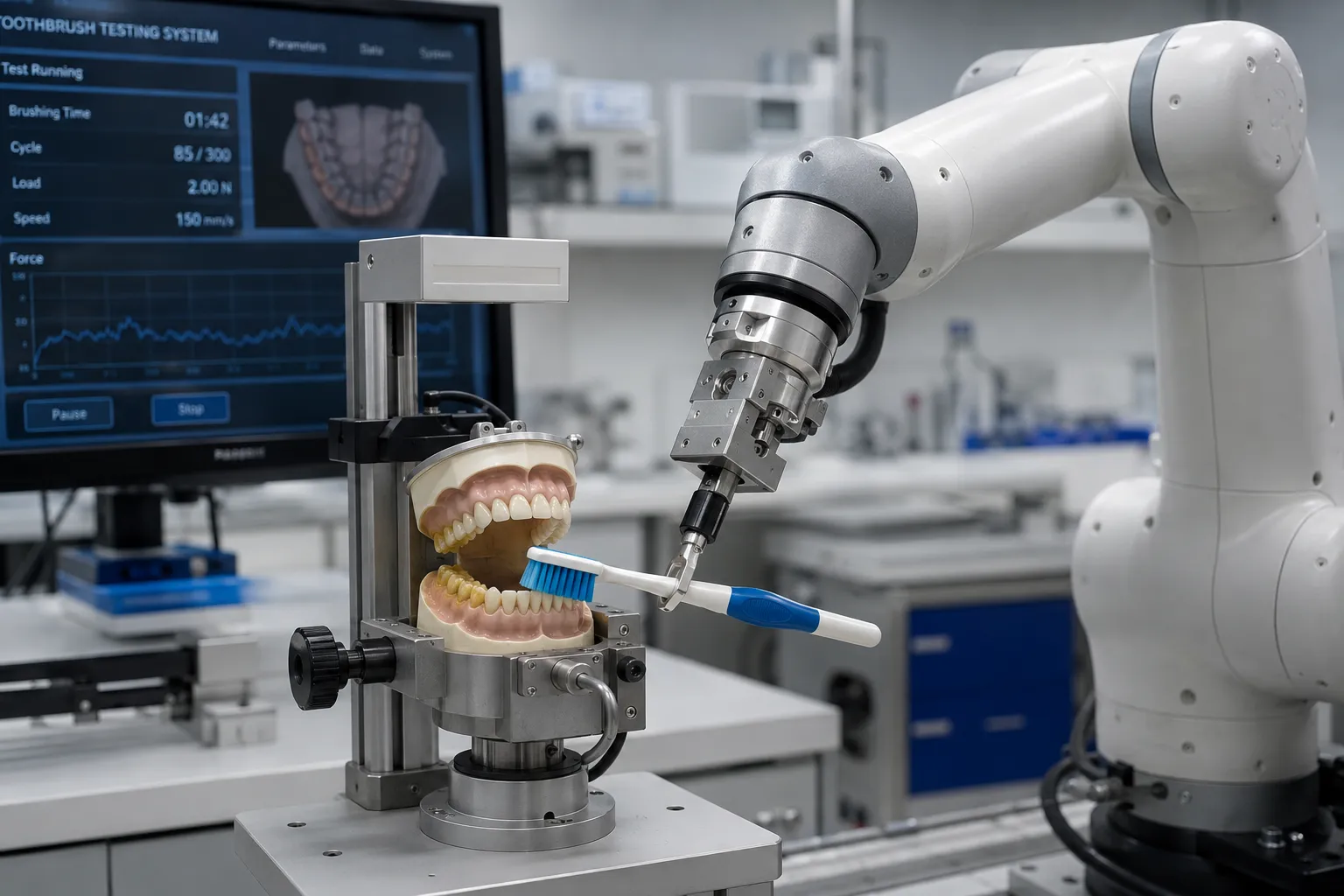
Oral health protection: Testing verifies that toothbrushes effectively remove plaque biofilm without causing damage to tooth enamel, dentine, or gingival tissues through excessive abrasion.
Safety assurance: Evaluation confirms that materials and design prevent injury to soft tissues and do not pose chemical or biological hazards to users.
Performance validation: Testing provides objective evidence of cleaning efficacy, enabling meaningful comparison between products and designs.
Quality consistency: Regular testing ensures manufacturing consistency and identifies variations that could affect performance.
Regulatory compliance: Certified testing provides documentation required by regulatory agencies and standards organizations for market access.
Product development: Testing data guides design optimization and material selection for improved performance.
Toothbrush Types and Testing Considerations
Manual Toothbrushes
Design variations:
- Flat-trim bristles
- Angled bristles
- Multi-level bristles
- Flexible neck designs
- Ergonomic handles
Testing focus:
- Bristle integrity and durability
- Cleaning efficacy at gumline and interdental areas
- Force distribution and control
- Handle strength and flexibility
- Wear resistance
Powered Toothbrushes
Types:
- Oscillating-rotating
- Sonic/vibrating
- Ultrasonic
Testing considerations:
- Motor performance and durability
- Battery life and safety
- Brush head attachment security
- Vibration frequency and amplitude
- Waterproof integrity
- Electrical safety
Specialty Toothbrushes
Types:
- Interdental brushes
- Sulcular brushes
- Orthodontic brushes
- Surgical brushes
Specific tests:
- Size accuracy for interdental spaces
- Gentle tissue contact
- Specialized cleaning patterns
Bristle Testing Methods
Bristle Material Properties
Material types:
- Nylon (most common)
- Natural bristles (rare, mostly historical)
- Tapered filaments
- Textured surfaces
Properties tested:
Diameter measurement:
- Individual filament diameter
- Diameter consistency across bristles
- Tip diameter for tapered designs
- Affects stiffness and flexibility
Stiffness classification:
- Soft: 0.15-0.20 mm diameter
- Medium: 0.20-0.25 mm diameter
- Hard: 0.25-0.30+ mm diameter
- Classification affects cleaning and safety
Elastic modulus:
- Measures bristle flexibility
- Affects force transmission to teeth
- Influences cleaning below gumline
- Tested via tensile or bending methods
Bristle End-Rounding
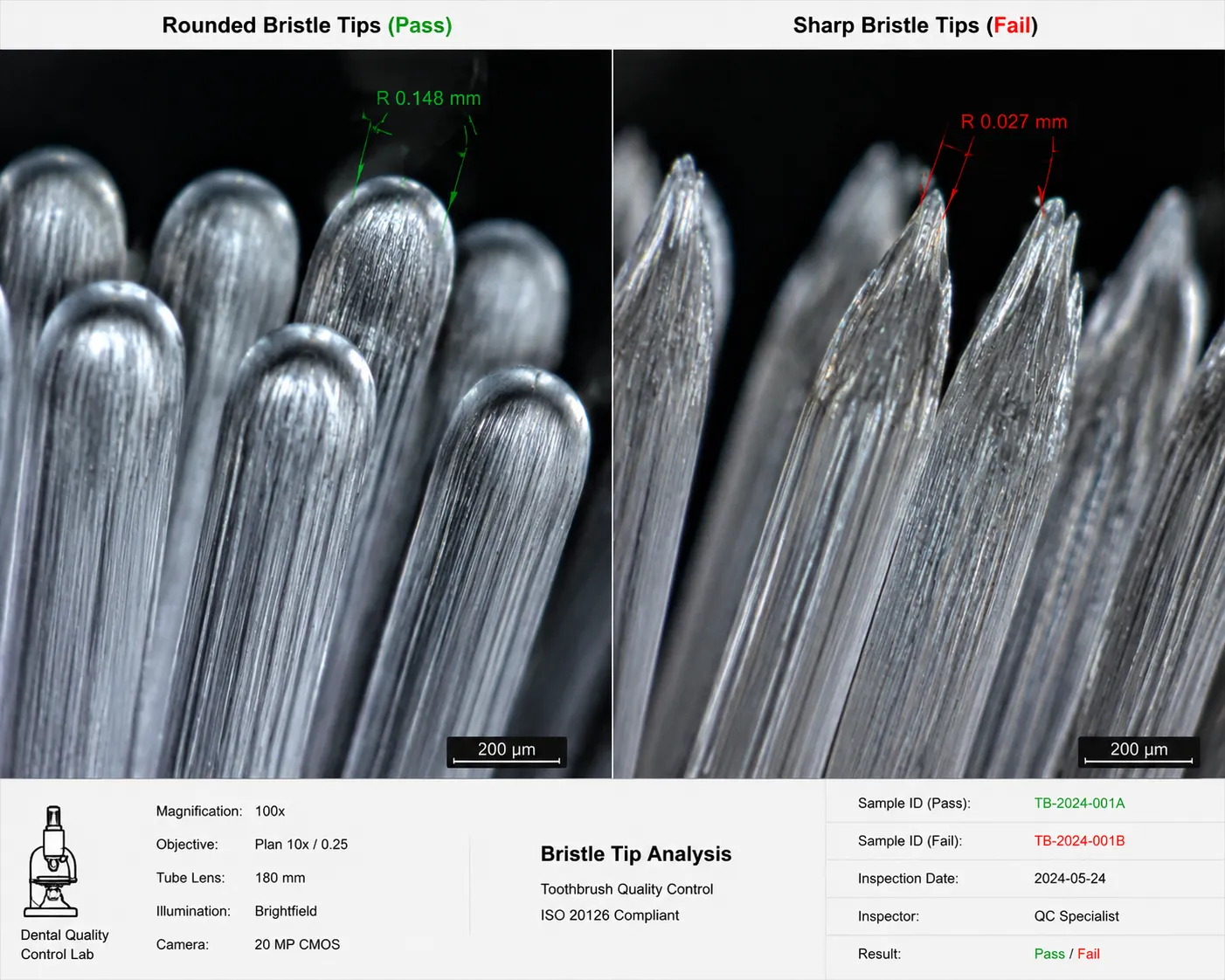
Purpose: Verify safe, rounded bristle tips that minimize tissue damage
Inspection method:
- Microscopic examination (optical or SEM)
- Sample size: typically 50-100 bristles
- Classification by rounding quality
- Round vs. sharp vs. cut ends
Acceptance criteria:
- Minimum percentage of well-rounded tips
- No sharp or jagged ends
- Consistent rounding across tufts
Importance:
- Rounded tips reduce gingival abrasion
- Prevent enamel scratching
- Improve user comfort
- Critical for safety certification
Bristle Anchorage Testing
Purpose: Verify secure attachment of bristles to brush head
Pull-out test:
- Grip individual bristle or tuft
- Apply increasing tensile force
- Record force at failure
- Compare to minimum requirements
Acceptance criteria:
- Minimum pull-out force per tuft
- Consistent anchorage across head
- No bristle loss during normal use
Failure modes:
- Bristle pull-out from anchor
- Anchor plate failure
- Head material failure
Bristle Durability Testing
Wear simulation:
- Repeated brushing cycles
- Contact with abrasive surfaces
- Simulated toothpaste use
- Temperature cycling
Measurements:
- Bristle length reduction
- Tip shape changes
- Stiffness changes
- Surface wear patterns
Cycle testing:
- Typically 10,000-50,000 cycles
- Simulates months of use
- Identifies premature wear
- Guides replacement recommendations
Mechanical Testing Methods
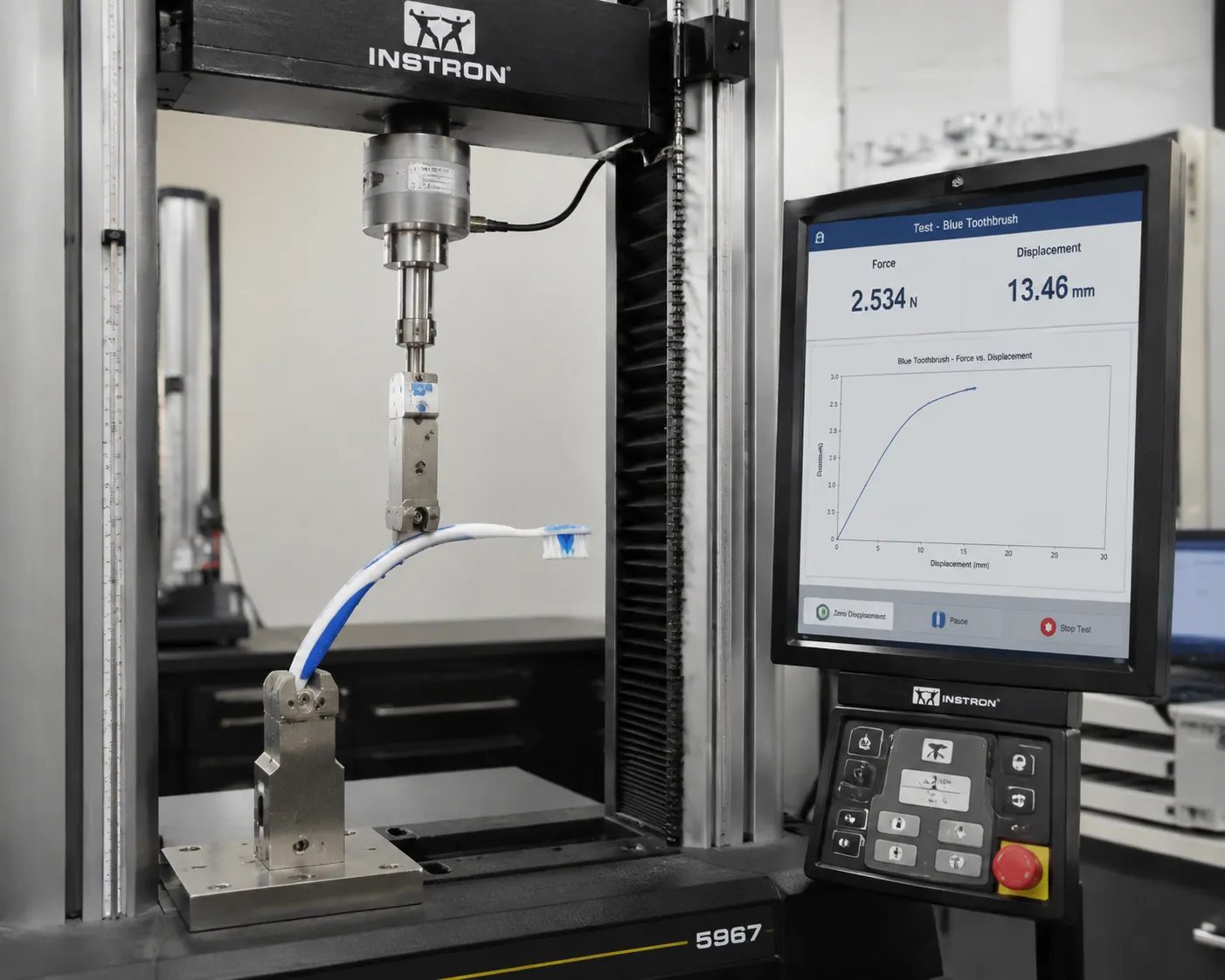
Flexibility and Deflection Testing
Purpose: Measure toothbrush flexibility and force distribution
Test setup:
- Universal testing machine (e.g., Instron)
- Custom fixtures for toothbrush mounting
- Force application to brush head
- Deflection measurement
Procedure:
- Mount toothbrush in fixture
- Apply force to brush head
- Measure deflection at multiple points
- Calculate stiffness and flexibility
Key measurements:
Neck flexibility:
- Deflection under applied load
- Comparison between designs
- Flexible vs. rigid neck behavior
- Affects force transmission
Head deflection:
- Bending under brushing force
- Uniform vs. uneven deflection
- Impact on cleaning pattern
Handle strength:
- Resistance to breaking
- Flexibility for comfort
- Grip effectiveness
Typical results:
- Flexible neck designs deflect 2-2.5× more than rigid designs
- Optimal range balances flexibility and control
- Too flexible: inadequate cleaning force
- Too rigid: excessive force transmission
Force Control Testing
Purpose: Evaluate force distribution during simulated brushing
Methods:
Force plate measurement:
- Toothbrush applied to force sensors
- Measures force distribution pattern
- Identifies high-force areas
- Evaluates uniformity
Pressure mapping:
- Pressure-sensitive film or sensors
- Visual map of force distribution
- Identifies pressure points
- Guides design optimization
Dynamic force measurement:
- Measures force during brushing motion
- Peak force recording
- Force variation analysis
- Correlates with wear potential
Acceptance criteria:
- Maximum force within safe limits
- Uniform distribution across bristles
- No excessive pressure points
- Consistent with user habits (1.5-3.25 N typical)
Cleaning Efficacy Testing
Robot-Based Brushing Simulation
Advantages over clinical testing:
- Consistent, reproducible brushing motion
- Controlled force application
- Standardized plaque substrate
- Eliminates user variability
- Enables direct product comparison
System components:
Robot arm:
- Multi-axis movement capability
- Programmable brushing patterns
- Force control and measurement
- Reproducible positioning
Typodont (artificial mouth):
- Artificial teeth with realistic surfaces
- Replaceable tooth specimens
- Anatomically correct positioning
- Simulates oral geometry
Plaque substrate:
- Artificial plaque coating
- Uniform thickness and composition
- Reproducible application
- Visual contrast for measurement
Brushing parameters:
- Force: typically 2.0-3.0 N
- Motion: horizontal, vertical, rotating
- Duration: standardized test period
- Toothpaste: with or without
Plaque Removal Assessment
Planimetric measurement:
- Photograph teeth before and after
- Measure plaque-covered area
- Calculate percentage removal
- Statistical analysis of results
Specific areas evaluated:
Gumline (cervical margin):
- Critical for periodontal health
- Often difficult to clean
- High plaque accumulation area
- Key differentiator between brushes
Interdental areas:
- Between adjacent teeth
- Challenging for flat-trim brushes
- Better with angled designs
- Measured separately
Buccal and lingual surfaces:
- Main tooth surfaces
- Baseline cleaning assessment
- Easier to clean
- Expected high removal
Typical results:
- Superior designs: 70-90% plaque removal
- Standard designs: 50-70%
- Interdental areas show greatest variation
- Gumline cleaning differentiates products
In Vitro Cleaning Tests
Artificial tooth models:
- Standardized enamel surfaces
- Reproducible geometry
- Enable multiple tests
- Cost-effective screening
Substrate types:
- Artificial plaque films
- Stained coatings
- Particle deposits
- Simulated biofilm
Measurement methods:
- Visual scoring
- Gravimetric analysis
- Surface profilometry
- Spectrophotometric analysis
Wear and Abrion Testing
Enamel Wear Testing
Purpose: Assess potential for tooth wear from brushing
Test method:
- Brush artificial enamel specimens
- Standardized brushing parameters
- Measure surface loss
- Compare abrasivity levels
Factors affecting wear:
- Bristle stiffness
- Brushing force
- Brushing technique
- Toothpaste abrasivity
- Brushing frequency/duration
Measurements:
- Surface profilometry
- Mass loss
- Depth of wear
- Surface roughness changes
Acceptance criteria:
- Wear below threshold limits
- No excessive abrasion
- Balance cleaning vs. wear
- Safety margin for long-term use
Dentifrice Interaction Testing
Purpose: Evaluate toothbrush performance with toothpaste
Test variables:
- Different toothpaste formulations
- Abrasive particle size and type
- Paste viscosity
- With/without toothpaste
Measurements:
- Cleaning efficacy changes
- Wear rate changes
- Bristle wear acceleration
- Force transmission effects
Importance:
- Real-world conditions include toothpaste
- Abrasives affect both cleaning and wear
- Optimize brush-paste combinations
- Guide product recommendations
Durability and Lifecycle Testing
Cycle Durability Testing
Brushing cycles:
- Simulate extended use
- Typically 10,000-50,000 cycles
- Monitor performance changes
- Identify failure points
Parameters monitored:
- Bristle integrity
- Cleaning efficacy
- Stiffness changes
- Physical damage
Replacement guidance:
- Test data supports 3-4 month replacement
- Worn brushes lose efficacy
- Frayed bristles can cause injury
- Evidence-based recommendations
Environmental Testing
Temperature testing:
- High temperature storage
- Temperature cycling
- Hot water exposure
- Material stability
Humidity testing:
- High humidity exposure
- Moisture absorption effects
- Mold/microbial growth resistance
- Storage condition evaluation
Chemical resistance:
- Toothpaste exposure
- Mouthwash compatibility
- Cleaning agent resistance
- Material degradation assessment
Safety and Biocompatibility Testing
Material Safety
Chemical testing:
- Material composition analysis
- Heavy metal content
- Phthalate and BPA testing
- Volatile organic compounds
Biocompatibility:
- Cytotoxicity testing
- Skin sensitization
- Oral mucosa irritation
- Extractable/leachable testing
Regulatory requirements:
- FDA 21 CFR for dental devices
- ISO 10993 biocompatibility series
- EU Medical Device Regulation
- Country-specific requirements
Microbiological Testing
Antimicrobial claims:
- Test antimicrobial treatments
- Verify claimed effectiveness
- Durability of treatment
- Safety of antimicrobials
Contamination resistance:
- Bacterial adhesion testing
- Biofilm formation resistance
- Cleaning efficacy after contamination
- Storage hygiene
Quality Control Procedures
Incoming material testing
Bristle materials:
- Diameter verification
- Material composition
- Mechanical properties
- Visual inspection
Handle materials:
- Polymer composition
- Color consistency
- Dimensional accuracy
- Defect inspection
In-Process Testing
Assembly inspection:
- Bristle anchorage verification
- Head-handle connection
- Dimensional checks
- Visual defects
Sampling frequency:
- Statistical process control
- Regular sampling intervals
- Critical parameter monitoring
- Trend analysis
Final Product Testing
Dimensional inspection:
- Overall length
- Head dimensions
- Bristle length
- Tuft spacing
Functional testing:
- Bristle pull test (sample)
- Flexibility check
- Visual quality
- Packaging integrity
Documentation:
- Test records
- Batch traceability
- Certificate of conformance
- Release authorization
Testing Standards and Guidelines
International Standards
ISO standards:
- ISO 20126: Manual toothbrushes - general requirements
- ISO 20127: Manual toothbrushes - test methods
- ISO 16055: Dentistry - powered toothbrushes
National standards:
- ADA (American Dental Association) Seal requirements
- BSI standards (UK)
- DIN standards (Germany)
ADA Seal of Acceptance
Requirements:
- Safety documentation
- Efficacy evidence
- Clinical studies (for claims)
- Quality control procedures
- Labeling compliance
Testing evidence required:
- Plaque removal efficacy
- Gingivitis reduction (if claimed)
- Safety studies
- Durability data
Review process:
- Council on Scientific Affairs review
- Independent expert evaluation
- Ongoing compliance monitoring
- Periodic re-evaluation
Specialized Testing Applications
DNA Testing from Toothbrushes
Forensic applications:
- DNA extraction from used toothbrushes
- Saliva and cheek cell collection
- Relationship testing
- Identification purposes
Sample requirements:
- Used minimum 20-30 times
- Single user preferred
- Proper storage (dry, paper)
- Recent use improves success
Success factors:
- Biological material quantity
- Storage conditions
- Time since last use
- Handling contamination
Clinical Research Applications
Comparative studies:
- Head-to-head product comparison
- Design variable testing
- User technique evaluation
- Population-specific testing
Study designs:
- Crossover studies
- Parallel group studies
- Single-use studies
- Longitudinal studies
Outcome measures:
- Plaque indices
- Gingivitis scores
- Patient-reported outcomes
- Safety observations
Frequently Asked Questions
How is toothbrush cleaning efficacy measured?
Cleaning efficacy is measured using robot-based brushing systems that apply standardized brushing motion and force to artificial teeth coated with plaque substrate. Before and after measurements calculate percentage plaque removal from specific areas including gumline, interdental spaces, and main tooth surfaces.
What is the difference between soft and hard bristle toothbrushes?
Soft bristles (0.15-0.20 mm diameter) are more flexible, clean better below the gumline, and cause less tissue damage. Hard bristles (0.25+ mm diameter) may clean more aggressively but can cause enamel wear, gingival recession, and dentine hypersensitivity. Most dental professionals recommend soft bristles.
How often should toothbrushes be replaced?
Toothbrushes should be replaced every 3-4 months, or sooner if bristles become visibly frayed or matted. Testing shows that worn brushes have reduced cleaning efficacy and may cause tissue injury. Some brushes include wear indicators that fade with use.
What is bristle end-rounding and why is it important?
Bristle end-rounding is a manufacturing process that creates smooth, rounded tips on bristle filaments. Rounded tips are gentler on gingival tissues and tooth enamel, reducing abrasion and injury risk. Testing includes microscopic inspection to verify adequate rounding.
How are flexible neck toothbrushes tested?
Flexible neck designs are tested using universal testing machines that measure deflection under applied load. Testing compares flexibility between designs and evaluates how flexibility affects force transmission, cleaning pattern, and user control.
What safety tests are required for toothbrushes?
safety testing includes material biocompatibility (cytotoxicity, irritation), chemical composition analysis (heavy metals, BPA), physical safety (bristle anchorage, handle strength), and microbiological assessment. Regulatory requirements vary by market but generally follow ISO and FDA guidelines.
How do powered toothbrushes differ in testing from manual brushes?
Powered toothbrushes require additional testing for motor performance, battery safety, electrical safety, waterproof integrity, and vibration characteristics. Cleaning efficacy testing accounts for the powered motion rather than manual brushing technique.
Can toothbrushes be used for DNA testing?
Yes, used toothbrushes can be sources of DNA for relationship or identification testing. Saliva and cheek cells accumulate in bristles during use. Success depends on frequency of use, storage conditions, and time since last use. Testing is performed by specialized forensic laboratories.
Conclusion
Toothbrush testing provides the essential foundation for oral hygiene product quality, safety, and efficacy. Comprehensive testing programs that include cleaning efficacy evaluation, bristle integrity assessment, mechanical property measurement, and durability testing enable manufacturers to deliver products that effectively remove plaque while protecting teeth and gums.
Understanding testing methods, maintaining rigorous quality control, and achieving appropriate certifications ensures that toothbrushes provide reliable oral health benefits throughout their service life. The investment in proper testing pays dividends through enhanced oral health outcomes, regulatory compliance, and consumer confidence.
Key takeaways:
- Cleaning efficacy testing uses robot systems for reproducible evaluation
- Bristle properties including end-rounding are critical for safety
- Mechanical testing evaluates flexibility and force control
- Flexible neck designs can improve cleaning and reduce tissue damage
- Durability testing guides replacement recommendations (3-4 months)
- Safety testing ensures biocompatibility and material safety
- Quality control procedures maintain manufacturing consistency
- ADA Seal and ISO standards provide testing frameworks
The commitment to rigorous toothbrush testing demonstrates manufacturer dedication to oral health, product quality, and consumer safety in this essential daily hygiene product.
Note: This article provides general guidance on toothbrush testing methods. Always consult relevant standards (ISO, ADA), manufacturer specifications, and regulatory requirements for detailed testing procedures and acceptance criteria. Reference authoritative sources including ISO, ADA Council on Scientific Affairs, and regulatory agencies for current standards and best practices.