Luggage and bag testing is essential for ensuring that products can withstand the rigors of modern travel while protecting consumers' belongings. Whether on business trips or vacations, travelers rely on their luggage to safeguard valuable and personal items. A failure during travel can result in lost or damaged possessions at the most inconvenient time.
quality testing helps manufacturers identify potential weaknesses before products reach the market. Products must meet both consumer expectations for durability and legal requirements for safety. Comprehensive testing protocols reduce the risk of product failure, minimize returns, increase customer satisfaction, and build brand loyalty.
The word "luggage" encompasses all types of bags—from large suitcases with extendable trolley handles to small, soft holdalls. Each type requires specific testing approaches to verify its suitability for intended applications. Before manufacturing begins, materials should undergo preliminary testing including tear strength, puncture resistance, and seam strength evaluations.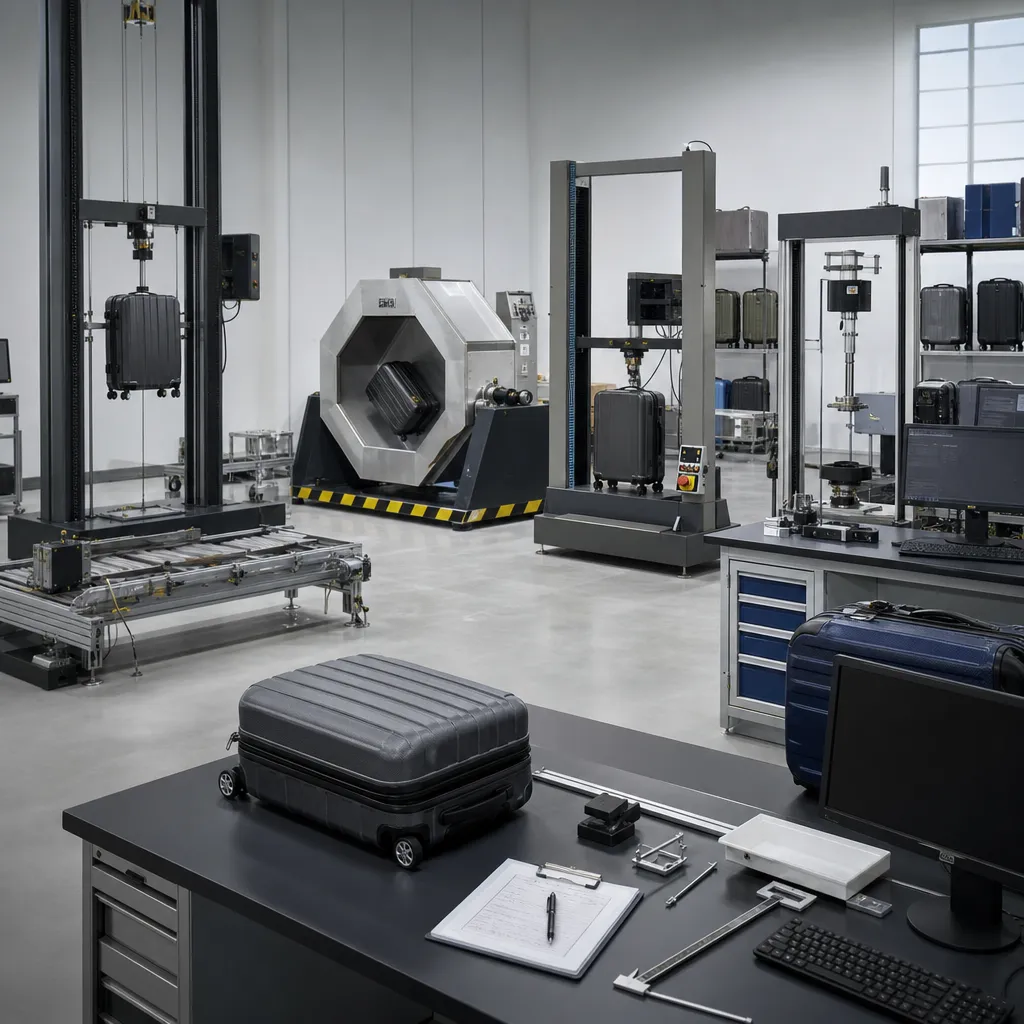
What Are the Essential Testing Methods for Luggage?
Essential testing methods for luggage include drop testing, handle testing, fatigue testing, abuse testing, rolling tests, and environmental testing. These methods collectively provide comprehensive evaluation of product performance under various real-world conditions.
COre testing Categories
Physical Performance Testing evaluates:
- Strength and durability of materials
- Functionality of zippers, straps, buckles, handles, and wheels
- Overall product quality and safety
Chemical Testing ensures compliance with:
- Hazardous substance regulations
- Material safety standards
- Environmental requirements
Environmental Testing assesses:
- Resistance to temperature extremes
- Humidity tolerance
- UV exposure effects
Each testing method serves a specific purpose in the quality assurance process. Manufacturers who implement comprehensive testing protocols can deliver products that meet international standards and consumer expectations.
How Is Drop Testing Performed on Bags and Suitcases?
Drop testing simulates the rough handling luggage experiences during travel, including falls from conveyor belts, drops by baggage handlers, and tips from overpacking. This test is one of the most critical durability assessments in luggage manufacturing.
Drop Test Procedure
The luggage is filled with a specified weight and dropped from various heights onto hard surfaces. The test replicates real-life scenarios by dropping the luggage on different sides including corners, wheels, and handles. This comprehensive approach identifies structural weaknesses throughout the entire product.
What Drop Testing Reveals
Drop testing ensures that:
- The casing remains intact after impact
- Zippers continue to function properly
- Internal frames maintain structural integrity
- Handles and attachments stay secure
The SATRA TM242 standard requires cases to be filled to realistic levels considering airline baggage restrictions. Cases are dropped twice onto each of eight corners or wheels positioned at corners. After testing, the entire case is assessed including attachments, trims, slide fasteners, wheels, and trolley handles.
Impact of Drop Test Results
Test results help manufacturers refine designs to meet industry durability standards. Engineers can identify weak points in construction and make improvements before products reach consumers. This proactive approach prevents costly returns and protects brand reputation.
What Is Handle Jerk Testing and Why Does It Matter?
Handle jerk testing evaluates the strength of luggage handles under sudden, extreme forces that simulate real-world handling scenarios. Handles bear the brunt of travelers' lifting, pulling, and dragging throughout a journey.
Understanding Handle Stress
Handles are subjected to repeated lifting motions with weights exceeding the luggage's recommended load. Testing machines simulate users yanking and pulling handles hundreds of times to verify they won't detach or break under heavy usage.
SATRA Testing Standards
SATRA TM241 tests luggage handle strength through static loading. Cases are loaded to represent maximum anticipated weight, then lifted by the handle and set down repeatedly. Any damage is assessed visually.
SATRA TM243 performs a snatch test that determines resistance to handle breakages when the loaded case is lifted, dropped through a defined distance, and the fall is arrested. This simulates sudden stops during lifting.
SATRA TM247 simulates strains from repeated lifting. Items are loaded with appropriate contents, then repeatedly lifted by handles and returned to the floor for up to 10,000 cycles. Damage to handles and attachment points is assessed during and after testing.
Preventing Handle Failures
Handle failures can render luggage unusable and leave travelers stranded with their belongings. Testing ensures handles remain securely attached and functional even under stress conditions exceeding normal use. Manufacturers can identify weak attachment points and reinforce them before production.
How Does Fatigue Testing Evaluate Bag Durability?
Fatigue testing measures how materials respond to repeated loading cycles, essential for evaluating the longevity of bags and suitcases under continuous use. This testing replicates various usage conditions to identify potential failure points before products reach consumers.
What Fatigue Testing Involves
Fatigue testing subjects products to repeated stress and strain simulating wear and tear from regular use. Manufacturers assess durability by simulating scenarios such as:
- Frequent packing and unpacking
- Dragging bags across different surfaces
- Repeated opening and closing of compartments
- Continuous loading and unloading cycles
Evaluating Component Durability
Tests reveal how well components withstand continuous use:
- Zippers maintain functionality without failing
- Seams remain intact under repeated stress
- Handles retain attachment strength
- Wheels continue rolling smoothly
- Overall construction maintains integrity
Benefits of Fatigue Testing
Proactive fatigue testing enhances product quality and builds consumer trust. Brands that prioritize rigorous testing demonstrate commitment to delivering durable products. Test results inform improvements in design and materials, leading to better products that withstand real-world challenges.
Several notable brands have successfully implemented fatigue testing in quality assurance processes. Testing has revealed that certain stitching techniques significantly improve product lifespan under heavy loads, outperforming competitors who hadn't prioritized such rigorous evaluations.
What Does Abuse Testing Reveal About Product Quality?
Abuse testing pushes bags and laptop cases to their limits by mimicking extreme conditions that products might face in real-world scenarios. This rigorous evaluation allows manufacturers to identify weaknesses before products reach consumers.
Extreme Conditions Simulated
Abuse tests simulate harsh realities that bags and laptop cases encounter during everyday use:
- Being tossed around in crowded airports
- Enduring harsh weather conditions
- Exposure to rough handling by baggage systems
- Accidental impacts during transport
- Extreme weight loads beyond normal capacity
Types of Abuse Tests
Tumbling Barrel Testing replicates years of rough handling in minutes. Luggage is placed inside a rotating drum with internal obstacles, experiencing repetitive impacts as the drum spins. This test measures how well products endure prolonged wear and tear.
Impact Testing simulates unexpected hits from collisions during baggage handling. Weights are dropped onto luggage from set heights, or luggage is swung against hard surfaces. This evaluates shell and frame resistance to sudden force.
Quality Assurance Benefits
Abuse tests provide insights into product resilience not apparent through standard evaluations like load tests or fatigue tests. These tests help identify potential failure points that could compromise product integrity. Manufacturers can refine designs and materials for optimal performance under extreme conditions.
Leading brands invest heavily in robust testing protocols including abuse testing. This commitment to quality assurance enhances brand reputation and instills consumer confidence in product durability.
How Do Mileage and Rolling Tests Assess Wheel Performance?
Mileage and rolling tests assess the ability of luggage wheels to glide smoothly over various terrains while maintaining structural integrity. Luggage wheels are critical components that enable convenient transport of heavy loads.
Rolling Road Testing
The SATRA TM248 standard assesses wheeled luggage on a "rolling road" apparatus. This test simulates real-world conditions where luggage is pulled and pushed over curbs and uneven surfaces.
How It Works:
- Luggage is loaded to maximum capacity
- Placed on a treadmill-like surface with obstacles
- The machine simulates rolling over uneven terrain, bumps, and slopes
- Test duration typically spans five hours
The rolling road features a rubber belt containing metal ridges representing unevenness encountered on many road and path surfaces. Loaded case wheels are alternately lifted and dropped by these ridges onto a moving belt.
Vertical Mileage Testing
The Vertical Mileage test simulates upright luggage being pushed or pulled over various surfaces. This evaluates wheel performance and attachment strength under realistic travel conditions.
What Tests Reveal
Mileage tests ensure:
- Wheels remain intact and functional after extended use
- Wheel attachments to luggage body stay secure
- Rolling mechanisms operate smoothly
- Products provide hassle-free travel experiences
Results help manufacturers select appropriate wheel materials and attachment methods. Testing also reveals potential weaknesses in wheel housing design that could lead to failure during use.
What Role Does Environmental Testing Play in Luggage Quality?
Environmental testing ensures luggage can withstand exposure to various climate conditions encountered during travel. Travel involves exposure to different temperatures, humidity levels, and weather conditions that can affect product performance.
Temperature and Humidity Testing
Luggage is placed in environmental chambers that subject it to extreme conditions:
- High temperatures simulating tropical climates
- Low temperatures mimicking arctic conditions
- High humidity representing rainy or coastal environments
- Rapid temperature changes during air travel
What Environmental Tests Identify
Testing identifies potential weaknesses including:
- Material cracking from temperature extremes
- Warping of plastic components
- Discoloration from UV exposure
- Adhesive failures from humidity
- Component separation from thermal stress
UV Testing
UV testing simulates sunlight exposure over extended periods. This ensures materials maintain their color and structural integrity despite prolonged sun exposure during travel. Testing helps manufacturers select UV-resistant materials and protective coatings.
Ensuring Year-Round Performance
Environmental testing guarantees that luggage maintains structural integrity and aesthetic appeal whether traveling in tropical heat or arctic cold. This comprehensive approach to quality assurance ensures products perform reliably regardless of destination climate.
How Are Zippers and Fasteners Tested for Strength?
Zipper and Fastener testing evaluates the durability and reliability of closure systems under stress conditions. These components are critical for keeping luggage securely closed and protecting contents during travel.
Zipper Strength Testing Methods
Lateral Strength Testing measures how much force can be applied to the zipper before failure occurs. This test pushes the zipper sides apart to determine maximum resistance.
Burst Testing applies pressure from inside the luggage to test zipper integrity when cases are overstuffed.
Closure Under Load Testing determines maximum lateral force that can be applied while the zipper still closes without failure.
Fatigue Resistance Testing investigates repeated opening and closing, usually with the zipper sides loaded to simulate real-world use.
SATRA Fastener Tests
SATRA TM244 assesses luggage fittings attachment strength. Samples containing fittings are gradually stressed by tensile machines until failure occurs. This test evaluates external and internal load-bearing fittings including handles and straps.
Importance of Fastener Testing
Strong, smoothly functioning zippers ensure luggage remains sealed and secure throughout journeys. Testing prevents embarrassing and inconvenient zipper failures that could result in lost belongings. Manufacturers can identify weak fastener designs and improve attachment methods.
What Color and Aesthetic Tests Ensure Product Appeal?
Color and aesthetic testing ensures luggage materials maintain visual appeal under various lighting conditions and over time. While durability is vital, aesthetics play a significant role in luggage appeal and consumer purchasing decisions.
Light Testing
Standard color matching lamp boxes provide multiple light sources including:
- Adjustable simulated daylight (D65 standard)
- Optional LED lamps
- Various artificial lighting conditions
Testing compares product colors with standard color samples under different lighting conditions. This ensures consistent appearance whether luggage is viewed in retail stores, airports, or natural daylight.
UV Aging Tests
UV testing evaluates aging and fading of colored accessories by simulating sunlight exposure. This ensures consumers can maintain product brilliance during daily use and extended ownership.
Colorfastness Testing
Colorfastness tests assess resistance to:
- Rubbing and abrasion
- Water exposure
- Light exposure
- Perspiration
- Cleaning agents
These tests are especially important for linings, as dye could transfer to clothing placed inside cases. Testing prevents color bleeding that could damage consumers' belongings.
How Does corrosion testing Protect Metal Components?
Corrosion testing ensures metal elements in luggage remain rust-resistant and functional despite exposure to moisture, salt, and various chemicals. Metal components including zippers, sliders, screws, and buckles must withstand harsh conditions during travel.
Salt spray testing
Metal parts or entire luggage pieces are placed in controlled salt spray chambers:
- Fine mist of salt water (typically 5% sodium chloride solution)
- Consistent temperature (35-40°C)
- Exposure duration ranging from hours to days
What Corrosion Testing Simulates
Tests mimic extended exposure to:
- Rain and snow during travel
- High humidity environments
- Saltwater at coastal destinations
- Sweat from handling
- Airport cleaning chemicals
- Maintenance products
Standards for Corrosion Resistance
ASTM B117 and ISO 9227 standards govern corrosion resistance testing. Compliance ensures metal components maintain functionality and appearance throughout product lifespan. Testing helps manufacturers select appropriate metal treatments and protective coatings.
What Standards Govern Luggage Testing Worldwide?
International luggage testing standards ensure consistent quality assessment across global markets. Products must comply with regulations in destination markets to avoid costly recalls and legal issues.
Major Testing Standards
European Union:
- EU REACH (Chemical Registration and Restriction)
- EU 1007/2011 Textile Standards
- EU 2001/95 General Product Safety Directive
- EU Ecolabel for Textile Products
United States:
- AATCC Standards for Textile Testing
- 16 CFR 1602-1640 Flammable Fabrics Act Regulations
- ASTM D 1230 Flammability Testing
- CA Proposition 65 Chemical Safety
International:
- ISO 12312, ISO 12870 for Spectacle Testing
- ISO 9227 Corrosion Testing
- SATRA Test Methods (TM241-TM249)
Chemical Safety Standards
Testing for hazardous substances includes:
- Formaldehyde content
- Azo dyes and carcinogenic colorants
- Heavy metals in coatings
- Phthalate content
- Flame retardants
- pH levels
Compliance Benefits
Adhering to international standards demonstrates commitment to quality and safety. Compliance opens access to global markets and builds consumer trust. Working with accredited testing laboratories ensures accurate results accepted by regulatory authorities worldwide.
How to Choose a Reliable Testing Laboratory
Selecting the right testing laboratory ensures accurate results and compliance with international standards. Quality testing partners provide expertise, accreditation, and comprehensive services throughout the product development process.
Key Selection Criteria
Accreditations: Look for laboratories with ISO/IEC 17025 accreditation and recognition from organizations like CNLA, A2LA, HOKLAS, and COFRAC. Accreditation ensures testing meets international quality standards.
Technical Expertise: Choose laboratories whose staff participate in developing international, industry, and regulatory standards. This demonstrates commitment to staying current with evolving requirements.
Global Network: Laboratories with worldwide presence offer convenience of local service with global coverage. This enables faster sample processing and consistent testing across different manufacturing locations.
Comprehensive Services
Reliable testing laboratories offer:
- Material testing during product development
- Component testing before assembly
- Finished product testing
- Chemical analysis for regulatory compliance
- Custom testing programs for specific requirements
Testing Throughout Supply Chain
Partner with laboratories that support quality assurance throughout your entire supply chain. This includes:
- Raw material verification
- In-process testing
- Pre-shipment inspection
- Failure analysis for returns
Turnaround Time
Industry-leading turnaround times help manufacturers make informed decisions quickly. Look for laboratories offering easy online booking and dashboard access for managing orders and accessing data anywhere, anytime.
Conclusion
Comprehensive luggage and bag testing is essential for delivering products that meet consumer expectations and regulatory requirements. From drop testing and handle evaluations to environmental and chemical testing, each method provides crucial insights into product performance.
Manufacturers who invest in rigorous testing protocols build trust with consumers and establish reputation for quality. Testing reveals potential weaknesses before products reach market, preventing costly returns and protecting brand image.
By partnering with accredited testing laboratories and adhering to international standards, manufacturers can ensure their products withstand the rigors of modern travel. This commitment to quality assurance ultimately benefits travelers who rely on their luggage to protect belongings during life's journeys.