What Does the Acute Dermal Toxicity Test Measure?
The acute dermal toxicity test determines the adverse health effects that follow a single dermal (skin) exposure to a substance — or multiple exposures within 24 hours — and quantifies them as the dermal LD50 (the dose lethal to 50 % of treated animals, in mg/kg body weight). It measures systemic toxicity (what the skin absorbs into the bloodstream and where it damages), not just local skin irritation — and that distinction is the first thing a test report must make clear. The test is governed for chemicals by OECD TG 402 (Acute Dermal Toxicity: Fixed Dose Procedure, 2017 revision) and its US counterpart EPA OPPTS 870.1200, in China by GB/T 21606-2022 (化学品 急性经皮毒性试验方法); for medical devices, acute systemic toxicity falls under ISO 10993-11 / GB/T 16886.11-2021 (Tests for systemic toxicity). It is one of the regulatory "acute toxicity six-pack" and feeds the UN Globally Harmonised System (GHS) classification that drives hazard labelling worldwide.
Why It Is a Systemic Test, Not a Skin Test
A frequent confusion is to equate "dermal toxicity" with "skin irritation". They are different endpoints. Skin irritation/corrosion (OECD 404 / GB/T 16886.23) measures local, reversible inflammatory change at the contact site. Acute dermal toxicity measures the systemic damage caused by the fraction of the dose that is absorbed through the skin into the bloodstream — liver, kidney, nervous-system and other organ effects distant from the application site, and ultimately lethality. A chemical can be a mild skin irritant yet highly toxic dermally (absorbs fast, damages organs), or a severe skin corrosive yet low in systemic toxicity. The two tests share the dermal application route but measure different biology, which is why OECD 402 explicitly notes that severe local skin effects observed in the dermal-toxicity study can inform irritation potential, but they do not replace a dedicated irritation study.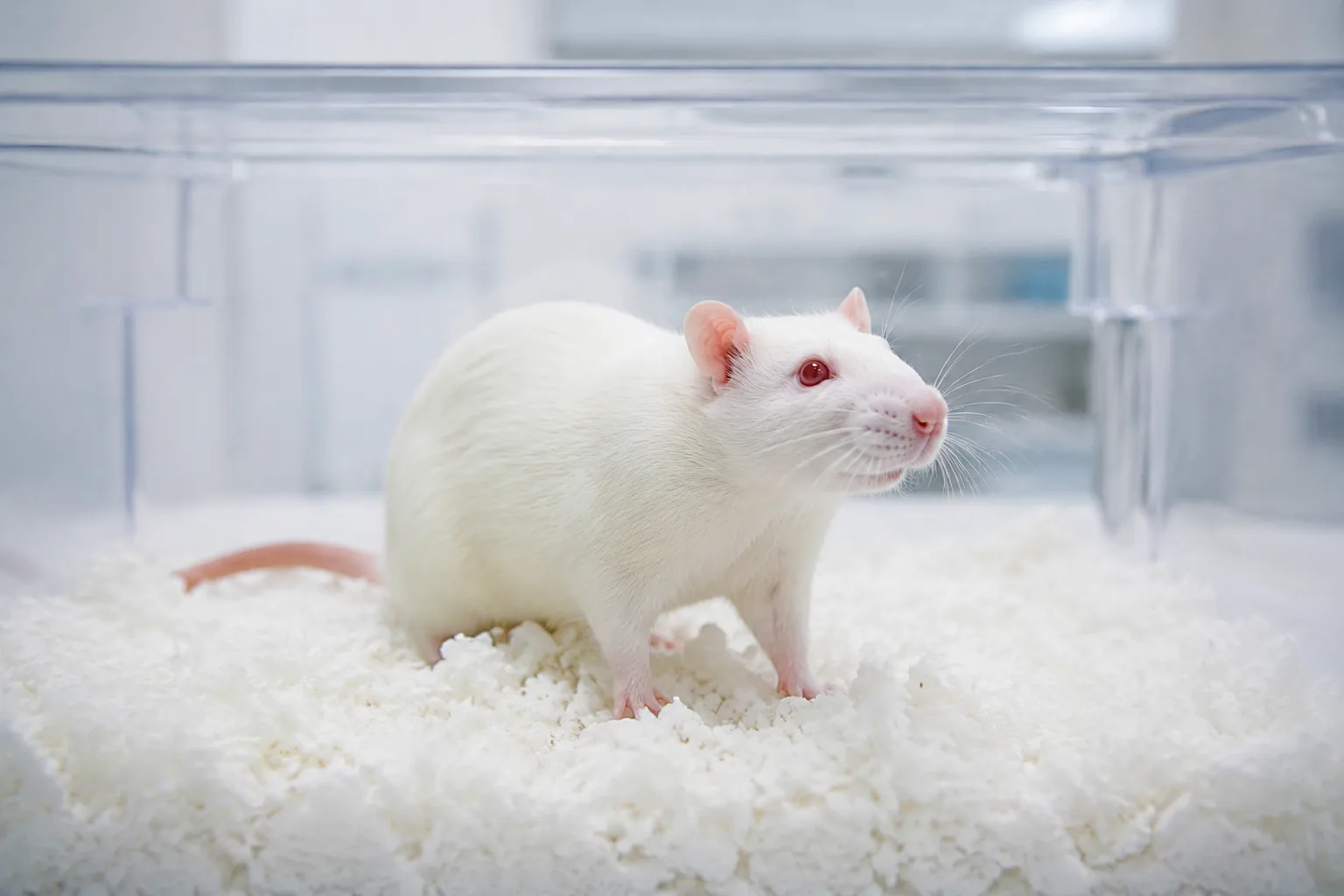
How Is the OECD 402 Fixed-Dose Procedure Performed?
The 2017 OECD 402 revision replaced the old multi-dose LD50-point-estimate design with a stepwise fixed-dose procedure (FDP) that uses far fewer animals and classifies the chemical into GHS categories without necessarily calculating a point-estimate LD50. The procedure:
- Species/sex — adult rat preferred; females (nulliparous, non-pregnant) normally used, as data show no meaningful sex difference and females are marginally more sensitive where one exists.
- Age/weight — young adults, 8–10 weeks, 200–300 g, weight within ±20 % of mean.
- Skin preparation — dorsal/flank fur clipped (≥10 % of body surface area) the day before dosing, without abrading the skin.
- Application — test chemical applied as a thin uniform film over the clipped area, held with porous gauze (<8 ply) and non-irritating tape for 24 h semi-occlusive (occlusive acceptable); animals prevented from ingesting the dose (individual caging during exposure).
- Dose strategy — sequential, single-sex, with a range-finder at 200 mg/kg when no data exist, then main study at fixed doses (50, 200, 1000, 2000 mg/kg) chosen to produce clear toxicity without lethality where possible; only doses expected to be moderately toxic are used.
- Observation — ≥ 14 days; daily clinical exam, body weight weekly, time of onset/duration of toxicity and time of death recorded.
- Necropsy — all animals (found-dead and sacrificed) gross-necropsied; histopathology of organs with gross lesions considered.
The pass/fail is not a single LD50 number — it is the GHS category assignment derived from the dose that produced toxicity/mortality, reported with the classification rationale.
What Are the GHS Categories and the Limit Test?
The whole point of the modern test is to assign the chemical to one of five GHS acute-toxicity-hazard categories for the dermal route, defined by ATE (acute-toxicity-estimate) cut-offs in mg/kg body weight:
| GHS Category (dermal) | ATE range (mg/kg bw) | Signal word | Label |
|---|---|---|---|
| Category 1 | ≤ 50 | Danger | Fatal in contact with skin — skull & crossbones |
| Category 2 | > 50, ≤ 200 | Danger | Fatal in contact with skin — skull & crossbones |
| Category 3 | > 200, ≤ 1000 | Danger | Toxic in contact with skin — skull & crossbones |
| Category 4 | > 1000, ≤ 2000 | Warning | Harmful in contact with skin — exclamation mark |
| Category 5 (optional) | 2000 / 5000 conversion | Warning | May be harmful |
| Uncategorised | > 2000 (no effects at limit dose) | — | Not classified |
The limit test at 2000 mg/kg (5 males + 5 females under OPPTS, or stepwise under OECD 402) is the screening tier: if no mortality and no marked toxicity occur at 2000 mg/kg, the substance is classified Category 5 / unclassified and no full study is needed. The full test (multiple fixed doses, stepwise) is run only when the limit test shows toxicity or when the waiver criteria do not apply.
When Can the Test Be Waived? — the Modern Default
This is the change most competitors understate: in vivo acute dermal toxicity testing is now the exception, not the default. OECD 402 (2017) opens with the finding that, across hundreds of pesticides and thousands of industrial chemicals, >98 % of dermal-toxicity classifications are equal to or less severe than the oral-toxicity classification — and where the oral LD50 is > 2000 mg/kg, the dermal LD50 is ≥ 2000 mg/kg in ~99 % of cases. The practical consequences, codified in OECD Guidance Document 237:
- If oral acute toxicity data exist and classify the substance, the dermal study can usually be waived.
- For mixtures/formulated products, the GHS additivity-calculation method (ATE of each ingredient) shows >98 % concordance with in-vivo data, providing another waiver route.
- An in-vivo dermal study is conducted only where waiver criteria do not apply and there is compelling scientific justification — the test exists for "exceptional circumstances".
A well-prepared test request therefore first applies the weight-of-evidence and waiver analysis, not jump straight to dosing animals.
How Does the Medical-Device Route Differ?
For a medical device, the framework shifts from chemical hazard classification (OECD 402) to biological evaluation (ISO 10993-11 / GB/T 16886.11-2021, Tests for systemic toxicity), and the structure changes with it:
- Sample — the device is extracted (per ISO 10993-12) in polar and non-polar vehicles; the extract is dosed, not the device itself — mirroring the medical-device irritation test logic.
- Species/route — the acute systemic-toxicity test typically uses the mouse, dosed by an appropriate route (intravenous, intraperitoneal, or oral for the extract), observed for 72 h for signs of toxicity and mortality. The rabbit is used for longer-term or dermal-patch device-extract studies combining local and systemic evaluation.
- Endpoint — absence of systemic toxicity (no mortality, no abnormal clinical signs beyond what is acceptable) at the extract dose, rather than a GHS LD50 category. The question for a device is "does the leachable burden from this material harm the whole animal", not "what is the LD50 of this chemical".
- Position in the programme — acute systemic toxicity is one item in the ISO 10993 biological-evaluation matrix (alongside cytotoxicity, irritation, sensitisation, subacute/subchronic toxicity, implantation), selected per ISO 10993-1 based on body contact and duration.
For the broader ISO 10993 biocompatibility programme, see biocompatibility testing to ISO 10993; for the related local-endpoint skin test, Skin corrosion/irritation test; for the in-vitro cell-viability endpoint, Cytotoxicity test.
FAQ
What is the difference between acute dermal toxicity and skin irritation?
Skin irritation (OECD 404 / GB/T 16886.23) measures local, reversible inflammation at the contact site. Acute dermal toxicity (OECD 402 / GB/T 21606) measures the systemic damage from the dose absorbed through the skin into the bloodstream — organ effects distant from the site and lethality, reported as a dermal LD50 / GHS category. A mild irritant can be highly toxic dermally, and vice versa.
Which species and sex are used in the OECD 402 test?
The adult rat, female (nulliparous, non-pregnant), 8–10 weeks, 200–300 g. Females are used because data show no meaningful sex difference and females are marginally more sensitive where one exists; males are used only with justification (e.g. structurally-related chemicals known to be more toxic in males).
What is the limit test, and when is a full study needed?
The limit test doses 2000 mg/kg; if no mortality and no marked toxicity occur, the substance is Category 5 / unclassified and no full study is needed. A full stepwise fixed-dose study (50 / 200 / 1000 / 2000 mg/kg) is run only when the limit test shows toxicity or the waiver criteria do not apply.
When can the acute dermal toxicity test be waived?
Frequently. OECD 402 (2017) and Guidance Document 237 note that dermal toxicity classifications are ≤ oral in > 98 % of cases, and for mixtures the GHS additivity calculation shows > 98 % concordance with in-vivo data. Where oral acute-toxicity data classify the substance, or the mixture ATE can be calculated, the dermal study is typically waived — in-vivo testing is now for exceptional circumstances with scientific justification.
How does the medical-device acute systemic toxicity test differ from the chemical OECD 402?
The device test (ISO 10993-11 / GB/T 16886.11) doses a device extract (polar + non-polar, per ISO 10993-12), typically in the mouse by IV/IP/oral route, observed 72 h for systemic toxicity — the endpoint is "does the leachable burden harm the animal", not a GHS LD50. It is one item in the ISO 10993 biocompatibility matrix, not a standalone chemical classification.
Our Testing Capabilities
As an ISO/IEC 17025-accredited third-party laboratory, Beijing ZKGX Research provides acute dermal / acute systemic toxicity testing aligned to OECD 402, EPA OPPTS 870.1200, GB/T 21606-2022 and the medical-device framework ISO 10993-11 / GB/T 16886.11-2021:
- Chemicals / pesticides / cosmetics — OECD 402 fixed-dose procedure and limit test (rat, female), GB/T 21606-2022, OPPTS 870.1200, with GHS Category 1–5 assignment and ATE for mixtures.
- Weight-of-evidence and waiver analysis — applying OECD GD 237 to determine whether an in-vivo dermal study is justified before dosing, using existing oral data, (Q)SAR, structural analogues and the GHS additivity calculation.
- Medical-device acute systemic toxicity to ISO 10993-11 / GB/T 16886.11-2021 — extract preparation (polar + non-polar, ISO 10993-12), mouse IV/IP/oral dosing, 72 h observation, gross necropsy.
- Combined local-and-systemic evaluation — where a dermal device-extract study evaluates both local skin and systemic effects in the rabbit, per ISO 10993-11.
- Integrated ISO 10993 biocompatibility — acute systemic toxicity alongside cytotoxicity, irritation (GB/T 16886.23), sensitisation (GB/T 16886.10), subacute/subchronic toxicity and implantation, as a full programme.
Sample types include industrial chemicals, pesticide active ingredients and formulated products, cosmetics, and medical-device materials/finished devices (as extracts). If you have a specific product type, regulatory framework (OECD / EPA / GB / NMPA / EU CLP), or target (GHS classification vs medical-device biocompatibility), contact the laboratory to confirm the correct standard, sample-preparation method, and whether a waiver analysis applies befOre testing.